
Room Integrity Test Failure Causes and Fixes
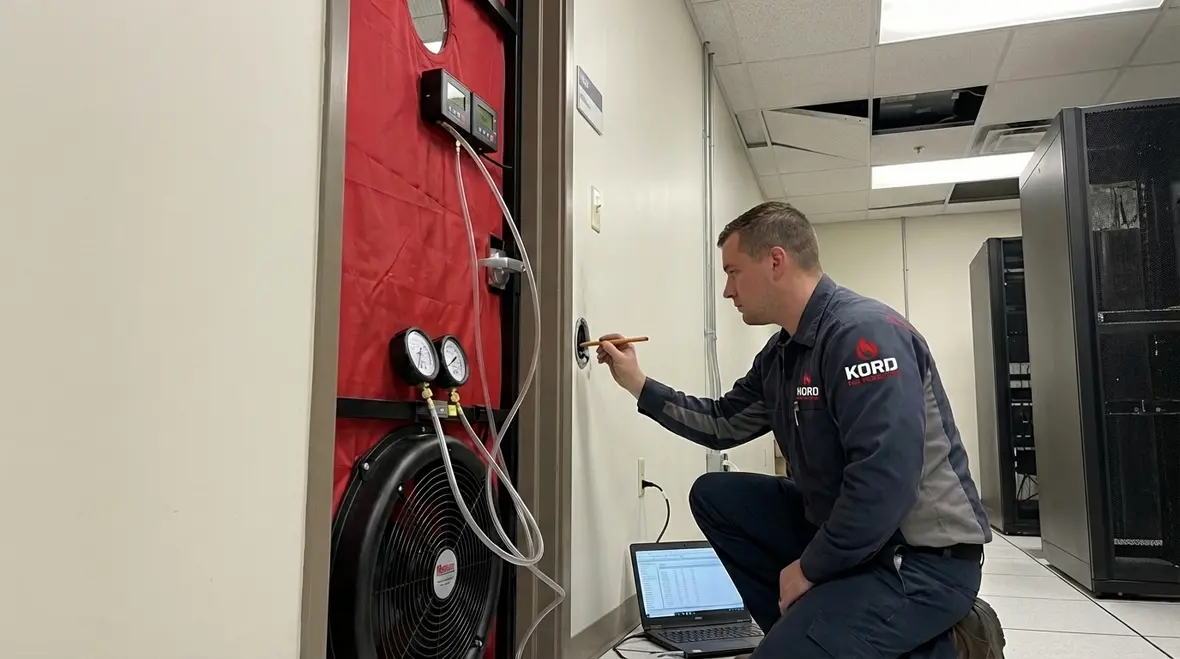
There is a moment, usually right after a clean agent discharge test, when the room should hold steady and do its job. And yet, the gauges dip. The timer falls short. Another failed result. The most common room integrity test failure causes often hide in plain sight. Gaps above ceiling tiles. Cracks along cable trays. Poorly sealed dampers. Doors that look sturdy but leak like a screen door on a submarine. While these issues may seem small, they can compromise life safety systems in a matter of minutes. That is why Kord Fire Protection technicians take a slow, methodical approach. They do not guess. They investigate, explain, and fix the problem at its source.
Why Room Integrity Matters More Than Most Realize
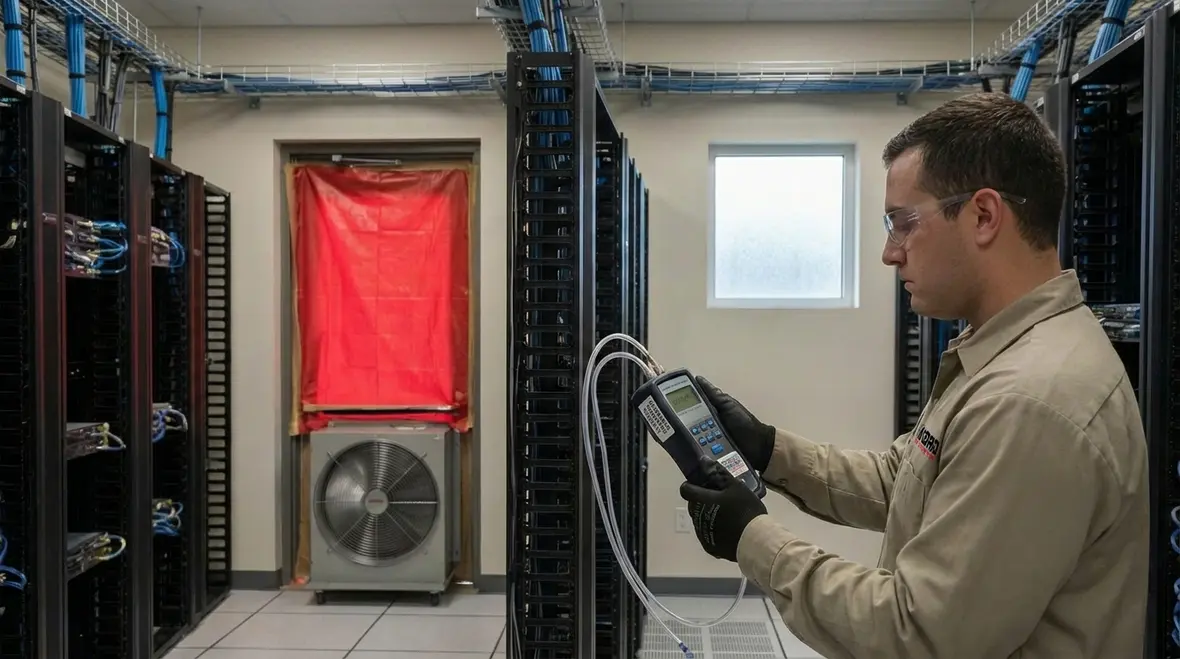
A clean agent fire suppression system works only if the agent stays in the protected space long enough to suppress the fire. That required time is called hold time. When a room fails a door fan test, it means the enclosure cannot maintain the concentration needed to extinguish a fire.
Now, that might sound technical. However, the idea is simple. If the room leaks, the agent escapes. If the agent escapes too quickly, the fire wins. And nobody wants to explain to their boss why the “state of the art” system behaved like it had stage fright.
Kord Fire Protection technicians often remind clients that the enclosure is just as important as the suppression system itself. In fact, many room integrity test failure causes stem from construction details rather than system design. Therefore, testing should never be treated as a formality. It is a diagnostic tool that reveals the invisible weaknesses in a room.
If you want a deeper dive into how these tests support clean agent systems, you can also review Kord Fire’s overview of room integrity and clean agent performance in their article on what room integrity testing is and why it matters.
Common Leakage Paths That Trigger a Room Integrity Test Failure
When technicians conduct a door fan test, they measure how much air escapes under pressure. Although the equipment is precise, the culprits are usually basic building features. Below is a closer look at the most frequent leakage paths and how they undermine performance.
Above Ceiling Leaks
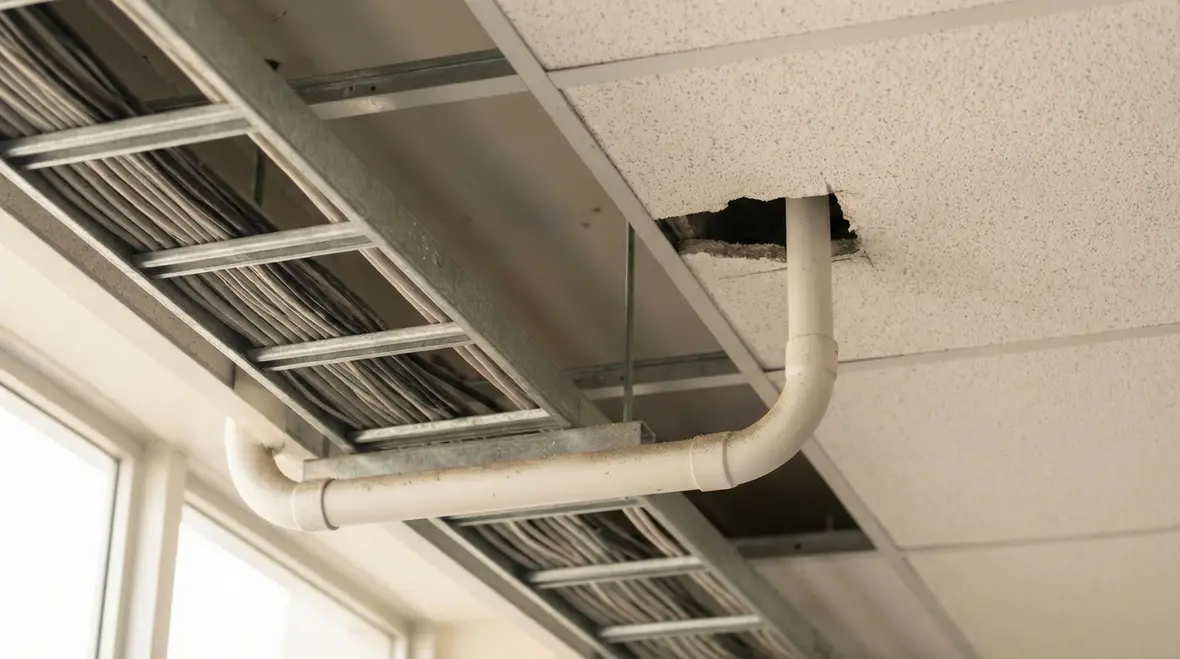
Many protected rooms extend to the structural deck, yet contractors sometimes forget to seal penetrations above drop ceilings. As a result, air slips through gaps around conduits, cable trays, and sprinkler pipes.
Raised Floor Voids
Data centers often have raised floors. However, unsealed openings in the subfloor can allow agent to escape into adjacent spaces.
Door Perimeter Gaps
Even a solid fire rated door can leak if the sweeps and seals are worn. Over time, vibration and daily use create gaps that are nearly invisible.
HVAC Dampers
If dampers fail to close fully during discharge, they become open highways for clean agent loss. In many cases, linkage problems or poor maintenance are to blame.
Wall and Ceiling Penetrations
New cables, pipes, or retrofits often bypass proper sealing. Consequently, each small opening compounds the leakage rate.
Structural Cracks
Concrete joints and wall seams may shift over time. Although these cracks seem minor, pressure testing exposes their impact quickly.
Together, these issues form the backbone of most room integrity test failure causes. Fortunately, each one has a practical solution.
How Kord Fire Protection Technicians Diagnose the Real Problem
Anyone can point to a failed report. The real value lies in explaining why it failed. Kord Fire Protection technicians approach each test like investigators at a quiet crime scene. First, they establish baseline measurements. Then, they use calibrated door fan systems to pressurize and depressurize the room. This process reveals how much leakage exists and where it likely occurs.
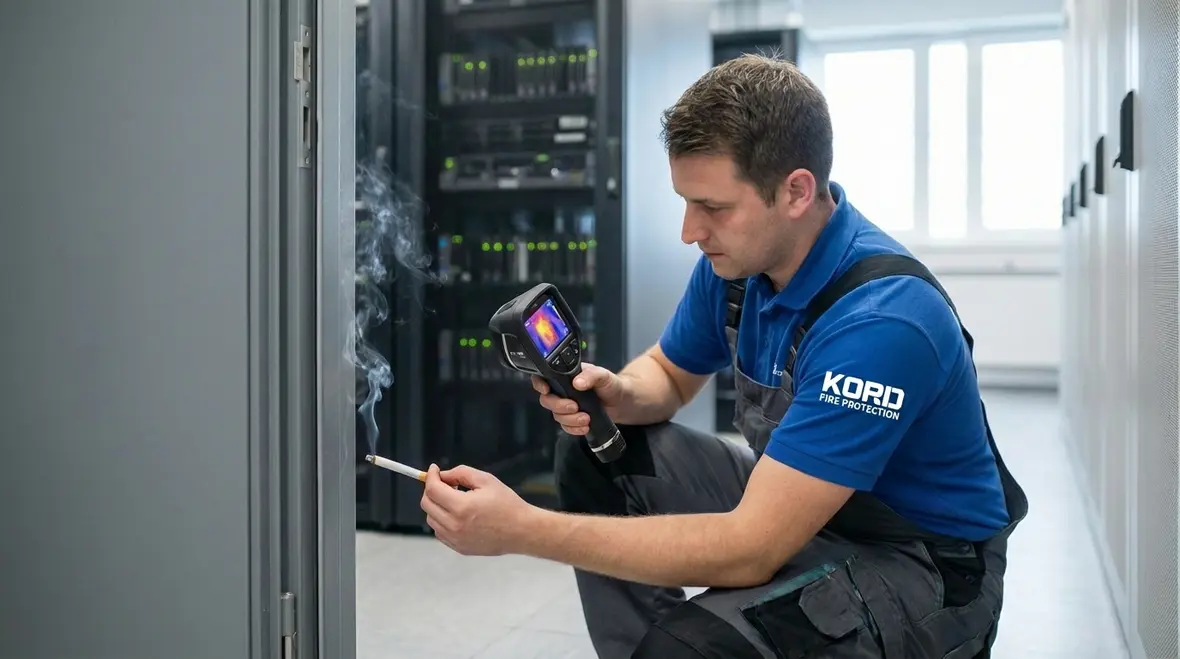
Moreover, they use smoke pencils and thermal tools to trace airflow at suspected weak points. Instead of offering vague advice, they walk facility managers through the findings. They explain how each leakage path affects hold time and what corrective action will improve results.
There is no dramatic music in the background. Just steady analysis, clear communication, and practical steps. Because in fire protection, clarity beats theatrics every time.
For facilities that rely on sensitive systems, this diagnostic work pairs naturally with the design of the clean agent system itself. Kord Fire outlines those systems in more detail in their guide to clean agent fire suppression for critical equipment, where enclosure performance and agent selection go hand in hand.
Practical Fixes That Improve Enclosure Integrity
Once the leakage paths are identified, the repair phase begins. Importantly, fixes should match the construction type and system design. Quick patches may pass a test today but fail again next year.
Seal Penetrations Properly
Technicians recommend listed firestop sealants for cable and pipe penetrations. Additionally, they ensure materials are compatible with the wall or floor assembly.
Upgrade Door Seals
Replacing worn sweeps and perimeter gaskets often delivers immediate improvement. In some cases, automatic door bottoms provide a tighter seal.
Repair or Replace Dampers
If HVAC dampers do not close fully, they should be adjusted or replaced. Furthermore, functional testing should confirm full closure during system activation.
Address Above Ceiling Barriers
Contractors may need to extend walls to the structural deck or seal open plenums. Although this step requires coordination, it significantly reduces leakage.
Seal Raised Floor Openings
Grommets and brush seals around cable cutouts can limit airflow beneath the floor.
Each correction builds toward one goal: achieving the required hold time without guesswork. Over time, addressing these room integrity test failure causes strengthens the entire life safety strategy.
What Would Cause a Room to Fail a Door Fan Test?
A room typically fails because its calculated hold time falls below the minimum required by the suppression system design. However, that result traces back to excessive leakage area.
In practical terms, the enclosure cannot contain the clean agent concentration long enough. While some facility managers assume the suppression cylinders are at fault, the issue almost always lies in the room itself.
Kord Fire Protection technicians often explain it this way. Imagine filling a bathtub with the drain open. You can keep pouring water in, but if the drain pulls it out faster than expected, you never reach the level you need. Likewise, an enclosure with unsealed gaps will not maintain proper concentration.
Therefore, identifying and correcting leakage paths remains the only reliable solution.
Preventive Strategies That Reduce Future Failures
Although repairs fix current issues, prevention keeps them from returning. Forward thinking facilities treat enclosure integrity as an ongoing responsibility rather than a one time task.
Coordinate During Renovations
Whenever new cables or piping enter the room, sealing should occur immediately. Waiting until the next test invites trouble.
Schedule Periodic Visual Inspections
Facility teams can inspect door seals, ceiling tiles, and wall penetrations quarterly. Small repairs today prevent large problems tomorrow.
Maintain HVAC Components
Routine damper testing ensures proper closure during discharge events.
Retest After Major Changes
If construction alters the enclosure boundary, a new test verifies performance. This step confirms that no new room integrity test failure causes were introduced.
By integrating these habits into maintenance plans, organizations protect both their assets and their compliance status.
The Broader Impact of Enclosure Integrity on Compliance and Safety
Beyond passing a test, enclosure integrity directly affects regulatory compliance and insurance requirements. Standards require documented evidence that protected spaces meet hold time criteria. Therefore, a failed test can delay occupancy approvals or trigger corrective mandates.
More importantly, safety depends on performance under real conditions. Fires do not pause to allow second attempts. If the enclosure leaks during an actual event, critical equipment and data may suffer irreversible damage.
Kord Fire Protection technicians emphasize that resolving room integrity test failure causes is not about checking a box. It is about ensuring that when the system activates, it performs exactly as designed. Quietly. Reliably. Without excuses.

FAQ About Room Integrity Testing
Secure the Room, Secure the Outcome
When a protected space fails, it sends a clear message. Something needs attention. Instead of hoping the next test will magically improve, facility leaders can partner with Kord Fire Protection technicians who explain each issue and implement lasting fixes. A secure enclosure supports the suppression system, protects assets, and meets compliance standards.
Schedule a professional evaluation today and ensure the room stands ready when it matters most. To see how room integrity testing fits into a full clean agent strategy, explore Kord Fire’s clean agent fire suppression services and dedicated room integrity testing insights, then request support for your critical equipment or contact their local fire protection team to get started.
Know Your Weapon Before You Fight the Flame
Kord Fire Protection is your go-to when it comes to all things fire protection. For over 20 years, we’ve been serving Southern California with the quality service and equipment to keep your home or business safe at all times. Our competitive prices reflect our unwavering commitment to protecting what matters most in the event of a fire emergency. Give us a call, send an email, or use that form!

Join Our Newsletter!
Get the latest fire safety tips delivered straight to your inbox From our Newsletter.


