Clean Agent Fire Suppression Cost in Southern California
In Southern California, the clean agent fire suppression cost can swing a lot depending on the risk level, the type of protected space, and how the system gets installed. Still, most owners want the same thing: a fire protection plan that works fast without turning a business into a cloudy science fair project. And yes, it matters that clean agents leave little to no residue, which is exactly why facilities like data rooms, medical suites, and electronics spaces often choose them.
Below, the article breaks down what drives pricing, what clients should ask for before signing, and how Kord Fire Protection can act as a vital partner from site planning to final documentation. Because in fire protection, “close enough” can be the most expensive phrase in the room.
What is clean agent fire suppression and why Southern California pricing varies
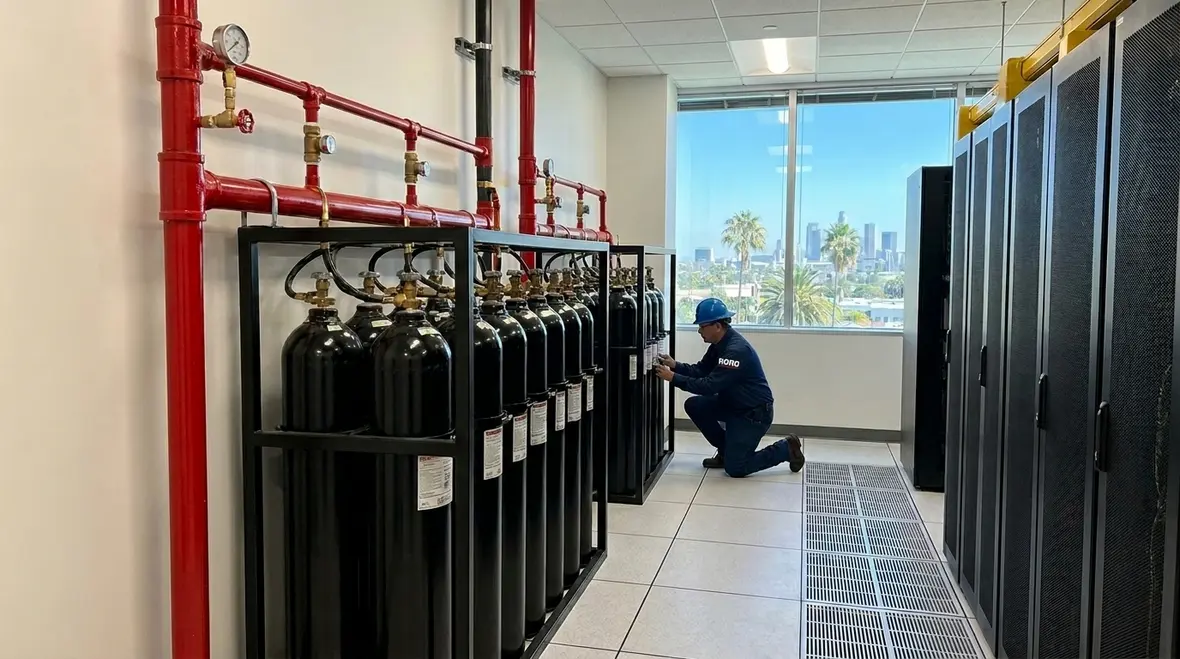
Clean agent systems use gases that interrupt the fire process. They protect enclosed areas such as server rooms, telecom closets, paint supply control rooms, and certain mechanical spaces where water or foam would cause damage. In practice, this choice changes the economics. Therefore, pricing depends on factors that directly affect engineering, design, and the amount of agent required.
In Southern California, additional pricing pressure often comes from tighter jobsite conditions and higher labor costs. Moreover, the region includes many older buildings with tricky layouts, which means installers spend more time routing piping, mounting cylinders, and coordinating with electrical and life safety teams.
And if someone promises a universal “one price fits all” quote, the client should treat it like a pop quiz with no study guide. It might feel friendly, but it usually ends poorly.
Why these systems are often chosen for sensitive spaces
That residue free performance is a big reason companies compare clean agent solutions against more traditional options. In rooms filled with electronics, controls, records, diagnostics equipment, or expensive downtime, the conversation quickly shifts from “What stops fire?” to “What stops fire without wrecking everything else?” That distinction is where clean agent systems earn their keep.
For businesses sorting through broader protection options, Kord also offers fire suppression services that help owners compare solutions based on hazard type, space conditions, and long term maintenance needs.
Key clean agent fire suppression cost factors for a real estimate
Most pricing starts with engineering. After that, the rest of the work gets priced around the design. Here are the major drivers.
- Protected volume: Larger or oddly shaped areas often need more agent and more complex layout work.
- System type: Different clean agent options and configurations affect cylinder count, controls, and distribution equipment.
- Alarm and detection: Smoke, heat, or aspirating detection changes material counts and wiring complexity.
- Discharge piping and nozzle layout: Routing and sealing requirements can raise labor time.
- Door and barrier integrity: If the space leaks air, it may require extra sealing or a reworked design to hit the required performance.
- Electrical and controls integration: Connections to panels, dampers, shutdowns, and annunciators add scope.
Next, the project details add layers. For example, high ceilings, limited access, and occupied schedules can increase labor rates. Then, permitting and plan review time influences how quickly crews can work, which can impact total cost.
The design phase is where the budget starts telling the truth
Clients sometimes focus first on hardware counts, but the design basis is what determines whether those counts make sense. Room measurements, airflow conditions, equipment arrangement, occupancy considerations, and interface requirements all shape the final system. In plain English, the sketch on page one usually has more to do with the final bill than the shiny cylinder photo on page ten.
How enclosure quality and risk classification affect the final price
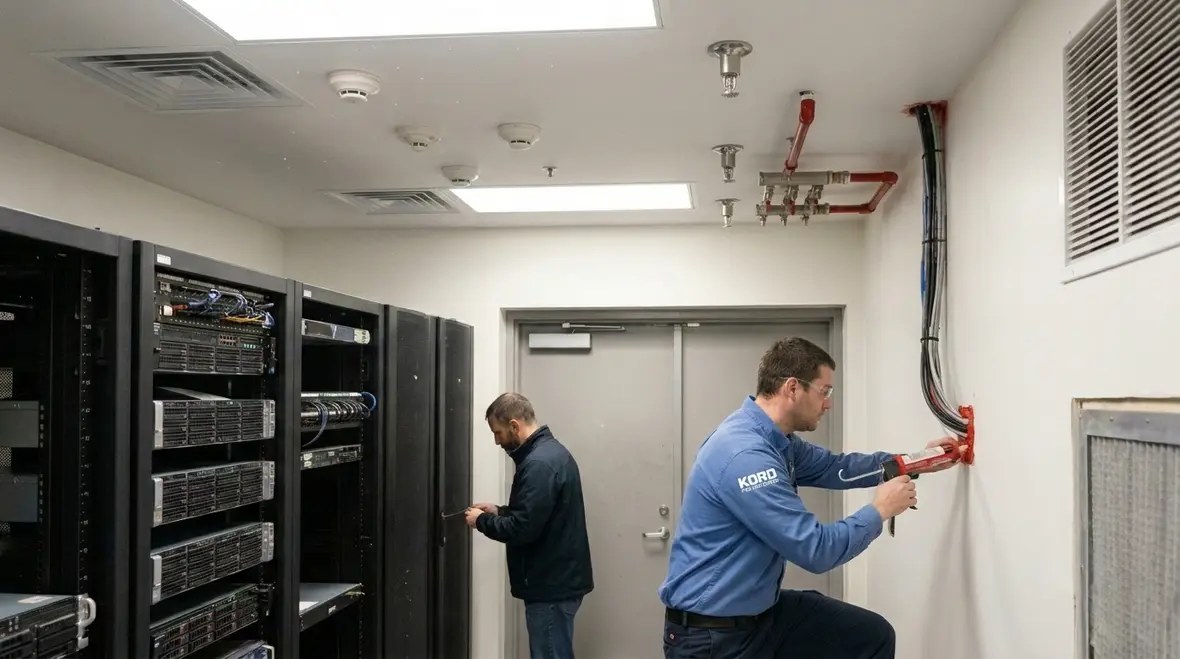
Clean agent systems rely on the space acting like a controlled enclosure. When doors, penetrations, or ceiling gaps allow airflow, the system must compensate through design adjustments. Consequently, the clean agent suppression system pricing may rise because the design team increases agent quantity or changes distribution strategy.
In addition, risk classification matters. A higher hazard rating can lead to different agent concentration targets, longer discharge requirements, and more robust detection and release control. As a result, a “similar sized” space can still carry a meaningfully different budget.
To keep the cost under control, a good partner will evaluate enclosure readiness early. He or she will coordinate with maintenance teams to identify seal and access issues before the final engineering package is finalized. Otherwise, the project can drift like a Wi-Fi signal in a metal warehouse.
Why room integrity work can change the budget fast
Even a well selected agent can underperform if the enclosure cannot hold concentration long enough. That is why room integrity is not some side quest added at the end to keep everyone busy. It can directly influence design revisions, labor hours, and coordination with other trades. Businesses that want a clearer picture of this issue can explore Kord’s related guide on clean agent suppression system and room integrity testing.
Dual column pricing breakdown: what clients usually pay for
To make budgeting clearer, the following provides a typical way quotes get structured. Note that each project varies, but this helps clients understand where dollars tend to go.
Cost component
- Design and engineering
- Agent and hardware
- Detection and actuation
- Installation labor
- Testing and documentation
What it includes
- Hazard review, calculation, layout drawings, and system documents
- Cylinders, valves, distribution manifolds, nozzles, and controls
- Detectors, wiring, control interfaces, and releasing devices
- Cylinder mounting, piping, cable pulls, sealing, and commissioning support
- System checkout, programming verification, and required submittals
Furthermore, some quotes separate permitting and inspections, while others bundle them. Therefore, clients should ask the estimator to explain what is included, what is excluded, and what will trigger change orders.
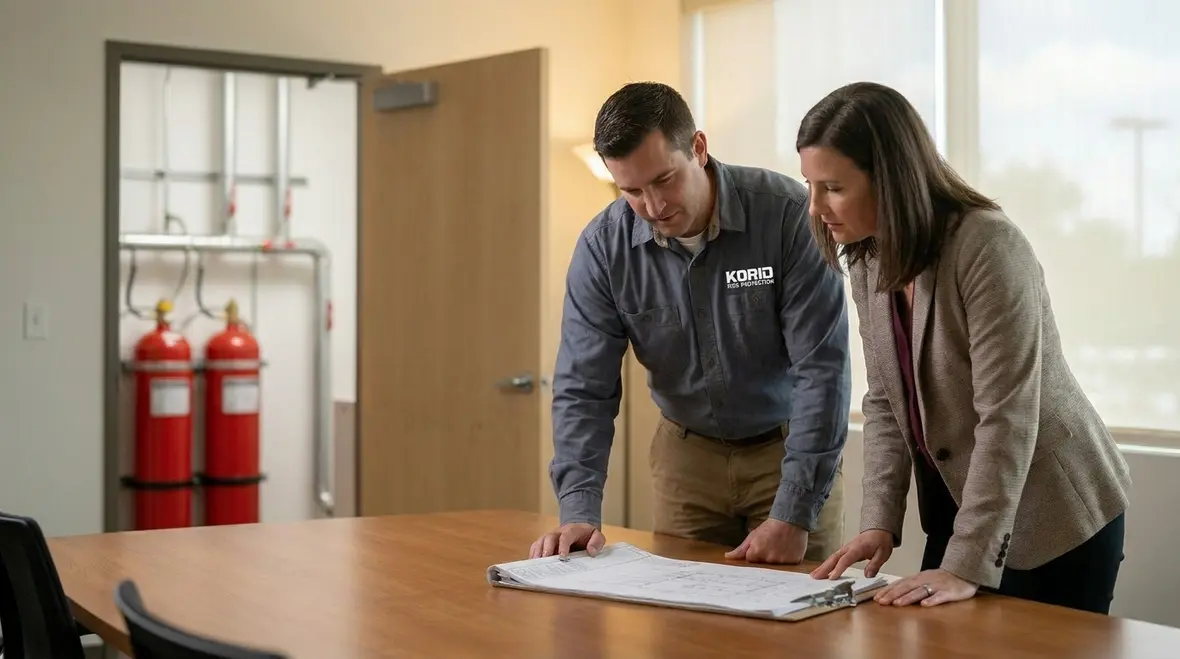
This is also the stage where owners should confirm whether demolition, ceiling patching, penetrations sealing, after hours labor, lift access, and final documentation are listed clearly. If those details stay fuzzy, the final invoice can become a master class in unpleasant surprises.
What to ask before choosing a contractor in Southern California
Clients often compare equipment lists first. However, the bigger value comes from project execution and documentation quality. A solid contractor will help the business owner stay calm during the process, because fire protection projects should not feel like negotiating peace treaties.
Before signing, a decision maker should ask for the following.
- Confirmation of hazard classification and the design basis
- Proof of clean agent distribution design that matches the enclosure
- Clear timeline for submittals, installation, and acceptance testing
- Commissioning plan including system verification steps
- Maintenance expectations and compliance notes for ongoing service
- Whether the quote includes demo, patching, and any sealing work
Additionally, clients should confirm that the contractor coordinates with the local authority having jurisdiction and the building team. In Southern California, schedule coordination matters, and it can reduce delays that otherwise inflate costs.
Useful experience beats a mysterious low quote
It is tempting to compare proposals like grocery receipts and pick the lowest total. But clean agent work depends on engineering accuracy, enclosure performance, controls coordination, and documentation discipline. A quote that skips important scope may look efficient right up until everyone is standing in a room asking why the panel, shutdowns, and drawings disagree with each other.
Kord Fire Protection as a vital partner for clean agent projects
When a facility needs a clean agent system, the job is not just “install cylinders and walk away.” It needs planning, coordination, and careful attention to code requirements, system performance, and long term service needs. That is where Kord Fire Protection becomes a vital partner.
Kord helps clients move from early risk review to engineered design, then into clean installation practices and solid documentation. Consequently, the business owner gets fewer surprises, cleaner handoffs, and a smoother acceptance process. Also, because clean agents depend on enclosure and control accuracy, Kord focuses on system integration details like detection placement, release logic, and coordination with building components.
And if you are thinking, “We just want the cheapest quote,” that is understandable. Yet, in fire suppression, the cheapest line item can turn expensive if the system does not match the hazard. Kord’s approach aims to protect the investment and the facility, not just the paperwork.
For readers who want additional context on how these systems support sensitive environments, Kord’s resources on clean agent fire suppression for critical equipment and the data center clean agent fire suppression guide are useful next steps.
FAQ: clean agent fire suppression cost and planning quick answers
Final word: get the right quote before the numbers get loud
For Southern California businesses, the clean agent fire suppression cost should reflect real engineering, not guesswork. A strong estimate protects the facility, reduces delays, and avoids change orders caused by enclosure issues or missing scope. That is the difference between buying a system and buying confidence that the system was actually thought through.
If a facility needs a partner who treats clean agent design like it matters, contact Kord Fire Protection. Businesses can review Kord’s dedicated clean agent fire suppression service page or start with the broader fire suppression services page to schedule a site assessment and request a quote that makes sense.

Join Our Newsletter!
Get the latest fire safety tips delivered straight to your inbox From our Newsletter.