Vehicle Fire Suppression Inspection Checklist and Process
Vehicle fire suppression inspection: what a good check actually looks like
When a facility relies on vehicle fire suppression inspection, it cannot treat the task like a quick glance and a thumbs up. A real inspection, done on schedule, helps protect people, property, and uptime. In fact, it keeps emergency response from becoming a dramatic movie scene where everyone runs around yelling. Instead, it verifies that the system is ready the moment the heat shows up. Kord Fire Protection supports this work with the kind of steady, business smart process that helps fleets and equipment owners stay compliant, confident, and calm during audits and inspections.
When inspections become a compliance issue
Most organizations discover requirements only after a surprise notice, a claim, or a routine safety survey. Then the clock starts ticking. Therefore, owners should understand that vehicle fire suppression systems often connect to broader safety duties, including risk management plans and regulatory expectations tied to equipment use and occupancy. In many cases, the inspection rules depend on system type, manufacturer guidance, and documented intervals. As a result, the best approach uses the manual as the baseline and then confirms how local rules and insurance expectations align with it.
Inspections typically do not end at “is it there.” They involve verifying that key components remain in proper working order over time, despite vibration, heat cycling, road grime, and the occasional accidental bump that turns a neat system into a mystery. For organizations building a broader service strategy, Kord Fire Protection also offers guidance through its Vehicle Fire Suppression Systems Maintenance Guide, which helps connect day to day upkeep with long term readiness. That is useful when compliance stops being theoretical and starts showing up in emails with suspiciously urgent subject lines.
Key components covered during a proper inspection
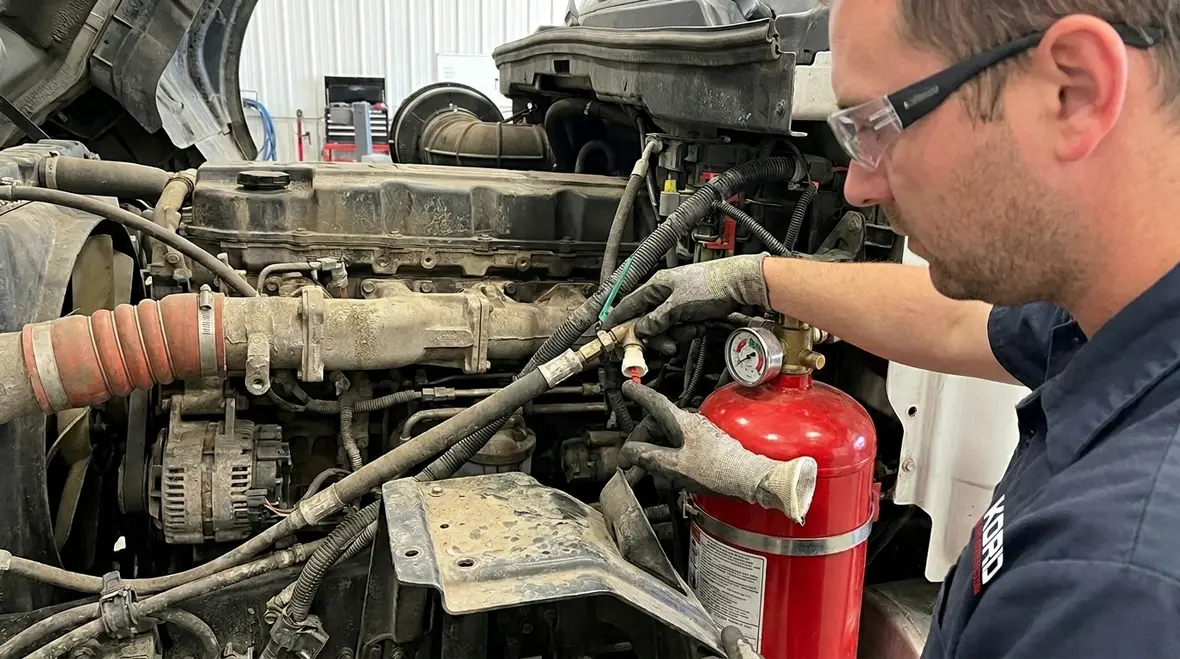
A thorough vehicle fire suppression inspection checks the system as a complete set. So even if the agent looks fine, the protection can still fail if detection, control, or power fails. Inspectors usually focus on these areas:
- Detection devices: cables, sensors, wiring condition, and placement that matches the manufacturer layout
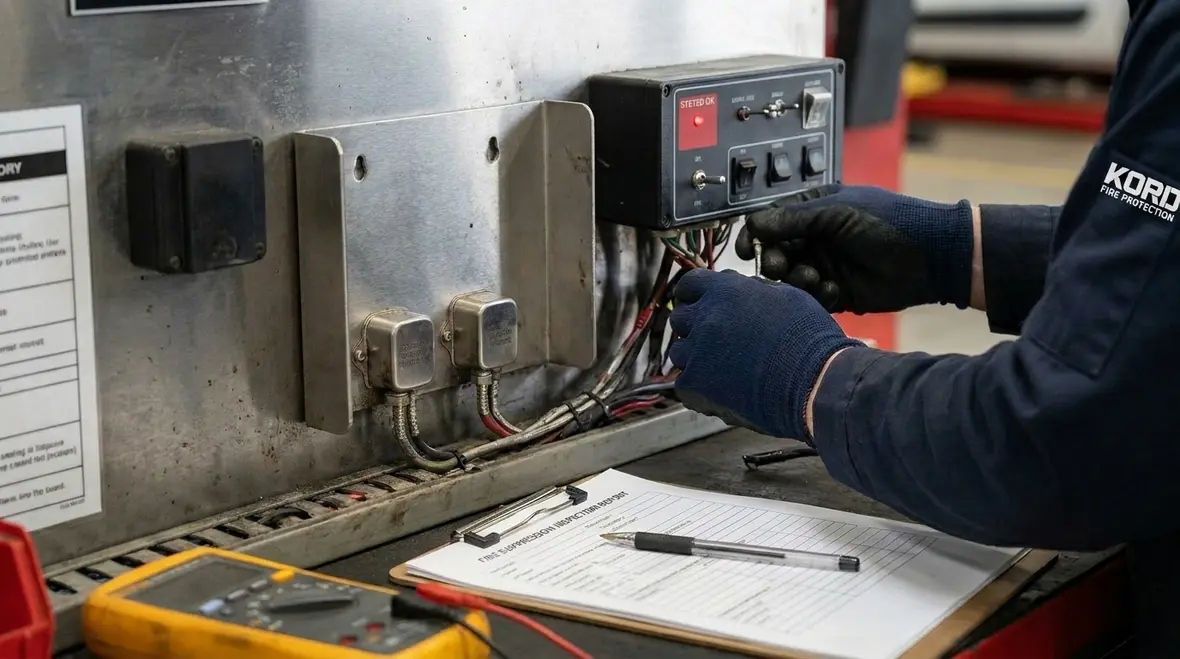
- Control head or controller: proper function, correct indicator status, and wiring integrity
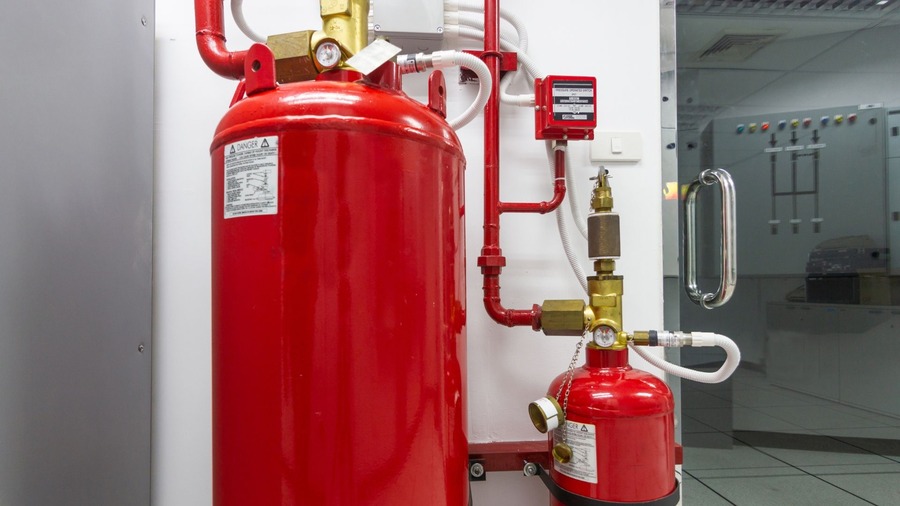
- Agent storage: tank condition, mounting stability, and valve area cleanliness
- Nozzles or discharge outlets: obstructions, alignment, and secure attachment
- Electrical and power: battery condition for panels that use them, and continuity where required
- Manual pull stations and related activation features when installed
Then the inspector verifies that the system documentation matches the equipment setup. For example, changes in engine layout, added equipment, or alterations to compartments can affect coverage. If the real vehicle no longer matches the installed design, protection may not perform as intended. And yes, people do sometimes “improve” a compartment with random brackets. The laws of physics do not care about good intentions.
How inspection intervals should be planned
Scheduling matters because the system can degrade while you delay. Many programs use a tiered approach: more frequent routine checks and less frequent detailed service based on manufacturer instructions and the risk profile. Therefore, owners should build a calendar that accounts for vehicle usage patterns, operating environments, and the specific system design.
Fleets that run in harsh conditions often need more careful monitoring. Heat, moisture, and dust can affect sensors and wiring. In addition, equipment that cycles rapidly between hot and cold states can stress connections. When the maintenance plan reflects the real world, the organization avoids the classic problem of discovering issues after a failure, then spending time on emergency procurement and rushed repairs.
A practical way to map the schedule
The easiest scheduling model starts with the manufacturer interval, then adds operational reality on top. A lightly used support vehicle may stay close to baseline timing. A mining loader, transit bus, waste truck, or other hard working machine probably deserves tighter oversight. That means routine visual reviews by site staff, documented inspections by qualified technicians, and immediate follow up whenever the equipment is repaired, modified, or involved in an incident. If that sounds less exciting than waiting for failure, that is because it is. Calm maintenance rarely trends, but it does save budgets.
What technicians verify during functional checks
Inspections do more than look. Technicians perform steps that confirm the system responds correctly. At a practical level, they often check:
- Indicator and status lights to confirm the controller shows normal condition
- Detection pathway by verifying sensor cleanliness and wiring integrity
- Activation logic where required, ensuring the controller triggers the proper outputs
- Discharge readiness without unnecessary discharge events, based on manufacturer rules
- Signage and labeling so responders and maintenance staff know what they face
Depending on the system, deeper service actions may also occur at set intervals. For instance, the agent system might require detailed verification steps or part replacement after a period of use. Additionally, if the vehicle suffers damage, owners should re-evaluate the system sooner. A bent bracket or a compromised wire run can quietly undermine protection.
For teams that want a broader picture of suppression upkeep beyond vehicle applications, Kord Fire Protection’s Fire Suppression System Design, Types and Maintenance article is a useful interlink. It helps explain how inspection, testing, and maintenance work together instead of floating around as separate tasks in separate folders that nobody opens until the audit fairy appears.
Using Kord Fire Protection as a vital partner
Vehicle suppression systems sit at the intersection of safety, compliance, and operational continuity. That is why partnering with Kord Fire Protection can matter. Kord helps organizations manage the process with clear documentation, consistent work quality, and a focus on readiness. Instead of treating inspections like a one-off event, Kord supports ongoing programs that keep the paperwork clean and the equipment protected.
In a world where audits arrive with the timing of a pop quiz, strong service records and organized inspection reports reduce stress. Moreover, Kord can coordinate next steps when technicians find issues, so repairs happen with minimal downtime. After all, a vehicle that cannot move is basically a very expensive storage unit.
To make planning easier, Kord also supports a straightforward workflow: scheduling, on site verification, documented results, and recommended corrective actions. Then the organization can track recurring service without guessing. This style of partnership turns inspections into a system, not a scramble. If your team is evaluating dedicated equipment protection, the vehicle fire suppression systems page is the natural place to review service options and next steps.
How documentation and reporting help during audits
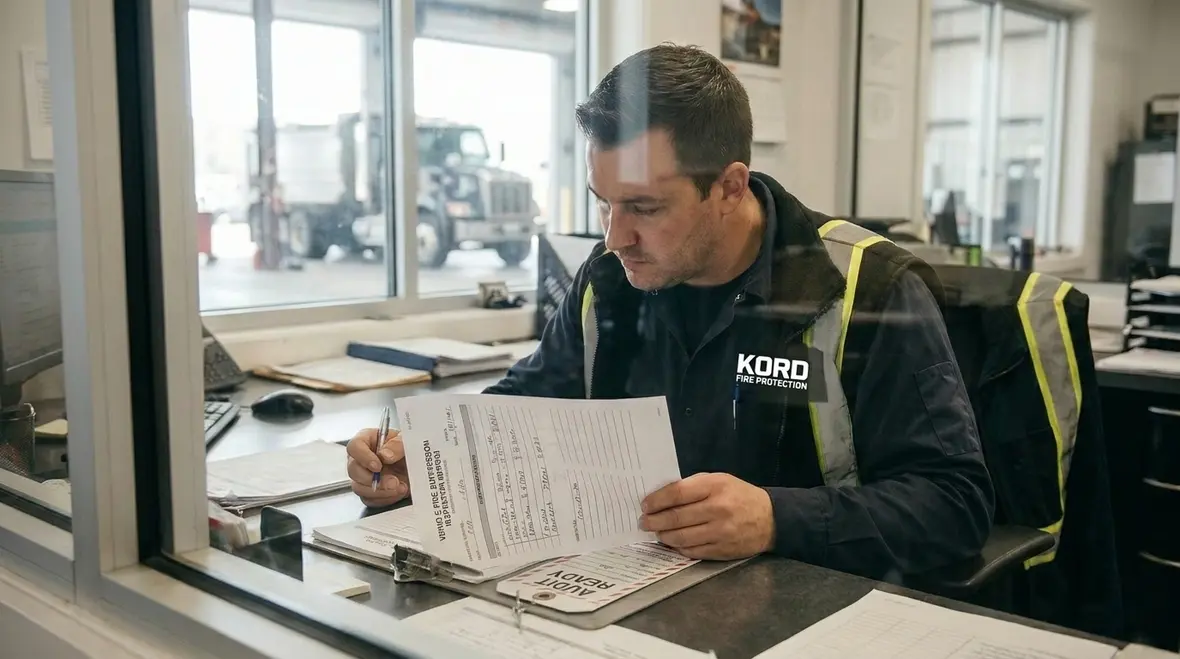
Proper records help teams prove that they stayed ahead of risk. During audits, inspectors and reviewers want evidence that inspections occurred on schedule and that the system components met required standards. Therefore, the report should clearly list what the technician checked, what condition the system showed, and what actions were recommended or completed.
Teams should store documentation where maintenance leaders and safety managers can access it quickly. When a report is easy to find, it helps avoid last minute scramble. It also helps show a pattern of responsibility, which can improve outcomes with stakeholders. And yes, it makes HR less likely to call everyone into a meeting titled “We need to talk.”
What a useful inspection report should include
A strong report is specific enough to support action. It should identify the vehicle or asset, inspection date, system type, technician findings, deficiencies, corrective recommendations, and completion status for any follow up work. Photos help when available, especially if a manager needs to approve repairs without walking out to the yard and squinting at a bracket from twenty feet away. Good records also help trend recurring issues, which is how smart maintenance teams stop repeating the same expensive surprise.
Inspection checklist and typical outcomes
Organizations often ask for a clear, practical view of what happens after an inspection. Below is a common structure used by many teams. It is also a helpful way to align internal maintenance with the service scope.
| Inspection step | Typical outcome |
| Visual condition of agent storage, controller, wiring, and nozzles | Normal condition noted, or repair recommended for damage or improper mounting |
| Verification of detection and control status | Controller shows proper state, sensors checked for cleanliness and secure connections |
| Functional readiness checks per manufacturer direction | System triggers and logic verified, or corrective actions scheduled |
| Documentation review and labeling check | Report created, labels verified, and gaps flagged for follow up |
Vehicle fire suppression inspection FAQ
Schedule your next inspection with confidence
Vehicle fire suppression inspection is not a box to check. It is a readiness guarantee that keeps operations moving and risk under control. Kord Fire Protection helps organizations plan inspections, verify system performance, and maintain clear documentation that holds up when questions show up. If the system serves your fleet or equipment, schedule service now and get a detailed, calm, professional review.
Then you can focus on the work you do best, not on the paperwork that loves to arrive late. For a related service overview and a direct next step, visit Kord Fire Protection’s fire suppression services page to connect inspection planning with broader protection support.

Join Our Newsletter!
Get the latest fire safety tips delivered straight to your inbox From our Newsletter.