Using Wrong Fire Extinguisher Consequences Guide
There is a moment, just before a fire truly takes hold, when a person believes they are about to be the hero of the day. The extinguisher is in hand. The pin is pulled. Confidence rises. And then, in a cruel twist, the flames surge higher. Using wrong fire extinguisher consequences can turn a small, manageable incident into a raging emergency in seconds. Water spreads burning grease. Powder clouds blind a room. Carbon dioxide displaces oxygen in tight spaces. What began as a simple fix becomes chaos. Fortunately, as kord fire protection technicians often explain, most of these disasters are preventable with the right knowledge and calm action.
Using wrong fire extinguisher consequences in real world fire events
Real fires rarely behave like they do in the movies. There is no dramatic soundtrack. There is only heat, smoke, and urgency. Because of that urgency, people grab the nearest extinguisher without checking the label. However, each extinguisher type exists for a specific fuel source. When that match is wrong, the results escalate quickly.
For example, consider an office kitchen. A toaster sparks and ignites nearby paper towels. Someone reaches for a water extinguisher. If the fire involves electrical current, that water can conduct electricity back toward the user. As a result, the individual risks shock while the fire continues to feed on energized components. Kord fire protection technicians frequently point out that this scenario shows how using wrong fire extinguisher consequences extend beyond property damage to personal injury.
Meanwhile, in a warehouse storing flammable liquids, a foam extinguisher might be the correct tool. Yet if someone deploys a standard water unit instead, the liquid fuel can spread. Instead of smothering the flames, the stream pushes burning material outward. Therefore, what was once a contained pool fire becomes a wide surface blaze racing across the floor.
These examples are not rare. They happen in offices, restaurants, labs, and homes every year. And each time, the lesson remains the same. The extinguisher must match the fire class.

Fire classes explained so anyone can act fast
First, it helps to understand the simple language of fire classes. Although the lettering system may seem technical, it is actually straightforward.
- Class A involves ordinary materials like wood, paper, and cloth.
- Class B includes flammable liquids such as gasoline and oil.
- Class C covers energized electrical equipment.
- Class D relates to combustible metals.
- Class K applies to cooking oils and fats.
Because each class burns differently, each requires a unique method of suppression. Water cools Class A fires effectively. However, it can spread Class B liquids and conduct electricity in Class C situations. Dry chemical agents interrupt chemical reactions, while carbon dioxide removes oxygen from the immediate area. Wet chemical systems for kitchens create a soapy layer that seals off grease fires.
When people ignore these distinctions, using wrong fire extinguisher consequences become immediate and severe. Kord fire protection technicians often compare it to using the wrong key for a lock. You can jam it in and twist with all your might, but the door will not open. In fact, you may break the lock entirely.
If you want a deeper refresher on extinguisher types and where they belong, Kord has a practical breakdown in their guide to guidelines for fire extinguishers in Anaheim and an in-depth overview in their NFPA 10 portable fire extinguisher guidelines.
Kitchen chaos and grease fire mistakes
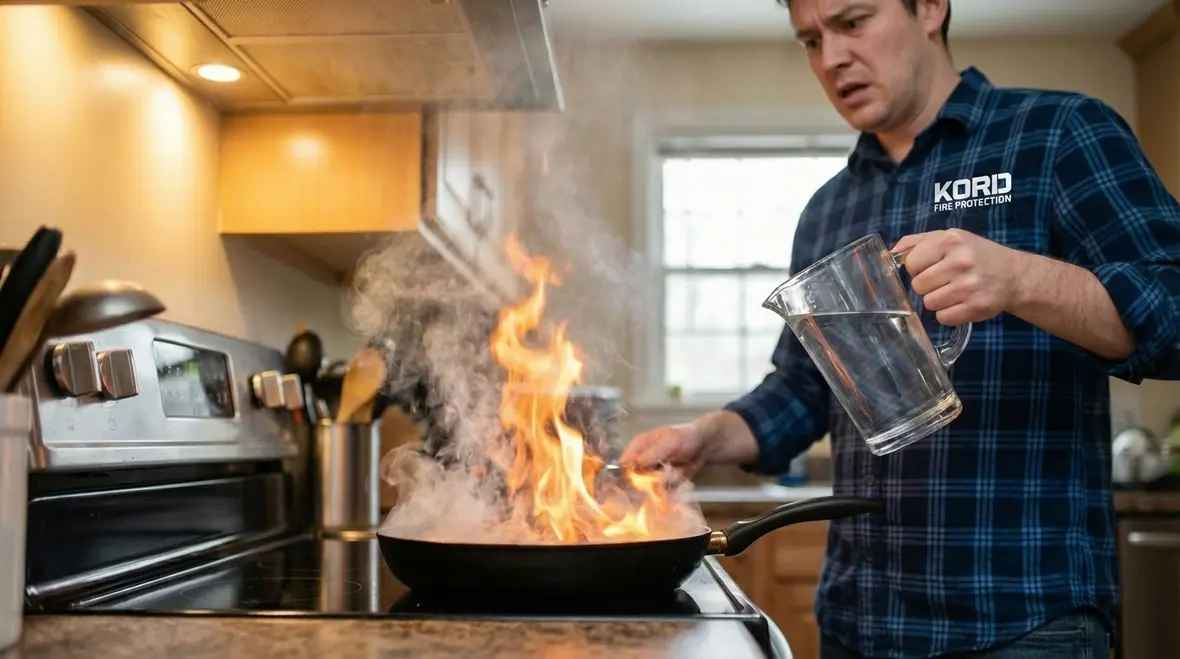
If there were an award for most dramatic household fire, the grease fire would win by a landslide. It flares up fast, roars loudly, and punishes bad decisions without mercy. Unfortunately, instinct tells many people to grab water.
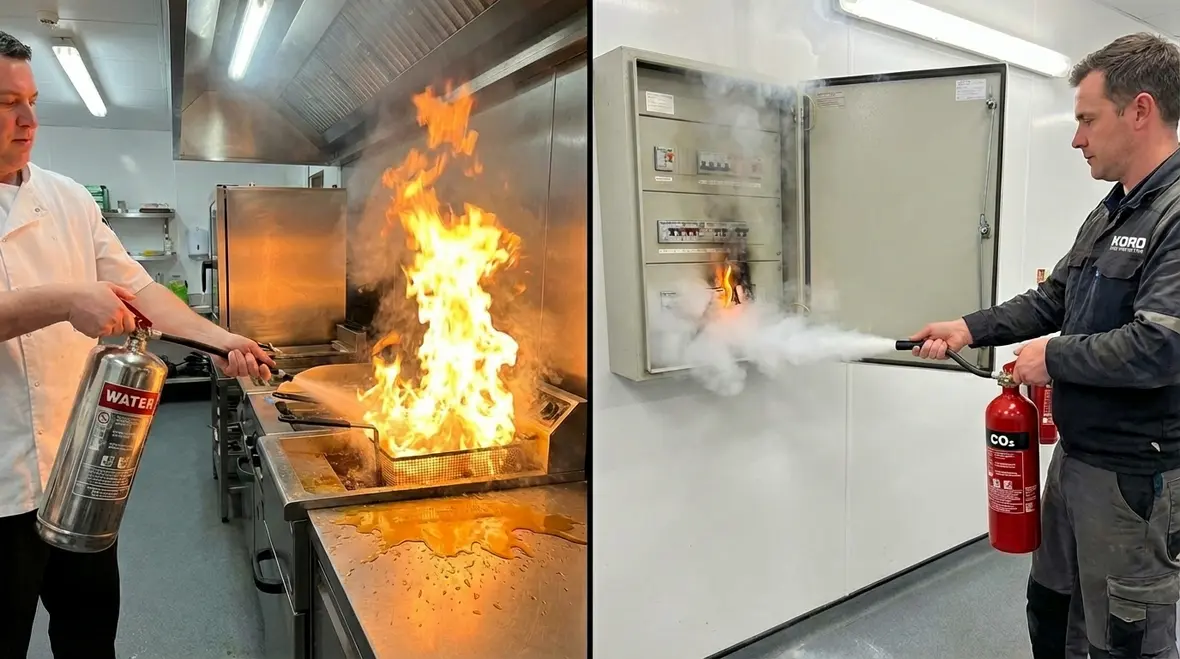
When water hits burning oil, it sinks beneath the surface and instantly turns to steam. Consequently, it expands violently and blasts flaming grease into the air. What was once a pan fire becomes a ceiling fire. This is one of the clearest examples of using wrong fire extinguisher consequences in action.
Instead, a Class K extinguisher releases a wet chemical agent that reacts with hot oil. It forms a foam blanket that cools and seals the surface. Kord fire protection technicians explain this process in simple terms during training sessions. The agent does not fight the fire with force. Rather, it gently suffocates it. Think less action movie explosion and more calm problem solving.
Moreover, technicians stress that kitchen staff should never experiment during a real emergency. Muscle memory matters. Therefore, regular hands on training builds the right reaction under pressure.
Electrical room emergencies and hidden dangers
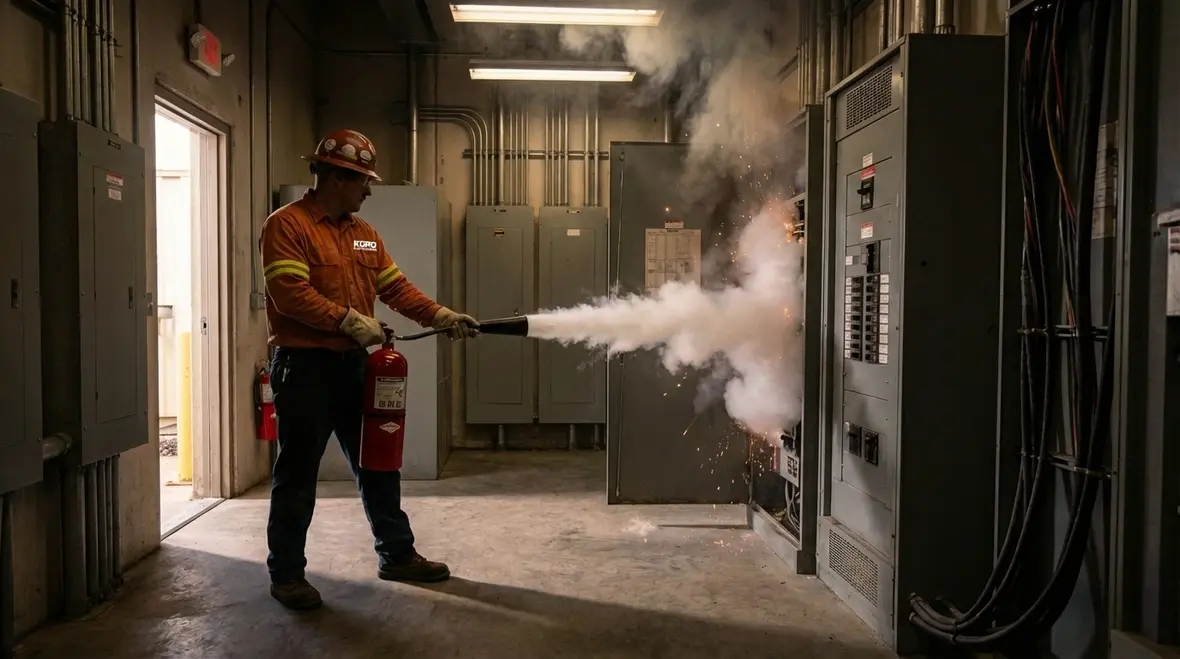
Electrical fires present a different kind of risk. They often start behind panels or within equipment. At first, there may be only a faint burning smell. Then, sparks appear. Because the flames seem small, someone may assume any extinguisher will do.
However, spraying water or foam on energized equipment can create a path for electricity. As a result, the operator may suffer shock or even cardiac arrest. In addition, the equipment may short out further, feeding the fire internally. In these moments, using wrong fire extinguisher consequences multiply quickly.
A carbon dioxide extinguisher, by contrast, displaces oxygen and leaves no residue. That clean discharge protects sensitive electronics from powder damage. Kord fire protection technicians often remind facility managers that residue cleanup after an incorrect discharge can cost more than the fire damage itself. Nobody wants to explain to the finance department why a small spark turned into a full server replacement project.
For more detail on matching the agent to the hazard, Kord’s comprehensive guide to fire extinguisher types and usage and their Masters guide to fire extinguishers for 2025 both reinforce why electrical rooms demand the right clean agent or CO2 unit—not guesswork.
How using wrong fire extinguisher consequences escalate fast
Fires grow in stages. First, there is ignition. Next comes growth. Then full development. Finally, decay. When the wrong agent is applied during the early stage, the growth phase accelerates instead of slows. Therefore, seconds matter.
For instance, in an industrial setting with combustible metal shavings, applying a water based extinguisher can trigger a violent reaction. Some metals react with water to release hydrogen gas, which ignites easily. Consequently, the fire can flare brighter and hotter. This dramatic shift clearly shows how using wrong fire extinguisher consequences are not theoretical warnings but real physical reactions.
Furthermore, visibility often drops after an incorrect discharge. Dry chemical clouds can fill a room, reducing sight lines to near zero. While the powder works well on certain classes, it can disorient untrained users. In a panic, people may stumble or inhale irritants. Kord fire protection technicians emphasize that understanding both the power and the limits of each extinguisher prevents these avoidable escalations.
Side by side: correct choice versus costly mistake
To make the contrast clear, technicians sometimes present situations in a simple comparison format.
Correct extinguisher choice
- Matches the fire class exactly
- Suppresses flames quickly
- Limits smoke spread
- Reduces cleanup costs
- Protects the operator from added risk
Incorrect extinguisher choice
- Spreads burning material
- Increases heat or flare ups
- Creates electrical hazards
- Leaves unnecessary residue damage
- Highlights using wrong fire extinguisher consequences in the worst way
This side by side approach helps teams see that the difference often comes down to a label and a few seconds of thought. While it may feel heroic to act instantly, it is far wiser to act correctly.
Training, maintenance, and human behavior
Even the best equipment fails without proper training. People default to habit under stress. Therefore, if training never covered fire classes in detail, employees may rely on guesswork. And guesswork during a fire rarely ends well.
Kord fire protection technicians conduct live demonstrations where possible. They show how each agent behaves. They explain why using wrong fire extinguisher consequences can include regulatory fines, insurance issues, and shutdowns. Because businesses must meet safety codes, an incorrect response can trigger investigations.
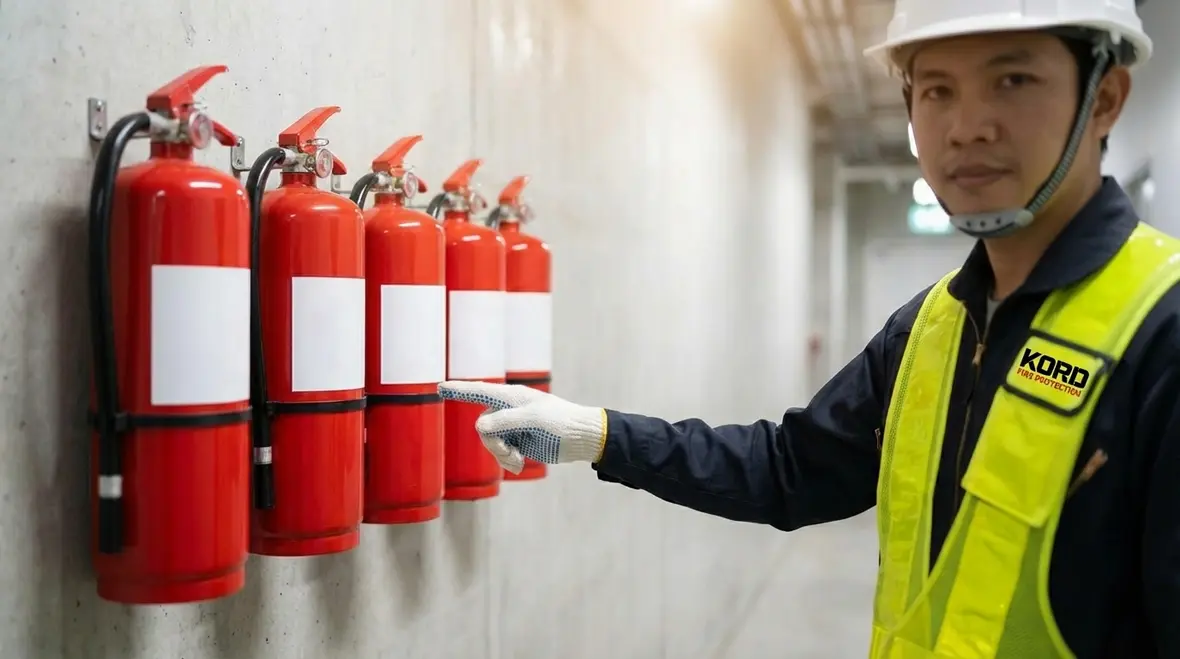
In addition, maintenance plays a quiet but vital role. An extinguisher that is not inspected may lose pressure. As a result, even the correct unit might fail to discharge properly. Technicians check gauges, seals, and placement height. They also verify that signage clearly marks fire classes. Clear labeling reduces the odds of using wrong fire extinguisher consequences during a high stress event.
Behavior matters too. Leaders who promote safety culture see better outcomes. When managers encourage questions and refresher courses, employees respond with confidence rather than panic. And confidence, when rooted in knowledge, makes all the difference.
If your extinguishers are overdue for care, Kord’s monthly inspection and annual service program and their six year break down/tear down service keep equipment reliable long before an emergency tests it.
What should someone do if the wrong extinguisher was used?
First, they should stop discharge immediately if it is safe to do so. Continuing to apply the wrong agent only worsens the situation. Next, they should reassess the fire class quickly. If the correct extinguisher is nearby and the fire remains small, they may attempt a second controlled response.
However, if flames have grown or visibility has dropped, evacuation becomes the priority. Fire services must take over. Using wrong fire extinguisher consequences sometimes mean the window for safe intervention has closed. Therefore, pride should never override safety.
After the incident, the area requires inspection. Residue may corrode equipment. Electrical systems may need testing before power restoration. Kord fire protection technicians often assist with post incident assessments. They identify what went wrong and update training to prevent repeat events.
FAQ: quick answers for fast clarity
Conclusion: turn knowledge into protection
Fire does not wait for second chances. The right extinguisher, used with calm precision, can stop disaster in its tracks. The wrong one can magnify the threat in seconds. Businesses that invest in expert guidance avoid costly mistakes and protect what matters most. Kord fire protection technicians stand ready to train, inspect, and advise.
Schedule a professional assessment today and replace uncertainty with confidence before the next spark ever appears. To get started, explore Kord\u2019s full fire protection services or contact their team for fire extinguisher walk-in support and training options. One conversation today can change the outcome of tomorrow\u2019s emergency.
Know Your Weapon Before You Fight the Flame
Kord Fire Protection is your go-to when it comes to all things fire protection. For over 20 years, we’ve been serving Southern California with the quality service and equipment to keep your home or business safe at all times. Our competitive prices reflect our unwavering commitment to protecting what matters most in the event of a fire emergency. Give us a call, send an email, or use that form!

Join Our Newsletter!
Get the latest fire safety tips delivered straight to your inbox From our Newsletter.