Industrial Fire Extinguisher Placement for Clear Exits in Big Buildings
Industrial fire extinguisher placement that keeps exits clear in big buildings
In large facilities, the difference between a small incident and a serious one often comes down to speed and reach. That is why Industrial fire extinguisher placement matters early, within the first minutes when staff need help fast and paths stay open. Kord Fire Protection technicians often explain that the best plan is not the one that looks good on paper, it is the one that works under stress, where smoke can cut visibility and people move slower than they expect. And yes, they also joke that every extinguisher should be easier to grab than a TV remote you cannot find. In business terms, this means access, mounting, and visibility must stay consistent across warehouses, campuses, plants, and multi level offices.
Big buildings make small mistakes feel much bigger. A perfectly good extinguisher does not help much if someone has to guess where it is, dodge a pallet jack, or squeeze past stacked inventory to reach it. Placement is part safety strategy, part operations discipline, and part common sense that survives a hectic Tuesday afternoon. When teams design around how people actually behave, not how floor plans look in a conference room, exits stay clearer and response becomes faster.
Start by mapping how people actually move
To optimize access, a facility team must first understand how people move when things get noisy, busy, or chaotic. Kord fire protection technicians commonly begin with walk paths used during normal operations, then they layer in real constraints like locked doors, blind corners, and congested corridors near loading docks. Next, they review where equipment and storage create choke points, because an extinguisher can be present and still be unreachable if it sits behind a cage or along a route that becomes blocked during shift changes.
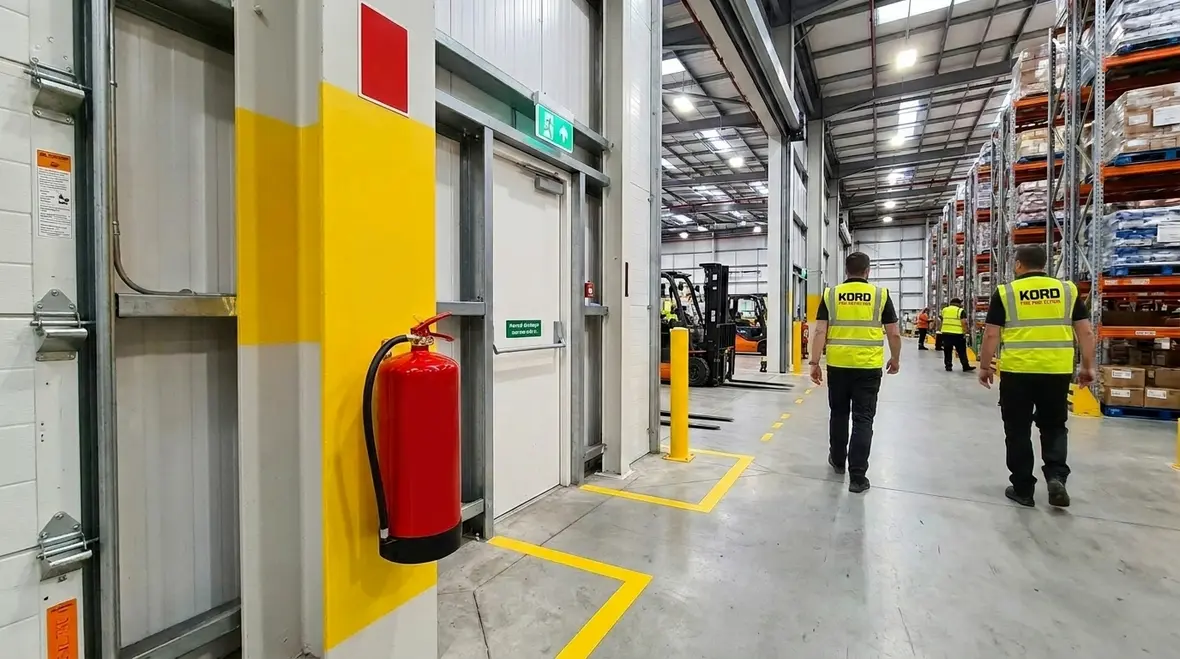
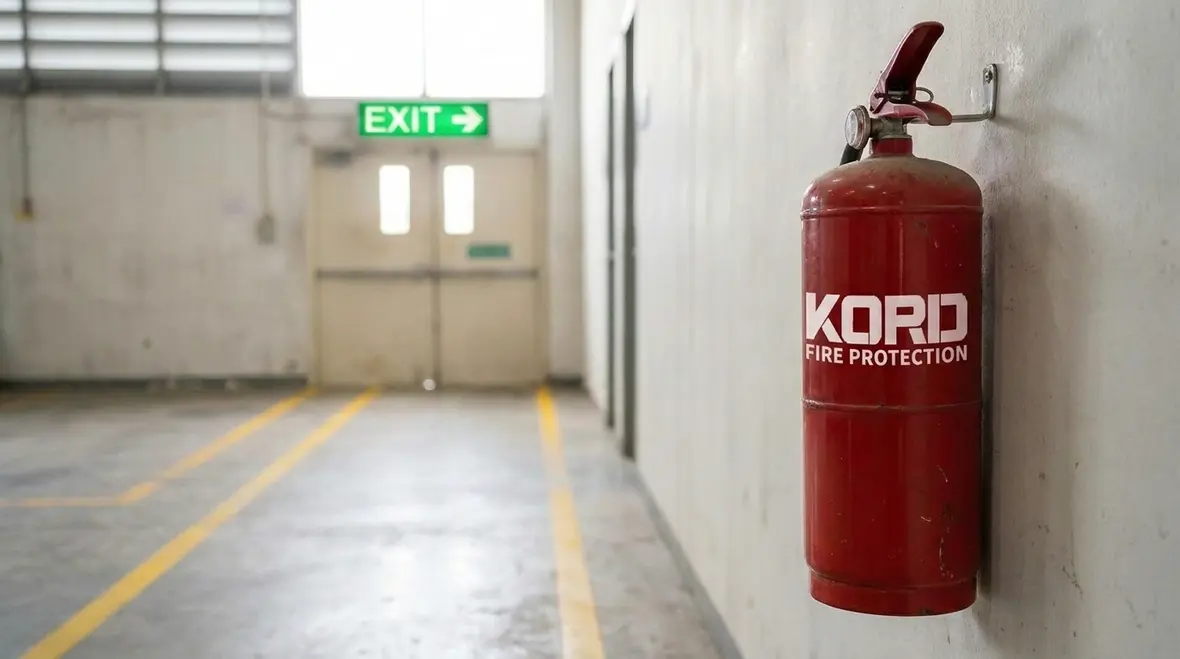
They also advise teams to think about sight lines. For example, placing units near obvious route signs works better than hiding them beside a door that blends into the wall. Also, staff respond faster when the location feels predictable, like a well marked first aid station. When facilities treat extinguisher access like wayfinding, employees do not have to guess. They can act.
That mapping process should include the awkward realities of a working building. Shift start crowds, break room traffic, forklift routes, temporary workstations, and seasonal overflow storage all change the shape of access. A hallway that looks beautifully open at 9 a.m. can feel like an obstacle course by 3 p.m. If the extinguisher is meant to support a fast response, it has to stay reachable during the building’s messiest moments, not just its best behaved ones.
Practical movement questions worth asking
- Where do people naturally turn when heading for an exit?
- Which corridors regularly narrow because of carts, bins, or staging?
- Are there corners where a mounted unit disappears until someone is already too close?
- Do temporary barriers show up during maintenance, shipping, or construction work?
Which mounting height and spacing help during a real emergency
Mounting height and spacing control whether a person can grab and use an extinguisher without climbing, dragging chairs, or weaving through racks. Kord fire protection technicians stress that teams should follow local codes and the manufacturer’s guidance, then adjust for the specific workforce and site layout. For instance, if a facility includes staff who use wheelchairs, employees must reach the handle comfortably without stretching or stepping onto unstable surfaces.
Spacing also affects function. When extinguishers sit too close together, workers sometimes crowd the area, which blocks movement. When they sit too far, they end up acting like decorative furniture, the kind nobody touches until a problem forces it. Therefore, the team should place units so that a person can reach them from a likely fire location without crossing an immediate hazard. In other words, the extinguisher should support the action, not become another obstacle.
Consistency helps more than most people expect. If one wing mounts units in easy to spot positions and another tucks them behind equipment, staff lose the benefit of memory. Under stress, people rely on pattern recognition. That is why a consistent placement approach across floors, departments, and building zones often works better than a series of one off decisions that made sense in isolation but create confusion together.
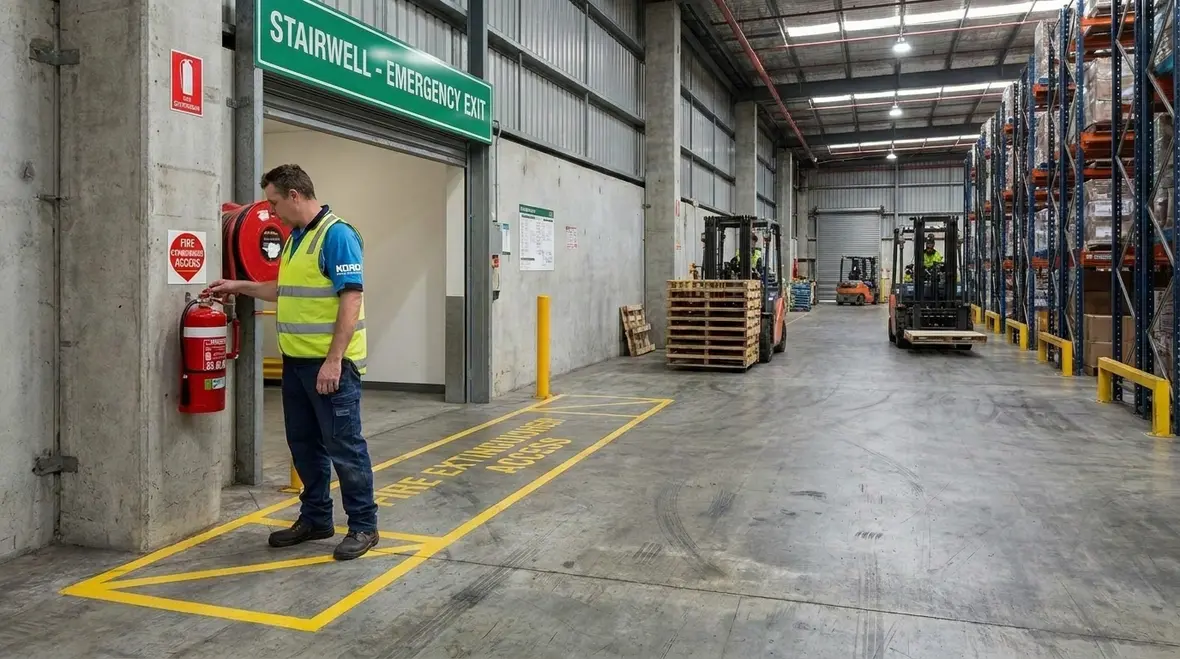
Use signage, lighting, and wayfinding that survive poor conditions
Even with correct mounting, poor visibility can turn good planning into wasted time. Large facilities often include areas with low lighting, high glare, or reflective surfaces. As a result, Kord Fire Protection technicians recommend strong, consistent signage near each unit, plus lighting checks in hallways and near stairwells. They also suggest using clear labels with simple instructions that match the extinguisher type.
Additionally, facilities should avoid placing extinguishers in spots where forklifts, carts, or seasonal displays block the view. A wall mounted unit behind a stack of pallets is like hiding a life jacket in the trunk and hoping nobody needs it. Transitioning from planning to reality means checking how the space changes through the week. What looks clear on Monday can be blocked by Friday, especially in busy production zones.
Wayfinding should remain useful when stress goes up and visibility goes down. That means signs should be easy to notice from common approach angles, labels should be readable without a scavenger hunt, and surrounding walls should not visually swallow the unit. If an extinguisher blends into the background until someone is practically hugging it, the signage has failed its one job.
What to check during visibility reviews
- Can the sign be seen from the main travel path?
- Does glare from lights or windows wash out labels?
- Would stacked materials hide the unit by the end of the week?
- Does the extinguisher type match the hazard in the area?
Keep access routes wide, clean, and monitored
Access optimization is not just about the extinguisher itself. It is also about the route to it. Kord Fire Protection technicians often recommend creating clear zones around each unit, then protecting those zones from storage and traffic flow. If pallets or equipment regularly migrate, the facility should implement housekeeping rules with real enforcement, because “we’ll move it during drills” rarely happens during real events.
They also advise using spot checks and simple tracking. For example, facility leads can assign a small routine inspection to verify that each unit remains reachable, its tag is readable, and nothing has been installed in the access path. Then, when something changes like a new rack line or a construction wall, the team can re evaluate placement rather than waiting for a compliance visit.
This is also where placement becomes an everyday management issue instead of a once a year project. A facility can spend money on good equipment and still lose the benefit through sloppy storage habits. Clear routes have to be defended the same way exits are defended. Otherwise, the building slowly trains people to accept blocked safety equipment as normal, and normal is dangerous when seconds matter.
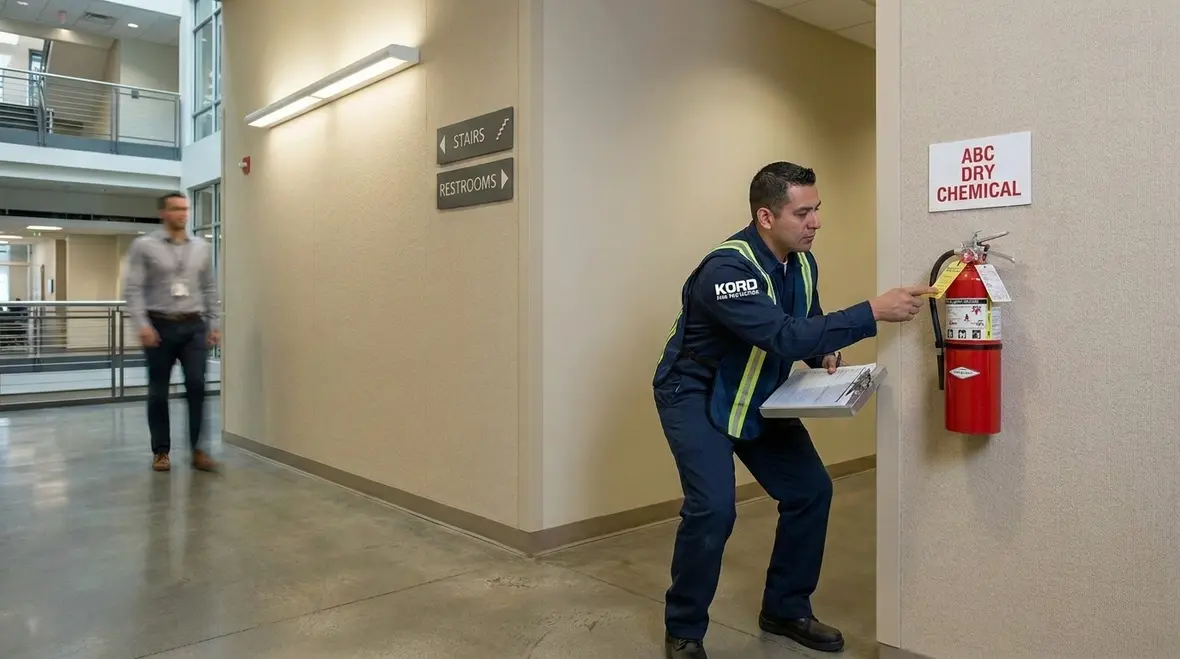
Dual columns for quick facility placement planning
When teams need a fast way to coordinate placement decisions, Kord fire protection technicians often use a simple planning checklist. Below is a dual column approach to keep the conversation clear between safety leads, operations, and maintenance.
Placement focus
- Route based locations near primary movement paths
- Unit reachability for staff in all roles
- Visibility support through signs and lighting
- Access zones kept clear from storage
Operational checks
- Weekly verification during shift peaks
- Review after layout changes
- Confirm extinguisher type labels stay readable
- Remove barriers created by daily work
Training staff so placement turns into action
It is one thing to place extinguishers well, and another to use them well. Therefore, facilities should train staff on how to respond based on location. Kord Fire Protection technicians often recommend short scenario drills that connect route memory to real behavior. Instead of just showing the extinguisher once, they help teams practice finding it from common work areas, then they review how to approach safely and how to evaluate the situation.
When staff understand where the nearest extinguisher sits, they stop wasting time. Also, they reduce panic because they can follow a simple plan. In many buildings, employees already know where stairwells and exits are. With smart planning and consistent Industrial fire extinguisher placement, they can learn the extinguisher locations just as naturally.
To keep it practical, the training should include how to recognize hazards around the extinguisher area. For example, an extinguisher might be mounted on a wall near an electrical panel or near a vehicle charging station. Staff must know the difference between responding and rushing into danger. That calm clarity is what turns a piece of equipment into a safety system.
Kord Fire Protection also offers fire extinguisher service and certification for businesses that want inspections, maintenance, testing, documentation, and support tied together in one practical plan. For teams reviewing reliability as well as placement, their guide on inspecting and replacing fire extinguisher parts is also a useful related resource.
FAQ about extinguisher access in large facilities
Final call for a placement review
Large facilities do not get safer by hoping. They get safer by testing access in the real world. Kord Fire Protection technicians can help your team review movement paths, visibility, and clear routes so your extinguishers stay reachable when seconds matter. If you want fewer guesswork moments and fewer “we moved the pallets later” surprises, schedule a placement and access assessment.
Then update signs, routes, and training while the building is still under control. For a stronger next step, explore Kord Fire Protection’s fire extinguisher service and certification options, or review their full fire protection services if your facility needs broader support. Act now and protect people the way your facility was built to do.

Join Our Newsletter!
Get the latest fire safety tips delivered straight to your inbox From our Newsletter.