Fire Extinguisher Service Records Retention Guide
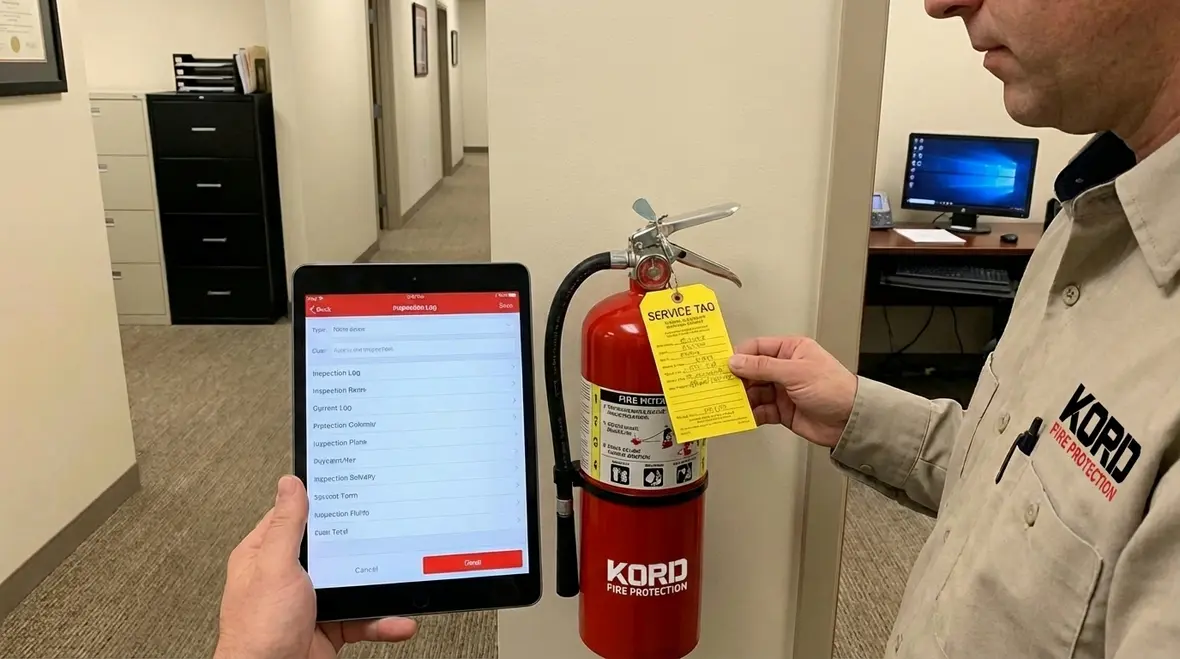
There is something oddly comforting about a small plastic tag hanging from a fire extinguisher. It whispers, “Someone checked me. Someone cared.” Yet behind that tag lies a bigger responsibility: fire extinguisher service records retention. How long should tags stay on file? What about invoices and inspection reports? Within the first few moments of any compliance audit, these documents step into the spotlight. They tell a story of diligence, safety, and preparation. Kord Fire Protection technicians often explain that keeping accurate records is not about paperwork. It is about proof. Proof that when sparks fly, someone planned ahead.
Now, let us walk through what to keep, how long to keep it, and why those humble records matter more than most people realize.

Why Fire Extinguisher Service Records Matter More Than People Think
At first glance, a fire extinguisher looks simple. Pull the pin. Aim. Squeeze. Sweep. Hollywood makes it seem easy. However, behind that red cylinder sits a web of safety codes, insurance requirements, and local regulations.
Because fire extinguishers are considered life safety devices, authorities require regular inspections, maintenance, and testing. Consequently, each visit generates documentation. These records serve several purposes:
They demonstrate compliance
Inspectors from local fire departments or OSHA do not accept good intentions. They expect proof. Service documentation shows that inspections occurred on schedule.
They protect against liability
If a fire occurs and an extinguisher fails, service documentation becomes critical evidence. Therefore, clear records can protect a business from legal exposure.
They support insurance claims
Insurance companies often request maintenance logs after a fire. Without proper documentation, coverage disputes can arise. And nobody wants to argue policy language while staring at smoke damage.
Kord Fire Protection technicians often explain that records are like a seatbelt. Most of the time, they sit quietly. When trouble hits, they suddenly become the most important thing in the room.
Related reading: how servicing supports those records
If you are still wrapping your head around how often extinguishers need attention in the first place, Kord Fire’s guide on how often a fire extinguisher needs to be serviced connects the dots between inspections, testing, and the records that prove it all happened.
How Long Should You Keep Fire Extinguisher Service Records?
This is the question business owners ask most often. The answer depends on the type of record and the governing code. However, there are general best practices that provide solid guidance.
According to common fire safety standards such as NFPA guidelines, businesses should retain inspection and maintenance documentation for a minimum of several years. In many jurisdictions, keeping records for at least three to seven years is considered prudent. Nevertheless, some companies choose to retain them for the life of the equipment.
Kord Fire Protection technicians frequently advise clients to exceed the minimum requirement. After all, digital storage is inexpensive. Peace of mind, on the other hand, is priceless.
Here is a practical breakdown.
Record Type
Monthly visual inspection logs
Annual maintenance reports
Hydrostatic test reports
Service tags attached to extinguishers
Invoices and work orders
Recommended Retention Period
At least 3 years
3 to 7 years minimum
Life of the extinguisher
Keep current tag on unit, archive past data
7 years or longer for audit support
Although requirements may vary by state or municipality, this structure offers a strong baseline. Furthermore, organizations operating in regulated industries such as healthcare or manufacturing may face stricter standards.
Understanding Service Tags, Reports, and Invoices
Each piece of documentation plays a distinct role. Therefore, understanding the difference helps determine how long to keep each item.
Service Tags
Service tags remain attached to the extinguisher. They show the date of inspection and the technician who performed it. While only the current tag stays physically on the unit, previous inspection data should be logged and stored separately.
Inspection and Maintenance Reports
These reports detail findings, repairs, replacements, and pressure checks. Because they provide technical data, they are vital during audits. In addition, they demonstrate compliance with national fire codes.
Hydrostatic Test Documentation
Hydrostatic testing typically occurs every five or twelve years, depending on extinguisher type. Since this testing verifies cylinder integrity, documentation should remain on file for the life of the unit.
Invoices and Work Orders
Invoices confirm services performed and payments made. While they support accounting processes, they also verify maintenance history. Therefore, many businesses retain them for at least seven years.
Kord Fire Protection technicians often remind clients that tags show what happened recently. Reports show what happened thoroughly. Invoices show what happened officially. Together, they tell the full story.

Digital vs Paper: The Smarter Way to Store Fire Extinguisher Service Records Retention
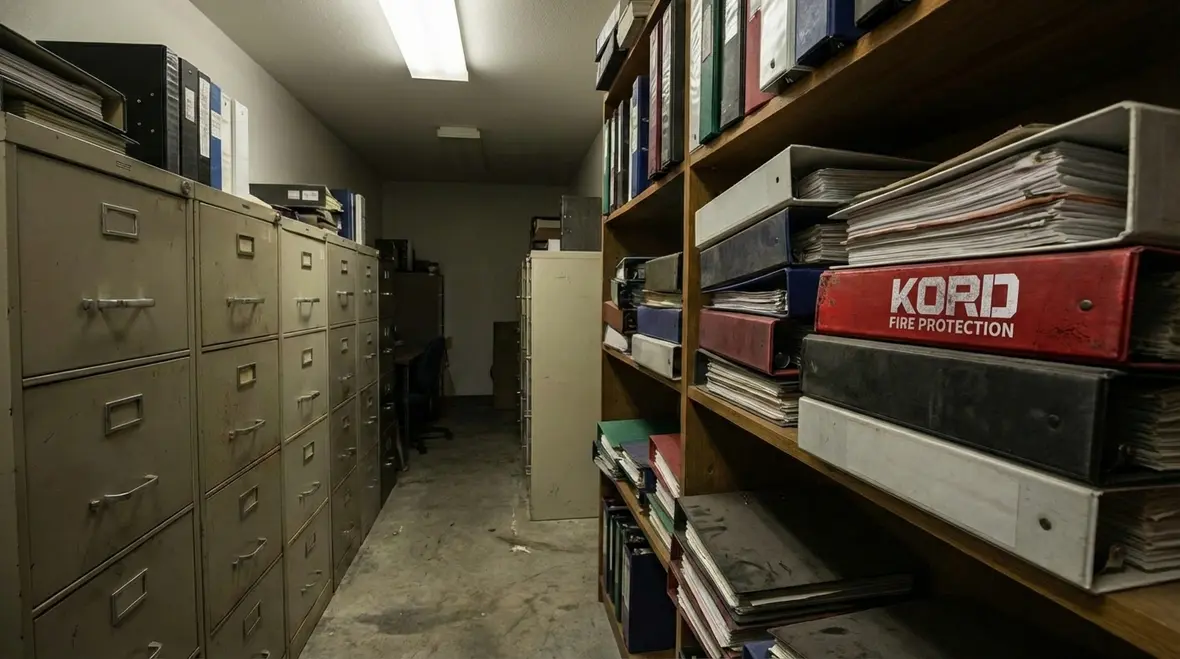
Once upon a time, maintenance binders ruled the office shelf. They sat proudly next to the coffee machine, gathering dust and the occasional sticky note. Today, however, digital recordkeeping has become the gold standard.
Digital Storage Benefits
First, digital files reduce physical clutter. Second, they simplify retrieval during inspections. Moreover, cloud backups protect against loss from fire or water damage. Ironically, paper fire safety records often fall victim to the very hazards they document.
Paper Records Still Have Value
Some jurisdictions still prefer on site documentation. Therefore, maintaining a physical compliance binder remains wise. Nevertheless, that binder should mirror digital files, not replace them.
Kord Fire Protection technicians frequently guide businesses toward hybrid systems. They explain procedures in clear, simple language. As they often say, “If you can find your streaming password faster than your inspection log, it is time to reorganize.”
Consistency matters more than format. Whether digital or paper, records must remain organized, legible, and accessible.
What Happens During an Inspection or Audit?
Imagine an inspector walking through the door. There is no dramatic music. No slow motion camera pan. Just a clipboard and a calm expression. Still, that quiet presence carries weight.
During inspections, officials typically request:
- Proof of monthly inspections
- Annual maintenance documentation
- Hydrostatic testing reports where applicable
- Evidence of corrective actions
If documentation appears incomplete, businesses may receive citations or corrective orders. Consequently, maintaining organized fire extinguisher service records retention reduces stress and prevents costly fines.
Kord Fire Protection technicians often prepare clients ahead of scheduled inspections. They review logs, confirm dates, and ensure no detail slips through the cracks. That proactive approach transforms inspections from nerve wracking events into routine checkups.
Industry Specific Considerations and Local Codes
Although national standards provide guidance, local fire codes ultimately govern compliance. Therefore, retention timelines may differ across regions.
Healthcare facilities, for example, often face stricter documentation rules due to patient safety concerns. Similarly, industrial sites handling hazardous materials may require extended record retention.
Because of these nuances, businesses benefit from consulting professionals familiar with local regulations. Kord Fire Protection technicians regularly interpret municipal code requirements for clients. They explain what applies, what does not, and what deserves extra attention.
In addition, companies operating across multiple states should standardize retention policies based on the strictest applicable requirement. While that approach may seem cautious, it simplifies compliance across locations.
Common Mistakes in Fire Extinguisher Service Records Retention
Even responsible businesses make simple errors. Fortunately, most mistakes are preventable.
Relying only on service tags
Tags alone do not provide detailed documentation. Therefore, always maintain separate logs and reports.
Failing to document corrective actions
If a technician replaces a unit or performs repairs, record the action clearly. Otherwise, gaps may raise questions during audits.
Inconsistent monthly inspections
Skipping months or backdating logs creates compliance risks. Instead, assign responsibility to a trained staff member.
Poor organization
Scattered emails and random folders slow down audits. A structured system prevents confusion.
Kord Fire Protection technicians often compare poor documentation to assembling furniture without instructions. It might stand upright. However, nobody feels fully confident sitting on it.
How Businesses Can Build a Simple Retention Policy
Creating a clear internal policy strengthens compliance. Moreover, it ensures continuity when staff changes occur.
A practical policy should include:
- Defined retention periods for each document type
- Assigned responsibility for monthly inspections
- Digital backup procedures
- Annual internal reviews of records
First, identify all extinguisher locations. Next, create a centralized tracking system. Then, schedule calendar reminders for inspections and maintenance. Finally, audit records internally once per year.
Because turnover happens, documentation procedures should live in writing rather than in someone’s memory. As Kord Fire Protection technicians often explain, “The best safety system works even when your most experienced employee takes vacation.”
Connect your policy to real-world service
Once you document your retention policy, pair it with consistent field work. Kord Fire’s monthly inspection and annual service offerings make it easier to keep those logs and tags perfectly in sync with what is happening on site.
Frequently Asked Questions
Final Thoughts and Next Steps
Fire extinguisher documentation may not inspire movie plots or dramatic theme music. Yet it stands quietly between compliance and chaos. Proper record retention protects businesses, employees, and property. It transforms routine inspections into confident conversations. Kord Fire Protection technicians guide organizations through every step, explaining requirements with clarity and calm assurance. When safety matters, documentation matters.
If you are ready to tighten up your records and your equipment at the same time, partner with a team that lives and breathes this work. From monthly checks to six year teardowns and hydrostatic testing, Kord offers full fire extinguisher service support across California. Contact Kord Fire Protection today and ensure your records stand ready long before smoke ever appears.
Know Your Weapon Before You Fight the Flame
Kord Fire Protection is your go-to when it comes to all things fire protection. For over 20 years, we’ve been serving Southern California with the quality service and equipment to keep your home or business safe at all times. Our competitive prices reflect our unwavering commitment to protecting what matters most in the event of a fire emergency. Give us a call, send an email, or use that form!

Join Our Newsletter!
Get the latest fire safety tips delivered straight to your inbox From our Newsletter.