Warehouse Sprinkler System Design for High Piled Storage
In high-piled storage warehouses, Warehouse sprinkler system design cannot be a copy paste job. Kord Fire Protection technicians typically start by looking at the real stacking plan, the actual ceiling height, and the airflow that moves through the racking like a slow movie montage. Then they map the fire threat to the right sprinkler type, spacing, and water supply so protection stays reliable when storage geometry gets tricky. And yes, the plan has to work even when forklifts behave like they have a personal feud with physics. In this article, third person guidance explains how advanced design supports safe, code ready systems for tall racks, deep commodity loads, and complex warehouse layouts.
Why high piles change sprinkler performance
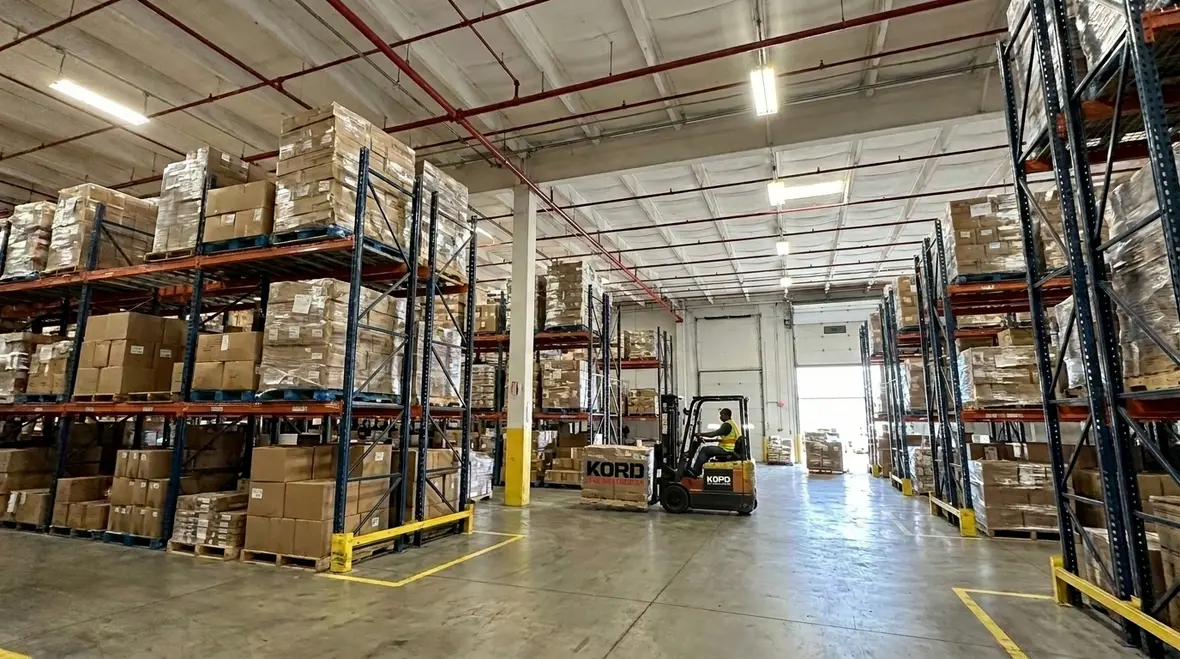
When storage rises, a warehouse fire often develops heat and smoke layers near the ceiling. As a result, the sprinkler system must respond fast enough to control flames before they race along the roof and racking bays. Unlike low bay spaces, tall storage can create a “shadow” effect where heat does not reach sprinklers evenly. Therefore, designers treat the warehouse as a flow system, not just a box with pipes.
Kord Fire Protection technicians explain it this way: the higher the pile, the more critical it becomes to predict how heat travels. They evaluate rack depth, aisle widths, and the way warm gases move upward. Then they select a layout that avoids dry zones and reduces the chance of underdosed areas. In short, the design must manage both water delivery and fire growth.
Designing for heat movement, not wishful thinking
That difference matters because high piled storage is rarely uniform for long. A warehouse can look neat on drawing day and turn into a complicated maze by the time operations settle in. Stacks shift, aisles narrow, inventory changes, and airflow starts doing its own thing around the racks. Good design accounts for that reality instead of assuming every pallet will politely remain where the plan says it should.
Target hazard classification and storage details
Advanced work begins with accurate hazard classification and a clear storage description. Many projects stall because teams assume “general warehouse” equals “one sprinkler answer.” However, actual commodity behavior matters. A cardboard dense case pack can burn differently than plastic totes, and that changes how quickly sprinklers need to activate.
To get it right, design teams collect data such as rack type, storage height, commodity group where needed, and any special conditions like sprinklers obstructed by lights, signage, or structural beams. Kord Fire Protection technicians also ask how goods are stored during operations, because a system designed for tidy pallets can fail in the messy world of real receiving. Then they align the Warehouse sprinkler system design with the expected loading and the protection goals.
This is also where practical field experience earns its keep. It is one thing to label a commodity on paper. It is another to understand how packaging, wrapping, pallet condition, and real day to day stacking habits change the hazard. A warehouse with mixed goods is not just a bigger room. It is a moving target, and the sprinkler approach has to keep up.
Protecting aisles, rack bays, and obstructed spaces
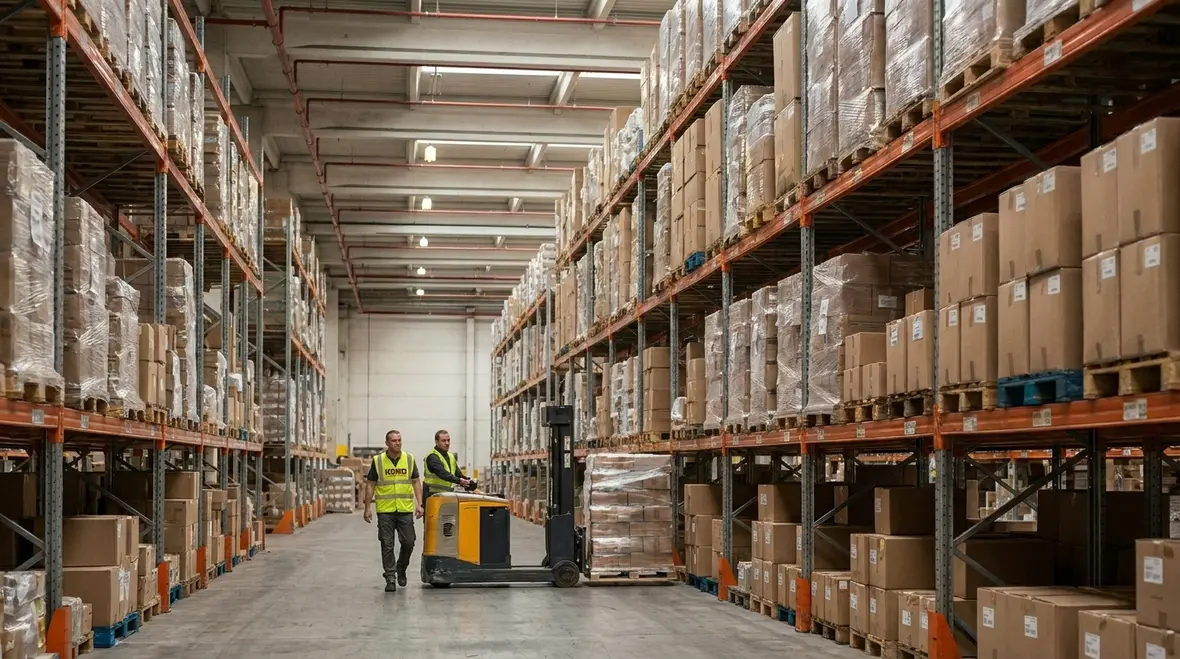
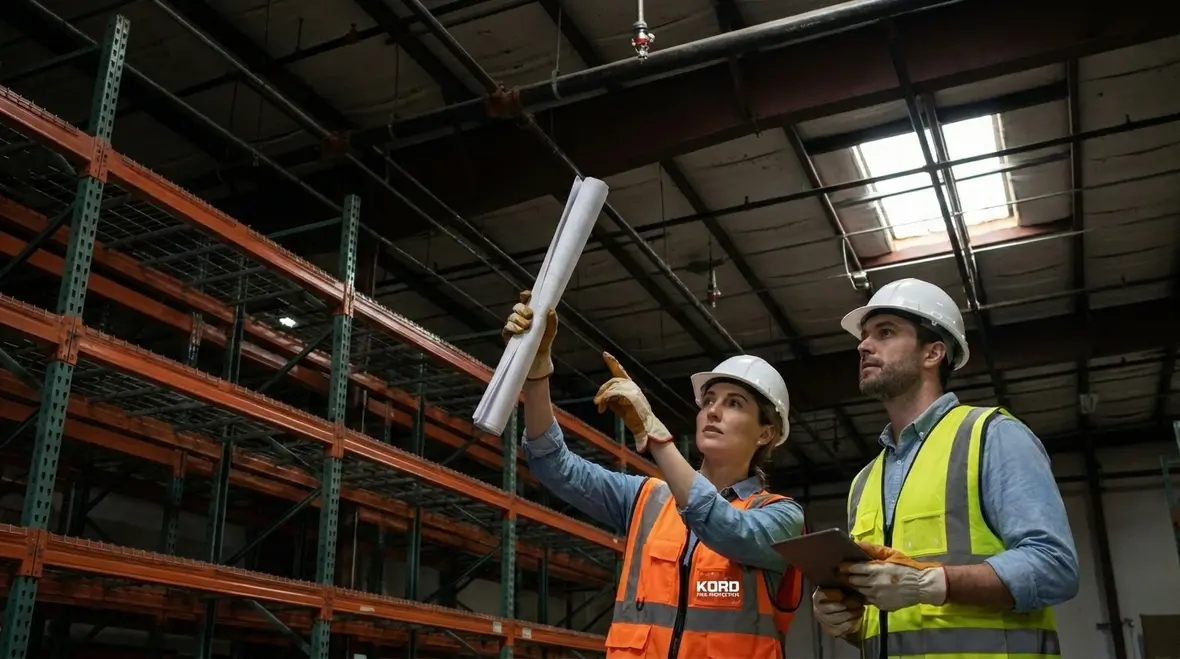
Warehouses often look simple from the floor, but racking turns every bay into its own mini theater. Sprinklers near beams, columns, and trusses face water distribution challenges. Meanwhile, obstructions can delay heat transfer and prevent sprinklers from operating when and where needed.
Kord Fire Protection technicians commonly use layout strategies that address these realities. They review the ceiling construction, verify how far sprinklers can be from beams, and confirm the location relative to obstructions. They also coordinate pipe routes with structural members so the system stays consistent during construction changes.
Next, they confirm how water reaches the storage face. For deep racks, they evaluate whether additional sprinklers or modified spacing reduces shielded areas. They also consider whether in-rack options are needed when cartoned materials block spray patterns. In the end, the goal stays clear: protect the first moments of fire so the building crew can do their job.
Why rack geometry deserves its own respect
Aisles and bays do not just organize inventory. They shape the path of heat, smoke, and water. Deep storage, tight aisle spacing, and awkward structural conditions can all change how effectively sprinklers perform. That is why experienced technicians do not treat obstructions like a minor footnote. In a high pile warehouse, one badly placed element can quietly sabotage an otherwise solid plan.
Choosing sprinkler types, spacing, and activation strategy
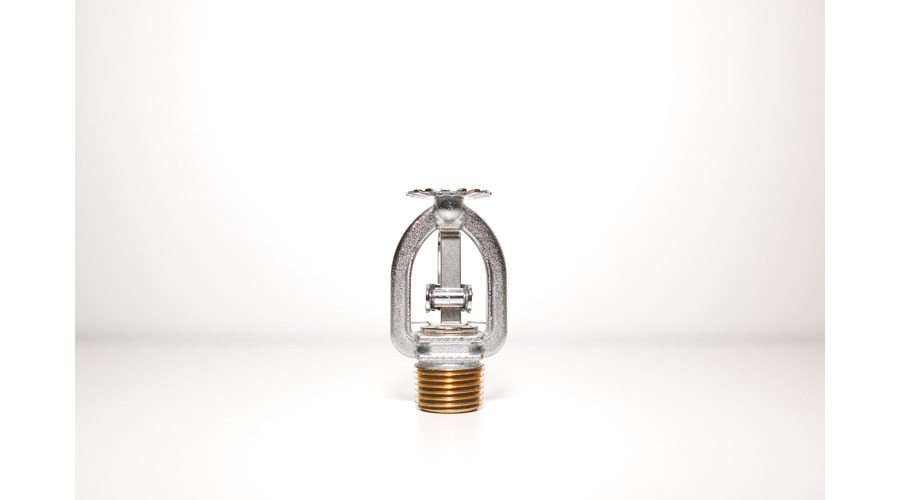
Advanced systems rely on more than a single sprinkler model. Designers select heads based on spray pattern, temperature rating, corrosion needs, and the way sprinklers interact with the ceiling environment. Since the warehouse ceiling can vary across zones, a one type system may not cover every condition.
For high-piled storage, distribution becomes the star of the show. Therefore, Kord Fire Protection technicians often compare coverage needs across different rack heights and bay widths. Then they adjust spacing and sprinkler locations to meet the water demand. They also ensure the activation strategy matches the hazard so sprinklers open early enough to limit flame spread.
And because someone always asks, yes, aesthetics matter too. A well designed system can look clean while still performing under stress. Think of it as the difference between a movie prop and the real thing. One looks nice; the other stops the fire.
Kord Fire Protection also provides broader fire sprinkler system service support that helps facilities connect design decisions with long term inspection, repair, and performance planning. That matters because the best design on paper still needs real world support after the warehouse starts operating at full speed.
Water supply, pumps, and system reliability at scale
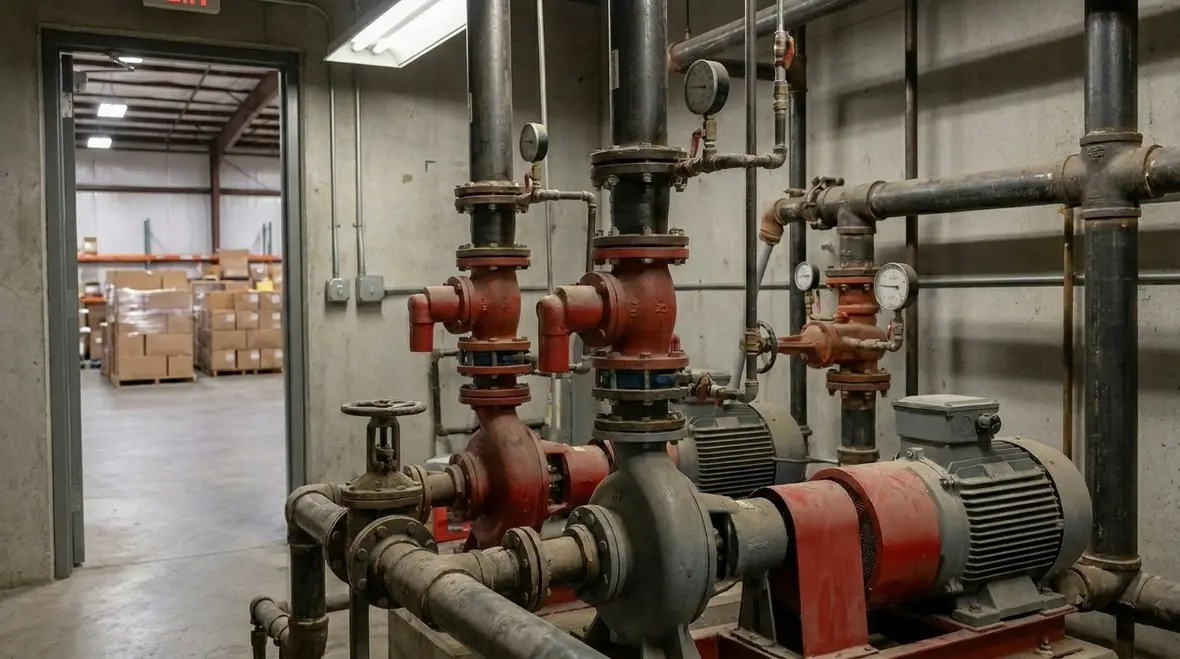
Even the best layout can fail with weak water supply. High racks increase the required discharge duration and can raise total system demand. So designers focus on pump selection, reservoir sizing, and the ability to maintain pressure under peak flow.
Kord Fire Protection technicians review available water sources and pressure curves, then model the hydraulic performance. They also look at end conditions like hose valve locations, standpipe interfaces, and any tie ins that could reduce reliability. Next, they evaluate redundancy where needed so a single failure does not turn into a full incident.
In practice, reliability means clear maintenance access, proper supervision, and alarms that alert the right people fast. Therefore, the design includes monitoring features, controller settings, and testing access points. It is not just math. It is a plan that still works when the lights flicker and the alarms start doing their best impression of a car chase.
Facilities that need integrated system support may also benefit from coordinated fire alarm service systems, especially when supervision, notification, and ongoing monitoring all have to work cleanly with the sprinkler infrastructure. A warehouse fire event does not care which system was supposed to talk to which one later. The response has to happen now.
Hydraulic calculations and coordination with layout teams
Advanced Warehouse sprinkler system design depends on solid hydraulic calculations, but those calculations also depend on coordination. Designers must align pipe sizes, elevations, and sprinkler schedules with the mechanical, electrical, and structural drawings. Otherwise, the final system can drift during construction, which changes coverage and can increase friction losses.
Kord Fire Protection technicians commonly run detailed hydraulic analysis across the zones that matter most. They validate how pipe routing affects pressure, and they confirm that changes in ceiling height or beam dimensions remain within allowable limits. Then they coordinate with other trades to prevent “surprise” conflicts that lead to field changes.
To keep the process smooth, they also document assumptions and update the model when the design team revises the racking plan. That way, the sprinkler system does not become a guessing game. In a well managed project, calculations and drawings march together like a disciplined marching band, not like a group chat with missing context.
Coordination is what keeps a good design from unraveling in the field
This part is easy to underestimate until the field conditions start shifting. A beam moves, a light fixture lands where no one expected, a duct crosses the route, or the rack layout changes after procurement. If the sprinkler design is not actively coordinated, those little changes snowball fast. Good teams update early, document clearly, and keep the protection strategy intact from submittal through installation.
Testing, inspections, and commissioning for ongoing performance
Once construction completes, advanced design still needs proof. Testing and commissioning confirm that water moves as intended and that devices activate correctly. Kord Fire Protection technicians emphasize the basics done thoroughly: flow tests, alarm system checks, valve inspections, and verification of sprinkler spacing and placement.
They also check that sprinklers used in the field match the listed conditions, including temperature rating and deflector orientation. In tall warehouses, even small mismatches can matter. Therefore, they support acceptance testing so the system performs under realistic conditions.
Then they close the loop with maintenance guidance. A sprinkler system works best when teams plan inspections and keep records. It is like servicing a forklift. You do not wait until it breaks and then hope it magically gets better.
For more warehouse specific planning insight, Kord Fire Protection has also published a related guide on highbay warehouse sprinkler layout that complements this topic with additional perspective on tall storage environments and the performance challenges they create.
FAQ
Request a safer, more reliable sprinkler plan
Advanced storage protection requires real engineering, careful coordination, and commissioning that does not skip steps. Kord Fire Protection technicians help teams build a practical Warehouse sprinkler system design that matches the racking plan, the commodities, and the water supply. If this warehouse is tall, busy, and always changing, now is the time to tighten the protection plan before a small problem becomes a big incident.
Reach out for a design review and next step recommendations tailored to the facility. Teams looking for broader support can also explore Kord Fire Protection’s full fire protection services to connect warehouse sprinkler planning with inspection, alarm, extinguisher, and system readiness support across the property.

Join Our Newsletter!
Get the latest fire safety tips delivered straight to your inbox From our Newsletter.