Multi-story Building Alarm Zones for Clear Fire Alerts
Complex properties rarely behave like simple floor plans. In real life, buildings twist, tenant layouts change, and fire risk does not respect the neat little boxes people draw on paper. That is exactly why Multi-story building alarm zones matter. When Kord Fire Protection technicians design a zoned fire alarm system, they build it so crews can locate the problem fast, occupants receive clear alerts, and maintenance teams can test the system without guessing like it is a mystery novel. And yes, nobody wants to “solve the case” by repeatedly resetting a panel while the smoke heads toward the next floor like an uninvited party guest.
Why zoning matters in complex, occupied buildings
Zoning is not just a design preference. It improves response speed, reduces false panic, and supports smarter troubleshooting. When a fire starts, the first minutes decide how much damage occurs. Meanwhile, the building may include multiple wings, stacked mechanical spaces, stair cores, loading docks, and tenant improvements that evolve over time. Therefore, a well planned alarm layout divides the property into logical zones tied to real locations.
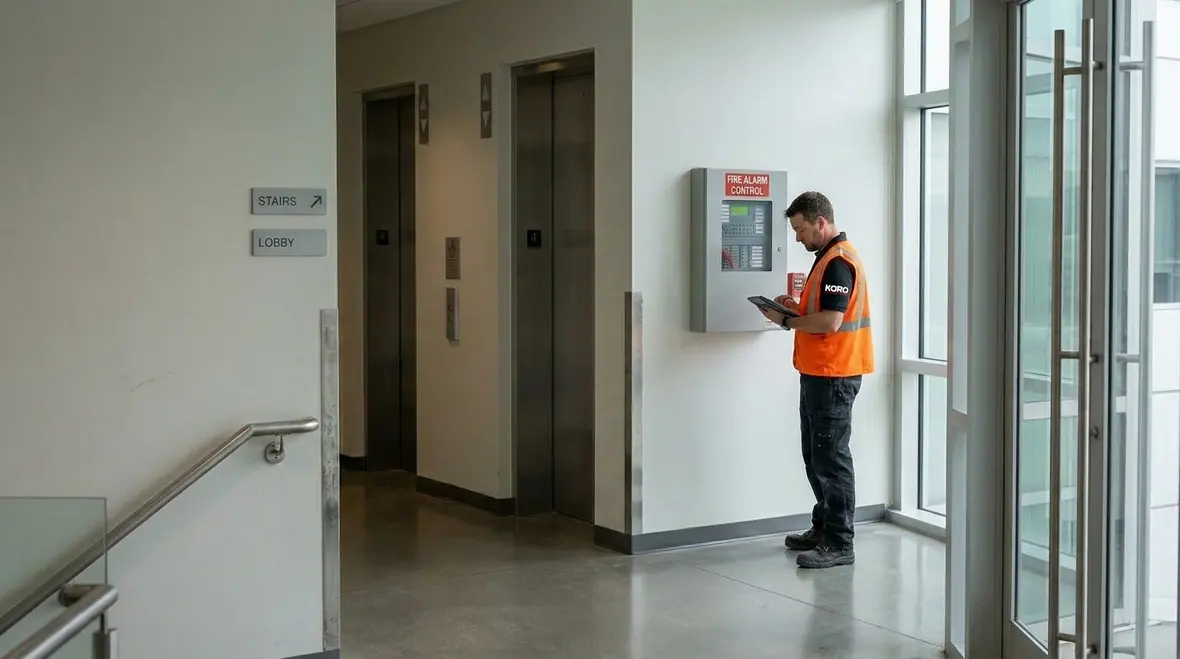
Kord Fire Protection technicians explain it plainly: zones should help the fire service understand where to go, not just what the panel reports. So instead of a vague “alarm in building,” the system points to a specific area such as “floor 4 west corridor near elevator lobby” or “unit mix corridor behind tenant demising wall.”
Further, zoning supports better testing. Technicians can isolate sections for inspection without shutting down the entire building. As a result, the owner stays compliant and operations continue with less disruption. That same approach also pairs well with fire alarm inspection and testing for commercial buildings, where clear labeling and organized reporting make every inspection less chaotic and far more useful.
How Kord Fire Protection technicians plan zones that make sense
Start with the building as it really works
The best zoned fire alarm design starts with layout reality, not assumptions. First, Kord Fire Protection technicians review architectural drawings, life safety plans, and any hazard notes tied to the property. Then they walk through spaces to confirm how rooms are used. For example, an office might later become a storage area, and that changes the best smoke detector location.
Next, they map each detector and initiating device to a zone in a way that matches occupant movement. Because people do not walk in straight lines like game characters, the zone boundaries should align with how occupants actually evacuate.
Finally, they coordinate with other systems and trades. That includes door holding devices, duct smoke detectors, sprinkler impairment procedures, and fire alarm power supplies. In other words, zoning becomes a bridge between code intent and what the site truly requires. For properties that also rely on central response coordination, Kord’s fire alarm monitoring systems service adds another layer of fast, organized communication when alarms occur.
Defining zoning boundaries across multiple floors
Use the building’s actual separations and circulation paths
Many buildings look orderly from the street, then become complicated once you step inside. In practice, Multi-story building alarm zones must account for floor to floor differences and shared spaces. Some examples include vertical shafts, shared corridors, interstitial spaces, and atriums. Therefore, the zoning plan needs clear rules for when signals stay on a floor and when they can spill into adjacent areas.
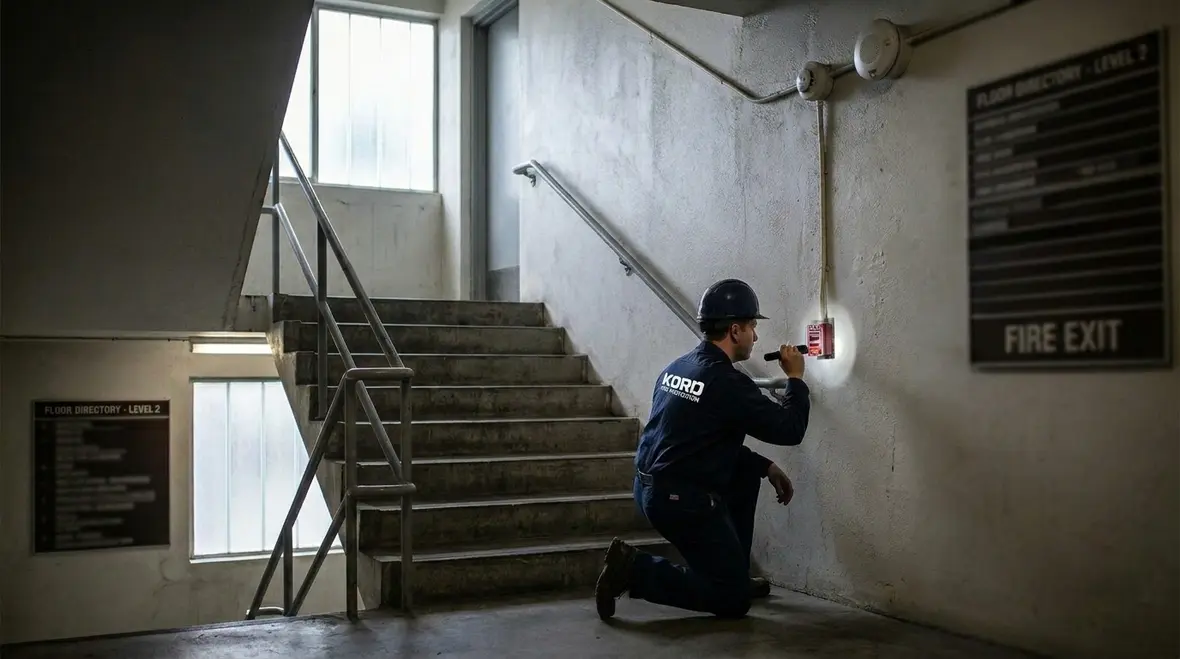
Kord Fire Protection technicians typically separate zones by functional areas such as corridors, stairwells, elevator lobbies, and designated assembly spaces. However, they do not treat every corridor the same. A corridor that contains electrical rooms, communications closets, or high risk storage deserves a different approach.
Additionally, zone boundaries often follow physical features like fire rated separations and doors. That helps keep the system’s message aligned with how fire spreads. When boundaries follow construction, the alarm system tells a more accurate story about the event location. This is also where strong records matter, and Kord’s article on fire safety system documentation for compliance is a useful companion read for owners who want plans, labels, and reports to stay in sync.
Initiating devices and notification appliances within each zone
Detection and alerts need to speak the same language
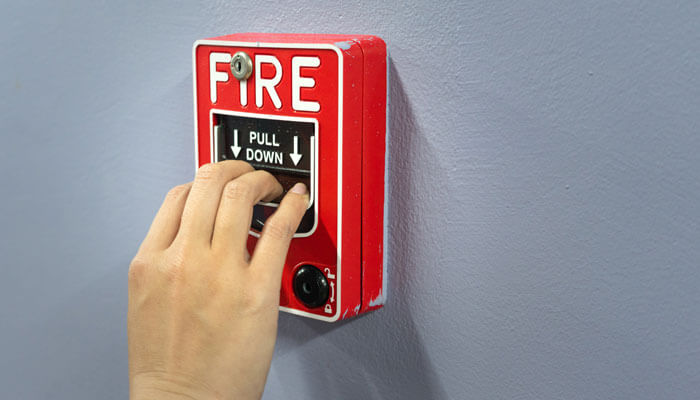
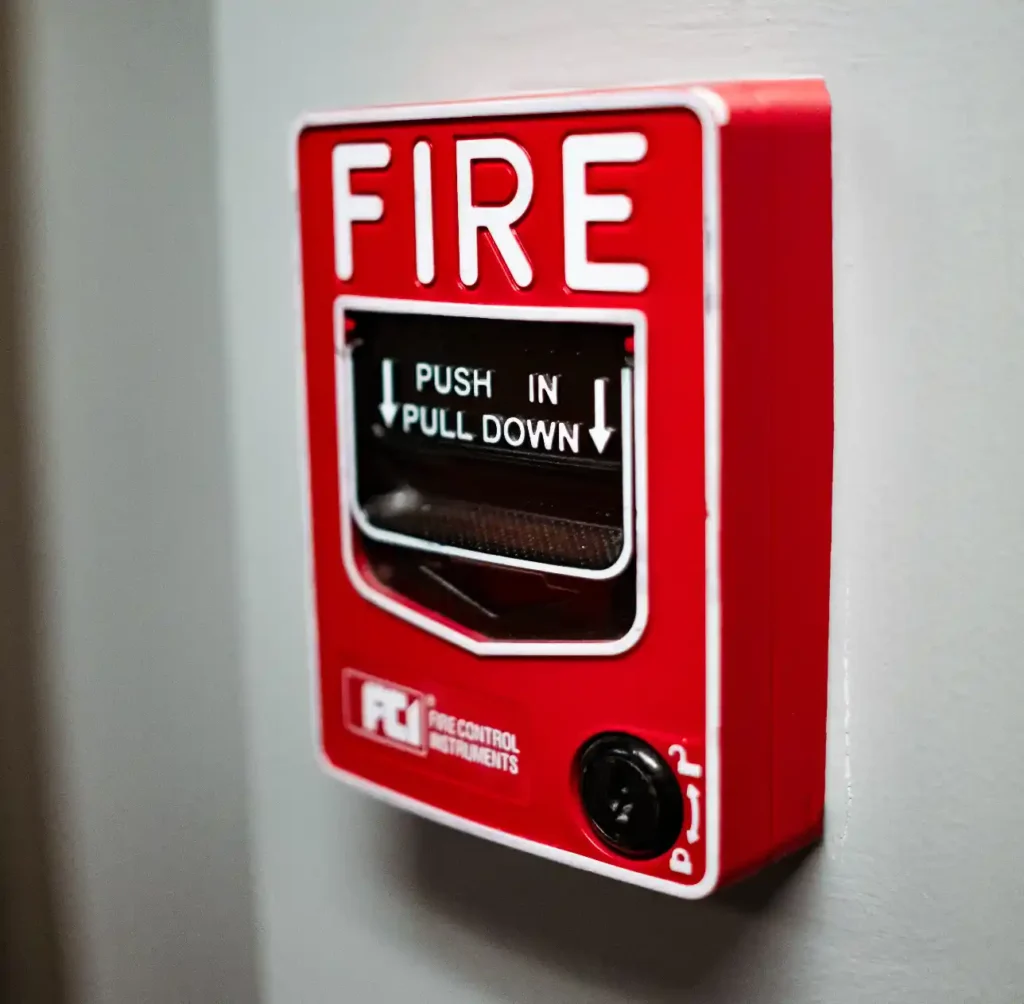
A zoned system works only when the initiating devices and notification appliances cooperate. Smoke detectors, heat detectors, manual pull stations, and other devices must feed the panel into zone specific information. Likewise, speakers, strobes, and alarm sounders must operate with that same logic.
Therefore, Kord Fire Protection technicians choose device spacing and placement based on airflow patterns, ceiling height, and room function. For instance, a high ceiling atrium may need specialized detection coverage, while a small office suite might need fewer points but tighter placement.
Then they assign notification patterns so occupants understand urgency and direction. When the system uses clear alerts by zone, occupants can react with less confusion. It is like having GPS during rush hour instead of “turn left at the big problem.”
Moreover, they consider audibility and visibility. Strobes must meet code requirements for placement and candela rating, and horn or speaker levels must work in noisy environments. A zone that signals correctly but cannot be heard or seen does not protect anyone.
Programming and control logic for zoned systems
Good hardware still needs smart behavior
Beyond hardware placement, the system’s programming decides how it behaves in the real world. Kord Fire Protection technicians configure panel behavior so the right events trigger the right actions. For example, trouble signals should not look the same as an alarm event. Supervisory signals must identify specific device conditions.
Then they refine alarm verification settings, evacuation delays where permitted, and how the system handles multiple alarms. In a complex property, two zones might activate close together due to nuisance events like cooking or dust disturbances. Therefore, the logic must support decision making without forcing constant manual resets.
They also address sequencing for building response. That can include door control, elevator recall behavior, smoke management coordination, and fan shutdown. Importantly, the programming should match the owner’s emergency plans, because a system that runs perfectly but fights the building’s procedures helps nobody.
And yes, it needs documentation. Technicians should leave clear zone labeling, circuit maps, and inspection records. Otherwise, future maintenance turns into guesswork, and guesswork is not a fire safety strategy. Owners looking to strengthen the response side of that equation can also explore how fire alarm monitoring improves response time for additional context on what happens after the signal leaves the panel.
Design checks, testing, and ongoing maintenance
A zone plan is only useful if it stays accurate
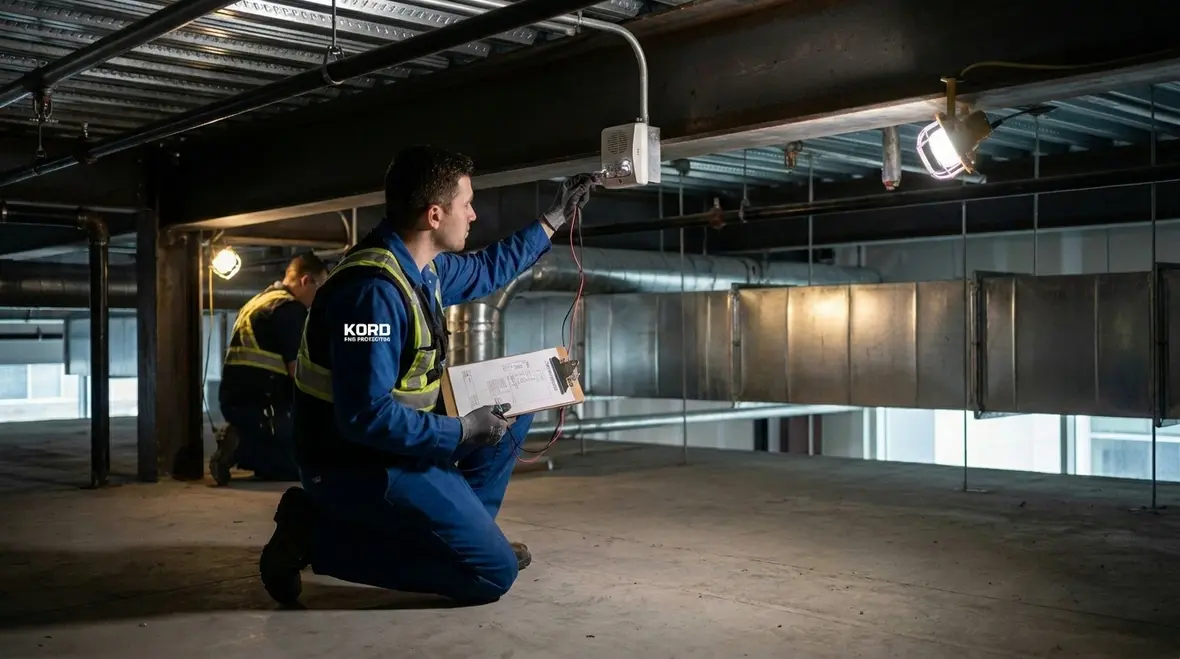
A zoned fire alarm system must prove itself after installation. First, Kord Fire Protection technicians verify each device address and circuit mapping. They confirm that the correct device reports to the correct zone and that the panel labels align with the building maps used during emergencies.
Next, they perform functional testing and full alarm drills when required. This includes checking notification coverage, verifying audibility in each corridor, and ensuring strobes remain visible from typical occupancy locations. They also test panel outputs that link to other safety systems.
After that, they review maintenance needs with the owner. Because dust, construction changes, and tenant renovations happen, the zoning plan should stay accurate over time. When a tenant reconfigures space, zones may need updates. Further, routine inspections help catch drift in detector sensitivity or wiring faults before they become problems.
In short, zoned systems succeed when the design, the labeling, and the maintenance plan all stay consistent. That is how a building keeps its calm when something goes wrong.
FAQ
Conclusion and call to action
Designing zoned fire alarm systems for complex properties works best when the plan matches how the building actually operates. Kord Fire Protection technicians build Multi-story building alarm zones with clear boundaries, accurate device mapping, and control logic that supports real emergency decisions. If a property has shifting tenants, layered floor plans, or shared vertical spaces, it deserves a careful zoning review before small changes turn into big risk.
Request a site evaluation today and get a zone plan that protects people and makes maintenance feel less like a guessing game. For a direct next step, explore Kord Fire Protection’s Fire Alarm Services page to schedule support for design, monitoring, inspection, maintenance, and repairs.

Join Our Newsletter!
Get the latest fire safety tips delivered straight to your inbox From our Newsletter.