System Demand Drives Commercial Fire Pump Sizing in Australia
Quick Answer: System demand drives the real work behind commercial fire pump sizing. When water supply, sprinkler counts, hose needs, and design pressure all change, the pump’s flow rate and horsepower must change too. Accurate demand modeling helps avoid underperformance, costly retrofits, and headaches during audits.
In Australia’s industrial and commercial sites, commercial fire pump sizing starts long before a pump model ever lands on a contractor’s desk. In fact, the sizing process begins with one thing that refuses to be ignored: system demand. Facilities may look similar from the street, but inside the pipes, demands can vary wildly based on building layout, hazard level, and the way sprinklers or hose lines operate under fire conditions.
Because system demand acts like the “truth serum” of fire protection design, the pump must match what the system will actually require. And if it does not, the consequences can be slow, expensive, and very inconvenient. Nobody wants to be the person explaining to a safety officer why water pressure went on a vacation.
That is also why teams reviewing pump performance should connect design assumptions with real service practices. Near the top of that list is commercial fire pump maintenance schedule optimization, because keeping a pump aligned with demand is easier when the maintenance rhythm already supports pressure checks, flow review, and early warning signs. The same principle sits behind Kord Fire Protection’s broader approach to fire pump maintenance services, which fits naturally into performance verification after the system is installed.
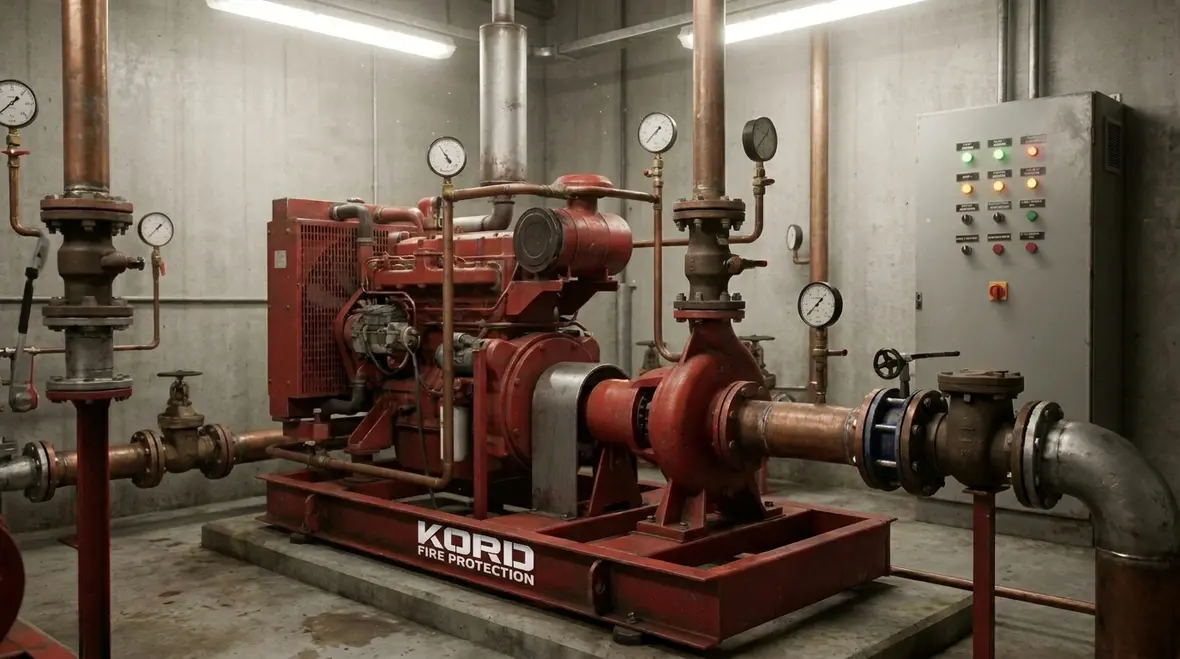
Why system demand governs fire pump performance
System demand is the combined water requirement of everything the fire system is expected to protect. This includes sprinklers, hose reels, hydrant connections, and sometimes additional design loads based on the local code basis and the site’s hazard classification. Therefore, the pump must deliver the correct flow while also maintaining the minimum required pressure at the most demanding point in the system.
When engineers calculate demand, they consider more than just “how many sprinklers.” They also account for elevation changes, friction losses through pipe fittings, valve positions, control devices, and the status of any networked zones. As a result, two buildings with the same footprint can require different pump performance if the piping runs longer, the hydraulics are harsher, or the design water density is higher.
Additionally, demand can shift over time. A retail tenancy fit out today might become a warehouse tomorrow. Equipment upgrades, new production lines, or changes to storage height can increase hazard. So, the pump that once looked right may become marginal without a disciplined review process. That is where related reading like water supply reliability analysis for fire suppression systems becomes useful, because supply conditions and demand assumptions tend to argue with each other the minute a site changes.
Pressure and flow have to agree at the same time
That is the part people sometimes underestimate. A pump that looks impressive on paper can still miss the mark if it reaches the target flow only by sacrificing pressure, or reaches the pressure target only at a flow the system does not actually need. Commercial fire pump sizing lives in that balancing act. The system does not care that the pump is technically running. It cares whether the remote sprinkler or hose point gets what it was promised.
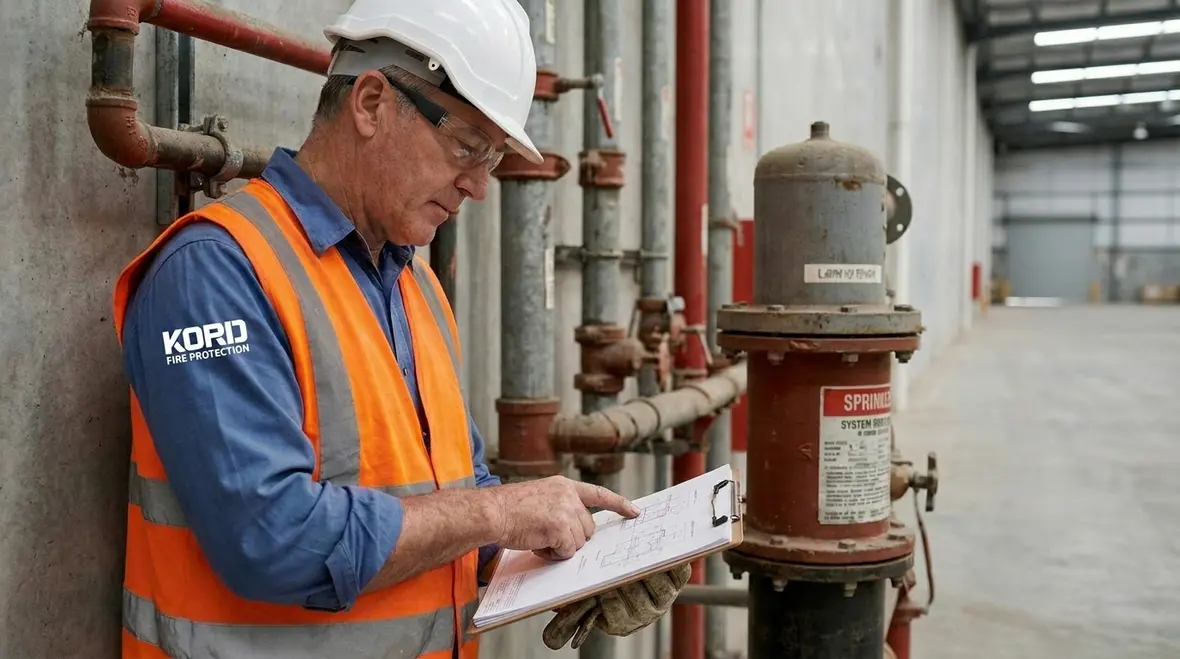
Key demand inputs that change the pump curve
To size a fire pump properly, the design team needs real inputs. These inputs shape the pump curve selection and influence how the system behaves at various flows. If the inputs are off, the pump may still spin, but it will not deliver what the system needs when it matters.
- Occupancy and hazard category that influences sprinkler design density and hose allowance requirements
- Sprinkler layout including spacing, density zones, and whether the system has multiple demand areas
- Hose and hydrant scenarios based on the site layout and approved hose stream design
- Pipe network friction from pipe diameter, length, fittings, and valves that affect head loss
- Elevation and discharge points that impact static head and discharge pressure at remote sprinklers
- Water supply conditions such as tank levels, available mains flow, and any pressure booster constraints
Then, the pump needs to land in the right zone of its performance curve. A commercial fire pump cannot simply be “big enough.” It must deliver the required flow at the required discharge pressure while staying within the expected efficiency and operating stability range. Otherwise, performance might be inconsistent, and that can trigger compliance issues during acceptance testing.
This is one reason Kord’s related article on fire pump power supply reliability fits nicely with sizing discussions. Even a correctly selected pump can disappoint if the electrical side behaves like it woke up in a bad mood. Flow, pressure, controls, and power all need to pull in the same direction.
Bad inputs create confident mistakes
That is what makes demand modeling so important. A design team can be extremely precise about the wrong assumptions and still end up with an expensive problem. If a future tenant changes storage height, if a valve arrangement adds more loss than expected, or if the water source underperforms in practice, the pump curve chosen during design may no longer be the calm, sensible answer it once appeared to be.
How different system designs alter demand outcomes
Not all systems generate demand in the same way. Therefore, the pump selection changes depending on the design approach and the system type used across Australian facilities.
In a typical arrangement, a sprinkler system and a hose line do not always demand water in equal proportions. Instead, the hydraulics determine the most demanding simultaneous scenario. Some buildings require higher flows due to design density, while others see pressure losses dominate due to longer pipe runs or restrictive piping layouts.
For example, a plant with multiple hazard zones may require a pump that can handle a higher peak demand even if only one zone is fully involved at a given time. In contrast, a retail facility may show lower design density, but the system can still demand strong performance if hose streams run to distant points with higher friction losses.
Moreover, systems with more complex control valves, check valves, or pressure sustaining features can shift the pressure requirements at the pump discharge. So, a design that looks straightforward on paper can still produce demanding hydraulic outcomes after installation details and real-world piping constraints are applied.
Teams that also manage sprinkler reliability often see this overlap in practice, which is why an article like automatic sprinkler system reliability maintenance best practices is a useful internal reference. Demand is not just a pump-room concept. It is a whole-system concept, and the hydraulics will happily expose every weak assumption in the chain.
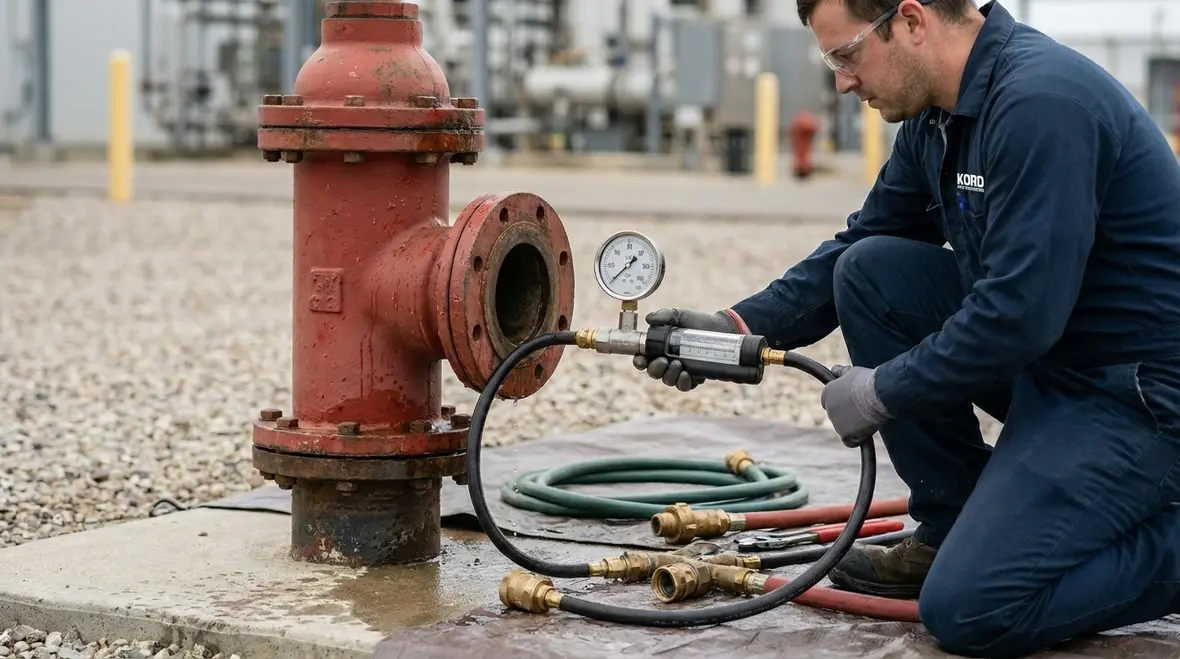
Failure modes when demand data is wrong
Misjudged system demand leads to predictable failure modes. And yes, the system usually does not fail gracefully, because fire protection equipment has one job and it intends to do it.
- Underperformance at peak demand where the pump cannot deliver required flow and pressure simultaneously
- Overcycling and unstable operation when the pump runs outside its intended control band
- Unexpected pressure drops at remote sprinklers or hose points due to inaccurate friction assumptions
- Reduced system margins that leave little tolerance for aging pipes, added fittings, or later modifications
- Compliance and test issues during commissioning, audits, or routine performance verification
Additionally, the site may experience operational friction even if the system “works.” If the pump runs hotter, cycles more often, or operates at less efficient points, lifecycle costs rise. Over time, components like mechanical seals, bearings, and controllers face higher stress. In short, incorrect demand data turns a safety investment into an expensive guessing game.
The expensive part usually arrives later
That is the sneaky part. Undersizing might not announce itself immediately with dramatic alarms and flashing lights. Sometimes it waits until acceptance testing, an audit, a tenant change, or a real system impairment review. By then, the “small” modeling miss has become a retrofit conversation, and retrofit conversations have a special talent for becoming budget conversations very quickly.
Why maintenance partnerships keep sizing relevant
Even a perfectly sized pump can drift out of spec. Pumps age, pipe networks change, and valves do not stay exactly as installed. Therefore, maintenance and verification matter after commissioning, not just before it.
This is where Kord Fire Protection becomes a vital partner for fire pump maintenance tied to ongoing system performance. They support facilities by keeping pump operation aligned with the original design intent and by watching the indicators that demand assumptions may no longer match reality.
For example, their team can help with performance-minded routines such as pressure verification, flow checks, and condition assessments that reveal early signs of wear. They can also coordinate updates after site changes, such as new tenants, modified piping layouts, or changes in hazard classification. In other words, they help keep the sizing story honest over the pump’s full life.
And because audits love evidence, a structured maintenance approach makes it easier for facilities across Australia to show that their systems remain reliable, not just “installed and forgotten.” Nobody wins awards for neglecting paperwork. For broader context, Kord’s post on the full lifecycle of fire protection servicing reinforces the same idea: performance is something you maintain, not something you assume forever.
How Australia’s facilities should plan for changing demand
Industrial, retail, and facilities teams often face the same reality: buildings change. A distribution center expands. A shopping precinct adds fit outs. A workshop converts to light assembly. When the building changes, the demand profile can change too.
To plan effectively, facilities should treat system demand as a living input rather than a one time project. Therefore, they can follow a practical approach:
- Document the hydraulic design basis and keep it accessible for future reviews
- Review fire system impacts during renovations before changes get installed and then locked in
- Verify performance during maintenance to detect drift caused by wear, valve changes, or sediment in water paths
- Coordinate with fire pump service schedules so verification happens when it still matters
- Plan for seasonal and operational factors that can affect supply conditions and system behaviour
When these steps are followed, commercial teams reduce the risk of discovering mismatched demand only after commissioning fails or an inspector asks uncomfortable questions.
FAQ
Final word from the field
System demand drives commercial fire pump sizing because it defines the required flow and pressure under real fire scenarios. Facilities in Australia should treat demand as something that can change, then maintain the pump so performance stays matched. That approach reduces ugly surprises, expensive retrofits, and those awkward moments when a system review suddenly turns into a detective story.
To keep your system reliable and your documentation tight, Kord Fire Protection can support your fire pump maintenance and performance verification. Book a review through https://kordfire.com/services/fire-pump-maintenance/. It is a lot easier to confirm demand now than to explain later why the pump and the system stopped agreeing with each other.

Join Our Newsletter!
Get the latest fire safety tips delivered straight to your inbox From our Newsletter.