NFPA 40 Section 8.1: Enclosure Requirements for Motion Picture Projectors
Quick Answer
NFPA 40 Section 8.1 sets enclosure expectations intended to limit the spread of fire from motion picture projector components and reduce the escape of burning material. Compliance centers on proper construction, correct ventilation where required, secure access openings, and disciplined maintenance practices.
Enclosures for motion picture projectors protect both occupants and property by managing ignition sources, hot surfaces, and potential fire initiation points. For facilities that operate projection equipment in theaters, educational spaces, live event venues, and some specialized retail or industrial environments, the NFPA 40 motion picture projector enclosure requirements in Section 8.1 guide how enclosure design, installation, and ongoing condition support fire-safe operation.
This article addresses practical compliance challenges, common failure modes, and the inspection and maintenance considerations that often determine whether an enclosure system remains compliant in real-world use.
For facilities tightening inspection discipline and documentation near the start of that process, Kord Fire Protection’s fire protection compliance auditing guide is a helpful related resource that fits naturally with enclosure verification and corrective action tracking.
What NFPA 40 Section 8.1 Requires for Projector Enclosures
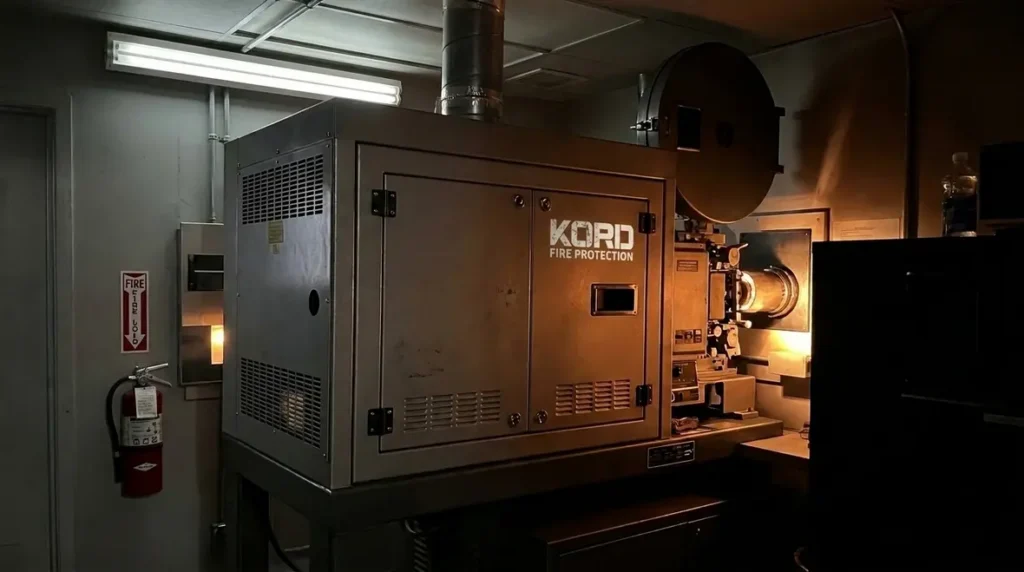
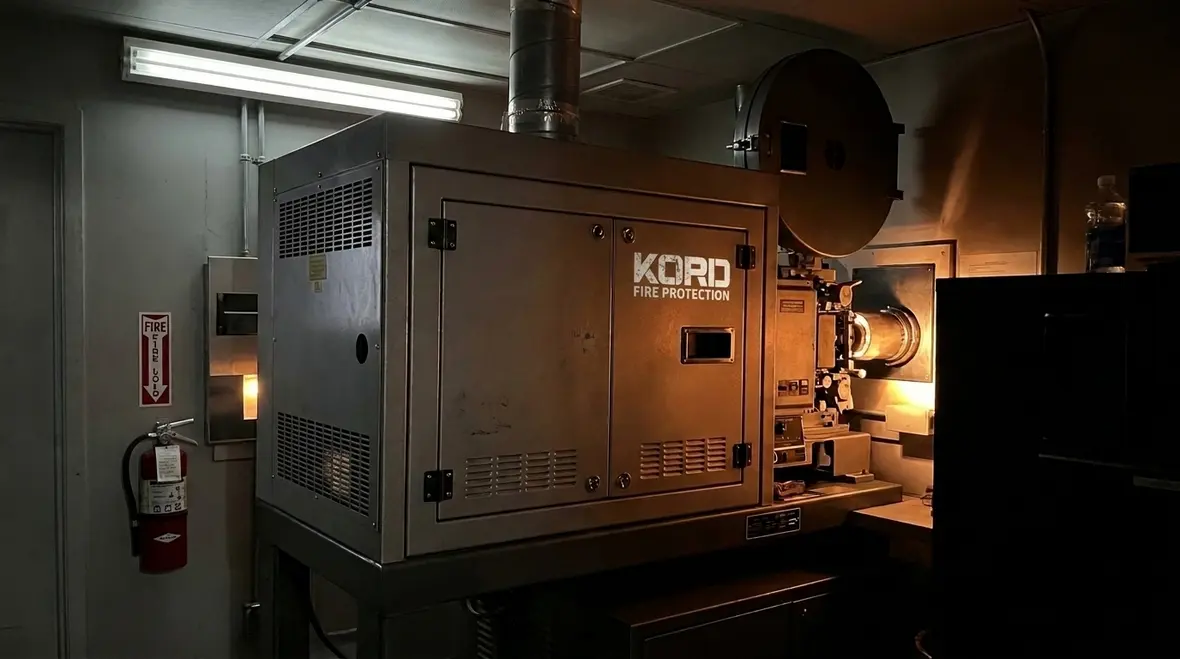
NFPA 40 Section 8.1 focuses on enclosing motion picture projectors in a manner that limits the release of heat and burning debris. While projector technology and installations vary, the intent remains consistent: the enclosure system functions as a barrier between potential fire conditions at the projector and the surrounding space.
From a compliance standpoint, the key expectations typically fall into these categories:
- Physical construction: Enclosure materials and assembly methods must withstand the conditions they are exposed to during normal operation and credible abnormal events.
- Access control: Doors, removable panels, or access openings must remain properly positioned, closed, and secured except when authorized service tasks occur.
- Ventilation and heat management: Enclosure systems must permit required heat dissipation without undermining the protective function.
- Protection of surrounding combustibles: The enclosure must prevent ignitable materials in adjacent areas from receiving direct exposure to flames or hot particles.
Facilities should treat enclosure compliance as an integrated system. Enclosure integrity depends on both hardware and operational discipline, including how staff open and reclose access points and how maintenance personnel manage parts replacement.
Where Enclosure Failures Actually Happen in Commercial Installations
Most enclosure noncompliance does not arise from deliberate removal of safety features. It typically results from routine service activities, aging, and operational shortcuts that gradually defeat the protective intent. Common failure points include:
- Door misalignment and incomplete latching: Even small gaps can allow hot air and burning debris to escape during abnormal events.
- Missing or damaged seals: Gasket deterioration, cracked fasteners, or warped covers create pathways for fire spread.
- Incorrect vent modifications: Facility teams sometimes adjust openings for airflow without ensuring the enclosure still meets protective intent.
- Improper reinstallation after maintenance: Panels may be replaced with hardware that does not match the original system, leaving looseness or uneven closure.
- Accumulated debris and dust buildup: Dust can increase ignition risk and can also interfere with heat dissipation and operating safety features.
For commercial and industrial environments, these issues become more likely when contractors rotate frequently, when multiple departments share responsibility for maintenance, or when projector usage changes over time. For example, a facility that increases runtime or changes projector models may inadvertently exceed the heat load conditions the enclosure was built to manage.
Installation and Maintenance Practices That Support Ongoing Compliance
Correct installation establishes baseline compliance, but ongoing maintenance sustains it. A practical compliance program treats projector enclosures as life safety equipment requiring verification, not as static cabinetry.
1) Verify enclosure closure and integrity
Maintenance teams should confirm that all access panels and doors fully close and latch as designed. Any clearance or misalignment should be documented and corrected. If the enclosure uses gaskets, damaged gaskets must be replaced with compatible components.
2) Maintain ventilation pathways without disabling protective function
Ventilation and heat dissipation systems must remain unobstructed. However, enclosures should not be “opened up” with ad hoc modifications that create larger openings or remove protective barriers. Any change should be reviewed against the enclosure design basis and the applicable provisions of NFPA 40 Section 8.1.
3) Control combustible loading around the projector
Even a well-built enclosure cannot offset poor housekeeping. Facilities should manage cable clutter, paper products, packaging, and dust accumulation near projector systems. A clean environment reduces both ignition potential and the risk that escaping hot particles encounter combustibles.
4) Use a documented inspection cadence
Inspections should include physical checks of enclosure components and verification that maintenance has been performed using correct parts and procedures. After any service event involving enclosure access, a closure verification step should be required before returning the projector to service.
Because these checks require consistent documentation and technical interpretation, commercial facilities often benefit from professional support. Kord Fire Protection helps organizations maintain compliance through inspection, testing support, and corrective action planning aligned with life safety expectations.
How Inspectors Evaluate Enclosure Condition During Compliance Visits
During inspections, authorities and safety professionals typically focus on whether the enclosure continues to perform its protective role. Inspectors commonly assess the following:
- Condition of enclosure surfaces and fasteners: Corrosion, loose mounting, and missing hardware can reduce barrier effectiveness.
- Integrity of doors and access panels: Closure mechanisms must function correctly.
- Openings and penetrations: Gaps around conduits, cabling pass-throughs, or service ports can undermine containment.
- Evidence of modifications: Unapproved changes to ventilation openings, covers, or internal shielding can trigger noncompliance.
- Maintenance-related defects: Poorly reinstalled panels or incorrect gasket placement is frequently observed.
Commercial facilities that document enclosure inspections and corrective actions typically reduce repeat findings. When issues occur, the corrective plan should address root cause, such as training gaps, missing parts, inadequate labeling, or unclear responsibility for service after-hours.
For related fire safety guidance and maintenance strategies across commercial assets, organizations can also reference Kord Fire Protection resources such as fire safety services and guidance on managing inspection readiness and corrective follow-through.
Common Compliance Scenarios and What to Do Next
Facilities often encounter enclosure requirements during specific operational events. The best approach depends on the scenario.
Scenario A: Projector model or heat output changes
Switching to a different projector model, lamp type, or operating mode can change heat loads and airflow expectations. Facilities should verify that the existing enclosure system still supports the protective intent of NFPA 40 Section 8.1 and that ventilation and clearance remain correct.
Scenario B: Service contractor opens enclosure and does not fully restore condition
After a service visit, management should require a closure and integrity check. If inspectors later find incomplete sealing, misaligned panels, or missing fasteners, the facility should implement a standardized post-service verification checklist.
Scenario C: Facilities add storage nearby for convenience
Even when the projector enclosure itself remains intact, newly stored combustibles can create additional risk pathways. Enclosure compliance must pair with site housekeeping standards and control of nearby materials.
For these scenarios, Kord Fire Protection can support facilities with a practical compliance plan that includes documentation, corrective actions, and verification steps that align with inspection expectations.
Frequently Asked Questions
Call to Action
Facilities that rely on motion picture projector systems should not treat enclosures as “install and forget” equipment. Conduct a documented review of enclosure construction, closure integrity, ventilation condition, and post-service restoration practices. If your facility needs ongoing support, contact Kord Fire Protection to plan inspections, corrective actions, and maintenance verification that help sustain compliance and reduce inspection risk.

Join Our Newsletter!
Get the latest fire safety tips delivered straight to your inbox From our Newsletter.