Water supply reliability analysis for fire suppression systems
When a sprinkler system fails, it does not fail quietly. That is why this article focuses on Water supply reliability analysis, the practical work of checking whether a water source can deliver the right pressure and flow when fire protection demands it. Kord Fire Protection technicians explain that reliability is not a guess, it is a process: measure, verify, model, and maintain. Fire protection engineers may speak in equations, but technicians deal in real-world outcomes, like whether hydrants perform at 2 a.m. when everyone else is sleeping and the building manager is suddenly very awake.
That practical mindset matters because water supply issues rarely announce themselves in a dramatic way during normal operations. A building can look fully protected, pass casual visual checks, and still carry hidden weaknesses in the path between the source and the system demand point. The whole point of reliability analysis is to uncover those weak links before an emergency turns them into expensive proof. It asks a very direct question: when the system actually needs water, will the supply show up with enough pressure, enough flow, and enough consistency to do the job?
What Fire Suppression Systems Need From the Water Source
A fire suppression system depends on water that arrives on time, at the right pressure, and in the needed quantity. Kord Fire Protection technicians typically start with the design targets that the system expects. Then they trace the path from the water source to the most demanding outlet, usually the hose valve or sprinkler area that creates the toughest flow requirement.
In practice, “needs” includes static pressure, residual pressure during flow, and total flow available at the location. If the water supply cannot maintain pressure under demand, the system may still discharge water, but it may not do so with the coverage and performance the design assumed. And yes, that can turn “protected” into “hopeful,” which is not an engineering strategy. Transitioning from ideal conditions to real conditions is where reliability analysis earns its paycheck.
The supply path matters as much as the source
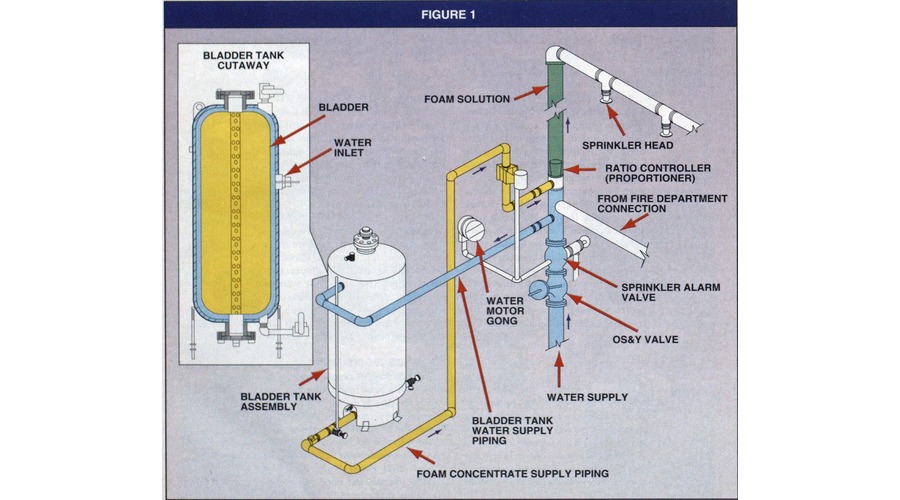
A city main can look adequate on paper, but the system does not operate on paper. It operates through backflow devices, underground piping, risers, valves, elevation changes, and whatever friction losses those components add to the trip. Technicians therefore evaluate the full route water takes through the system. A strong source with a restricted path can create the same bad day as a weak source with perfect piping, which is why the analysis has to cover both.
This is also why many properties benefit from complementary inspection and service planning tied to broader sprinkler readiness. Kord Fire Protection offers fire sprinkler system service that supports the same goal: making sure the hardware in the field performs the way the design intends. A reliable water source is essential, but the connected system has to be equally ready.
How Kord Fire Protection Technicians Perform Reliability Analysis
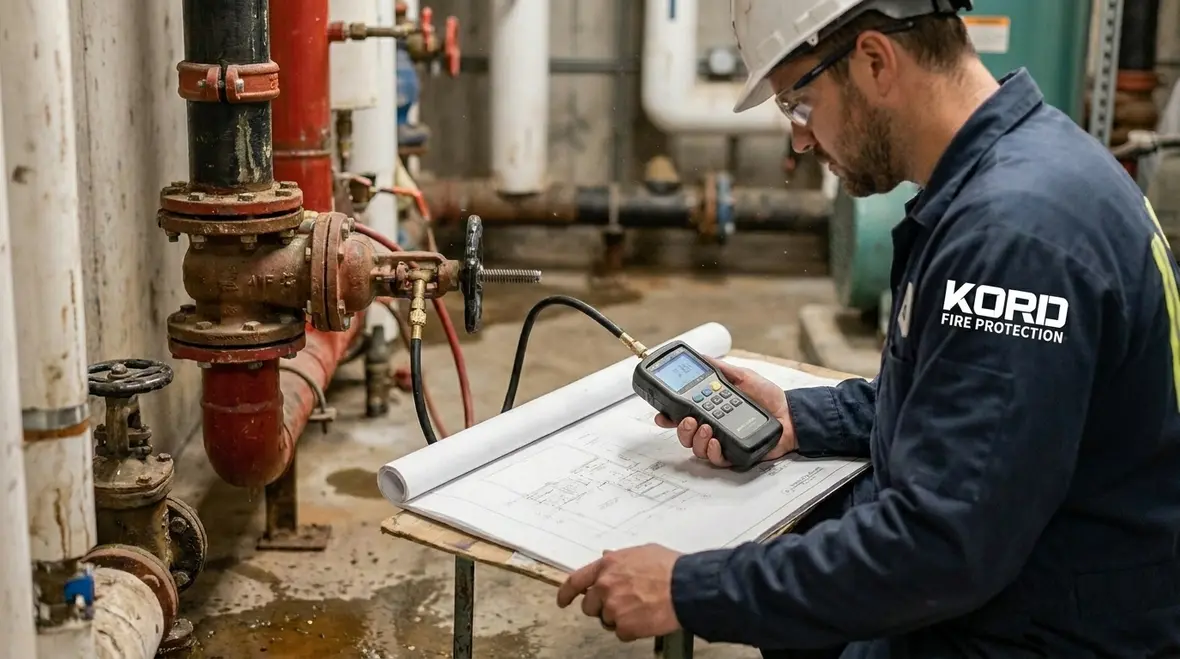
Kord Fire Protection technicians use a methodical approach that feels simple on the surface, and detailed underneath. First, they review existing documentation such as system design drawings, the fire pump schedule if one exists, and local utility information. Next, they verify the physical layout: piping sizes, valve types, meter locations, and any backflow devices.
Then they evaluate performance under flow. That means testing where water pressure changes, especially at the point that controls the system, such as a pressure reducing valve or a check valve. Technicians also account for operational realities like nighttime demand, nearby construction, or seasonal utility fluctuations. In other words, they treat reliability like a living thing, not a one time report. This is also where they translate what the calculations mean for actual system behavior.
From documents to field verification
A drawing package can show the intended arrangement, but technicians still verify what was actually installed and what has changed since the original work. Over time, systems get modified, devices get replaced, and tenant improvements can quietly reshape demand. Reliability analysis catches those shifts by comparing design assumptions with field conditions. That blend of paperwork and proof is what keeps the final conclusion from becoming an expensive fairy tale.
Key Variables That Impact Water Supply Reliability
Several variables can quietly erode performance. Therefore, technicians track each one, not just the headline number. Common drivers include:
- Static pressure at the source when no water flows
- Residual pressure once flow begins, which tells the real story
- Available flow rate at the same time the system would operate
- Piping condition and internal roughness, which affect friction losses
- Valve position and valve condition, since partially closed valves can throttle flow
- Elevation differences that change pressure and pump needs
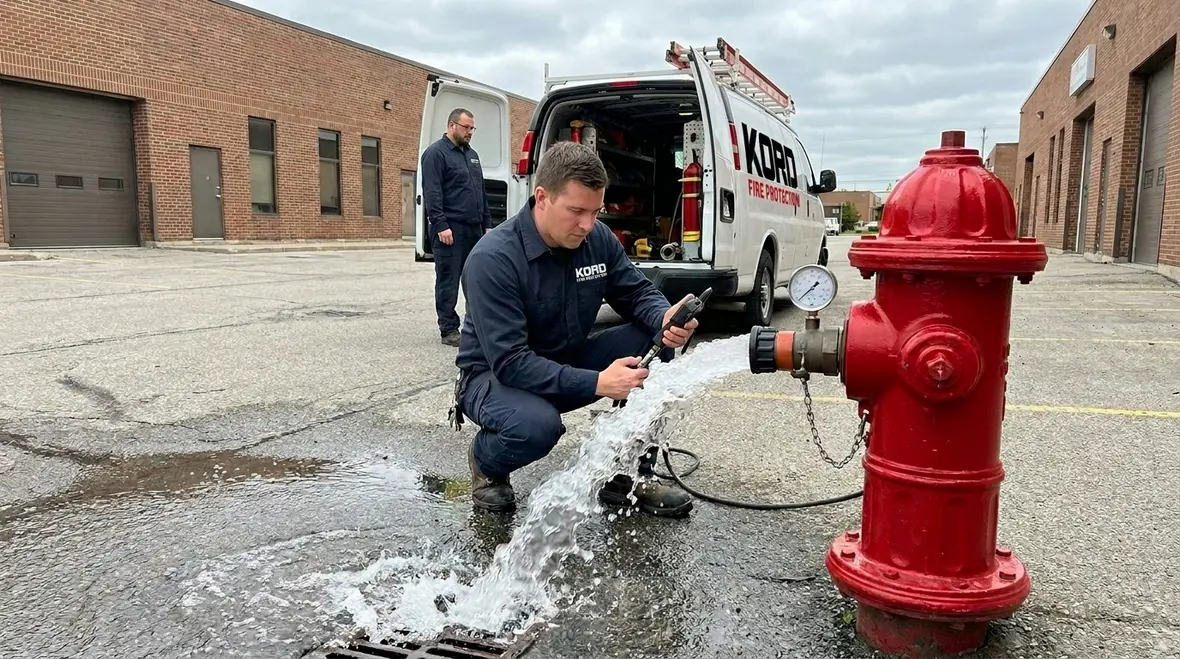
To make this less abstract, technicians often compare “what the map says” to “what the meter proves.” For example, a hydrant test may show adequate residual pressure at one hydrant, but another nearby supply point may fail under flow due to distance, pipe size, or constrictions. It is like finding out a sports car can zoom on one road, then realizing the route to the race has potholes. Same car, different outcome.
Why residual pressure gets all the serious attention
Static pressure is useful, but it is basically the system smiling for the camera. Residual pressure is the action shot. Once water starts moving, hidden restrictions and weak supply conditions stop being theoretical and start showing up in the gauge reading. That is why technicians put so much emphasis on performance during flow. It reveals the water supply under stress, which is exactly how a fire event would test it.
Kord Fire Protection also discusses system readiness through related reliability topics such as water quality and fire system reliability. That perspective helps property teams understand that flow and pressure are not the only concerns. The condition of the water moving through the system can affect valves, piping, and long-term hydraulic performance too. Reliability, unfortunately for anyone hoping for a shortcut, is wonderfully interconnected.
Testing Methods and What They Tell You
Reliable analysis relies on testing that matches how the system runs. Kord Fire Protection technicians typically use flow testing and pressure monitoring to measure how the supply behaves during demand. They also perform checks that reduce guesswork, such as confirming pump controls, verifying suction conditions, and ensuring that any water storage tank functions as designed.
In addition, they look at the time component. A system does not just need the right pressure today; it needs it during the first minutes of an incident and then throughout the expected duration. Therefore, they consider factors like pump run time, replenishment rates for tanks, and whether the supply can sustain flow without dropping pressure too far.
Transitioning from theory to proof matters here. A design can look perfect on paper, while a hidden control issue or a weak water main can sabotage performance. Technicians remove those surprises before they show up like a pop quiz that no one studied for.
What a good test program reveals
A strong test program tells you more than whether the supply can hit one target number. It shows how the system behaves as conditions change, where pressure drops begin, whether equipment sequencing works properly, and whether the available water can be sustained long enough to support suppression objectives. That broader picture is what turns test data into decision-making. Otherwise, you just have numbers staring at you from a report and hoping you know what they mean.
Common Failure Scenarios and How to Prevent Them
Water supply reliability problems often share patterns. One scenario involves adequate static pressure but weak residual pressure, meaning the system loses momentum when it matters. Another scenario involves network changes, such as new development that increases local demand or changes pipe configurations. In that case, reliability analysis has to reflect the current distribution system, not a snapshot from years ago.
There are also mechanical and operational culprits. For instance, valves can be mispositioned after maintenance. Filters can accumulate debris. Backflow devices can create unexpected restrictions. Even fire pump settings can drift over time if maintenance practices are inconsistent.
Kord Fire Protection technicians prevent these failures by combining inspection, testing, and clear documentation. They also coordinate with building staff so the right access procedures happen on time. Because if the fire department arrives and the key is in a drawer labeled “somewhere,” the system does not fail, but everyone’s stress level sure does.
Small restrictions, big consequences
Many reliability issues start as small operational flaws that seem harmless in isolation. A valve left partly closed, a neglected strainer, an undocumented site change, or a drifting control setting can all shave away hydraulic performance. No single issue may look dramatic on its own, but stacked together they can reduce available pressure right where the system needs it most. Reliability analysis is valuable because it hunts down those stacked problems before they coordinate a group project nobody asked for.
Keeping Reliability High Over Time
Reliability analysis should not end after a test report lands in an inbox. Instead, it should shape a maintenance plan and a schedule for updates. Kord Fire Protection technicians encourage ongoing checks of hydrants, valves, and controls, plus periodic review of water supply performance.
They also recommend revisiting the analysis when the building changes. Renovations, new tenants, added sprinklers, or changes to water demand can alter system needs. Similarly, nearby utility work can affect supply behavior. Therefore, a good program treats water supply reliability analysis as part of lifecycle management, not a one-and-done task.
To support planning, many sites benefit from a simple tracking structure:
| Reliability Item | What Technicians Validate |
| Supply performance | Residual pressure and flow under demand conditions |
| System controls | Pump logic, valves, and operating sequences |
| Physical components | Piping condition, restrictions, and access readiness |
For many properties, this long-view mindset works best when reliability checks connect with broader life safety planning. That can include alarm coordination, monitoring strategy, and communication pathways that support emergency response. Kord Fire Protection’s commercial & residential fire alarm installation page is a useful related resource because a dependable suppression system and a dependable alarm system belong in the same conversation, especially when response time matters.
FAQ: Water Supply Reliability Analysis for Fire Suppression
Next Steps: Turn Reliability Data Into Safer Coverage
If a building relies on fire sprinklers, it deserves more than assumptions. Kord Fire Protection technicians can help perform a thorough Water supply reliability analysis, verify the supply path, and identify risks that could reduce performance when seconds count. Then they can recommend updates and maintenance actions that keep the system ready, season after season.
Schedule an evaluation with Kord Fire Protection to turn uncertain water performance into clear, test backed confidence. Because when the alarm sounds, the only surprise should be how fast the team responds. To explore broader support options near the end of your planning process, review Kord Fire Protection’s full fire protection services and connect that reliability data to a stronger site-wide safety strategy.

Join Our Newsletter!
Get the latest fire safety tips delivered straight to your inbox From our Newsletter.