A stable fire pump power supply can mean the difference between a calm response and a chaotic one when smoke rolls in and every second counts. Kord Fire Protection designs and installs power solutions that keep mission critical fire pumps running when they must, not when the grid feels like behaving. And while the grid has all the reliability of a pop quiz, the right system brings steady voltage, quick changeover, and smarter protection so pumps perform as designed. In this article, Kord Fire Protection technicians explain what to secure, why it matters, and how to avoid the kind of failure that no one wants to explain to the local fire marshal.
Mission critical fire pump power starts with a clear risk view

Before equipment gets wired, Kord Fire Protection technicians take a step back and build a risk picture that reflects how the system will actually behave in real conditions, not just in a clean design environment. They review the site layout, the pump controls, the available power sources, and the real history of outages or voltage dips. That includes looking at utility reliability patterns, known infrastructure weaknesses, and even how the facility has responded to past electrical disturbances. Then they map how the system behaves during normal operation and during the moments when things go wrong, because those are the moments that define whether protection succeeds or fails.
Next, they confirm the full power path from utility service to transfer equipment to pump controller, making sure there are no weak links hiding in plain sight. After that, they look at loads that could cause voltage drop at the worst time, such as large HVAC startups, elevators, or emergency systems that surge simultaneously. In other words, they treat the electrical system like a supply chain for safety, not like a random set of wires. And yes, electrical surprises always show up right on schedule, like a sitcom cliffhanger that nobody asked for but everyone has to deal with anyway.
How Kord technicians confirm compliance and performance

Kord Fire Protection technicians typically follow required standards and local authority expectations, but they do not stop at simply checking boxes. Compliance must translate to real performance under stress. That means verifying motor starting requirements, controller logic, and the exact transfer time required for the pump system to engage without hesitation. A system that meets code on paper but stumbles in practice is not acceptable when lives and property depend on it.
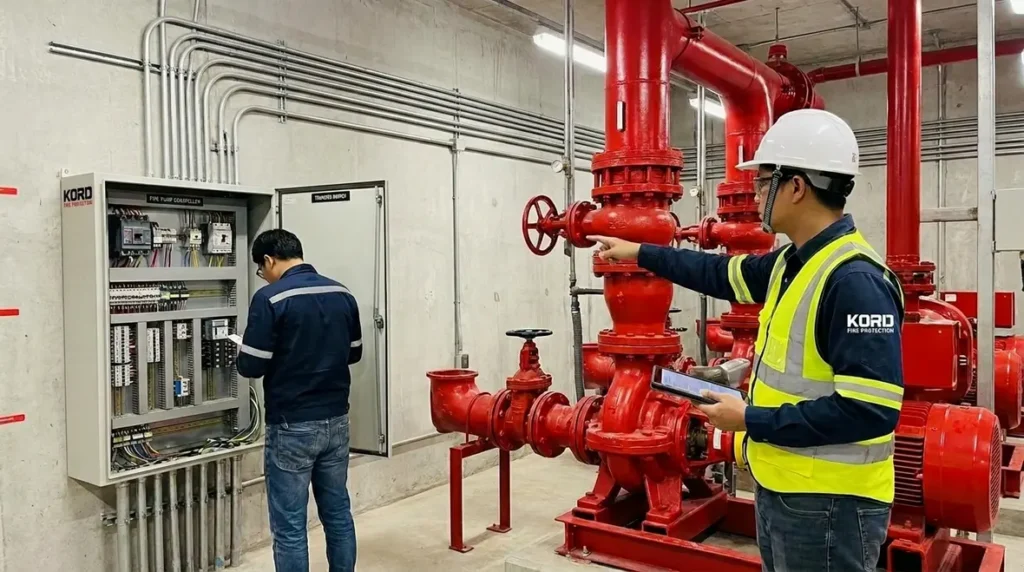
They also check design documentation against what actually gets installed in the field. This includes verifying breaker types, overcurrent protection settings, conductor sizing, and proper grounding. Even small mismatches can create major issues when systems are pushed to their limits. Then they confirm that the fire pump controller receives the right signals and maintains proper power quality under both normal and emergency conditions, ensuring stability across all scenarios.
When a project moves from plan set to real world, small differences can matter more than anyone expects. Therefore, technicians rely on hands on testing and detailed documentation to confirm the system behaves under stress, not just looks correct during inspection. It is this gap between theory and reality where most failures are born, and where careful verification makes the biggest difference.
Reliable transfer switching that does not blink under load
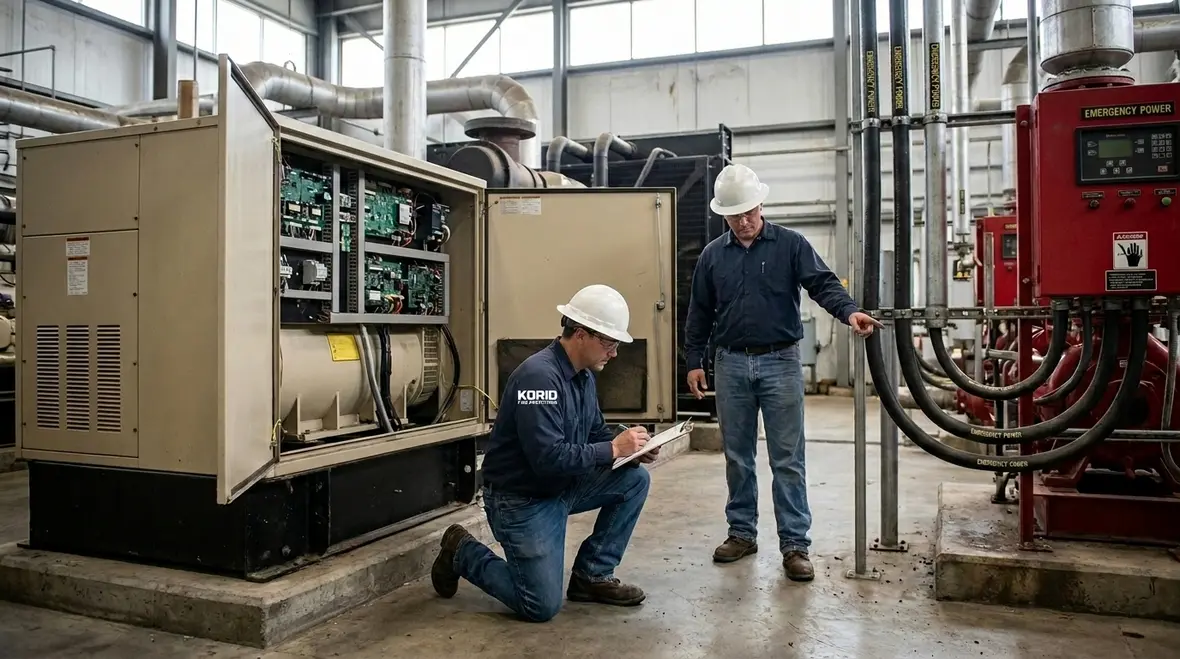
A mission critical fire pump power system often fails because transfer switching takes too long, hunts for stable voltage, or resets the controller at exactly the wrong moment. Kord Fire Protection technicians focus heavily on this phase because even a brief interruption can delay water delivery when it matters most. They confirm that transfer occurs quickly and smoothly, and that the pump controller remains stable throughout the entire process.
Depending on the design, the system may include an automatic transfer switch or a more complex arrangement with multiple sources. In each case, technicians verify interlocks, sensing circuits, and timer settings to ensure everything works in harmony. They also evaluate performance during partial power loss, frequency fluctuations, or phase imbalance, all of which can occur in real world emergencies.
And for the record, nobody wants the fire pump to act like a toaster that needs a second try. Yet without proper transfer logic and coordination, that is exactly what can happen. Reliable switching is not just about speed, it is about consistency, predictability, and resilience under pressure.
Backup power sources and coordination that actually work together
Many facilities rely on standby generators or alternative backup power options, but those systems only help if they perform exactly as needed during an emergency. Kord Fire Protection technicians ensure that backup systems start quickly, stabilize properly, and deliver power with the right characteristics for fire pump operation. Timing and coordination are everything, and even a slight delay can have serious consequences.
They evaluate generator sizing, starting current demands, voltage regulation, and fuel supply duration. Then they review protection settings to prevent nuisance shutdowns that could interrupt operation. After that, they align generator behavior with transfer switch timing and pump controller requirements, ensuring a seamless transition from primary to backup power.
Where multiple emergency loads exist, technicians establish clear priority so the fire pump receives the power it needs first. Without that coordination, competing systems can draw power away at the worst possible moment. In an emergency, the fire pump is not just another load, it is the priority that everything else must support.
Power quality checks that prevent slow damage
Even when systems remain operational, poor power quality can slowly degrade performance and reliability. Kord Fire Protection technicians go beyond simple on and off checks to evaluate voltage stability, harmonics, and phase balance. These factors may not cause immediate failure, but over time they can lead to overheating, premature wear, and unexpected shutdowns.
They also inspect for loose connections, overheated components, and worn contacts within transfer equipment. Protective devices are reviewed to ensure they match the motor’s starting profile, avoiding unnecessary trips or insufficient protection. Ignoring these details is like driving a car with a warning light that everyone agrees to deal with later, until later suddenly becomes a problem.
Maintenance and testing plans with real schedules
A reliable fire pump power supply does not stay that way by accident. It requires consistent maintenance, periodic inspections, and structured testing that reflects real world conditions. Kord Fire Protection technicians build schedules that align with system complexity, site risk, and applicable standards, ensuring that nothing important gets overlooked.
They document inspection results, track performance trends, and address small issues before they become major problems. This includes monitoring transfer switch condition, checking battery systems where applicable, and reviewing power quality data over time. Testing is conducted carefully to avoid disrupting readiness, because a test that compromises protection is not a test, it is a liability.
Using the right approach for your design in the field
Every facility comes with its own constraints, whether that involves building layout, utility limitations, or operational demands. Kord Fire Protection technicians help teams select solutions that work in the real world, not just in theory. They coordinate with contractors, engineers, and facility managers to ensure systems are practical, efficient, and reliable from installation through long term operation.
| Decision point | What Kord technicians verify |
| Source selection and transfer | Transfer time, sensing logic, interlocks, controller stability |
| Backup power coordination | Generator start, regulation, priority loads, shutdown behavior |
| Protection and wiring | Breaker sizing, settings, conductor capacity, grounding |
| Testing and follow through | Functional tests, trend tracking, corrective actions |
FAQ
Securing a mission critical fire pump system takes more than buying equipment. It requires thoughtful planning, detailed verification, and consistent follow through. From transfer switching to backup coordination, every piece must work together without hesitation when the unexpected happens.
Kord Fire Protection brings a methodical, real world approach to keeping systems dependable. If your system needs evaluation, commissioning, or upgrades, their team can help ensure your fire pump power supply is ready when it matters most.

Join Our Newsletter!
Get the latest fire safety tips delivered straight to your inbox From our Newsletter.