Commercial Fire Pump Maintenance Schedule Optimization
Picture this. A fire event starts, the alarms ring, and the system must perform like it rehearsed. That is why a strong commercial fire pump maintenance schedule matters, and not just on paper. In the real world, Kord Fire Protection technicians follow a clear rhythm: inspections, testing, lubrication checks, and pump performance reviews on a set calendar. From there, they move beyond basic sign off and focus on what actually keeps pressure stable, flow steady, and components healthy. Because when a fire pump behaves like it is guessing, everyone gets nervous, and not in a fun way like a horror movie. Here, the goal stays simple: optimize performance through practical steps that reduce surprises.
How Kord Fire Protection technicians go beyond checklists
Most teams start with a routine plan, then stop. Yet Kord Fire Protection technicians treat the commercial fire pump maintenance schedule as the foundation, not the finish line. They look at how the pump behaves under real operating conditions, then they adjust how the facility supports it. For example, they verify that the suction conditions stay consistent, that valves open and close smoothly, and that the controller logic matches the site setup.
In addition, they review past results. If discharge pressure drifted earlier, that data points to causes like misaligned sensors, worn impellers, or friction changes in piping. Therefore, rather than replacing parts on hope, they optimize first. In business terms, that means fewer shutdowns, fewer emergency calls, and fewer “Why did it do that?” meetings.
That mindset lines up with Kord Fire Protection’s broader full fire protection services, where inspection, maintenance, and system readiness are treated as connected responsibilities instead of separate boxes to check. It also complements the company’s dedicated fire pump service work, which focuses on inspection, repair, maintenance, and testing for commercial systems. When teams connect those dots, they are not just maintaining a pump. They are protecting the reliability of the entire life safety chain.
Why baseline records matter more than memory
Facilities often rely on someone’s recollection that the pump “sounded normal last time.” That is charming, but not exactly scientific. A documented baseline gives technicians something objective to compare against. Pressure, flow behavior, vibration, start response, and controller activity all create a fingerprint. Once that fingerprint changes, technicians can react sooner and with more confidence.
Baseline testing that actually predicts performance
Before any adjustment, good technicians establish a baseline. They confirm that the pump can deliver required flow at target pressure, and they document results in a way that supports future decisions. Then they compare trends. If one month shows healthy performance but the next shows slower build up, something changed.
Kord Fire Protection technicians also check the complete system, not just the pump. That includes the jockey pump or pressure maintenance unit, the strainers, and the supply conditions at suction. Sometimes the issue lives upstream, like a suction restriction that grows as debris collects. Other times, the issue sits in controls, like a setpoint that drifts or a sensor that reads pressure incorrectly.
And yes, occasionally the problem is as simple as a valve position that got changed during maintenance. Humans do that. They are helpful, and also wildly capable of forgetting. So technicians treat assumptions like rumors and verify the facts.

Using test history to spot trouble early
A one time result tells you what happened today. A trend tells you where tomorrow is trying to go. That is the difference between basic compliance and smart maintenance planning. If monthly churn tests begin to show pressure changes, or if annual performance testing edges away from prior benchmarks, those clues matter. Kord’s own article on fire pump testing requirements reinforces how regular testing frequencies and performance checks help confirm readiness while giving technicians data they can use to make better service decisions.
Hydraulic tuning for stable pressure and flow
Fire pump performance does not only depend on motor power. It depends on hydraulics. Therefore, optimization focuses on how friction losses and system resistance shift over time. Kord Fire Protection technicians verify pipe condition, check fitting layouts, and confirm that the system maintains the designed flow path.
They also examine the control response during demand changes. When a system starts and stops, pressure must remain within limits. If pressure overshoots or undershoots, the pump may cycle more often than needed. That cycling can increase wear on seals and bearings, and it can stress the electrical components.
Where needed, technicians adjust operational settings and verify that the controller responds in a controlled manner. They also check for signs of cavitation risk, which can sound like a problem you hear at sea, but it actually happens in pump systems. Cavitation may show up as vibration, heat, and poor performance during tests.
This is also where disciplined inspections pay off. Kord’s discussion of routine fire pump inspections highlights the practical value of catching wear, corrosion, and deterioration before they turn into emergency discoveries. A schedule becomes more effective when each test informs the next round of adjustments.
Pressure stability is not luck
A stable system usually looks calm from the outside because someone did the detailed work behind the scenes. Suction conditions were checked. Valve status was confirmed. Sensors were validated. Controls were reviewed. It feels uneventful, and that is exactly the point. In life safety systems, boring is beautiful.
Electrical and control optimization that prevents surprises
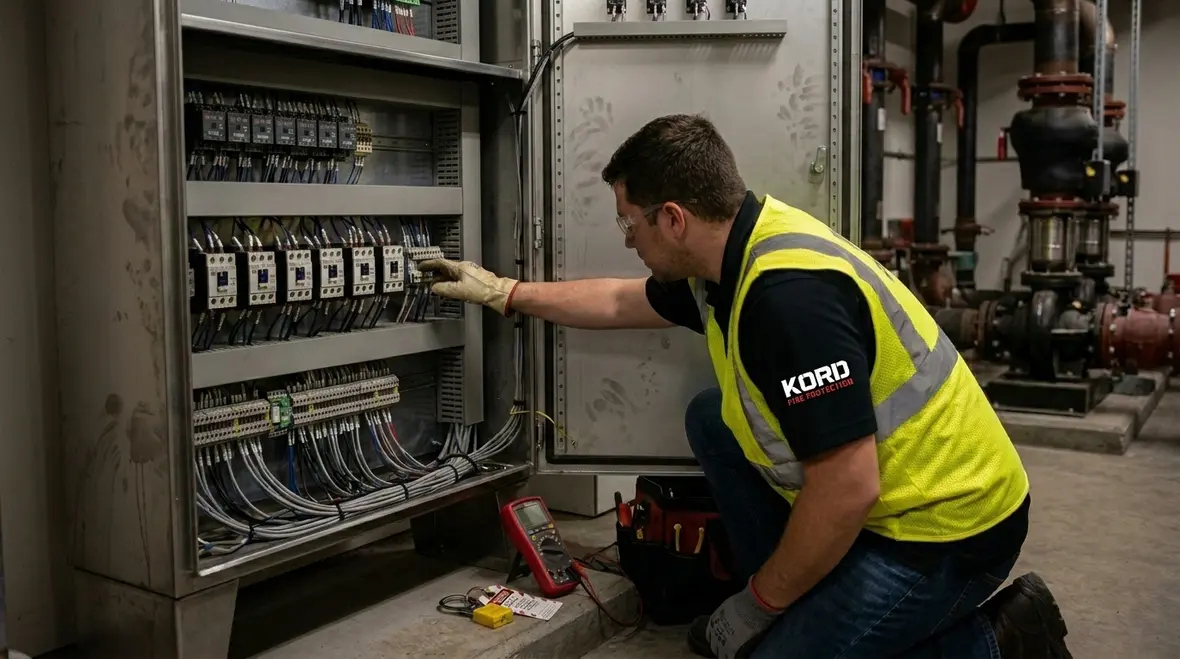
Even a perfectly tuned pump can fail if controls or electrical supply do not hold steady. Consequently, technicians focus on power quality, start behavior, and protection devices. They confirm that contactors and relays stay within rated performance and that wiring connections remain tight and clean.
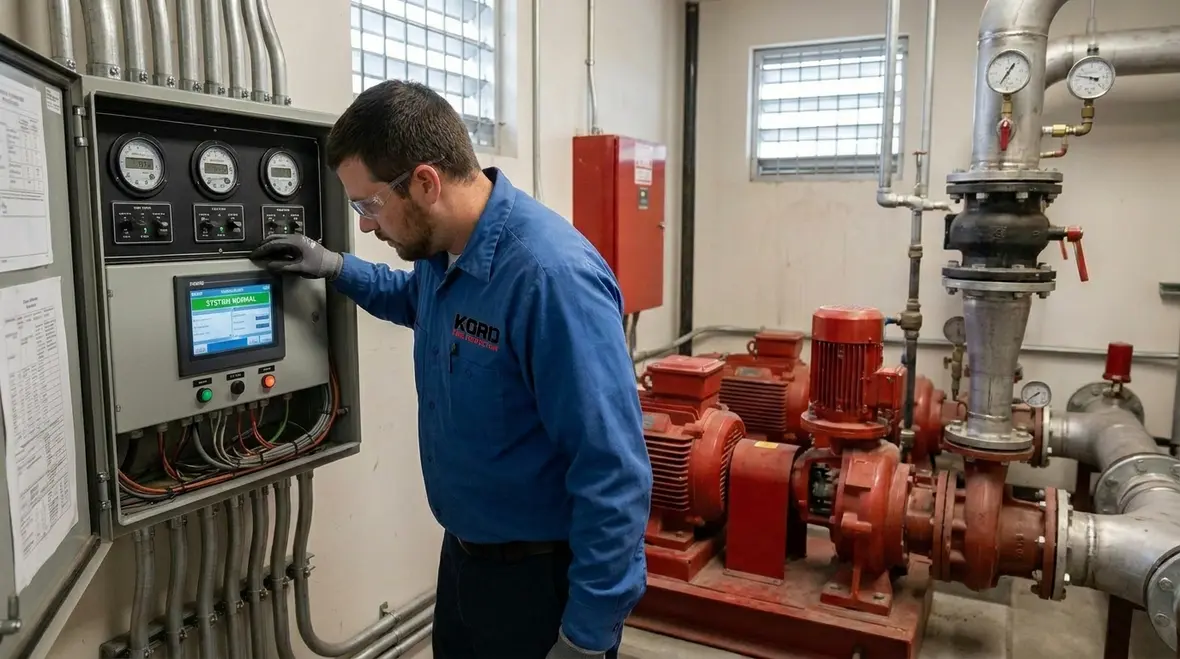
In addition, Kord Fire Protection technicians verify the controller’s settings and alarms. They review how the system handles transitions, like when it switches from stand by to run, and from run back to standby. Then they confirm that sensor inputs match actual conditions. If a pressure sensor reads high, the controller may reduce output too early. If it reads low, it may demand more than needed.
They also test fail safe behavior. The system must not “think” it is okay when it is not. In other words, the pump controller should guide actions reliably, not improvise like a sitcom character who forgot the script.
Controls need context, not blind trust
Controllers are incredibly useful, but they can only react to the information they receive. If that information is flawed, the system can make technically correct decisions for the wrong situation. That is why technicians confirm setpoints, alarm logic, signal integrity, and actual field conditions together rather than treating them as unrelated tasks.
Maintenance planning that matches wear, not just dates
Scheduling matters, but predicting wear matters more. A commercial fire pump maintenance schedule should align with usage patterns, water quality, and environmental conditions. A facility with frequent pump starts needs a different focus than one that tests only during planned events. Temperature swings, water sediment, and corrosion risk can also change how components age.
Kord Fire Protection technicians evaluate conditions, then they refine what the schedule includes. They check lubrication points, confirm seal condition, and inspect strainers for buildup. They also examine impellers and wear rings for early signs of erosion. When technicians catch wear early, they can plan repairs before performance drops during an emergency.
Importantly, they document everything. That documentation builds a history that supports fast troubleshooting and reduces time spent guessing when something changes.
A better schedule follows the real world
Calendar dates matter, but conditions matter more. Water quality, sediment, cycling frequency, and room environment all influence wear. An optimized maintenance schedule accounts for that reality so facilities can use service time and repair budgets more intelligently instead of reacting after the system starts hinting that it is unhappy.
Service work that protects reliability during outages
Optimization must include the periods when the pump is out of service. Repairs, inspections, and parts swaps can unintentionally introduce risk. Therefore, technicians plan work so the system remains protected and so testing happens after changes.
Kord Fire Protection technicians also coordinate with facility teams to control downtime. They confirm that bypass arrangements follow safe procedures and that temporary conditions do not compromise fire readiness. Then they run post maintenance tests to verify that performance returns to baseline.
When companies treat maintenance like a garage project, problems show up later. When they treat it like a controlled operation, performance stays predictable. The difference is usually one thing: discipline.
FAQ
Make optimization part of the next maintenance cycle
Optimization works best when it starts before problems appear. Kord Fire Protection technicians can review the current performance baseline, verify control and electrical behavior, and align the commercial fire pump maintenance schedule with real site conditions. Then they plan service work that protects reliability, not just compliance. If the system has shown drift, cycling changes, or uncertainty during tests, now is the time to act.
For facilities that want a clear next step, Kord Fire Protection offers dedicated fire pump service for inspections, repairs, maintenance, and testing, along with trusted fire alarm services that support a stronger overall life safety strategy. Request a site review today and keep the pump ready for what matters.

Join Our Newsletter!
Get the latest fire safety tips delivered straight to your inbox From our Newsletter.