
Standpipe Pressure Reducing Valve Maintenance Guide
Standpipe Pressure Reducing Valve Maintenance: Why It Matters More Than Most People Realize
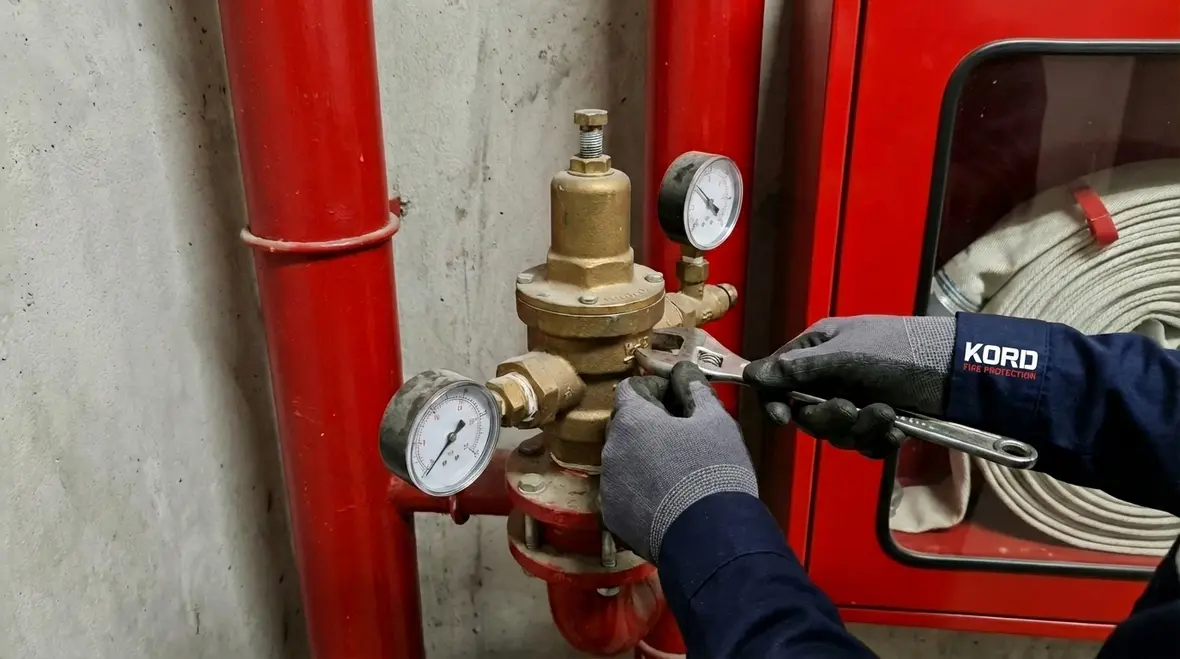
In every multi story building, behind the walls and above the ceilings, a quiet guardian stands ready. It waits for the moment water must move fast and with purpose. That guardian relies on proper standpipe pressure reducing valve maintenance to do its job. When fire strikes, pressure must be controlled, steady, and predictable. Too much force can harm equipment and firefighters. Too little can cost precious seconds. Therefore, routine service is not a luxury. It is a responsibility.
Kord Fire Protection technicians often explain it in plain terms. A standpipe system without proper valve care is like a sports car with no brakes. It may look impressive, but no one wants to test it in an emergency. Throughout this article, the deeper workings of these valves will unfold, along with clear signs that service is due and what professionals actually do during inspection.
The Role of a Standpipe PRV in Fire Protection Systems
A standpipe system delivers water to hose connections inside a building. Firefighters connect their hoses to these outlets, often located in stairwells. However, water pressure inside tall buildings can vary widely. Gravity, elevation, and pump output all play a role. Consequently, the pressure at lower floors may become dangerously high.
This is where the pressure reducing valve steps in. It regulates the water pressure delivered to each hose outlet. Instead of allowing uncontrolled force, the valve ensures water flows at a safe and usable level. In other words, it acts as a traffic cop for water, directing and calming the rush.
Kord Fire Protection technicians often compare it to adjusting the volume on a speaker. Too low, and no one hears the music. Too high, and you blow the speakers. The valve finds the sweet spot. Because of this balancing act, precision matters. Even small shifts in calibration can affect performance during a fire emergency.
How a Pressure Reducing Valve Actually Works
At its core, a pressure reducing valve uses internal components such as a spring, diaphragm, and seat assembly to control water flow. When incoming pressure rises above a preset level, the internal mechanism responds. It partially closes to limit downstream pressure. Conversely, when pressure drops, the valve opens more fully to maintain consistent output.
Although that sounds simple, the internal dynamics require accuracy. The spring tension must match system design. The seat must seal properly. The diaphragm must respond without sticking. Therefore, wear and debris can quickly disrupt performance.
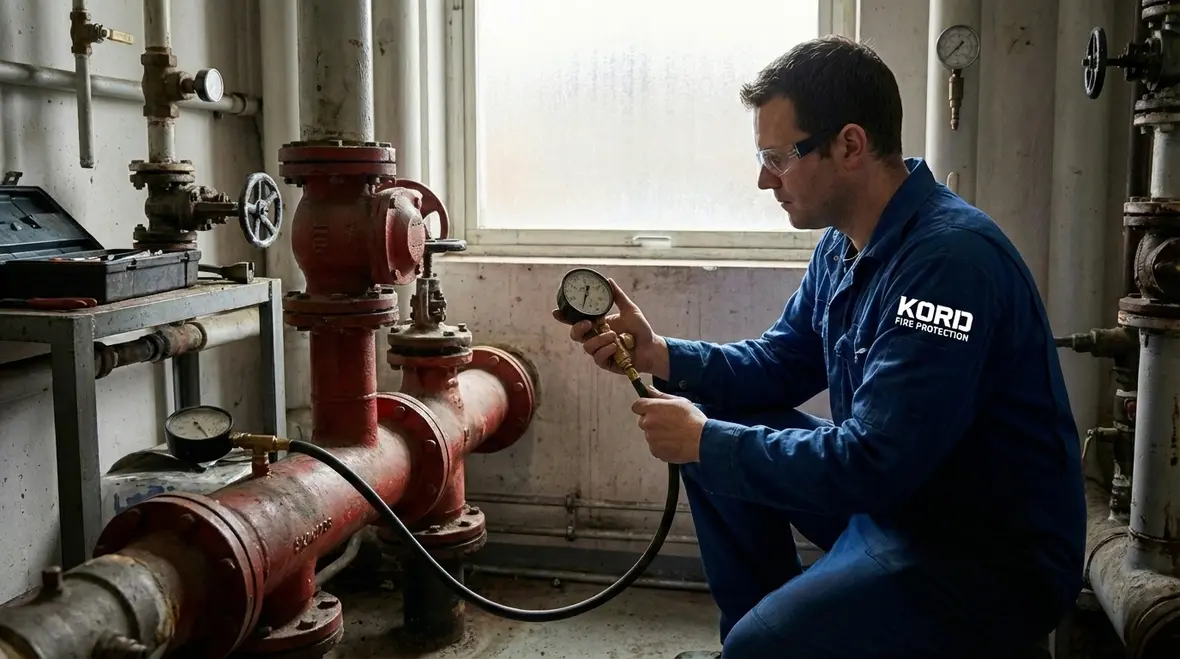
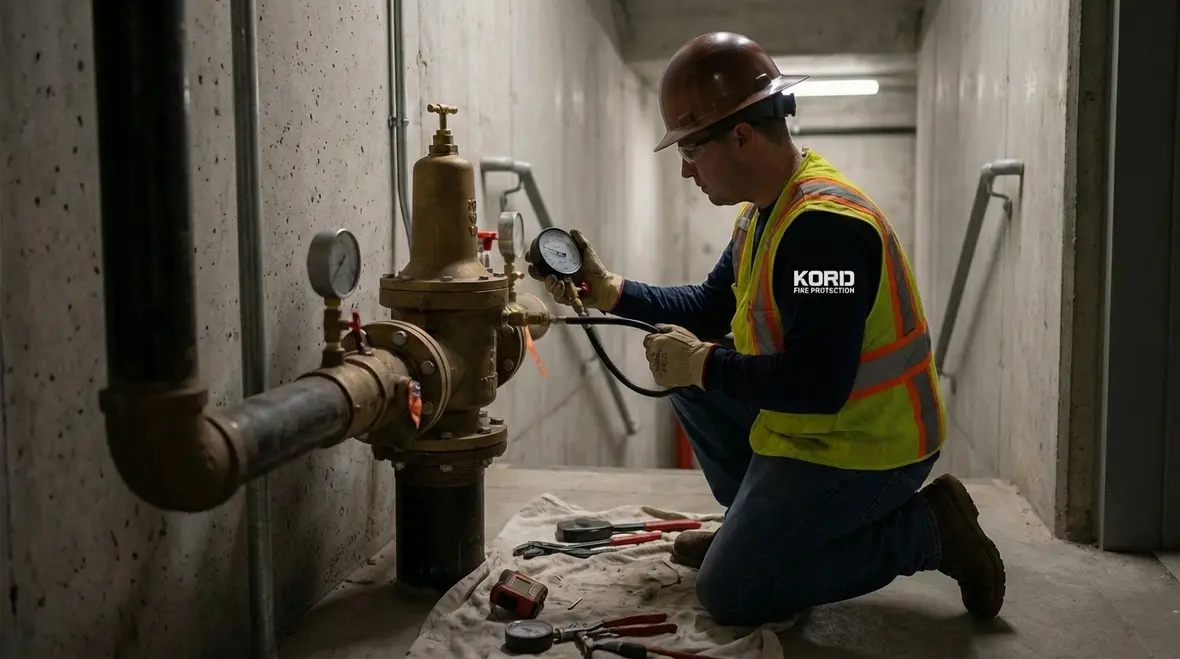
Kord Fire Protection technicians often demonstrate this during inspections. They connect gauges to measure both inlet and outlet pressure. Then, they simulate flow conditions. This process reveals whether the valve responds smoothly or hesitates. If a valve lags or overshoots its target pressure, it signals the need for adjustment or repair.
Moreover, these valves operate under harsh conditions. They sit unused for long periods, yet must function instantly when called upon. That combination of dormancy and urgency makes regular inspection essential.
Why PRV performance is tied to fire pump reliability
Standpipe PRVs do not work in isolation. They depend on a steady and reliable water supply from the fire pump. When fire pumps are tested and maintained in line with NFPA 20 and NFPA 25, the standpipe valves receive predictable inlet pressure, which allows technicians to dial in accurate settings during calibration. Regular fire pump testing and fire pump servicing help ensure that the upstream side of the PRV behaves the way the design intends, rather than surprising firefighters with unexpected surges or drops in pressure.

Common Problems That Affect Standpipe Pressure Reducing Valve Maintenance
Even the most durable equipment can drift out of spec. Over time, minerals in water build up inside the valve body. Corrosion may develop. Springs can weaken. Seals can harden. As a result, pressure control becomes less reliable.
Some of the most common issues include:
- Improper pressure settings from previous adjustments
- Internal corrosion affecting moving parts
- Debris blocking smooth valve travel
- Worn diaphragms that fail under load
- External damage from mechanical impact
Additionally, building modifications can change hydraulic demands. Renovations may alter pipe routing. Fire pumps may be replaced. Without recalibration, the valve may no longer match system needs.
Kord Fire Protection technicians emphasize that neglect does not usually announce itself with flashing lights. Instead, it hides quietly. A valve can appear intact while delivering incorrect pressure. That is why routine standpipe pressure reducing valve maintenance remains critical even when no obvious signs of trouble exist.
How PRV issues show up during broader system testing
Many PRV problems surface when the entire water-based fire protection system is tested under real flow. During annual fire pump flow tests and Reg 4 testing, technicians may notice outlets that deliver erratic or unexpectedly high pressures. In some buildings, Regulation 4 fire pump tests or Reg 4 auto sprinkler tests uncover standpipe outlets that simply do not behave like the hydraulic calculations predicted. More often than not, the standpipe PRVs at those outlets need focused maintenance to bring them back in line.
When Should a Standpipe PRV Be Serviced?
This is the question building owners often ask, sometimes with a hopeful tone, as if the answer might be rarely. However, codes and standards require regular inspection and testing. Annual evaluations are common, while more detailed flow testing may occur at defined intervals depending on local requirements.
Beyond scheduled service, certain warning signs demand immediate attention:
- Noticeable pressure fluctuations during testing
- Leaks around the valve assembly
- Difficulty operating hose connections
- Recent fire pump upgrades
- After any actual fire event
Furthermore, if a building changes occupancy or layout, hydraulic calculations may shift. In that case, recalibration ensures each outlet still delivers proper pressure.
Kord Fire Protection technicians often remind property managers that servicing after a problem appears is like calling a dentist only when the pain becomes unbearable. Preventive care costs less and avoids bigger trouble.

What Happens During Professional Valve Inspection and Calibration
A proper service visit involves more than a quick glance. First, technicians review system documentation. They confirm design pressures and previous test results. Then, they connect calibrated gauges to measure inlet and outlet pressures under static and flowing conditions.
Next, they adjust the valve as needed. This step requires care. Over tightening can restrict flow excessively. Under tightening can allow unsafe pressure levels. Therefore, technicians follow manufacturer specifications and code requirements.
If internal wear is suspected, the valve may require partial disassembly. Components are inspected for corrosion, pitting, and fatigue. Damaged parts are replaced. Afterwards, the valve undergoes another flow test to verify performance.
Inspection focus areas vs. why they matter
Inspection Focus
- Pressure gauge readings
- Spring condition
- Seat and seal integrity
- Valve body condition
- System documentation review
Why It Matters
- Confirm accurate regulation under flow
- Ensure consistent response to pressure changes
- Prevent leaks and pressure drift
- Detect corrosion or structural weakness
- Verify compliance with current codes
By the end of the visit, technicians provide detailed reports. These records support compliance and offer a clear maintenance history. In addition, documentation helps identify trends before they turn into failures.
Standpipe Pressure Reducing Valve Maintenance for High Rise Buildings
High rise structures present unique challenges. Water pressure increases with height differences. Therefore, lower floors may experience extreme inlet pressure. Without proper control, hose lines can become difficult to manage.
In these environments, precise standpipe pressure reducing valve maintenance becomes even more important. Technicians must account for fire pump output, elevation, and friction loss. They often coordinate testing across multiple floors to verify consistent performance throughout the building.
Kord Fire Protection technicians explain this process with a calm confidence that reassures building engineers. They break down hydraulic concepts into simple examples. For instance, they compare elevation pressure differences to stacking books. The taller the stack, the heavier the bottom feels. Water behaves in a similar way.
Because of these factors, high rise systems demand careful calibration. Small miscalculations can create large pressure swings. Therefore, professional evaluation remains essential rather than optional.
Compliance, Liability, and Peace of Mind
Fire protection systems exist within a framework of codes and standards. Authorities require inspection, testing, and documentation. Failure to comply can lead to fines or worse, increased liability after an incident.
However, beyond compliance lies something more practical. Proper standpipe pressure reducing valve maintenance protects firefighters who rely on predictable water flow. It also protects property and lives.
Insurance providers may review maintenance records after a loss. Thorough documentation demonstrates responsible system care. Conversely, missing records can raise uncomfortable questions.
Kord Fire Protection technicians understand this reality. They not only perform the technical work but also guide clients through regulatory expectations. In doing so, they remove uncertainty. And in fire protection, certainty is a valuable commodity.
FAQ: Standpipe Pressure Reducing Valves
Conclusion: Steady Pressure, Reliable Protection
In the quiet spaces behind stairwell doors, the standpipe system waits for its moment. When that moment comes, there is no room for guesswork. Proper valve care ensures water flows exactly as intended. Kord Fire Protection technicians stand ready to inspect, test, and fine tune each component with care.
Schedule professional service today and secure the confidence that comes from knowing your system will perform when it matters most. Whether you need a complete fire protection service package or targeted help with standpipes, fire pumps, or sprinklers, Kord Fire Protection can align your standpipe PRV maintenance with ongoing inspections, testing, and repairs across your entire water-based fire protection system.
Know Your Weapon Before You Fight the Flame
Kord Fire Protection is your go-to when it comes to all things fire protection. For over 20 years, we’ve been serving Southern California with the quality service and equipment to keep your home or business safe at all times. Our competitive prices reflect our unwavering commitment to protecting what matters most in the event of a fire emergency. Give us a call, send an email, or use that form!

Join Our Newsletter!
Get the latest fire safety tips delivered straight to your inbox From our Newsletter.


