Fire Pump Power Reliability with Kord Fire Protection
Fire pump power reliability is not a slogan for critical buildings. It is the difference between a protected space and a costly incident. To keep water where it must be, fire pumps need steady electrical power, clean protection, and monitoring that does not “hope” the system works. Fire pump power reliability starts long before any alarm sounds. It begins with best practice design, careful installation, and routine electrical checks that treat life safety equipment like life safety equipment, not a weekend project.
In this guide, third person experts explain how electrical maintenance and coordination support continuous operation. It also helps to know that Kord Fire Protection technicians walk clients through what to verify, what to log, and what to fix quickly, because the best inspection is the one that prevents the emergency that follows. Yes, that is the whole point. Even if someone somewhere still believes “it probably works.”
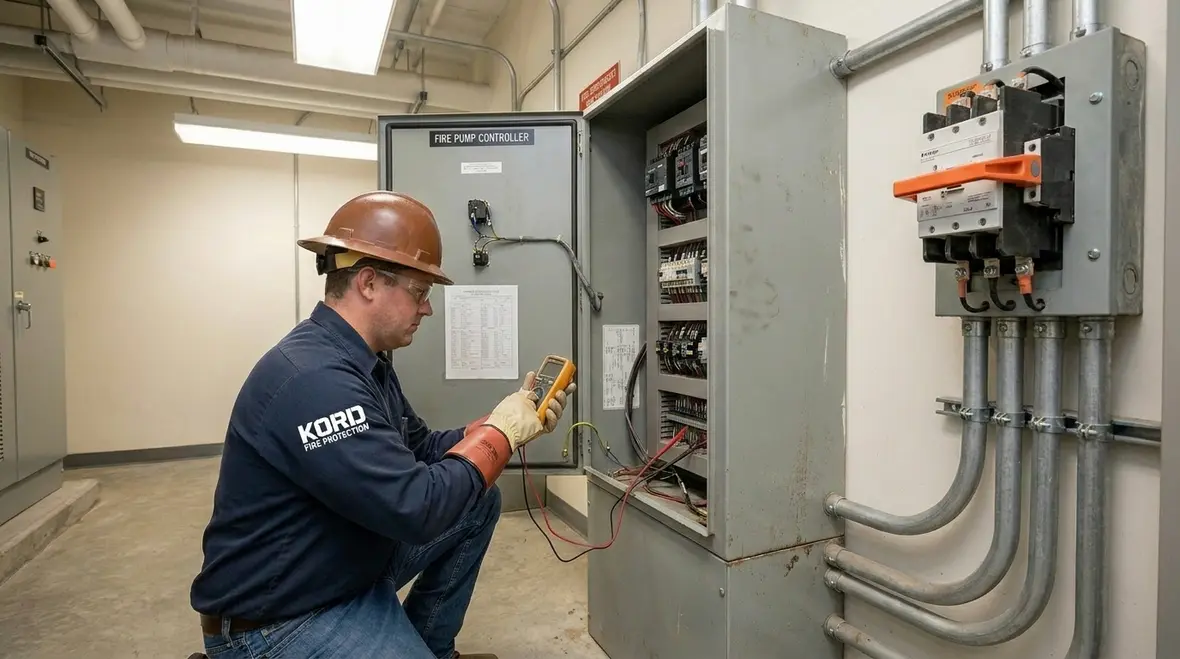
Why continuous fire pump power matters for life safety
When a fire alarm activates, the fire pump must start fast and run without hesitation. Electrical disturbances can interfere with motor starting, control logic, and transfer equipment. Consequently, power reliability becomes a chain of details: source stability, correct voltage and phasing, proper protection settings, and clear system supervision.
Moreover, fire pumps often run under high demand conditions. If an incoming feeder sags, if a contactor overheats, or if a protective device trips due to wrong settings, the system may delay suppression at the worst time. Therefore, a continuous power plan needs both prevention and evidence. That is also why facilities often benefit from aligning pump room electrical reviews with a broader full lifecycle of fire protection servicing, where design, testing, maintenance, and updates support each other instead of operating like distant relatives at a reunion.
Reliability is a chain, not a single switch
A fire pump system can have a strong motor and still struggle if the electrical chain around it is weak. Continuous operation depends on the utility source or emergency source, the transfer path, the controller, the conductors, and the supervision that confirms the system is ready. If one piece slips, the whole performance gets wobbly. And in a fire event, “wobbly” is not a feature anyone ordered.
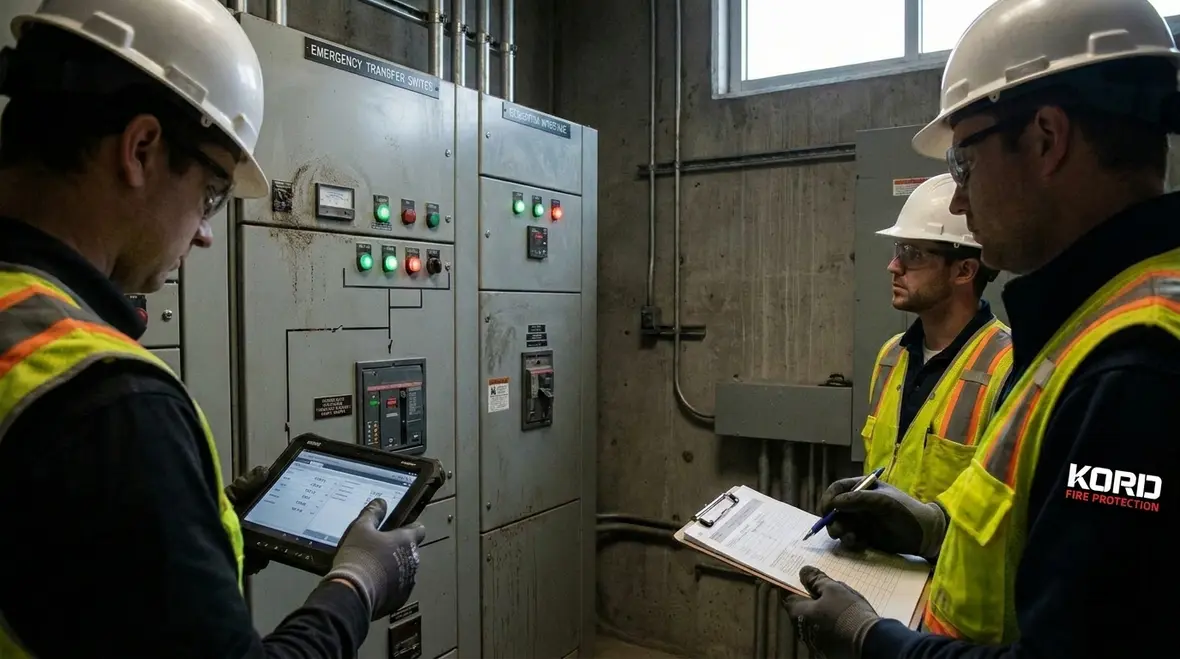
Electrical architecture that supports stable starting
Continuous operation begins at the single line diagram and ends at field wiring. Kord Fire Protection technicians typically stress three fundamentals during site review. First, they confirm that the power source design matches pump motor starting needs. Second, they verify correct conductor sizing and voltage drop limits so the motor can ramp up without stalling. Third, they check that phase balance stays within safe limits, because motors do not like surprises.
To keep the pump from acting like a stubborn pop star on tour, electrical systems should include well-coordinated transfer methods and properly rated switchgear. Additionally, control power should be stable. If controls drop out, the pump may fail to start or may reset at the worst moment. For facilities reviewing the code side of pump design and installation, Kord Fire Protection also covers this topic in How NFPA 20 Regulates Fire Pump Systems, which pairs well with a practical reliability discussion like this one.
Design choices show up later in maintenance
A tidy electrical design does more than pass review. It makes testing easier, troubleshooting faster, and long-term maintenance less dramatic. Clear labeling, accessible disconnecting means, sensible routing, and accurate as-builts allow technicians to verify conditions quickly without guessing what someone did five years ago on a Friday afternoon. Good design is polite like that.
What Kord Fire Protection technicians check in the field
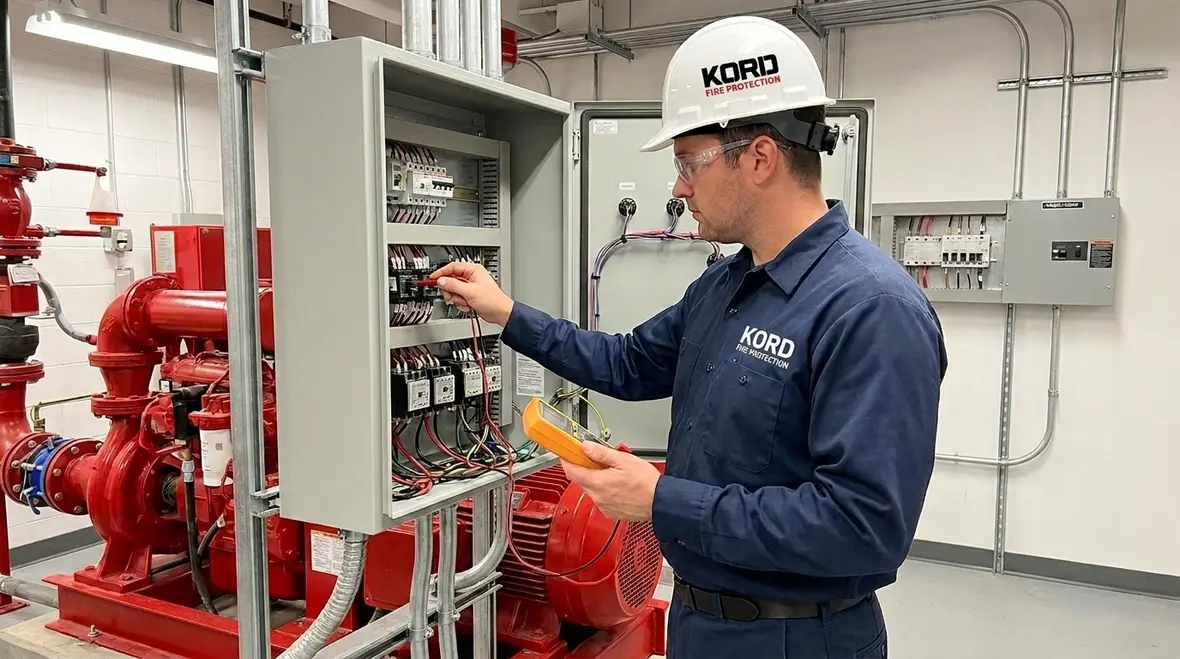
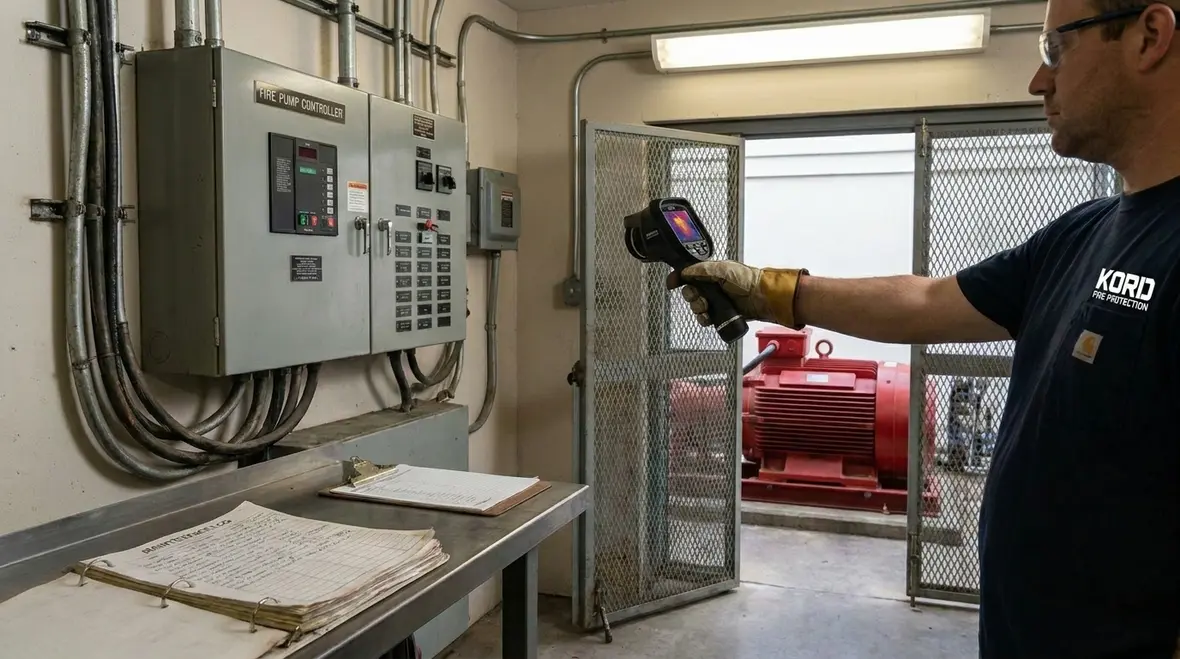
Good technicians do not only look for obvious faults. They confirm performance, cleanliness, and protection. Kord Fire Protection technicians often document the same items on every critical system visit, because repeatable checks reduce missed details. They verify incoming voltage and phase, inspect termination integrity, and confirm that protective devices match the intended motor and pump requirements.
They also examine the control cabinet with a practical eye. For example, they look at contactor wear, terminal heat discoloration, and any signs of moisture intrusion. Then they validate that indicators and alarms reflect real operating states. In other words, the panel should tell the truth, not tell a bedtime story.
Repeatable field checks catch slow problems early
The value of a field checklist is not paperwork for paperwork’s sake. It is consistency. A loose lug, a charger issue, a voltage imbalance, or a sticky transfer signal may not look dramatic on day one. Over time, however, those details stack up. By reviewing the same critical points on each visit, technicians can spot drift early and correct it before the pump room decides to add suspense to everyone’s day.
How to prevent nuisance trips and real failures
Electrical protection must trip when it should, yet avoid tripping for the wrong reasons. This balance depends on correct device selection, correct settings, and proper coordination between upstream and downstream protection.
Technicians typically review the following to improve reliability:
- Breaker and fuse coordination so faults clear at the right level
- Motor protection settings that align with motor starting current and service factors
- Grounding and bonding to reduce stray voltage and unstable reference points
- Control circuit integrity to prevent spurious start signals or dropout
Furthermore, they assess harmonics and power quality when the building has variable loads. If the electrical system feeds other equipment with heavy switching, it can introduce noise that affects contactor coils and electronic controls. So, they verify that the pump system remains immune to building “background chaos.”
Protection should be selective, not jumpy
A nuisance trip is not harmless just because the building did not happen to be on fire at the time. It is a warning that settings, hardware, or coordination may be off. Selective protection helps isolate real faults while keeping the larger life safety path available. That is why reliability work is not merely about replacing old parts. It is about understanding how those parts behave together under stress.
Dual power sources and transfer equipment, done right
Many buildings rely on normal power plus an emergency source, such as a generator. Transfer equipment must operate within required times and must not fail under load. Therefore, a thorough plan covers both the power path and the control logic.
| Item | Why it matters |
|---|---|
| Transfer switches and controls | They must move correctly and in sequence, even under fault conditions |
| Engine and generator readiness | Reliability depends on start reliability, voltage regulation, and stable frequency |
| Battery and charger systems | Control power for transfer and engine starts must stay healthy |
| Load tests for pump operation | Testing confirms real performance, not just theoretical compliance |
Also, transfer equipment needs physical inspection. Loose hardware and aging mechanical parts create intermittent failures that no one catches until a test “goes weird.” Since the fire pump cannot afford “weird,” preventive maintenance and documented results matter. Kord Fire Protection’s fire pump service page is a helpful reference for teams that need structured testing, maintenance, and documentation support for these systems.
Emergency power is only useful if it actually transfers
People sometimes speak about generators as if owning one settles the matter. It does not. Reliability lives in the transfer sequence, the charger condition, the starting batteries, the fuel or engine readiness, the controller logic, and the actual loaded performance. A silent generator in a brochure is not helping anyone. A tested, documented, transfer-capable source is.
Testing, documentation, and monitoring that prove reliability
Some teams treat testing as a checkbox. Others treat it as a feedback loop. Continuous power systems benefit from the second approach. When testing includes meaningful measurements, fire pump power reliability improves because people catch drift early, before it becomes a failure.
Effective programs include:
- Scheduled electrical tests such as insulation checks, contact resistance checks where suitable, and verified torque on terminations
- Trending of voltage and current to spot slow decline in components
- Verification of alarms and annunciation so notifications guide action
- As-built updates after any change, because outdated drawings cause delayed fixes
In addition, Kord Fire Protection technicians encourage clear logs. Logs show what was measured, who measured it, and what changed. That is how teams avoid mystery outages and reduce time-to-repair. If the system has a history, response becomes calmer. If it does not, the team plays detective during a stressful event. And nobody wants to be the character in a thriller who says, “I’m sure it was fine last time.”
Documentation turns maintenance into evidence
Reliable systems are supported by records that can answer simple but critical questions. What was tested. What changed. Which values were observed. Whether the setting was restored. Whether the alarm was verified. Good documentation shortens troubleshooting, improves accountability, and helps future technicians avoid re-learning old lessons the expensive way.
Maintaining continuous power without disrupting operations
Building owners and facility teams often worry that maintenance means downtime. Yet electrical best practices aim for minimal disruption. Therefore, teams coordinate service windows, stage parts, and perform targeted checks that keep critical systems available where possible.
Practical steps include planning before work begins, verifying lockout and safety procedures, and using qualified personnel for life safety equipment. When adjustments are needed, technicians confirm settings and restore the system to the verified configuration. Then they document the update so future maintenance stays accurate.
Also, a clear responsibility matrix helps. For example, the electrical contractor may handle switchgear work while fire protection technicians handle fire pump control verification. When roles align, the building does not lose time while teams argue who owns the problem.
Coordination keeps the building available
The best maintenance plan respects operations while still respecting risk. That means pre-job coordination, clear communication, temporary safeguards where needed, staged materials, and a realistic scope. Nobody enjoys avoidable downtime, but nobody enjoys surprise impairment either. Thoughtful planning prevents both.
FAQ
Conclusion and call to action
Fire pump power reliability deserves the same attention as the fire pump itself. When electrical design, protection settings, transfer equipment, and testing work together, the system stays ready instead of guessing. Kord Fire Protection technicians help teams verify key details, document results, and correct risks before they become emergencies.
If a facility needs a maintenance plan review or a power reliability assessment, act now. Schedule a consult through Kord Fire Protection’s full fire protection services page or visit the dedicated fire pump service page to bring electrical fire pump checks up to the standard the building expects.

Join Our Newsletter!
Get the latest fire safety tips delivered straight to your inbox From our Newsletter.