Commercial Kitchen Fire Hazard Reduction Electrical Safety
Commercial kitchens run hot, fast, and busy, which means fire risk never takes a day off. This commercial kitchen fire hazard reduction starts with practical electrical safety steps that protect staff, equipment, and the business. In other words, this is the plan that keeps a small wiring problem from turning into a big headline. And yes, a kitchen fire can spread faster than a bad meme in group chat. Yet with the right habits, inspections, and support from kord fire protection technicians, a manager can spot danger early and prevent the dramatic “why is the breaker smoking” moment.
A safer kitchen does not happen by accident. It comes from routine attention to cords, outlets, breakers, grounded equipment, and the hidden spaces where heat, grease, and vibration quietly team up against good judgment. It also comes from knowing when a quick fix is not a fix at all. If the operation depends on powered cooking equipment all day, then electrical safety belongs in the same conversation as hood cleaning, extinguisher readiness, and suppression system service. That is part of why facilities often pair their internal checks with guidance from commercial kitchen fire prevention strategies and formal inspections that catch the issues people stop noticing during a rush.
Electrical basics that prevent fire in busy kitchen spaces
Electrical problems create heat, and heat creates ignition. Therefore, the first safety step is making sure the kitchen’s power system matches the load it carries. When a hood light, fryer, ice machine, and ventilation blower all pull at once, weak wiring and loose connections feel the strain. Next, staff should understand the difference between a normal warm surface and a sign of trouble. A cord that feels hotter than usual, a plug that looks darkened, or a breaker that trips repeatedly signals a need for action, not a shrug.
To keep expectations clear, kord fire protection technicians often explain that kitchens are like a relay race. If one handoff fails, the team loses. Similarly, if power delivery fails at a connection or a breaker, the whole system becomes unstable. So the goal is simple: reduce unsafe heat sources and keep electrical components in good condition.
What staff should watch during daily operation
During service, employees are already close to the warning signs. They hear the buzz, smell the odd odor, and notice when a prep station loses power for no obvious reason. That makes daily awareness one of the cheapest and most effective layers of defense. Kitchens should treat repeated trips, sparking, inconsistent startup, and warm outlets as maintenance alerts, not personality traits of the building. If a piece of equipment always seems “a little weird,” that is usually the exact moment to stop being polite and start being preventive.
Spotting early warning signs before flames show up
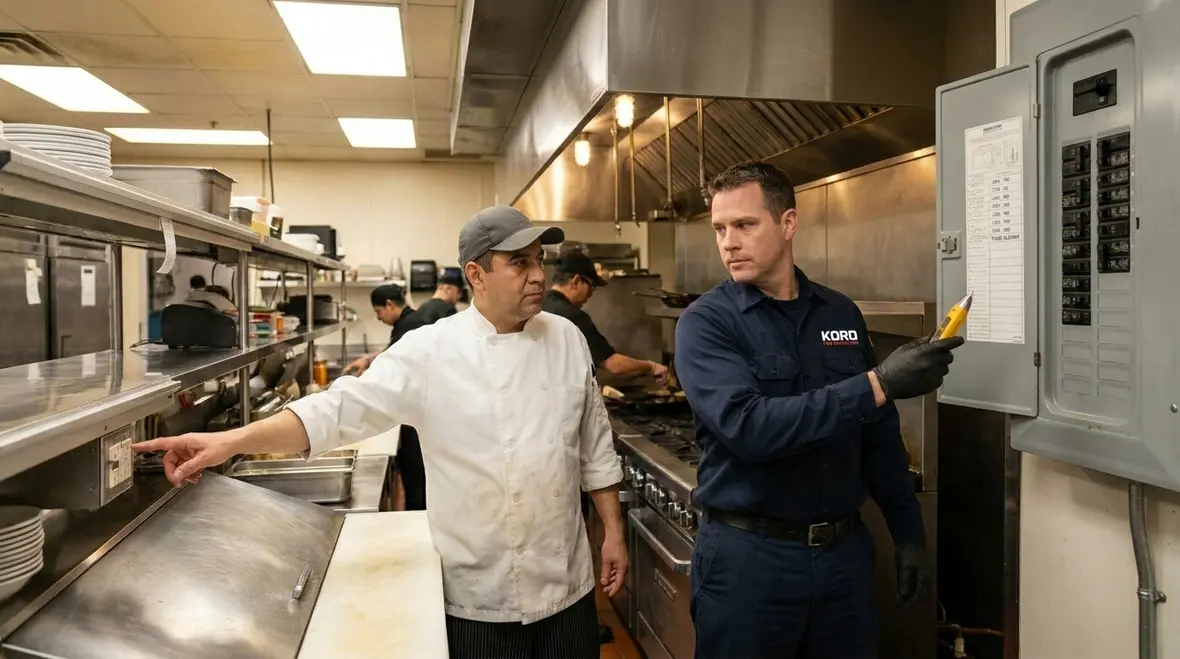
Most fires do not begin with a loud bang. Instead, they start with small electrical warnings that people miss while they focus on service. For example, flickering lights near cooking equipment can point to loose wiring. Buzzing outlets can indicate damaged components. Burning smells, scorch marks, or melted plugs should never be treated as “temporary.”
As a result, kitchens should use a quick inspection rhythm. During closing or pre shift checks, staff can visually scan key areas: under prep tables, behind equipment, near power strips, and inside cabinet spaces where cords often hide. Then they should report issues immediately. Waiting “until the rush is over” rarely ends well. It is like postponing a smoke alarm battery change. One day, it will work perfectly. The next day, it will not.
Build a reporting habit that actually sticks
The best inspection routine is the one people will actually follow. Managers can simplify reporting by assigning one short checklist for open, one for close, and one for after any equipment move or repair. If something smells hot, looks scorched, or works only when a cord sits in one oddly specific position, it goes on the list. This kind of pattern tracking often reveals recurring problems faster than memory ever will. It also complements broader reviews like a fire code violation inspection review, where electrical hazards often hide in plain sight.
Safe cord use and plug practices in commercial kitchens
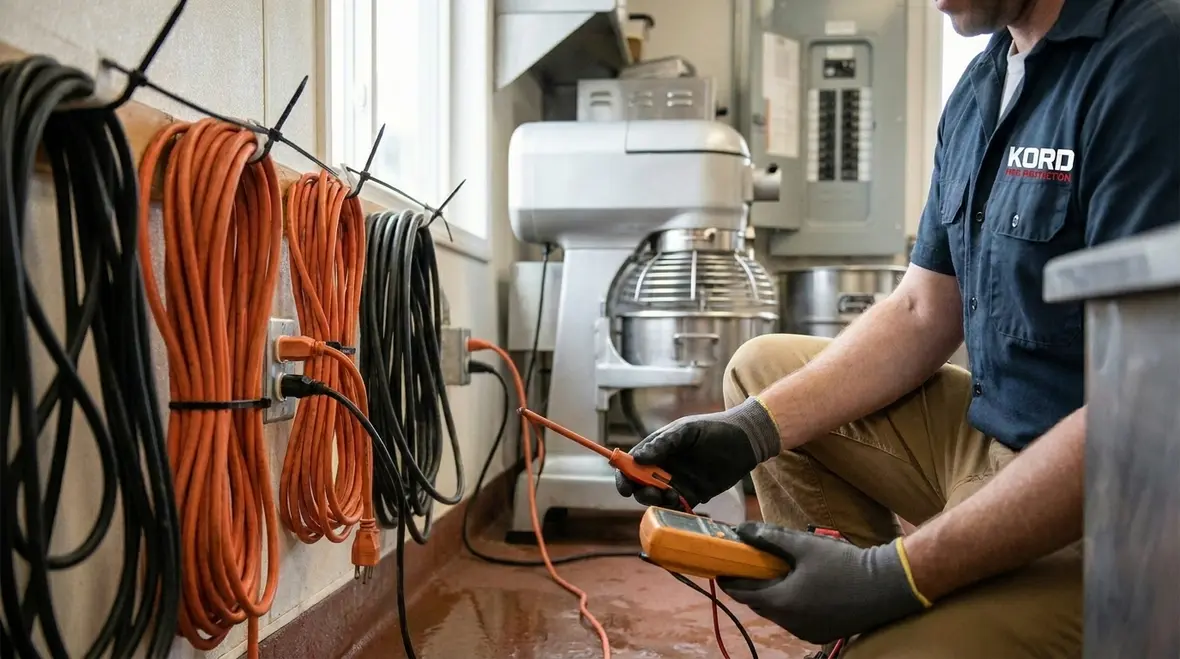
Even when people mean well, cord misuse causes many incidents. Therefore, managers should limit extension cords and power strips in places where heat and grease exist. Cords should not run across walkways where staff kick them, nor should they pass behind hot equipment where insulation can degrade. Also, cords should not sit under mats, near sinks that splash water, or behind appliances that vibrate during operation.
Furthermore, staff should handle plugs like they matter. A firm grip on the plug body, not yanking the cord, reduces stress at the connection. Also, equipment should only plug into outlets that match its rating. When a kitchen uses the wrong voltage adapter or an improvised setup, it risks overheating and failure.
kord fire protection technicians often stress that cords are not built for long term “creative routing.” They are built for intended use. If a cord becomes part of the routine, then the routine needs to change, not the cord.
Where temporary power becomes permanent risk
Temporary power has a sneaky habit of becoming permanent because everyone gets used to it. A strip under a counter becomes “how we do it here.” An extension cord behind a warmer becomes furniture. That is when the risk grows roots. If equipment placement forces awkward routing, the better answer is usually a code-compliant outlet plan or equipment relocation, not another layer of creative cable gymnastics. And yes, the phrase “it has been fine for months” has introduced many regrettable stories.
How proper equipment grounding reduces shock and ignition
Grounding and bonding help control electrical fault conditions. When grounding works, it guides dangerous current away from people and equipment surfaces. Meanwhile, it also supports breakers and protective devices so they trip during a fault instead of letting heat build.
To strengthen this step, kitchens should verify that equipment has intact ground paths. That means checking that plugs connect securely and that metal equipment frames remain properly grounded. In addition, managers should avoid replacing three prong plugs with two prong adapters unless the facility follows a compliant method. Adapters are not a magic trick. They often just move risk around.
When kord fire protection technicians review a site, they look for signs of grounding failure such as damaged cords, loose outlets, or corrosion at connection points. Then they recommend fixes that align with safety standards and the kitchen’s actual layout.
Grounding matters most where water and metal meet
Commercial kitchens are full of stainless steel surfaces, damp areas, and fast-paced movement. That combination makes grounding especially important around prep sinks, dish areas, ice equipment, and any appliance with metal housing. If the ground path fails, a person can become the easiest route for current. That is not the sort of teamwork anyone signed up for. Good grounding reduces both shock risk and the chance that a fault keeps heating inside an enclosure long enough to ignite nearby grease or packaging.
Panel labeling, breaker protection, and electrical maintenance
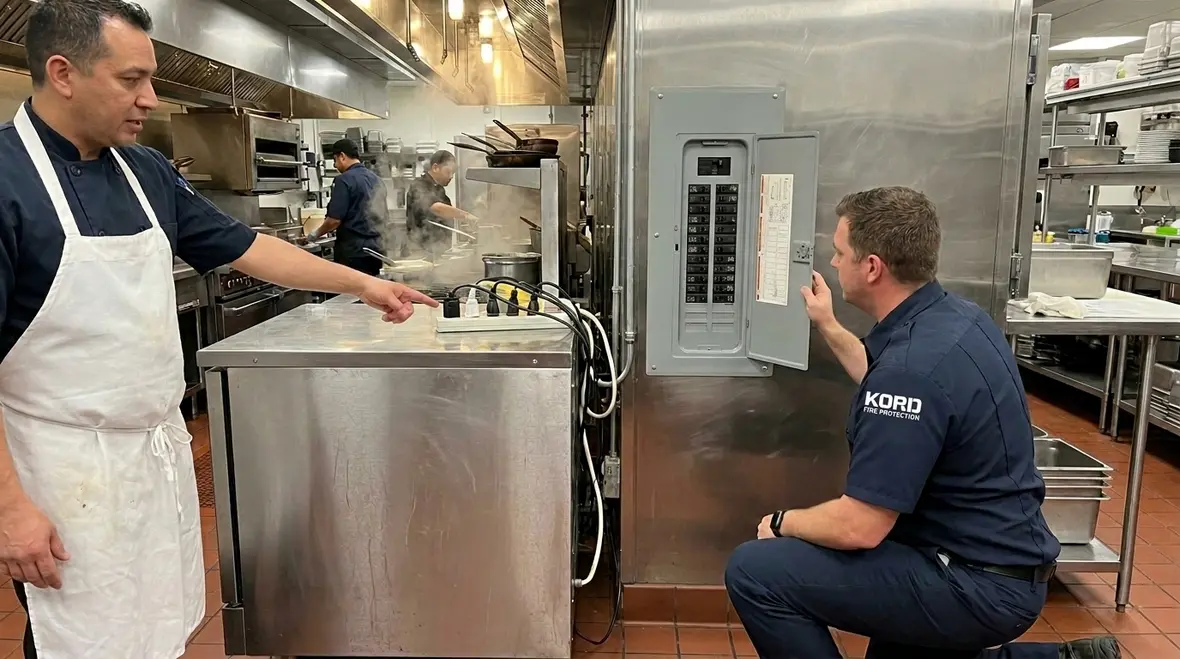
Electrical safety also depends on how well the building manages power distribution. If breakers lack clear labels, staff waste time during emergencies and can turn off the wrong circuit. Therefore, facilities should label panels so operators know which breaker controls which equipment. Updated labels matter because equipment changes over time, and kitchens love upgrades almost as much as they love procrastinating maintenance.
Next, managers should support scheduled maintenance rather than “fixing after failure.” That includes checking breaker condition, inspecting contact points, and ensuring protective devices work as designed. In commercial kitchens, moisture, grease, and vibration can speed up wear, so preventive work helps avoid surprise failures.
Technicians also recommend tightening and inspecting connections where appropriate. Loose connections create resistance, resistance creates heat, and heat creates smoke. So the safest plan follows a timeline, not a crisis.
Maintenance works better when documentation is boring and accurate
There is nothing glamorous about updated panel directories, inspection notes, and service records, but they save time when something goes wrong. A kitchen that documents repeat breaker trips, failed outlets, replaced cords, and equipment changes can identify patterns before they become incidents. That same discipline supports other life-safety systems too. For example, teams that stay organized with electrical records often do a better job keeping up with a restaurant hood fire suppression inspection checklist, because the habit of routine oversight carries across the whole operation.
Where inspections should focus for commercial kitchen fire hazard reduction
Inspections should go beyond the obvious. For strong commercial kitchen fire hazard reduction, the team should pay attention to hidden and heat affected areas. That includes wiring inside equipment, connections in service panels, and junction points behind hot and steam producing units. In addition, the inspection should cover areas where cords and temporary setups appear, such as back-of-house workstations and mobile appliance stations.
Managers can guide inspections with a checklist that follows real kitchen workflow. First, inspect during non rush hours so staff can access equipment safely. Then, confirm that cables stay clear of hot surfaces and that clips and strain reliefs hold cords in place. Finally, document findings and repair timelines.
According to kord fire protection technicians, one of the biggest improvements comes from tracking repeating issues. If the same outlet or junction point fails more than once, the problem is not “bad luck.” It is a system weakness that needs a targeted fix.
Pair electrical inspections with kitchen suppression readiness
Electrical safety is strongest when it supports the rest of the kitchen protection plan. If a fault starts a fire near cooking equipment, the suppression system, extinguishers, fuel shutoffs, and staff response all need to work together. That makes it smart to review electrical risks alongside the kitchen’s suppression setup, especially in high-output spaces. For operations that want to tighten the full picture, Kord Fire also offers guidance on commercial kitchen fire suppression systems and dedicated UL 300 restaurant system services for code-focused protection near cooking lines.
FAQ: Quick answers for electrical fire prevention in kitchens
Call to action for safer operations and faster fixes
Commercial kitchen risk does not wait for next quarter. A solid plan for commercial kitchen fire hazard reduction starts with practical cord rules, correct grounding, clear breaker labeling, and inspections that reach the hidden parts of the system. Then, if issues appear, qualified help should move fast. Contact kord fire protection technicians to review electrical safety, spot weak points, and build a maintenance plan that fits real kitchen workflow. Do the boring work now, so the kitchen stays calm later.
For teams that want protection beyond basic troubleshooting, a strong next step is reviewing the kitchen’s suppression coverage and service schedule. Explore Kord Fire’s commercial kitchen hood fire suppression service to connect electrical safety with a broader fire protection plan that supports compliance, faster response, and more confident operations.

Join Our Newsletter!
Get the latest fire safety tips delivered straight to your inbox From our Newsletter.