
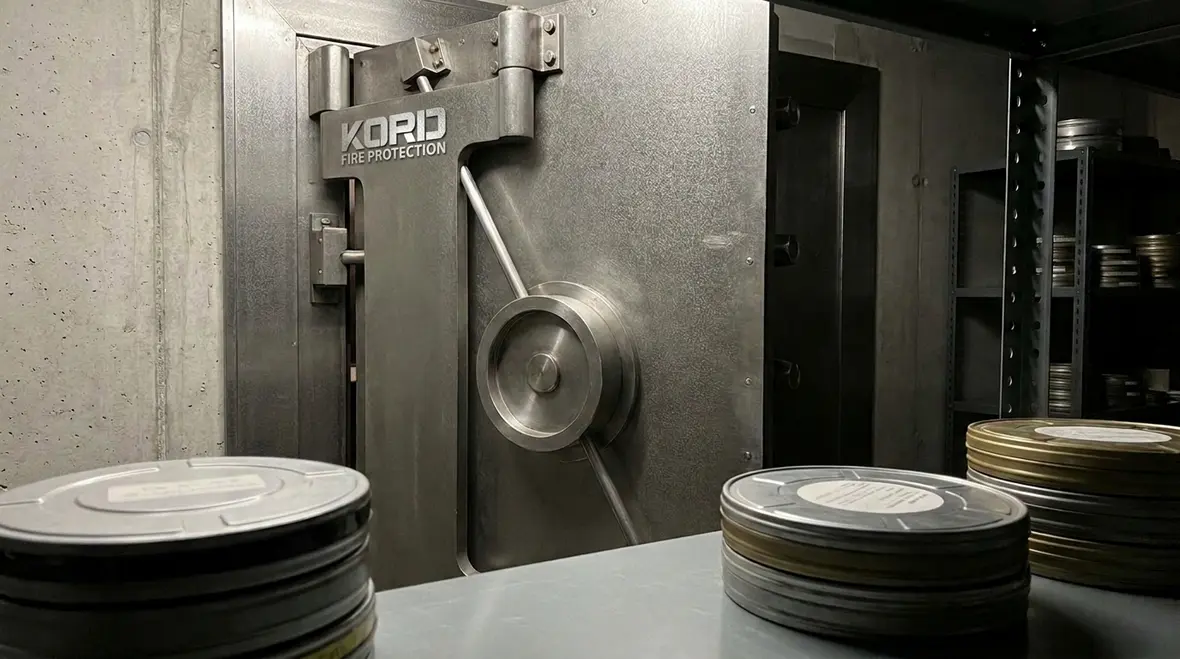
NFPA 40 Section 6.5: Permanent Storage Vault Requirements for Nitrate Film
Quick Answer: NFPA 40 Section 6.5 sets performance based construction, separation, and operational controls for permanent storage vaults used for nitrate film. Facilities must control heat, ventilation, detection, and security while maintaining inspection and maintenance readiness to protect occupants and property.
For practical guidance on recurring fire protection verification across commercial facilities, Kord Fire Protection also provides fire pump testing requirements and best practices that fit naturally into broader compliance planning.
What NFPA 40 Section 6.5 requires for permanent storage vaults
NFPA 40 Section 6.5 establishes detailed safety requirements for permanent storage vaults used to store nitrate film. For operators seeking NFPA 40 permanent storage vault requirements nitrate film, the core compliance challenge is aligning vault construction and site operational controls with the fire behavior and deterioration hazards unique to nitrate film. Effective compliance goes beyond “building a vault” and extends into verification testing, documented inspection routines, and ongoing maintenance that keeps critical mechanisms functioning as designed.
Understanding the hazard basis that drives vault design
Nitrate film presents a serious fire hazard because it can produce intense heat and burn rapidly once ignited, and it can also deteriorate over time in ways that increase risk. NFPA 40 Section 6.5 requirements reflect this reality by focusing on limiting ignition potential, controlling fire growth pathways, and providing robust separation and containment features suitable for long term storage.
In practical facility operations, the risk is often managed through a combination of: controlled storage environments, vault integrity, and readiness of protection and life safety systems that support safe evacuation and firefighting access. Many compliance findings stem from deterioration of door seals, misalignment of operational components, unmanaged penetrations, or loss of maintainable drainage and ventilation characteristics.
Vault construction and enclosure controls under Section 6.5
NFPA 40 Section 6.5 addresses the vault enclosure as the primary barrier that must maintain performance under realistic fire conditions and during normal operations. Commercial facilities must pay close attention to how the vault envelope is built and how it remains intact over years of use.
Key construction and integrity checkpoints
Vault doors and closure performance: Door hardware, closure alignment, and sealing mechanisms must maintain consistent barrier performance. Degraded gaskets and improper latch engagement are common failure points.
Penetrations and joints: Cable trays, conduit entries, and maintenance openings must remain properly sealed or protected to maintain the intended barrier characteristics.
Structural separation and adjacency planning: The vault must meet the separation expectations required by NFPA 40 so that surrounding occupancy and other storage areas do not create unacceptable exposure risk.
Operational hardware reliability: Hinges, locks, and release mechanisms need routine inspection so they do not impair secure storage or emergency response workflows.
Common commercial facility issues during inspections
Vault doors that are routinely used beyond design intent, causing misalignment and seal leakage.
Unauthorized modifications by facilities teams or contractors, especially around electrical and communications routing.
Incomplete reconciliation between as built drawings and current condition, especially after renovations.
To reduce these risks, facilities typically need a structured asset management process that includes clear work order controls, change review, and periodic physical verification of vault envelope elements.
Operational requirements: access control, handling, and readiness
Section 6.5 emphasizes that a permanent storage vault is not a “set it and forget it” asset. Operational procedures directly influence ignition risk, evacuation effectiveness, and maintenance outcomes. Commercial and industrial sites often face compliance drift when staffing changes or when standard operating procedures are not updated to reflect actual workflow.
What operators must control day to day
Secure access and inventory control: Only authorized staff should access nitrate film storage. Inventory practices support detection of abnormal deterioration patterns and unauthorized storage.
Handling procedures: Transfers in and out of the vault must follow controlled methods that avoid impact damage, contamination, and exposure of film to unsuitable conditions.
Housekeeping and storage discipline: A vault environment must remain free of combustibles and unmanaged materials that can undermine barrier and compartment intent.
Emergency readiness coordination: Site procedures should align with local response expectations, including access routes, pre incident planning, and internal notification sequences.
Operational compliance also depends on staff training and maintenance oversight. Facilities that treat vault checks as “quarterly housekeeping” often miss subtle degradation that can become a significant integrity issue. Kord Fire Protection supports commercial stakeholders by building practical compliance programs that connect inspections, documentation, and follow up repairs into a repeatable workflow.
Inspection, testing, and maintenance to maintain compliance
NFPA 40 Section 6.5 compliance requires ongoing assurance that the vault and associated systems continue to perform. The most difficult part is sustaining performance through normal facility aging, renovations, and varying maintenance execution quality across different vendors.
Maintenance focus areas that commonly fail
Door seal condition: Gaskets and sealing surfaces degrade, compress, or become contaminated over time.
Locking and closure mechanisms: Hardware that slows down, sticks, or drifts out of alignment can prevent full closure.
Compartment integrity during work: Repairs and cable runs can unintentionally introduce openings or leave sealing incomplete.
Documentation gaps: Facilities often cannot demonstrate what was inspected, when it was inspected, and what corrective actions were taken.
How commercial facilities should structure verification
A strong approach includes condition based checks paired with schedule based inspections. The inspection program should define responsibilities, escalation thresholds, and evidence retention. Where systems interface with other building fire protection elements, coordination should be documented so that changes do not inadvertently reduce performance.
For practical guidance on managing inspection and maintenance programs, commercial stakeholders can use Kord Fire Protection resources that support NFPA aligned compliance planning and ongoing service delivery. For example, visit Kord Fire Protection fire pump testing requirements to understand how recurring verification supports readiness across facility life safety assets.
Compliance planning for real world commercial and retail environments
Nitrate film storage can exist in specialized production sites, archives, logistics hubs, and certain commercial or retail adjacent contexts such as media asset operations. Compliance planning should address both code intent and operational realities.
Practical challenges facilities face
Space constraints: Retrofitting vaults or maintaining clearances while keeping operations running often leads to rushed penetrations and incomplete sealing.
Multi vendor work: Electrical and telecom contractors can create untracked changes. Without a formal change control process, vault integrity can degrade.
Seasonal environment swings: HVAC changes, humidity control issues, and temperature variations can affect deterioration risk and operational stability.
Kord Fire Protection plays a key role in keeping permanent storage vault programs audit ready. The service model typically includes review of documentation, field verification support, and maintenance coordination so that operators can demonstrate ongoing compliance rather than relying on initial installation records.
Frequently Asked Questions
Get vault compliance support from Kord Fire Protection
Permanent storage vault compliance under NFPA 40 Section 6.5 requires sustained execution, not one time installation. Kord Fire Protection helps commercial facilities maintain audit ready documentation, verify critical vault performance elements, and coordinate corrective maintenance before small issues become major compliance findings. Schedule a compliance review to align your nitrate film vault program with ongoing operational realities and inspection expectations.

Join Our Newsletter!
Get the latest fire safety tips delivered straight to your inbox From our Newsletter.



