Standpipe Pressure Management Systems for High Rise Stability
High rise buildings demand calm, steady water where people need it most. That is why standpipe pressure management systems matter. When a system keeps the right pressure at the standpipe outlets, it helps firefighters attack fast and helps occupants trust the building will respond. Still, pressure in tall structures does not behave like a friendly sitcom character who always shows up on time. It shifts with elevation, flow demand, and even hose line choices.
In this article, Kord Fire Protection technicians explain how effective pressure management works in real life, not just in theory. They also show how good design and careful testing prevent common failures, from weak streams to unsafe overpressure. Then, they map a clear path for maintenance teams who want results, not guesswork. For added context, teams comparing field performance and testing strategy can also review Kord Fire’s Standpipe Flow Test Guide for Fire Protection and the related discussion on Standpipe System Pressure Testing Tips for Reliability.
Why pressure control fails in tall buildings without a plan
Pressure control often fails when a high rise standpipe system treats the building like one uniform pipe run. However, the system experiences different pressures at different floors. As water rises, the static head changes. Then as water flows, friction losses build along the route. Finally, when firefighters open multiple outlets, the demand can jump fast.
As a result, the pressure at the top floors can drop just when it must hold steady. Conversely, some setups can over deliver at lower levels. That is where firefighting teams get stuck with a stream that is too weak at one end and too harsh at the other. Moreover, if the system lacks proper regulation, the standpipe pressure management systems cannot respond in a controlled way.
Kord Fire Protection technicians usually summarize it like this: water does not read the drawings. It responds to the physics. Therefore, design and devices must manage pressure through that reality. That same practical view appears in Kord Fire’s overview of standpipe system requirements and how it works, where real operating conditions matter more than wishful assumptions.
What changes pressure from floor to floor
Each floor adds elevation change, and each active hose line adds flow demand. That combination means the outlet that looks fine on paper at one level may behave very differently twenty stories up. Without a pressure management plan, a building can accidentally create a system that is technically present but operationally moody. Nobody wants a standpipe with the temperament of a reality show contestant.
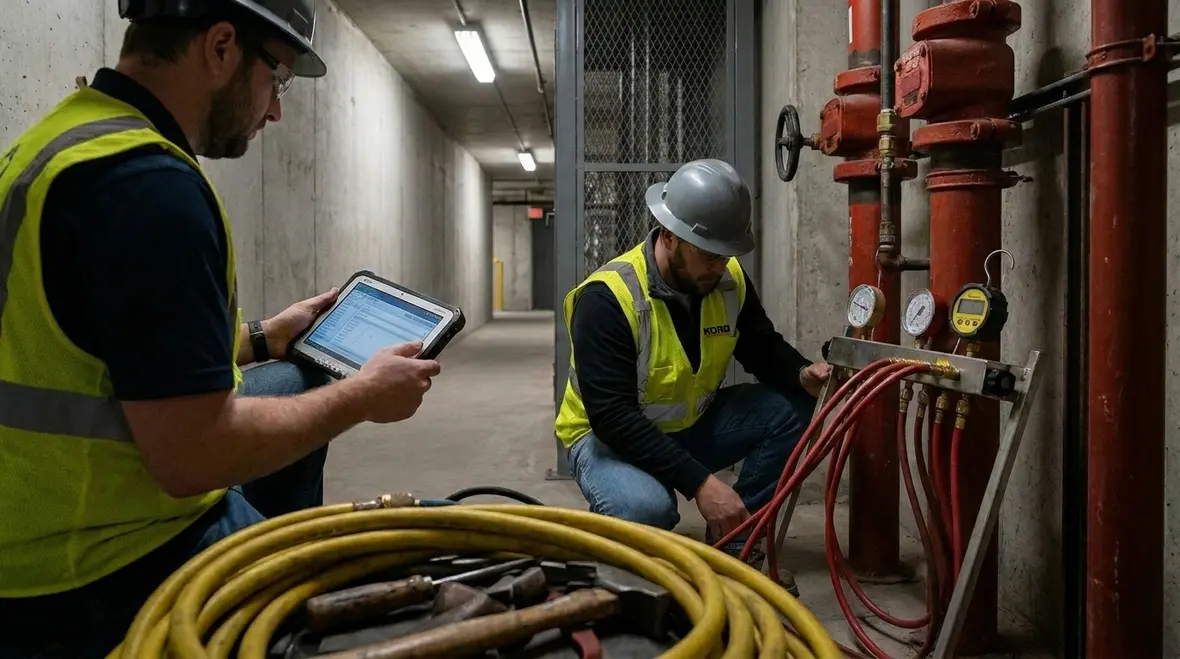
How Kord Fire Protection technicians approach effective pressure management systems
To manage pressure well, technicians start with the building goals and the expected fire response. Then they match those goals to the system components that control pressure. Typically, they focus on three tasks.
- Establish target pressure at outlets across floors so firefighting streams stay within safe operating limits.
- Control pressure during varying flow so the system does not swing wildly when hose lines open or close.
- Maintain reliable performance with testing and maintenance, so devices do not drift over time.
Next, they evaluate system behavior under the most likely flow scenarios. For example, the first hose line may draw a certain flow, while a second line may change the pressure profile. Also, they consider how long firefighters will run water and how quickly the standpipe system must stabilize. Think of it like traffic flow. If the building has only one on ramp with no sensors, the system will never stay smooth.
Planning for real incidents instead of ideal diagrams
Effective planning does not assume one perfect condition. It looks at multiple outlets, variable flow, and the fact that field conditions rarely ask permission before changing. Kord Fire technicians prefer systems that recover smoothly, hold target pressure, and make life easier for the people who actually have to use them during an emergency.
Choosing devices that stabilize flow and protect equipment
In practice, technicians use pressure regulating components to keep the standpipe performance steady. Some buildings rely on elevation based methods. Others use regulated control points. In many cases, the most reliable approach uses pressure control devices that respond as flow changes.
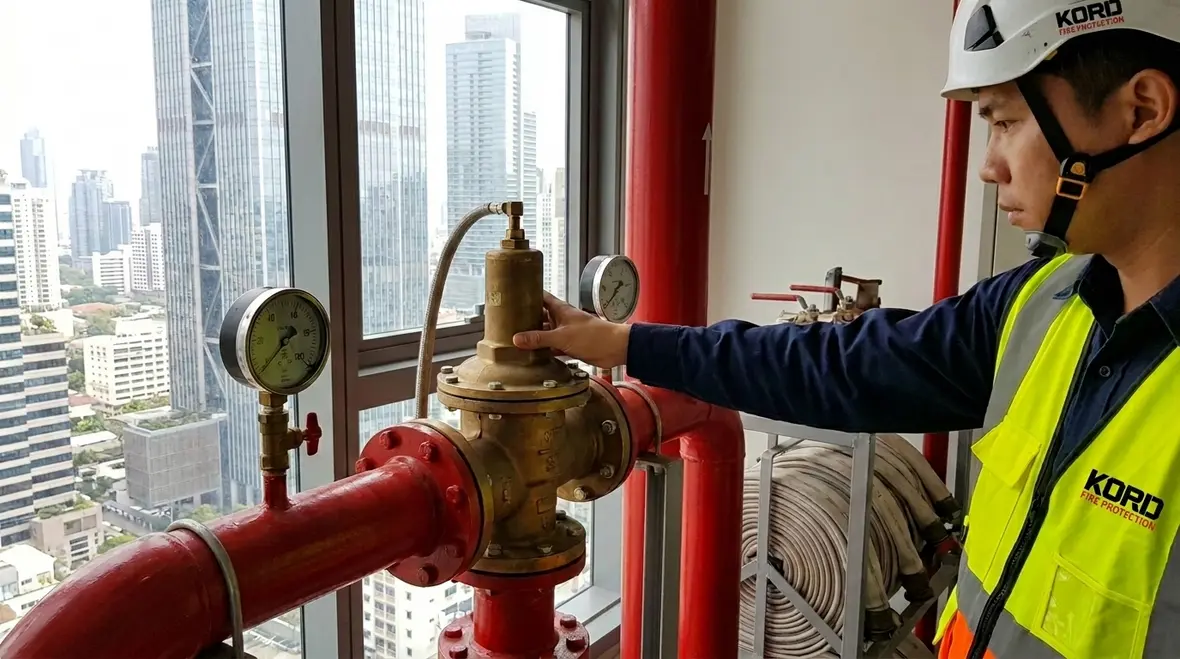
Kord Fire Protection technicians often look for devices that can handle these pressures without constant manual adjustment. They also verify compatibility with fire service valves, hose connections, and the system piping. Importantly, they check how regulators behave at low and high demand. A device that performs great during a full flow test but struggles at partial flow can still create unsafe conditions in real incidents.
They also consider what happens after water moves. Water hammer and surging can stress piping and fittings. Therefore, technicians aim for smooth control and stable pressure. If the system slams pressure up and down, that is not just annoying. It can wear components faster than expected. This is one reason maintenance teams often pair system reviews with broader service support through Kord Fire’s full fire protection services page when planning upgrades or inspections.
Engineering the system for pressure at every standpipe outlet
Now the key part: pressure at the outlet must meet the firefighting needs at each location. High rise design means elevation changes the outcome. Therefore, pressure management must address both static pressure and friction loss under flow.
Technicians evaluate outlet conditions floor by floor. Then they identify where pressure will likely drop or spike. After that, they position pressure control points so they support the full range of building heights.
In addition, they account for how firefighters likely operate the standpipes. They consider hose sizes, nozzle types, and the way multiple teams might open different outlets at once. Consequently, the system must perform under more than one demand pattern.
And yes, if someone tells a team to “just set the pressure and forget it,” that is the kind of advice that sounds confident but ages like milk. Kord Fire Protection technicians treat performance as a moving target, because demand and conditions change.
Balancing outlet usability with system-wide stability
The goal is not simply more pressure. The goal is usable pressure. A strong stream that is unsafe at one floor or a weak stream at another does not solve anything. Good engineering balances equipment protection, hose operation, and pressure consistency so the building responds with discipline instead of chaos.
Testing and commissioning that proves the system works
Design only starts the job. Testing and commissioning prove whether the standpipe pressure management systems perform as intended. During acceptance testing, technicians verify that pressure stays within target limits under controlled flow conditions.
They typically measure pressure at planned locations and confirm that the system reaches stable conditions without dangerous surges. Then they document results so maintenance teams can compare future readings to the baseline. If they find drift, they correct the issue before the building moves into operation.
Kord Fire Protection technicians also pay attention to adjustment history. For example, if someone modifies a regulator setting without following the commissioning plan, the whole pressure profile can shift. Therefore, they keep clear records of set points, maintenance actions, and test outcomes.
Moreover, they coordinate with the fire service team when possible. That helps ensure the results match operational expectations, not just a test report. Property teams looking for a deeper reference on inspection rhythm can also read Kord Fire’s wet standpipe system inspection and maintenance guide, which reinforces the value of documented performance over assumptions.
Maintenance practices that prevent pressure drift over time
Even a well designed system can drift. Regulators and related components can wear, clog, or respond differently after long service. Additionally, valve positions can change, and minor piping work during renovations can alter flow paths.
To prevent these problems, maintenance teams should follow a planned schedule that includes inspection, cleaning where allowed, and functional checks. They also test system pressure periodically and compare the data against the original performance baseline.
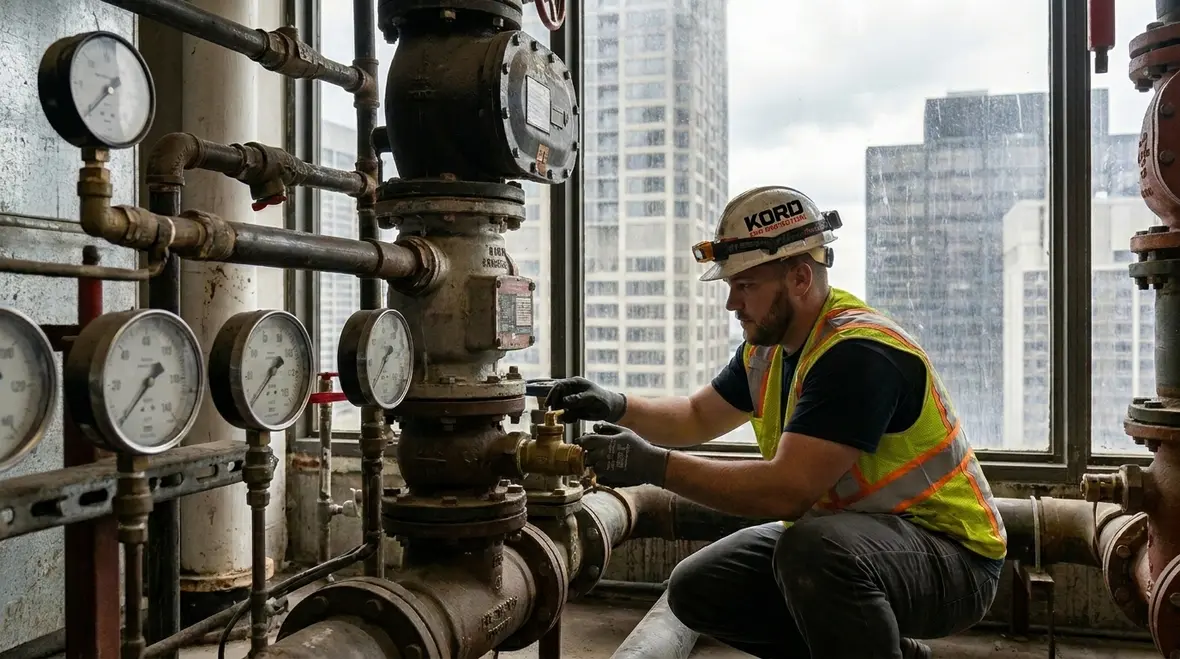
Kord Fire Protection technicians usually recommend focusing on the components that influence pressure most. They look at regulators, control valves, strainers, and any devices that can collect debris. Also, they confirm that no one bypassed a control setting during repairs.
When maintenance stays consistent, the standpipe pressure management systems keep delivering dependable performance. And in a fire emergency, dependable beats dramatic every time.
FAQ: Standpipe pressure management in high rise buildings
Conclusion: Get pressure stability your building can count on
High rise standpipe performance depends on more than pipe sizes and good intentions. With standpipe pressure management systems designed, tested, and maintained with care, buildings can deliver steady pressure at the right places and times. Kord Fire Protection technicians bring practical field knowledge, clear commissioning steps, and ongoing maintenance discipline to reduce risk.
If your system needs a review, a test plan, or pressure control upgrades, reach out today. For service support, inspections, and system coordination, explore Kord Fire’s Full Fire Protection Services page. Get the calm, controlled response your building deserves, not the wild pressure drama nobody asked for.

Join Our Newsletter!
Get the latest fire safety tips delivered straight to your inbox From our Newsletter.