NFSA for High Rise and Commercial Fire Safety
NFSA plays a steady, practical role in protecting lives and property in high rise and commercial settings, and it does it with real-world fire science instead of guesswork. In many buildings, NFSA support helps teams plan, inspect, and maintain protection systems so a fire does not spread like a rumor through the office. And yes, Kord Fire Protection technicians often explain this in plain language, because nobody wants a safety briefing that sounds like a legal thriller. This article looks at how NFSA fits into high rise and commercial fire strategies, what technicians actually check, and why the details matter when smoke, heat, and airflow start acting like they own the place.
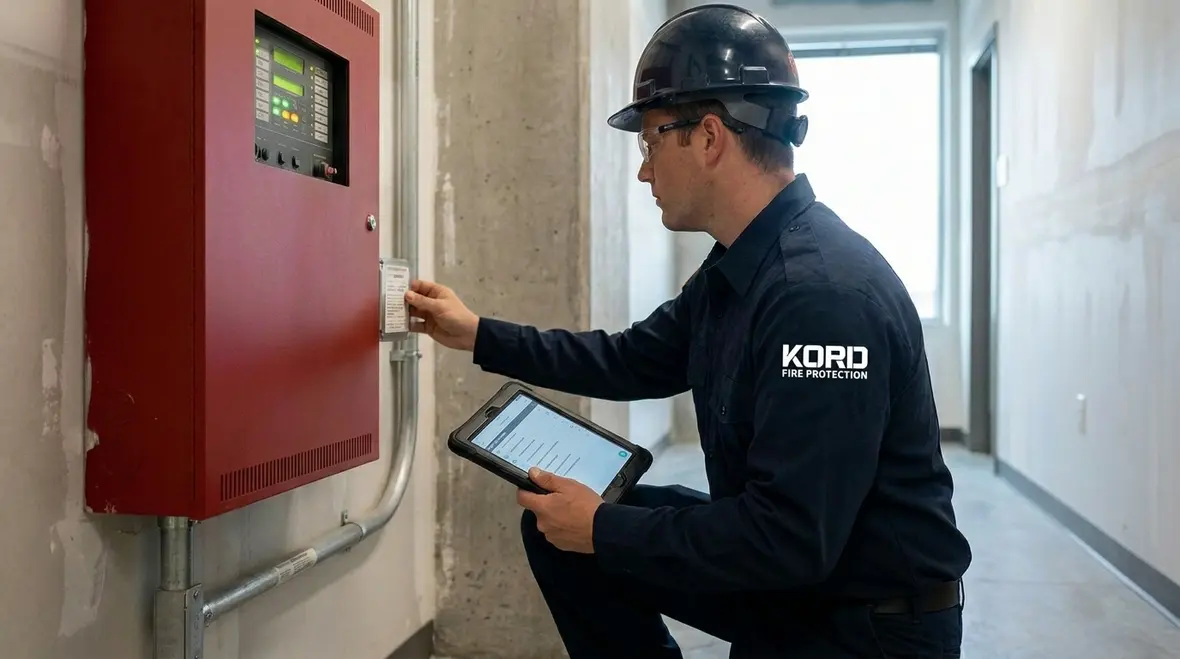
NFSA’s mission in high rise and commercial fire safety
In tall buildings and busy commercial spaces, fire risk rises fast because people move differently, compartments connect in unexpected ways, and vertical airflow can carry smoke upward. NFSA supports safety efforts by focusing on prevention, readiness, and system reliability. Therefore, the goal is not only to respond to fires, but also to reduce the chance that a small incident becomes a full emergency.
When fire professionals talk about NFSA, they typically emphasize practical controls. First, they confirm the building’s fire protection strategy matches its design and occupancy. Then, they verify that each system performs when needed, not just when a test photo is taken for the “safety wall.” Kord Fire Protection technicians often explain that the best protection plan behaves like a team, not like a pile of equipment waiting for the worst day.
That matters even more in high rise and commercial properties, where one weak point can affect multiple floors, tenants, and operating areas at once. A lobby, stair pressurization system, sprinkler riser, smoke damper, and alarm panel may all seem separate on paper, but during an emergency they become part of one live performance. If one section misses its cue, the rest of the building feels it immediately. That is why practical guidance matters so much. It keeps the strategy grounded in how the building really behaves, not how everyone hopes it behaves.
How NFSA supports risk planning for tall buildings
High rise safety depends on more than sprinklers and a fire alarm panel. In practice, teams must plan for smoke spread, evacuation routes, fire department access, and system coordination. NFSA helps these efforts by encouraging structured risk thinking across zones, levels, and use cases such as kitchens, loading bays, and plant rooms.
Furthermore, technicians consider how occupants actually use the space. For example, retail areas may attract crowds, while office floors may have long corridors and limited sight lines. As a result, the smoke control plan must align with evacuation movement. Kord Fire Protection technicians often walk people through these scenarios by mapping where smoke travels, how doors should behave, and what happens when fire dampers close.
Meanwhile, commercial risks can be more variable. A warehouse might store combustible goods; a salon might use flammable products; a data suite might hide heat loads inside equipment. Because NFSA planning accounts for real conditions, the protection strategy stays relevant instead of becoming a dusty binder.
This is also where a code-minded view and a field-minded view meet in the middle. The paperwork may define the occupancy and the system intent, but technicians still need to look at the actual site conditions. Has storage crept too close to sprinkler discharge patterns? Did a tenant remodel a space and change the travel path? Are equipment rooms still accessible, or have they become unofficial storage closets with commitment issues? Good planning catches those little changes before they create big problems. For related reading on tall-building requirements, see Fire Code Requirements for High Rise Buildings.

NFSA and smoke management: the part people underestimate
Smoke rarely gets the respect it deserves. It moves quickly, obscures exits, and can cause life-threatening conditions long before flames appear. Therefore, smoke management becomes a core topic in high rise and commercial fire safety, and NFSA related processes often focus on how systems reduce smoke hazards.
Technicians typically evaluate how air handling systems, fire doors, dampers, and compartment boundaries work together. In addition, they review control sequences so smoke control features activate in the correct order. Kord Fire Protection technicians explain these steps slowly and clearly, because a delayed damper action can be the difference between a controlled incident and a chaotic evacuation.
Also, they often point out an uncomfortable truth: people usually store “just a little” extra stuff near exits and service rooms. That small habit can block airflow pathways and complicate smoke control. So, maintenance and housekeeping policies matter just as much as hardware.
Smoke management is one of those subjects that sounds technical until you picture a real hallway filling from the ceiling down. Suddenly, air movement, door timing, and compartment integrity feel very personal. In high rise buildings, that is especially true because vertical shafts, stairwells, and mechanical systems can help or hurt depending on how they are designed and maintained. A building does not need dramatic flames to become dangerous. A poorly controlled smoke event can create confusion fast and force occupants to make decisions under pressure. That is why this part deserves more respect than it usually gets.
What technicians look for in smoke control performance
- Proper damper response and reset behavior
- Door operation that supports compartmentation instead of defeating it
- Fan sequences that match the intended emergency mode
- Clear egress paths with no stored materials interfering with movement or airflow
- Alarm and control logic that activates features in the right order
System coordination in high rise emergencies
In many buildings, systems function separately during testing, but during a fire they must work like a coordinated orchestra. NFSA related practices push teams to confirm interlocks, alarms, and control functions across life safety systems. That means the fire alarm triggers the right responses, and those responses support evacuation and fire attack.
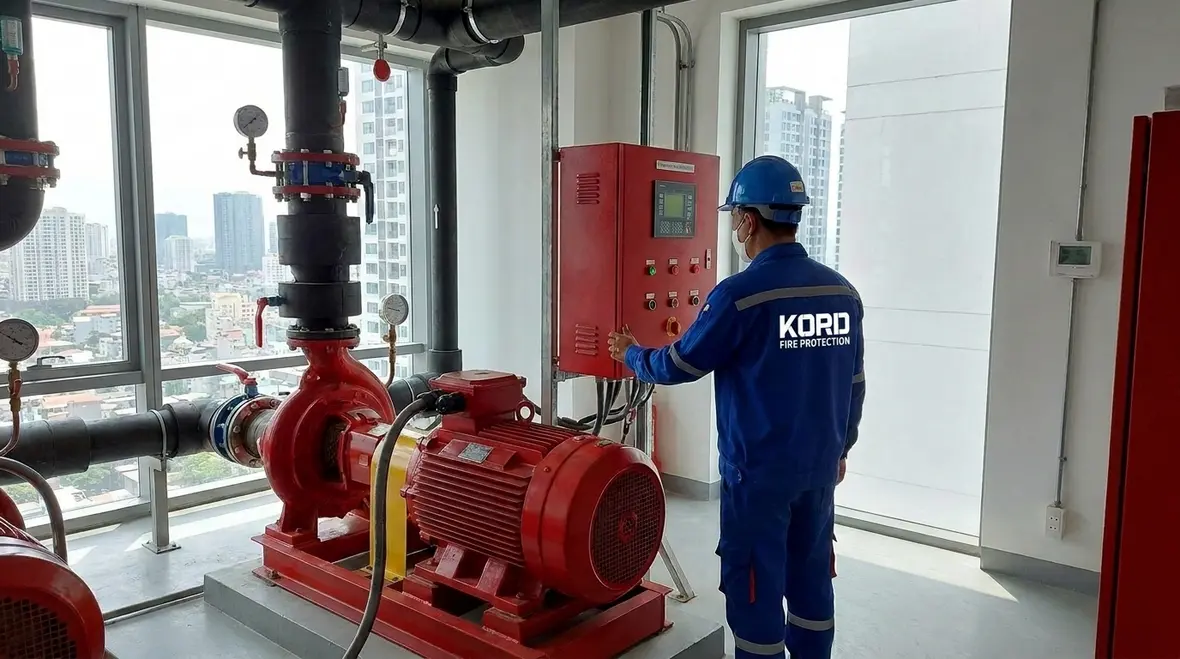
Common coordination points include elevator recall logic, door holder release, fan shutdown sequences, and alarm notification patterns. Moreover, technicians verify these functions under realistic conditions, not just in a lab setting. Because false assumptions can be expensive, Kord Fire Protection technicians often test how panels communicate with auxiliary equipment and how the building responds across multiple floors.
Here is where the humor sometimes shows up. Fire safety people joke that buildings can behave like teenagers during a crisis: “I will do it when I feel like it.” Still, testing removes that attitude by proving what the systems do, and when they do it.
Coordinated performance is also what turns individual devices into an actual life safety strategy. A detector can activate, a panel can signal, a fan can change state, and an elevator can recall, but the real question is whether all of it happens in a sequence that supports people getting out and responders getting in. If a single interface fails, the problem is rarely isolated. One mistimed response can slow evacuation, confuse occupants, or create conditions that force firefighters to spend valuable time working around the building instead of through it.
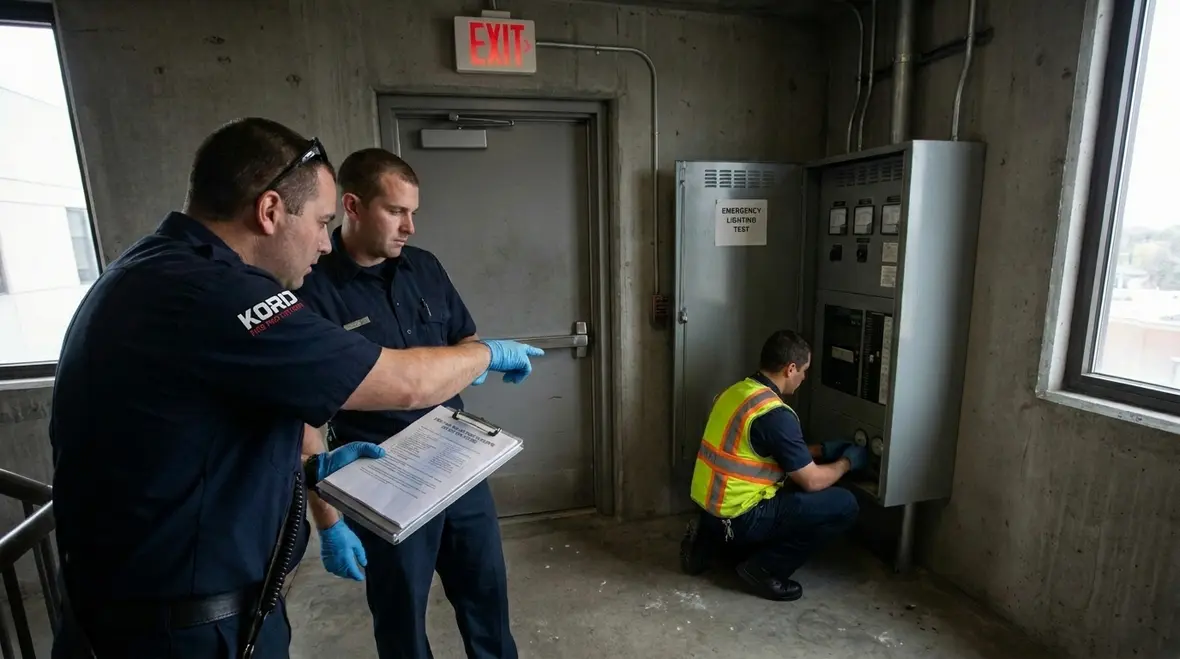
Inspections, testing, and documentation that stand up to scrutiny
High rise and commercial fire safety depends on more than initial installation. NFSA emphasizes ongoing verification so protection systems stay reliable. Therefore, inspection and testing schedules must match the building’s risk profile and the manufacturer requirements.
Inspections often cover alarm devices, sprinkler components, emergency lighting, fire extinguishers, hose reels, and smoke control features. Additionally, technicians check that access panels remain reachable and that fire doors close properly every time. Documentation also matters because it provides proof of performance, helps track trends, and supports compliance.
Kord Fire Protection technicians frequently explain that paperwork is not busywork. It is a map of what was checked, what was found, and what gets fixed. And when someone asks, “Why did this fail last time?” the answer comes from records, not guesswork. For a closer look at recordkeeping and compliance, read Fire Safety System Documentation for Compliance. If you want a practical inspection example, Wet Sprinkler System Inspection by Kord Fire Protection walks through what technicians check in the field.
What technicians verify
Fire alarm device health and signaling paths
Sprinkler readiness, water supply indicators, and valve condition
Fire door operation, seals, and closure speed
Smoke control damper alignment and reset behavior
Emergency power coverage for critical components
Why it matters
It confirms detection triggers at the right time
It reduces the odds of a partial or delayed suppression
It limits smoke migration and improves evacuation safety
It ensures smoke controls activate in the correct sequence
It keeps life safety functions operating during outages
Training and on site communication that prevent panic
Even the best systems cannot replace human decisions during an emergency. NFSA style safety programs often support practical training for staff, contractors, and facility managers. That includes evacuation drills, knowledge of alarm zones, and clear roles for building wardens or emergency coordinators.
Furthermore, effective training reduces delays caused by confusion. People do not evacuate well when they do not know what sounds mean, which stairwell routes are safe, or how to assist visitors. Kord Fire Protection technicians often help by explaining what each device is supposed to do, and how building staff can spot early warning signs like blocked exits or abnormal system faults.
And for the record, panic is like a bad streaming app: it buffers when you need it most. Training keeps that from happening.
Good communication on site also makes ongoing maintenance more effective. Staff who know where devices are located, which rooms are part of smoke control, and what common troubles look like can report issues faster and more accurately. That gives technicians a better starting point and shortens the time between finding a problem and fixing it. Safety gets stronger when the people in the building are not passive observers. They become part of the system’s everyday reliability.

FAQ: NFSA in high rise and commercial fire protection
Conclusion: book a safety review and get ahead of the smoke
Fire safety in high rise and commercial buildings works best when systems, planning, and people move in sync. NFSA helps owners and managers build that structure through risk focused support, ongoing verification, and clear documentation. Kord Fire Protection technicians can explain what matters most, what to fix first, and how to confirm the building performs when it counts.
Take the smart step now. Contact your local team, request a system review, and turn potential problems into planned upgrades before the next alarm becomes a real story. To explore broader support options, visit Full Fire Protection Services. If you want a strong foundation on suppression systems, Fire Sprinkler Overview and System Guide is another helpful resource.

Join Our Newsletter!
Get the latest fire safety tips delivered straight to your inbox From our Newsletter.