

FM 200 Fire Suppression Systems Explained
When people hear the words fm 200 fire suppression, they often picture a dramatic movie scene. A server room. Red lights flashing. A countdown echoing through the air. Then whoosh. A clean agent fills the room and saves the day without soaking a single circuit board. It sounds cinematic, yet this technology is very real, very precise, and still very relevant.
Across commercial buildings, data centers, medical labs, and industrial sites, clean agent systems continue to protect high value assets. And when questions arise, Kord Fire Protection technicians step in with calm, measured explanations that feel less like a sales pitch and more like a master class in fire science. They break down what works, why it works, and where it makes sense. Because while technology evolves, smart protection never goes out of style.
Understanding FM 200 Fire Suppression Systems
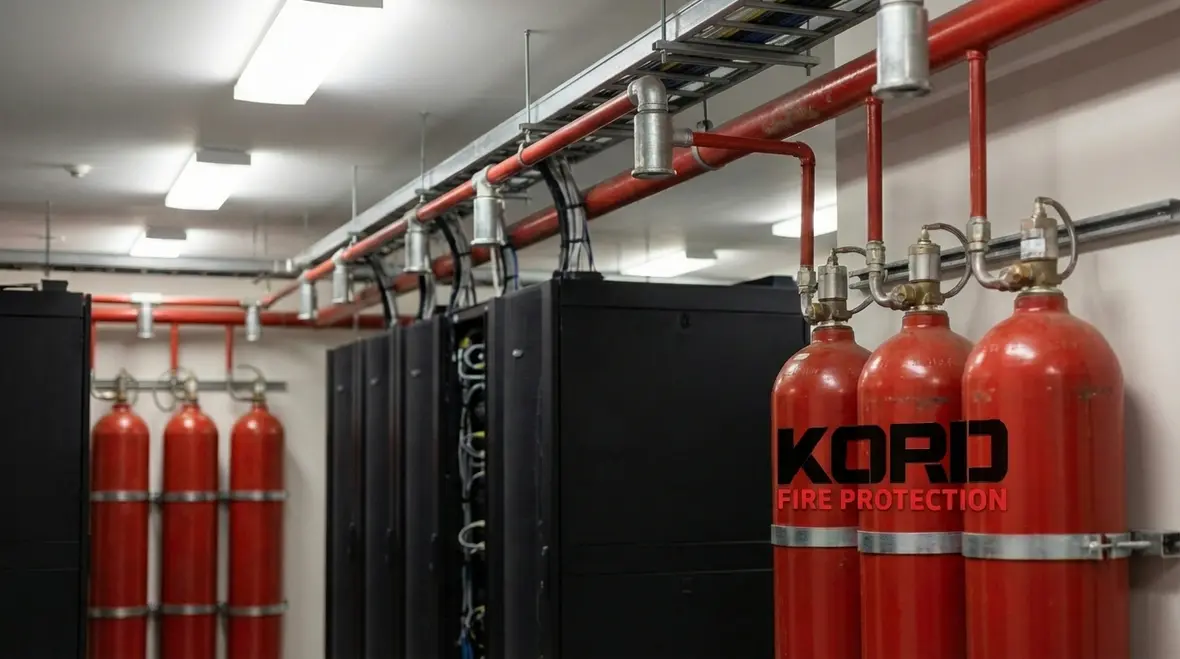
FM 200 is a clean agent fire protection system that uses a compound known as HFC 227ea. It extinguishes fire quickly without leaving residue. In simple terms, it stops a fire in its tracks without turning the room into a swimming pool or a foam party gone wrong.
Unlike traditional sprinkler systems, which rely on water to cool and suppress flames, FM 200 systems discharge a gas that absorbs heat and interrupts the combustion process. As a result, the fire is controlled within seconds. Most systems fully discharge in under ten seconds. That is faster than most people can find the light switch in a panic.
Because it leaves no residue, cleanup is minimal. Therefore, operations can often resume quickly. For facilities where downtime costs thousands per minute, that speed is not just convenient. It is essential.
Kord Fire Protection technicians often explain it in straightforward terms. The system does not smother the fire by removing oxygen to dangerous levels. Instead, it absorbs heat at a molecular level. Consequently, it remains safe for occupied spaces when properly designed and installed.
In facilities with critical equipment, FM 200 and other clean agents are part of a broader strategy to keep uptime front and center. For a deeper dive into how clean agents protect critical gear, see Kord’s guide on clean agent fire suppression for critical equipment.
How Does FM 200 Work in Sensitive Environments?
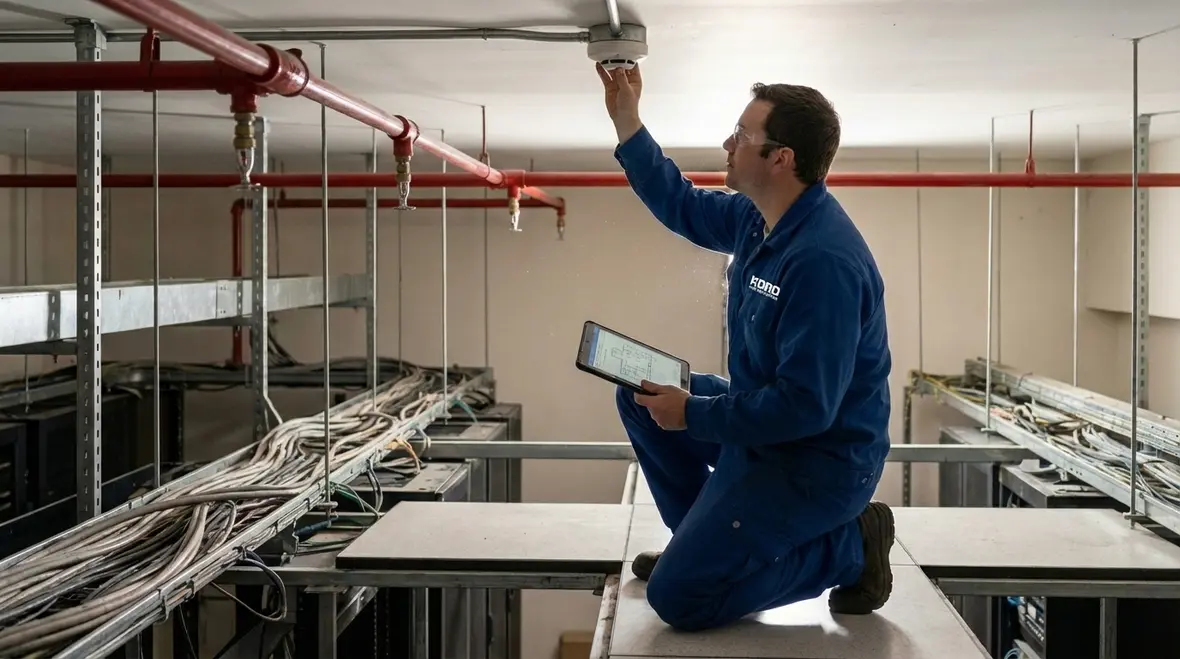
When clients ask how this clean agent actually performs inside critical spaces, technicians usually start with the basics. Detection comes first. Advanced smoke or heat detectors sense a developing fire. Then the control panel evaluates the signal. If conditions meet programmed thresholds, the system releases the agent through strategically placed nozzles.
Within moments, the gas disperses evenly. Because it is stored as a liquid and discharged as a gas, it spreads quickly and reaches hidden areas. That is crucial in rooms packed with wiring, server racks, or control panels.
Additionally, FM 200 systems are engineered with precise calculations. Room volume, ceiling height, air flow, and leakage rates all factor into the design. Kord Fire Protection technicians emphasize that proper room integrity testing plays a major role. If a room leaks too much air, the agent concentration can drop below effective levels. In other words, even the best system needs the right environment to shine.
Furthermore, alarms and warning signals activate before discharge. This gives occupants time to exit. The agent itself is safe for people at design concentrations. However, like any fire protection system, it demands respect and proper planning.
If you’re wondering why technicians obsess over door gaps and cable penetrations, Kord’s article on room integrity testing walks through how leaks can quietly undermine a clean agent system long before an emergency.
Room Integrity: The Unsung Hero
Behind every effective FM 200 system is an enclosure that can actually hold the agent long enough to do its job. That is where room integrity testing earns its reputation. By simulating how air escapes under pressure, technicians can identify leaks, failed seals, or unplanned penetrations that would otherwise go unnoticed until a real fire exposes them the hard way.
Where FM 200 Is Still a Great Fit Today
Some people assume newer technologies have replaced FM 200 entirely. That assumption makes for dramatic headlines, yet reality tells a more balanced story. In fact, many facilities still rely on this proven solution.
It remains a strong fit for:
Data centers and server rooms
Because water can destroy electronics, clean agent systems offer protection without collateral damage.
Telecommunications facilities
Continuous operation is critical. Therefore, a fast acting and residue free agent keeps networks running.
Medical and research labs
Sensitive equipment and controlled environments require a solution that does not introduce contaminants.
Museums and archives
Historic documents and artifacts deserve protection that does not drench centuries of history.
Industrial control rooms
Manufacturing lines depend on control panels and monitoring systems that cannot tolerate water exposure.
Moreover, many existing buildings already have infrastructure designed for FM 200. Retrofitting to a different agent can require costly changes to storage cylinders, piping, and room sealing. As a result, maintaining and upgrading an existing system often makes financial sense.
Kord Fire Protection technicians frequently walk clients through this decision. They evaluate risk, occupancy, environmental considerations, and long term goals. Then they offer guidance grounded in codes and real world experience, not guesswork.

FM 200 Compared to Other Clean Agents
When facility managers explore options, comparisons naturally follow. While several clean agents exist, each comes with its own strengths.
FM 200
- Absorbs heat quickly
- Proven track record
- Compact storage footprint
- Widely installed base
Inert Gas Systems
- Use natural gases like nitrogen or argon
- Reduce oxygen levels to suppress fire
- Require larger storage cylinders
- Often need reinforced rooms due to pressure
Newer Low GWP Agents
- Designed for lower environmental impact
- May require system redesign in retrofits
- Growing in popularity for new builds
While environmental regulations influence agent selection, many jurisdictions still permit FM 200 under specific guidelines. Therefore, existing systems remain serviceable and compliant when maintained properly.
Kord Fire Protection technicians typically explain that the right choice depends on building design, sustainability goals, and budget. No single system wins every scenario. Fire protection is not a superhero movie. It is more of an ensemble cast.
Environmental Considerations and Regulatory Landscape
Environmental impact has become an important topic in fire protection. FM 200 has a higher global warming potential compared to some newer alternatives. Consequently, regulations in certain regions limit new installations.
However, many areas allow continued use, especially for servicing existing systems. Additionally, responsible handling and recycling programs reduce emissions during maintenance or decommissioning.
Kord Fire Protection technicians stay current with national and local codes. They help clients navigate compliance requirements and understand what changes may affect their systems. Rather than stirring panic, they focus on practical steps. Maintain the equipment. Test it regularly. Plan ahead for future upgrades if needed.
Because regulations evolve, proactive planning matters. Facilities that assess their systems early avoid rushed decisions later. And as any seasoned professional knows, rushed decisions rarely end well. Just ask anyone who ever tried to fix a server with a butter knife.
Design, Installation, and Maintenance Best Practices
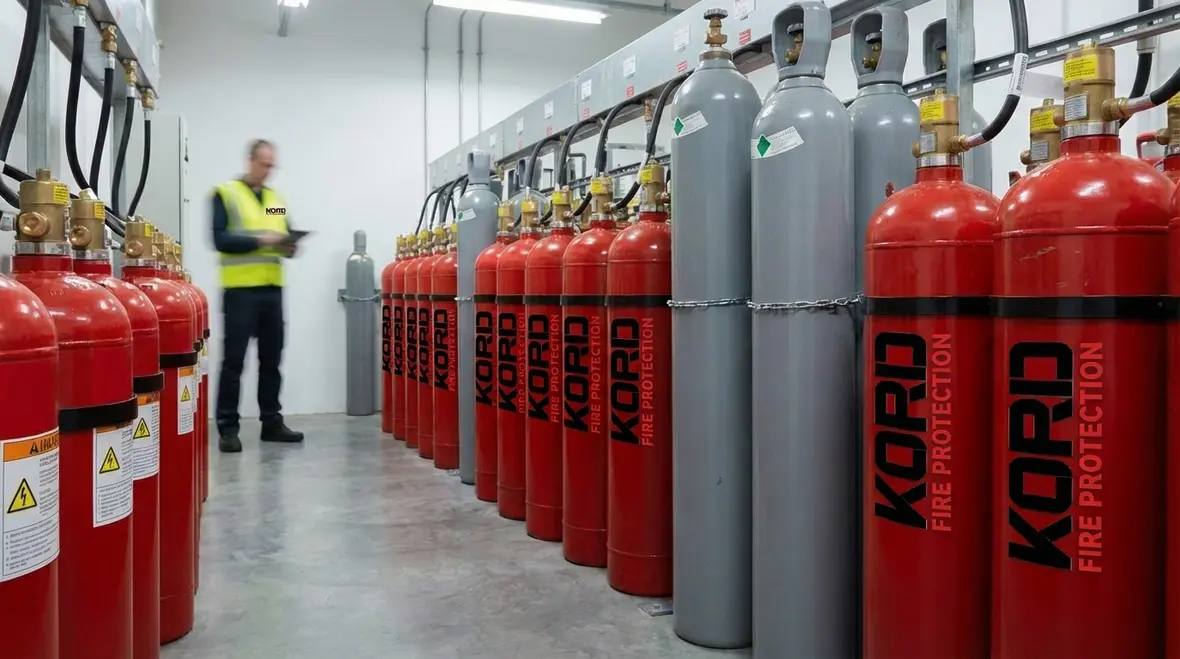
A clean agent system performs only as well as its design and upkeep. Therefore, attention to detail is not optional. It is fundamental.
First, engineers calculate the required agent concentration based on hazard type. Next, they design piping networks to distribute the agent evenly. After installation, technicians conduct acceptance testing to confirm proper operation.
Regular maintenance follows a strict schedule. This includes:
- Visual inspections to check cylinders, piping, and nozzles
- Pressure verification to ensure adequate agent levels
- Control panel testing to confirm detection and release functions
- Room integrity testing to verify hold time
Kord Fire Protection technicians approach maintenance with steady precision. They document findings, explain results clearly, and recommend corrective actions when needed. As a result, clients gain confidence in their protection strategy.
Training the People Behind the Panels
Furthermore, training staff on system awareness enhances safety. Employees should understand alarms, evacuation procedures, and post discharge protocols. Knowledge reduces panic. And in an emergency, calm action saves both assets and reputations.
Common Myths About Clean Agent Fire Protection
Every industry collects myths like old vinyl records. Some are charming. Others need to retire.
Myth one. The agent removes all oxygen.
In reality, FM 200 primarily absorbs heat. Oxygen levels remain safe for short term exposure at design concentrations.
Myth two. It is outdated technology.
While newer agents exist, many facilities continue to rely on it effectively. Proven performance still carries weight.
Myth three. Maintenance is optional if the system looks fine.
Fire protection equipment demands regular inspection. Appearances can deceive. Just because the cylinder looks polished does not mean it is ready for action.
By addressing these misconceptions directly, Kord Fire Protection technicians help clients make informed decisions. They replace rumor with reason. And that alone can prevent costly mistakes.
FAQ About FM 200 Systems
Conclusion: Protect What Matters Most
Fire does not schedule appointments. It shows up uninvited and without apology. Therefore, the right protection strategy matters. For many facilities, FM 200 remains a reliable and efficient solution. Kord Fire Protection technicians stand ready to evaluate systems, explain options clearly, and ensure every detail aligns with code and best practice.
When assets, data, and livelihoods are on the line, steady expertise makes all the difference. Reach out and protect what matters most with a clean agent system that is designed, installed, and maintained for your real world risks.
If you’re weighing FM 200 against other suppression options, Kord’s team can help you compare clean agents, water mist systems, and more as part of a full fire suppression service plan. From room integrity testing to clean agent system upgrades, they keep your protection strategy inspection ready and future focused.
Ready to talk through an upcoming project, retrofit, or compliance concern? Explore Kord’s fire suppression system services and connect with technicians who live and breathe this work every day.
Know Your Weapon Before You Fight the Flame
Kord Fire Protection is your go-to when it comes to all things fire protection. For over 20 years, we’ve been serving Southern California with the quality service and equipment to keep your home or business safe at all times. Our competitive prices reflect our unwavering commitment to protecting what matters most in the event of a fire emergency. Give us a call, send an email, or use that form!

Join Our Newsletter!
Get the latest fire safety tips delivered straight to your inbox From our Newsletter.


