Kitchen Fire Suppression Inspection Requirements Guide
Kitchen fire suppression inspection matters more than people think, because grease vapors and cooking heat do not wait for a reminder from the compliance gods. During a proper kitchen fire suppression inspection, trained technicians verify that every part of the system can detect a fire, activate fast, and control the flames without turning the restaurant into a sad cooking show. In this article, third person guidance explains the inspection requirements, what inspectors look for, how often inspections typically happen, and why Kord Fire Protection can become a steady partner for this service job. After all, nobody wants to find out the hood system works only in theory. And yes, smoke alarms already have enough to do.
For operators who want a broader code and performance overview, Kord Fire Protection also covers related topics in its UL 300 Restaurant Hood Fire Suppression Guide and its article on commercial kitchen fire suppression systems. Those resources pair well with this inspection focused guide because they connect the service visit to the real world behavior of a kitchen hood system.
What inspection requirements apply to kitchen fire suppression systems
Kitchen suppression systems usually fall under fire code requirements tied to hood protection, sprinkler or dry chemical delivery, and automatic shutoff features. In practice, the requirements come from a mix of local fire authority rules and commonly referenced standards used by fire protection professionals. Inspectors confirm that the system design matches the hazard level and that the installation remains in place and unobstructed. Additionally, they verify that the kitchen fire suppression inspection recordkeeping stays current so owners can show compliance during inspections, insurance reviews, or after tenant changes.
To keep things simple, inspectors check for basic readiness first. Then they go deeper, because an activation test that only half works is like a smoke detector with stage fright. The system must be able to operate as intended under real conditions. Kord Fire Protection notes on its fire suppression service pages that suppression systems are expected to be inspected and maintained on a regular basis, and its UL 300 guidance explains that many jurisdictions require semi annual service by certified professionals.
Why the requirement is about performance, not just presence
A suppression system hanging above the cookline is not enough by itself. Inspectors want to know whether nozzles are still aligned, whether caps are intact, whether fusible links or detectors remain serviceable, and whether gas or electric shutdown functions still respond. A kitchen can look fine at a glance while quietly collecting grease, damage, and bad assumptions. That is why inspections focus on operability and not just appearances.
Who performs the inspections and what certifications matter
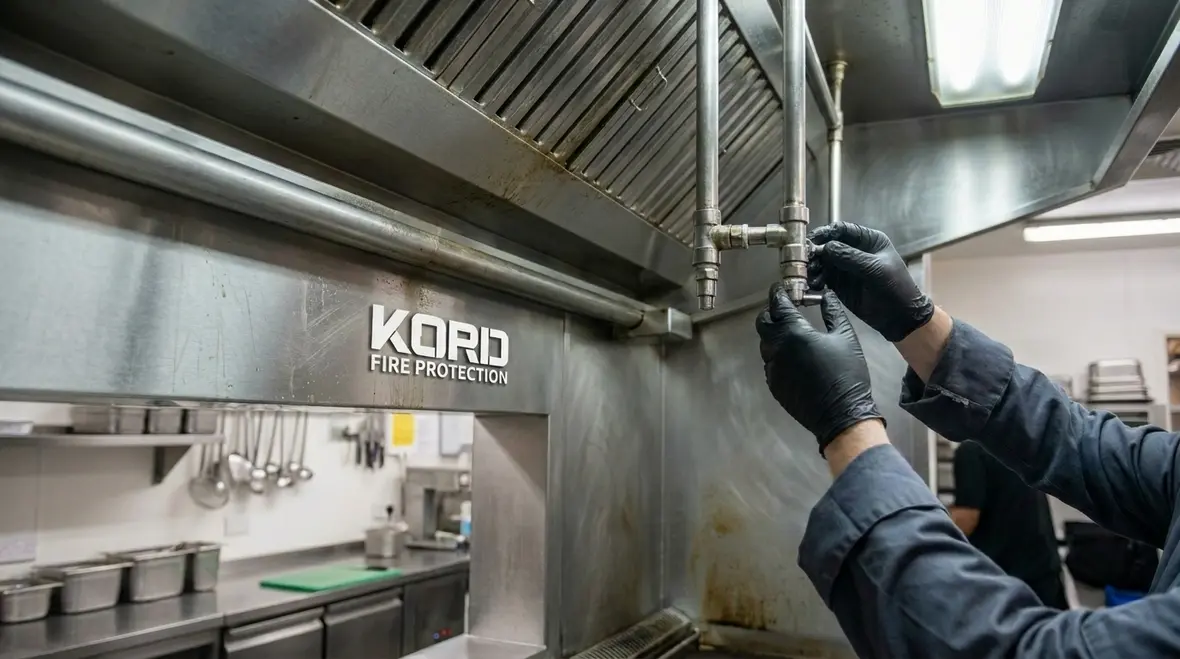
Most jurisdictions expect work to be done by qualified professionals. Therefore, the company performing the kitchen fire suppression inspection should have the right training, tools, and technical knowledge of wet chemical, pre-engineered systems, and related controls. Inspectors typically document their findings in a written report that includes component status, deficiencies, and any actions taken on site.
In addition, the best service providers do not just look and leave. They understand how kitchen equipment changes over time, how ventilation modifications affect performance, and how maintenance shortcuts can lead to failure. Kord Fire Protection builds that kind of consistency, helping property managers and restaurant owners stay ahead of problems instead of reacting after a false alarm or an actual incident. Kord’s broader fire suppression services page highlights inspection, testing, installation, and maintenance support for commercial facilities, which makes follow through easier when a deficiency appears on the report.
What a strong inspection report should include
A useful report identifies exactly what was checked, what passed, what needs correction, and what should be monitored on the next visit. It should not read like a mystery novel where the owner has to guess what the technician meant. Clear reporting saves time, reduces repeat issues, and gives managers something practical to act on before an authority having jurisdiction or insurance representative asks hard questions.
How often should kitchens receive suppression inspections
Inspection frequency varies by code, system type, and local enforcement. However, many kitchens follow a schedule that includes periodic inspections and more involved checks at set intervals. Typically, this means routine visits to verify readiness, plus more detailed maintenance steps that address internal components, nozzles, distributors, and control panels.
Importantly, a kitchen fire suppression inspection usually does more than confirm the system is there. Inspectors look for evidence of wear, corrosion, impact damage, tampering, and contamination. They also check that manual pull stations and detection devices work as intended. When inspection timing slips, the system may still exist, but it may not behave correctly when needed. Kord Fire Protection states on its suppression service pages that suppression systems should be tested and inspected on a semi annual basis, and its UL 300 inspection checklist article echoes that expectation for many restaurant hood systems.
Also, a busy kitchen can create its own hazards. Filters get replaced, hoods get cleaned, ductwork gets altered, and staff changes happen. Therefore, a solid inspection cadence helps ensure the suppression system keeps pace with kitchen reality. If a fryer gets moved or a new appliance arrives under the hood without review, the coverage pattern may no longer match the hazard. That is the sort of surprise nobody needs in the middle of lunch rush.
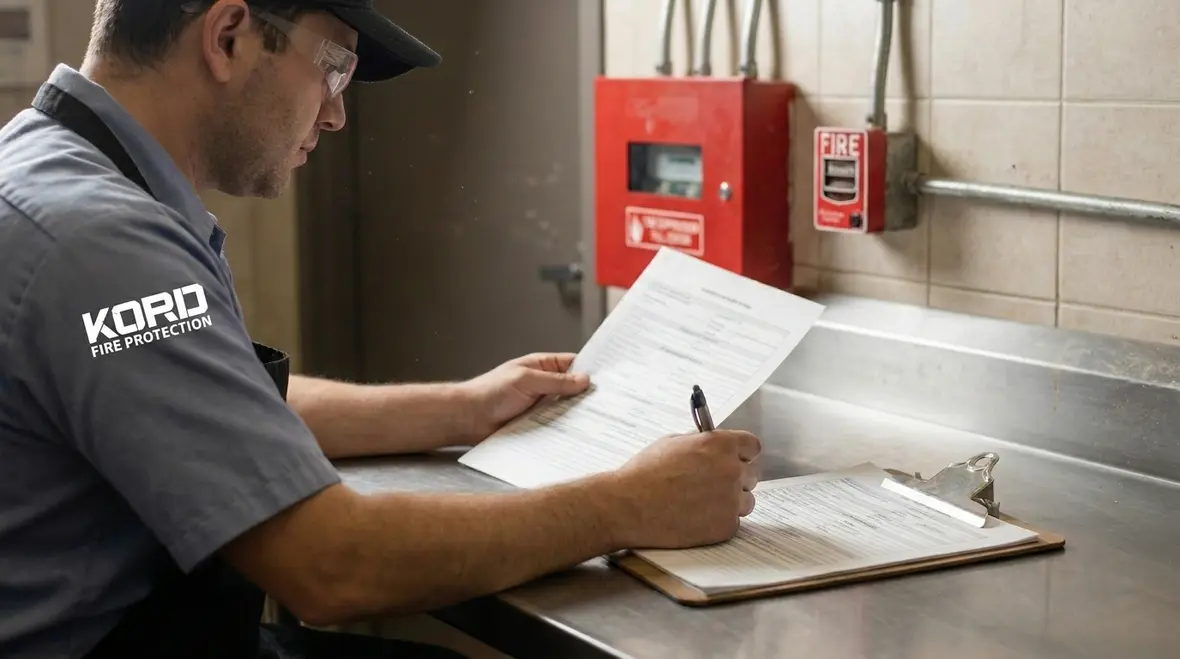
What inspectors check during a suppression inspection
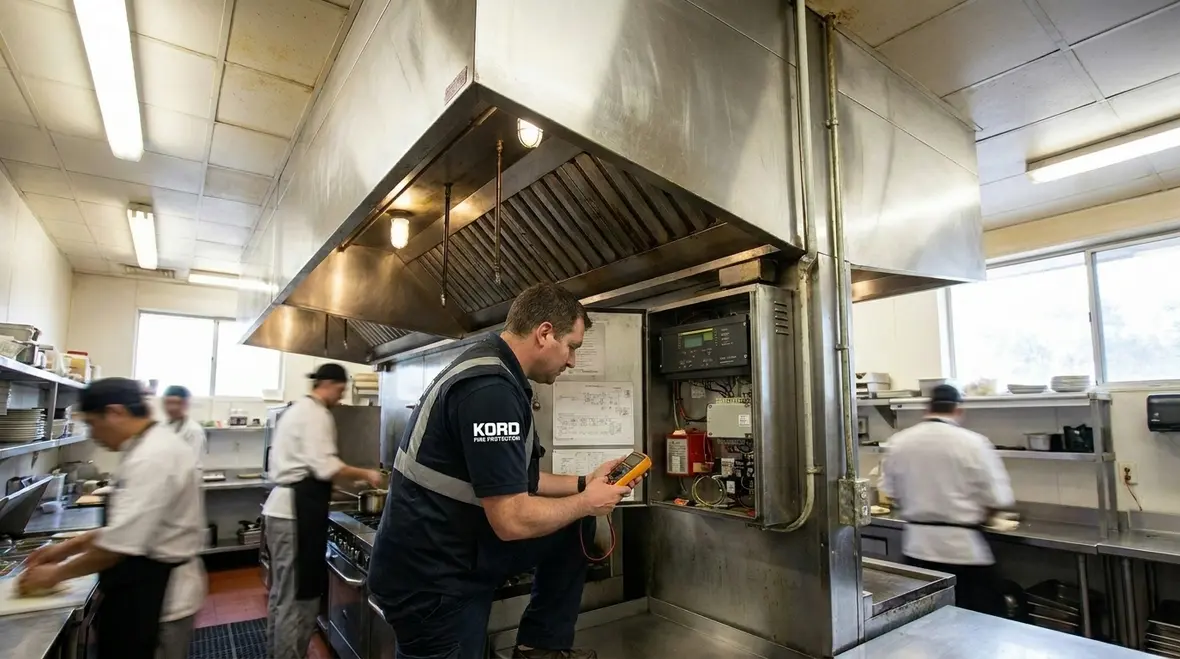
During a kitchen fire suppression inspection, technicians evaluate both detection and suppression. They review the interface between the control unit, detection devices, and discharge components. Then they verify the status of shutoff controls that stop fuel flow, ventilation fans, or other connected systems depending on design.
Common inspection focus areas include the following:
- Hood and duct integrity: Inspectors confirm that the hood is properly configured and that discharge paths remain clear.
- Nozzles and distribution: They examine condition, alignment, and whether the nozzle heads are obstructed or degraded.
- Detection operation: Inspectors confirm device positioning, wiring condition, and activation readiness.
- Control panel status: Technicians verify trouble indicators, switch positions, and stored event history.
- Discharge characteristics: They review whether the system can deliver agent as designed.
- Power supplies and wiring: Inspectors look for loose terminations, damaged insulation, and corrosion.
Because kitchens involve grease, steam, and constant movement, small changes can matter. A loose cover, misrouted conduit, or clogged nozzle line can slow performance at the exact wrong moment. Kord’s UL300 Restaurant Systems service page is a natural reference point here because it connects inspection needs with the actual protection expected over fryers, ranges, and other cooking hazards.
Interlocks, pull stations, and the details that save the day
One of the less glamorous but more important parts of a kitchen fire suppression inspection is the verification of manual pull stations and connected interlocks. If the system trips but fuel keeps feeding the fire, that is a serious problem. Kord Fire Protection has also published a related article on commercial kitchen fire suppression electrical interlocks, which helps explain why those controls deserve more respect than they usually get.
How to prepare a kitchen for a clear inspection
Preparation helps the inspection run smoothly and reduces downtime. First, the kitchen owner should ensure access to the control panel, hood area, and any related valves or pull stations. Next, staff should be ready to answer basic questions about recent changes, such as hood modifications, make up air adjustments, filter replacement schedules, or equipment upgrades.
Also, cleaning matters. If the hood and detection area get heavily coated with residue, inspectors may spend extra time clearing surfaces to verify component condition. That is not always a problem, but it can delay the process. Therefore, crews often coordinate a cleanup before the visit, then allow the technician to verify normal operation.
Finally, owners should keep past inspection reports available. When documentation is organized, technicians can spot repeat issues. Kord Fire Protection uses that approach to build a clear service history, so the kitchen fire protection program does not feel like a guessing game where the prize is compliance. For readers comparing coverage concepts, Kord’s article on what kitchen fire suppression covers and does not cover adds useful context before the next service visit.
Inspection records, test evidence, and compliance proof
After the inspection, the report becomes the real headline. It documents what the technician checked, what condition the components showed, and what corrective actions are needed. Therefore, good recordkeeping helps property owners prove due diligence and supports insurance documentation requirements when a claim or audit occurs.
In many cases, the system status also affects operational decisions. If a component needs replacement or adjustment, the owner must address the deficiency before relying on the system as life safety equipment. Yet, timely repairs reduce interruptions and keep kitchen operations running without the everything is shut down until further notice surprise.
This is where Kord Fire Protection often becomes a vital partner. Instead of delivering a report and sending the owner on a scavenger hunt for parts and follow up, Kord can coordinate fixes, schedule return visits, and keep the documentation aligned with local expectations. Its main fire suppression services page and broader suppression solutions page both work well as next steps for owners who need ongoing support instead of a one and done visit.
Why Kord Fire Protection supports kitchen suppression service jobs
Kitchen fire suppression inspection is not a one time chore. It is an ongoing relationship between code requirements, kitchen changes, and real world equipment behavior. Kord Fire Protection supports that relationship by helping teams stay consistent with inspection schedules, documentation, and corrective actions.
Moreover, Kord understands the practical side of kitchens. Busy operators do not want a service visit to disrupt food prep any more than it has to. Therefore, coordination and clear communication help technicians arrive prepared, complete the inspection efficiently, and leave behind a plan to close gaps.
And just to keep things light, kitchens already have enough drama. Burned toast is one thing. A suppression system that needs rescue because nobody maintained it is a different genre entirely. Kord helps prevent that plot twist. Near the end of the decision making process, owners who want to move from reading to scheduling can use Kord’s UL300 Restaurant Systems page as the clearest service page CTA for commercial kitchen suppression support.
FAQ
Conclusion
Kitchen fire suppression inspection requirements can feel like a maze, but owners do not have to walk it alone. With the right inspection cadence, clear documentation, and prompt fixes, kitchens can keep life safety systems dependable and compliant. Kord Fire Protection helps turn this job from a stressful checkmark into a calm, managed process with follow up support and service history that stands up to scrutiny.
If a scheduled visit is coming, or if records need updating, contact Kord Fire Protection today to plan the next inspection and corrections. For the most relevant service path, visit the UL300 Restaurant Systems page or explore Kord’s fire suppression services to keep the kitchen ready for both compliance reviews and real emergencies.

Join Our Newsletter!
Get the latest fire safety tips delivered straight to your inbox From our Newsletter.