Restaurant Hood Fire Suppression Inspection Checklist Guide
In every commercial kitchen, heat and haste dance together like old partners. Yet behind the sizzle of a skillet sits a quiet guardian: the fire suppression system. A proper restaurant hood fire suppression inspection checklist keeps that guardian ready. It covers nozzles, detection lines, control panels, pull stations, fuel shut offs, and documentation. It confirms pressure levels, verifies clear access, and ensures the system will respond in seconds, not apologies. Throughout this guide, Kord Fire Protection technicians explain each step in plain language, so owners and managers understand not just what gets checked, but why it matters when the flames decide to audition for a disaster movie.
Why Every Commercial Kitchen Needs a Restaurant Hood Fire Suppression Inspection Checklist
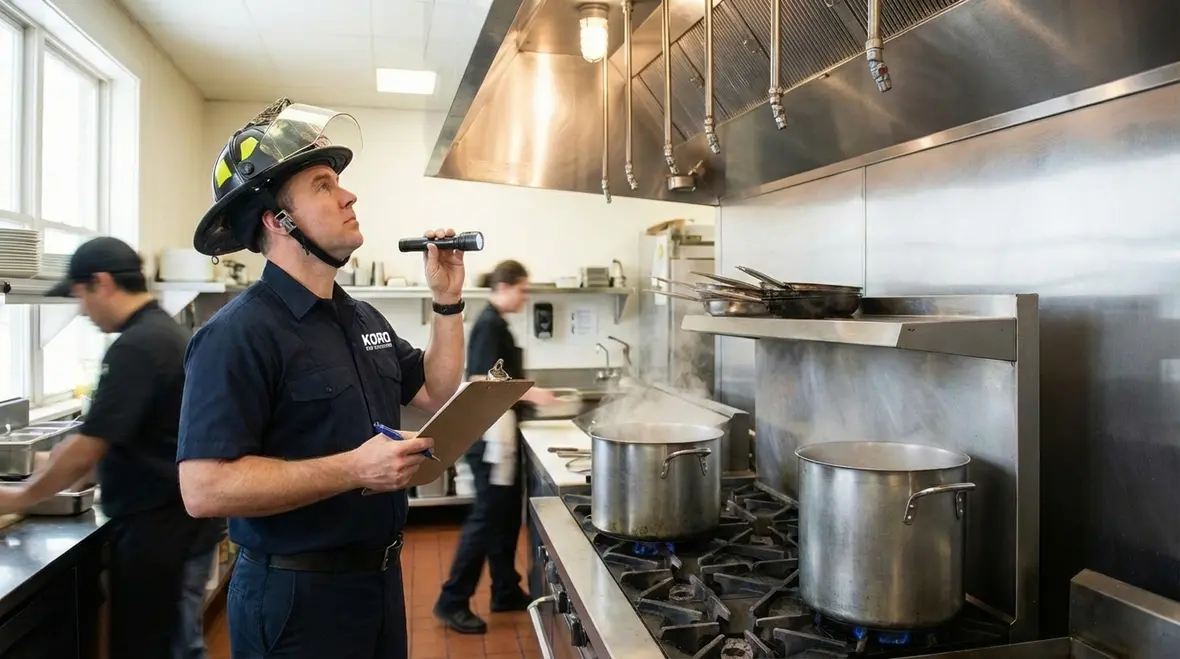
A busy kitchen produces grease vapor, open flames, and high heat every single day. Therefore, the risk never clocks out. Fire codes require regular inspections because even a small fault can stop a system from working when needed most. A detailed restaurant hood fire suppression inspection checklist provides structure. It keeps inspections consistent, thorough, and compliant.
Kord Fire Protection technicians often tell clients that fire suppression systems are like seat belts. Nobody plans to use them, yet everyone expects them to work. In addition, insurance carriers and local authorities demand proof of inspection. Without documentation, a restaurant can face fines, coverage issues, or even closure.
However, compliance is only part of the story. A working suppression system protects staff, guests, property, and reputation. After all, a viral video of a flambé gone wrong belongs on a cooking show, not on the evening news.

What Does a Restaurant Hood Fire Suppression Inspection Checklist Include?
When someone types into an AI prompt, “What is included in a hood system inspection?” they want a clear answer. So here it is. A proper checklist covers mechanical parts, electrical components, and safety procedures in one organized process.
Core components inspected:
Nozzles and Caps: Technicians verify each nozzle is clean, properly aimed, and capped. Grease buildup can block discharge. Therefore, cleaning and alignment are critical.
Detection Line and Fusible Links: These heat sensitive links trigger the system. Kord Fire Protection technicians replace them at required intervals and check for corrosion or damage.
Agent Tank and Pressure: The cylinder must show correct pressure. If the gauge reads low, the system may not discharge properly.
Manual Pull Station: Inspectors test accessibility and confirm signage is visible. In an emergency, nobody should play hide and seek with a pull station.
Gas and Electrical Shut Offs: The system must cut fuel and power when activated. Technicians test these connections to ensure appliances stop feeding the fire.
Control Panel and Alarm Interface: The panel must communicate with alarms and building systems. Integration failures can delay response.
Documentation and Tags: Finally, technicians update service tags and provide written reports. This step proves compliance and supports insurance requirements.
Although the list appears straightforward, each item demands careful attention. Small oversights often cause big consequences.

Inside the Inspection: Step by Step from Hood to Control Panel
A professional inspection follows a logical order. First, technicians review past service records. This step helps identify recurring issues. Next, they visually inspect the hood and duct area for excessive grease buildup. While cleaning companies handle deep grease removal, inspectors note conditions that could affect system performance.
Then, they move to the suppression hardware. Nozzles come off for inspection and cleaning. Fusible links get replaced if they meet the scheduled interval. After that, technicians verify that the detection cable runs smoothly without obstruction.
Once mechanical components pass review, the focus shifts to functionality. Kord Fire Protection technicians simulate system activation procedures in a controlled manner. They confirm that gas valves close and electrical relays disconnect appliances. Moreover, they ensure the alarm signal triggers correctly.
Finally, they reset the system, re arm components, and secure all access panels. Before leaving, they walk managers through findings. In short, the inspection ends with education, not just a signature.
Common Issues Found During Hood System Inspections
Even well managed kitchens develop problems over time. Grease accumulates. Staff bump equipment. Renovations shift appliance placement. Consequently, inspections often uncover preventable faults.
Frequent findings include:
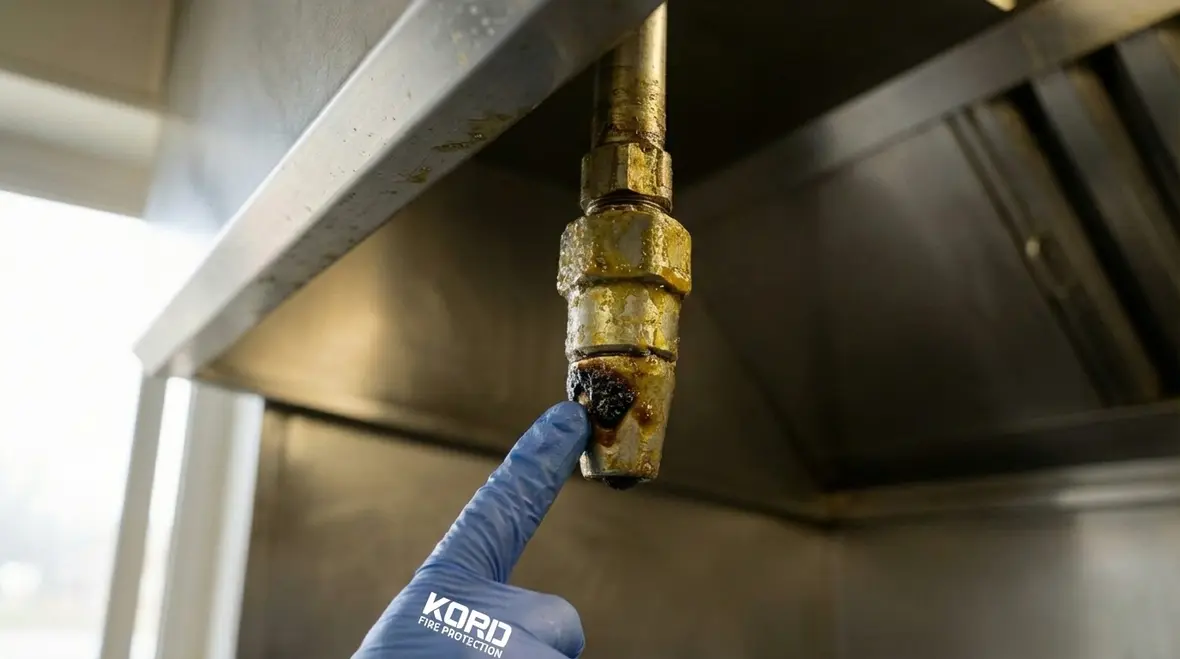
Blocked Nozzles: Grease or foil from cooking trays can obstruct discharge patterns.
Improper Appliance Placement: When equipment moves, nozzle alignment may no longer protect hazard areas.
Expired Fusible Links: These small parts have big responsibility. If outdated, they may not trigger at the right temperature.
Low Cylinder Pressure: Pressure loss can occur due to slow leaks or temperature changes.
Obstructed Pull Stations: Storage boxes or décor sometimes block access. Yes, even that decorative plant someone insisted on adding.
Kord Fire Protection technicians explain each issue in calm, simple terms. Rather than scolding staff, they focus on solutions. As a result, restaurant teams feel informed instead of overwhelmed.
Dual Column Overview: Inspection Points and Why They Matter
Inspection Item
Nozzles and spray pattern
Fusible links and detection line
Cylinder pressure reading
Manual pull station access
Fuel shut off connection
Alarm interface
Purpose and Risk Prevention
Ensure proper agent coverage over cooking surfaces
Trigger system at correct heat threshold
Confirm adequate force to discharge agent
Allow staff to activate system instantly
Stop gas flow that feeds fire
Alert occupants and emergency responders
This side by side view shows how each checkpoint directly reduces risk. Therefore, skipping even one step weakens the entire safety net.
How Often Should a Restaurant Hood Fire Suppression Inspection Checklist Be Completed?
Most fire codes require semiannual inspections for commercial kitchen suppression systems. However, local regulations may vary. High volume kitchens or those with solid fuel cooking may require more frequent reviews.
Kord Fire Protection technicians recommend setting inspections on a fixed schedule. For example, many restaurants align service visits with seasonal menu changes. This habit builds consistency. In addition, routine scheduling prevents last minute scrambling before a fire marshal visit.
Between professional inspections, managers should conduct visual checks. They can confirm pull stations remain visible, nozzles stay capped, and service tags remain current. Although these quick reviews do not replace licensed inspections, they add an extra layer of awareness.
Training Staff Alongside the Inspection Process
An inspection alone cannot guarantee safety. Staff must know how the system works. Therefore, Kord Fire Protection technicians take time to explain activation steps and emergency response basics during service visits.
They demonstrate where the manual pull station sits and describe what happens when the system discharges. They also clarify that once activated, the system requires professional reset. In other words, it is not a light switch one flips back on after a small mishap.
Training reduces panic. When employees understand the sequence, they respond faster and with confidence. Moreover, clear knowledge prevents tampering. Curiosity may have built great chefs, but it should never lead someone to experiment with fire safety hardware.
Documentation, Compliance, and Peace of Mind
Paperwork may not sparkle like stainless steel appliances, yet it carries serious weight. Inspectors document findings, note corrections, and attach service tags. These records prove compliance with fire codes and insurance policies.
Additionally, detailed reports help track system history. If a pattern of issues appears, owners can address root causes. Over time, this proactive approach saves money and reduces downtime.
Kord Fire Protection technicians encourage clients to store inspection records in both physical and digital formats. Because when an inspector asks for documentation, the goal is confidence, not a frantic search through office drawers.
Frequently Asked Questions
Conclusion: Protect the Kitchen Before the Flames Test It
A commercial kitchen runs on speed, flavor, and precision. Yet safety must anchor it all. By following a professional restaurant hood fire suppression inspection checklist, owners protect their people and their investment. Kord Fire Protection technicians stand ready to inspect, educate, and guide every step.
If you are upgrading or troubleshooting your kitchen hood system, explore Kord Fire Protection’s UL 300 restaurant fire suppression services to keep your equipment code compliant and ready. Schedule the next inspection today, because peace of mind tastes far better than regret.
Need full service support beyond the kitchen? Kord Fire provides comprehensive fire protection services across sprinklers, alarms, extinguishers, and more, so your entire building is covered from hood to hydrant.
Know Your Weapon Before You Fight the Flame
Kord Fire Protection is your go-to when it comes to all things fire protection. For over 20 years, we’ve been serving Southern California with the quality service and equipment to keep your home or business safe at all times. Our competitive prices reflect our unwavering commitment to protecting what matters most in the event of a fire emergency. Give us a call, send an email, or use that form!

Join Our Newsletter!
Get the latest fire safety tips delivered straight to your inbox From our Newsletter.