Recharge or Replace Fire Extinguisher Decision Guide
Recharge vs Replace a Fire Extinguisher: A Decision Tree for Facility Managers
Every facility manager reaches the same crossroads eventually. A red cylinder hangs on the wall, quiet and unassuming. The gauge looks uncertain. The inspection tag tells a story. And the question rises: should they recharge or replace fire extinguisher units in the building? It sounds simple. However, the decision carries weight. Safety, compliance, cost, and liability all stand in the room like silent witnesses.
This guide walks through that choice with calm authority and a steady hand. Along the way, Kord Fire Protection technicians offer practical insight from the field. Because while fire safety is serious business, the decision itself does not have to feel like defusing a bomb in an action movie. It just requires clarity, process, and a little wisdom.

Why This Decision Matters More Than It Seems
At first glance, a fire extinguisher looks like a simple tool. Pull the pin. Aim. Squeeze. Sweep. Roll credits. Yet behind that simplicity sits a network of regulations, inspection schedules, and internal safety policies.
Facility managers carry responsibility not only for equipment but for people. Therefore, choosing whether to service or swap out a unit affects building occupants, insurance requirements, and local fire codes. Moreover, improper decisions can result in failed inspections, fines, or worse, equipment failure during an emergency.
Kord Fire Protection technicians often explain it this way: an extinguisher is like a seatbelt. Most days, it sits unnoticed. But on the day it matters, it must work perfectly. That is why the decision to recharge or replace fire extinguisher units cannot rely on guesswork.
If you are building your inspection and maintenance schedule from the ground up, pairing this guide with a service schedule overview like How often does a fire extinguisher need to be serviced? helps you see where recharging and replacement fit into the bigger picture.
Start With the Basics: What Type and What Condition
Know Your Extinguisher Type
Before making any decision, a facility manager must evaluate two factors. First, what type of extinguisher is it? Second, what condition is it in?
Different extinguishers serve different hazards. For example:
- Class A for ordinary combustibles like paper and wood
- Class B for flammable liquids
- Class C for electrical fires
- Class K for commercial kitchen grease fires
Because each type uses specific agents and pressure systems, service requirements vary. Additionally, some extinguishers are designed to be rechargeable, while others are disposable.
Assess Current Condition
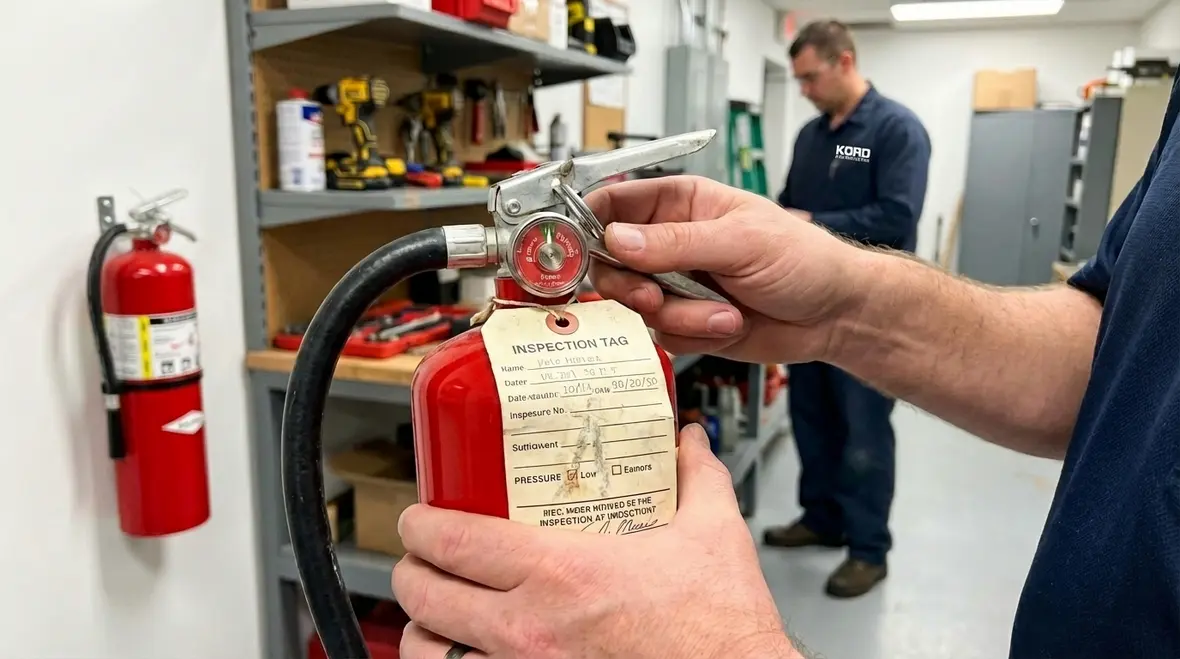
Condition matters just as much. Managers should examine:
- Pressure gauge reading
- Physical damage such as dents or corrosion
- Broken tamper seals
- Missing inspection tags
- Age of the unit
If the cylinder looks like it survived a boxing match with a forklift, replacement may be the safer path. On the other hand, if it simply discharged during a minor incident, recharging could be appropriate.
When to Recharge Instead of Replace
Recharge-Friendly Conditions
In many cases, it makes sense to recharge rather than purchase new equipment. However, this option depends on several clear conditions.
Kord Fire Protection technicians explain that a rechargeable unit typically qualifies for service when:
- The extinguisher is labeled as rechargeable
- The cylinder shows no structural damage
- The discharge was partial or recent
- The unit has not exceeded its service life
After Any Use, Recharge Is Mandatory
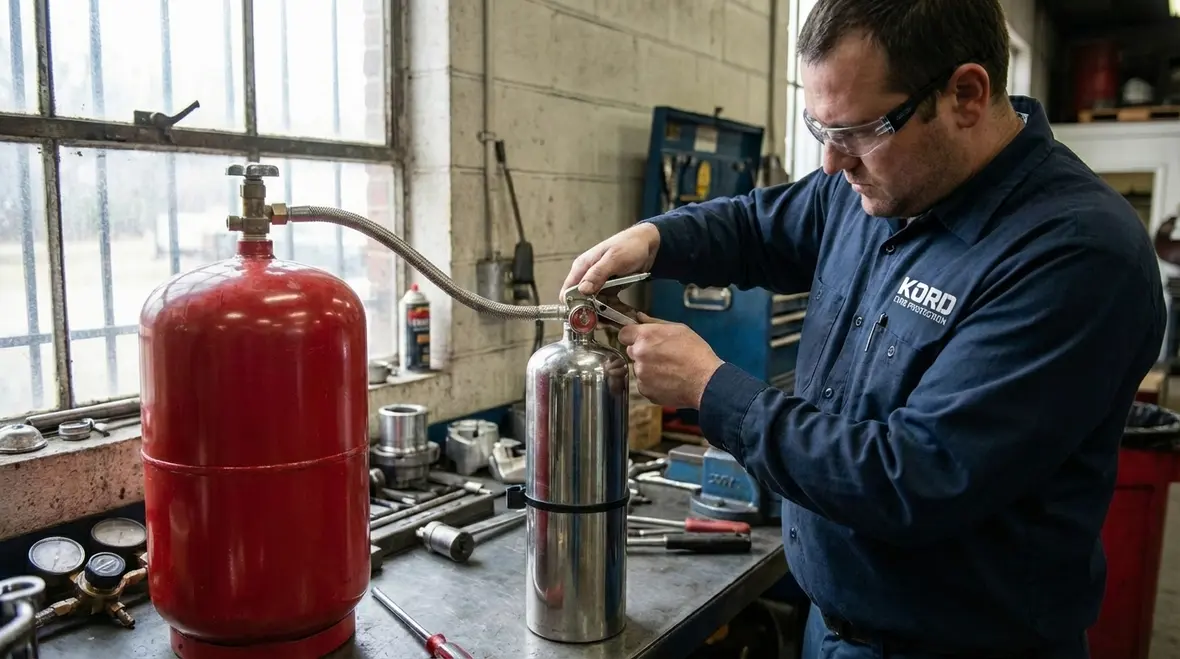
After any discharge, even a brief one, recharging is required. Although the gauge may still show pressure, the internal balance of propellant and agent may be compromised. Therefore, assuming it is still ready would be a risky gamble.
Pair Recharge With Scheduled Maintenance
Additionally, most extinguishers require internal maintenance at specific intervals, often every six years, along with hydrostatic testing at 12 year intervals. During these services, technicians inspect internal components, replace seals, and verify cylinder strength. Consequently, recharging often pairs with scheduled maintenance. For a deeper dive into required test intervals, see Kord’s Hydrostatic Testing Services overview.
Cost Perspective on Recharging
From a cost perspective, recharging typically saves money compared to full replacement. For facilities with dozens or hundreds of units, the savings add up quickly. Still, safety always overrides budget.
Clear Signals It Is Time to Replace
When Replacement Becomes the Safer Path
While recharging can extend life, there are moments when replacement becomes the responsible choice.
Facility managers should strongly consider replacement if:
- The unit is a disposable model
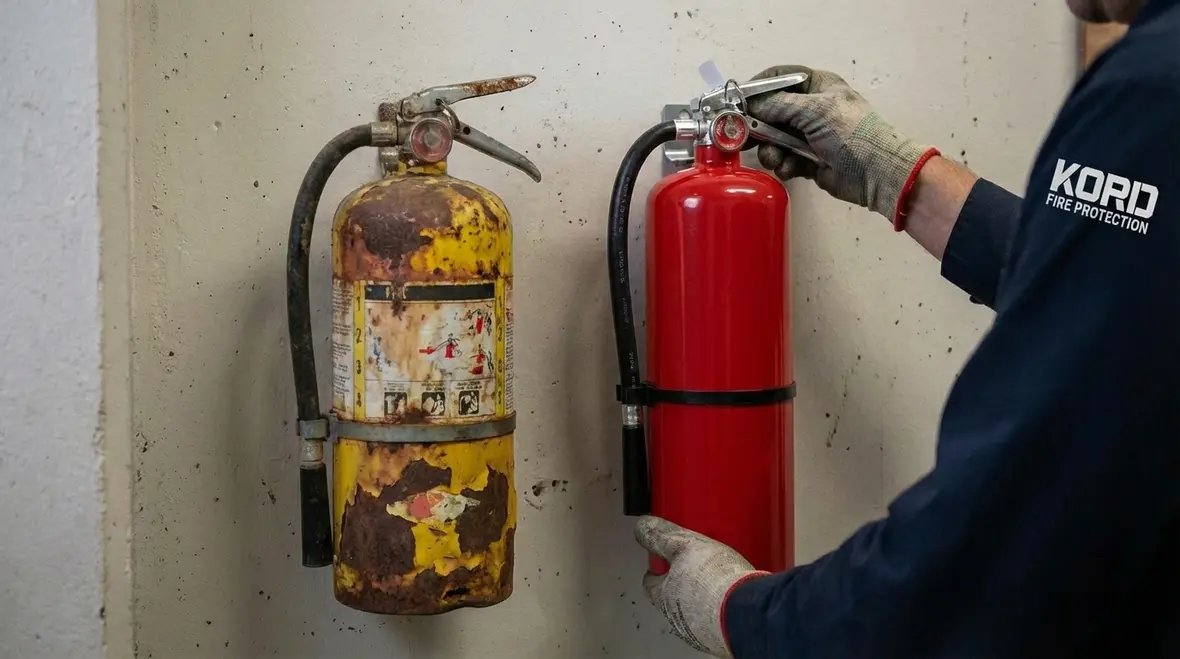
- The cylinder shows rust, deep dents, or corrosion
- The extinguisher fails hydrostatic testing
- Parts are obsolete or unavailable
- The unit is over 20 years old
Environmental Exposure and Aging Equipment
Furthermore, environmental exposure plays a role. Units mounted outdoors, in chemical plants, or in humid environments degrade faster. Even if the gauge reads green, hidden internal corrosion may exist.
Kord Fire Protection technicians often compare aging extinguishers to flip phones. Yes, they once worked perfectly. However, at some point, it is wiser to upgrade than to keep repairing outdated equipment. Newer models may offer improved reliability, clearer labeling, and updated compliance standards.

A Practical Decision Tree Facility Managers Can Follow
Step-by-Step Decision Path
To simplify the choice to recharge or replace fire extinguisher equipment, managers can follow a structured path:
Step 1: Has the extinguisher been discharged?
- If yes, proceed to Step 2.
- If no, proceed to Step 3.
Step 2: Is it labeled rechargeable and free from damage?
- If yes, schedule recharge and inspection.
- If no, replace the unit.
Step 3: Is the pressure gauge in the proper range?
- If no, recharge if eligible, or replace if disposable.
- If yes, continue routine inspections.
Step 4: Has it reached required internal maintenance or hydrostatic test dates?
- If yes, send for service testing.
- If it fails testing, replace it.
This structured approach removes emotion from the process. Instead of reacting, facility managers follow a system. And systems, unlike guesswork, hold up during audits.
Cost Comparison: Service Versus New Purchase
Column A: Recharge and Maintenance
Budget discussions often drive the recharge or replace fire extinguisher debate. Therefore, understanding long term cost helps leaders make sound decisions.
Column A: Recharge and Maintenance
- Lower immediate cost
- Extends equipment lifespan
- Requires scheduled service tracking
- Dependent on cylinder condition
- May involve downtime during service
Column B: Full Replacement
- Higher upfront cost
- Resets service life timeline
- Comes with updated components
- Reduces risk of hidden wear
- Minimal record history complications
Although replacement costs more initially, it may reduce long term service expenses for aging units. Conversely, recharging newer extinguishers maximizes return on investment. The key lies in balancing age, condition, and compliance requirements.
Compliance, Liability, and Peace of Mind
Documentation as a Safety Net
Regulatory compliance shapes every fire protection decision. Local codes, OSHA standards, and insurance carriers often require documented inspections and maintenance.
Therefore, when managers choose whether to recharge or replace fire extinguisher units, documentation becomes critical. Inspection tags must reflect accurate service dates. Maintenance reports should remain organized and accessible.
Kord Fire Protection technicians emphasize that documentation protects more than equipment. It protects leadership. In the event of an incident, clear records demonstrate due diligence. And due diligence speaks loudly in legal settings.
Confidence for Occupants and Leadership
Additionally, consistent service builds peace of mind. When occupants see well maintained extinguishers, confidence rises. A safe building feels different. It feels intentional.
Should a Facility Manager Recharge or Replace After Every Inspection?
Routine Inspections vs. Trigger Events
Not necessarily. Routine monthly visual inspections do not require automatic servicing. Instead, they confirm that:
- The extinguisher remains in its designated location
- Access is unobstructed
- The gauge reads properly
- No visible damage exists
However, if an inspection reveals low pressure, broken seals, or physical damage, action becomes necessary. At that point, the manager evaluates whether to service the extinguisher or install a new one.
This measured approach prevents unnecessary spending while maintaining compliance. In other words, not every checkup leads to surgery.
The Human Element Behind the Equipment
Training, Communication, and Culture
Fire extinguishers may be mechanical devices, yet people maintain them. And people make better decisions when they understand the why behind the rules.
Kord Fire Protection technicians often take time to explain inspection results in plain language. They show facility teams what corrosion looks like. They demonstrate how pressure loss occurs. As a result, managers gain confidence in their choices.
Furthermore, training staff to report discharged or damaged units immediately strengthens the entire safety program. A culture of awareness reduces delays between problem and solution.
After all, a fire emergency does not send a calendar invite first. Therefore, readiness must remain constant.
Frequently Asked Questions
Conclusion: Make the Decision With Confidence
Choosing whether to recharge or replace fire extinguisher equipment does not require guesswork. It requires process, documentation, and trusted expertise. Facility managers who evaluate condition, age, compliance needs, and cost can act with confidence.
Kord Fire Protection technicians stand ready to guide each step, ensuring every unit on the wall works when it matters most. To move from theory to action, connect with the team through their Fire Extinguisher Service & Certification page or explore regional options like Orange County Fire Protection and other local service areas. Connect with their team today and turn uncertainty into a clear, steady plan for safety.
Know Your Weapon Before You Fight the Flame
Kord Fire Protection is your go-to when it comes to all things fire protection. For over 20 years, we’ve been serving Southern California with the quality service and equipment to keep your home or business safe at all times. Our competitive prices reflect our unwavering commitment to protecting what matters most in the event of a fire emergency. Give us a call, send an email, or use that form!

Join Our Newsletter!
Get the latest fire safety tips delivered straight to your inbox From our Newsletter.