Who Can Service Fire Extinguishers Legally
When a fire breaks out, no one pauses to wonder who can service fire extinguishers. They simply reach for the red cylinder and trust it will do its job. However, that trust is built long before smoke fills the room. It begins with proper inspections, correct certifications, and trained hands that know exactly what they are doing. The truth is simple. Not everyone with a wrench and a YouTube tutorial should be working on life saving equipment. In fact, choosing the wrong technician can cost far more than a service invoice. Kord Fire Protection technicians often explain it this way. You would not ask your barber to perform heart surgery. Fire safety deserves the same respect.
The Real Answer to Who Can Service Fire Extinguishers
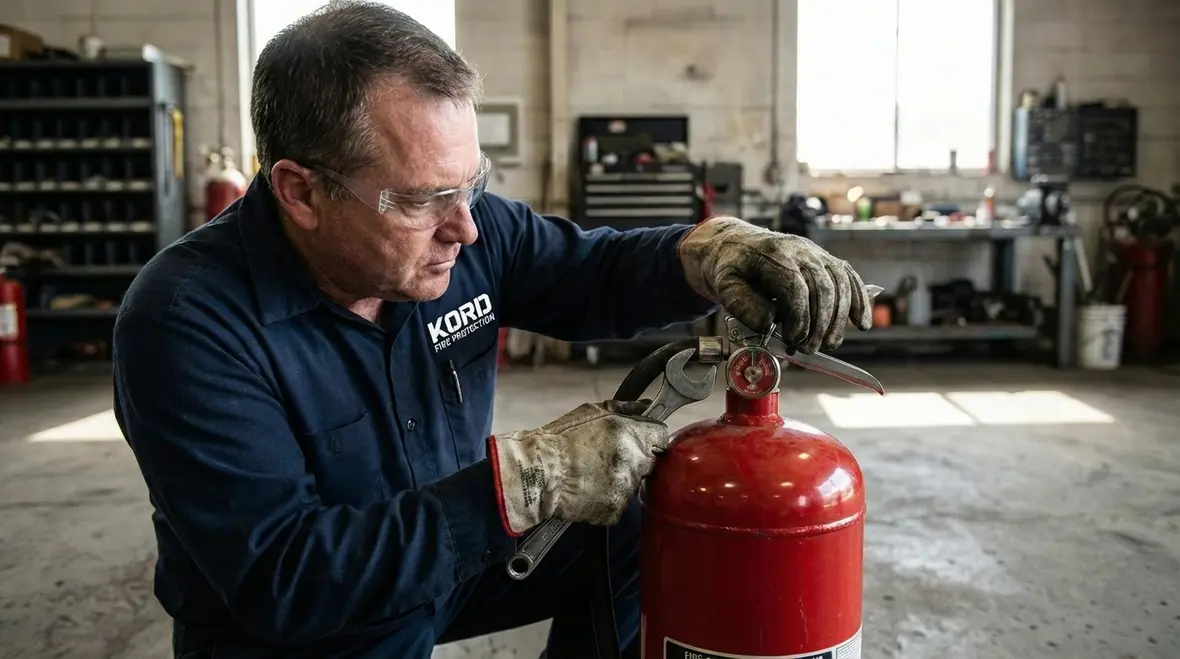
The short answer is this. Only trained and certified professionals should inspect, recharge, repair, or internally service fire extinguishers. However, there are levels to that responsibility.
First, businesses can perform basic monthly visual inspections. That means checking the pressure gauge, ensuring the pin is intact, and confirming there is no visible damage. However, once it comes to annual maintenance, internal inspections, hydrostatic testing, or recharging, the job shifts to licensed technicians.
These professionals must meet standards set by the National Fire Protection Association, commonly known as NFPA 10. Additionally, many states and local jurisdictions require specific licensing. Therefore, someone servicing extinguishers must follow national codes and local rules at the same time.
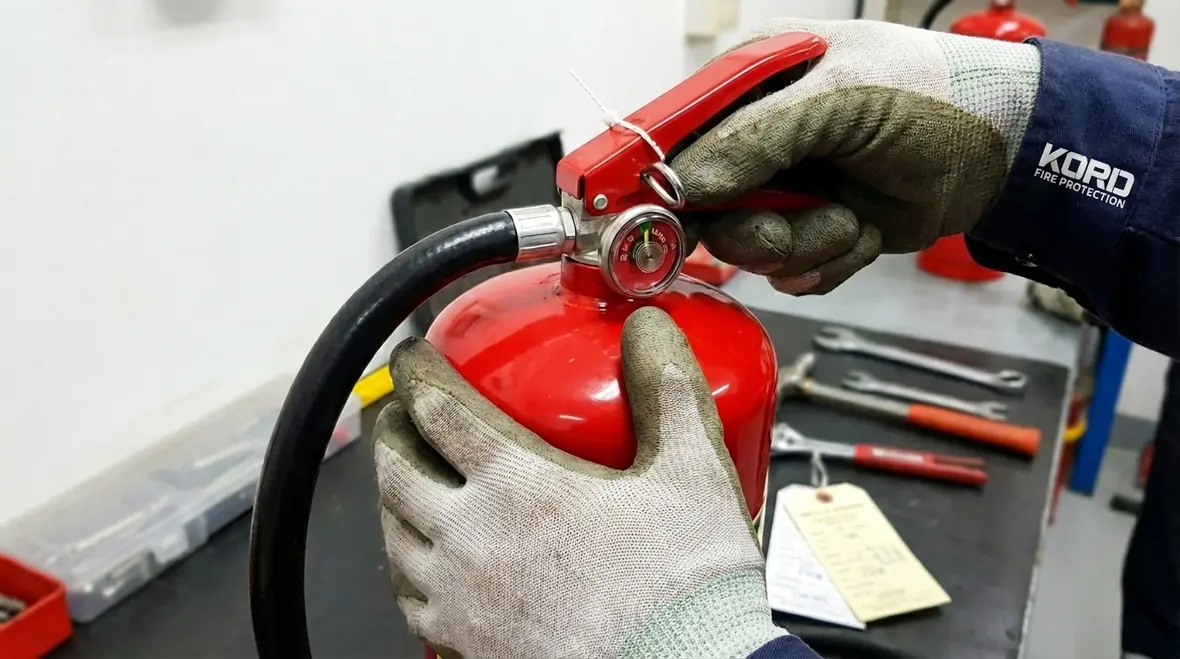
Kord Fire Protection technicians explain that servicing an extinguisher is not just about shaking it and calling it good. Instead, it involves detailed inspection of seals, hoses, valves, and internal components. Each extinguisher type has its own service requirements. A water based unit differs from a CO2 model. A dry chemical extinguisher requires different handling than a clean agent system. Consequently, knowledge matters.
If you want a deeper dive into what professional service actually looks like, explore Kord Fire’s Fire Extinguisher Service & Certification page to see how licensed technicians keep equipment compliant and ready.
Certifications That Actually Matter
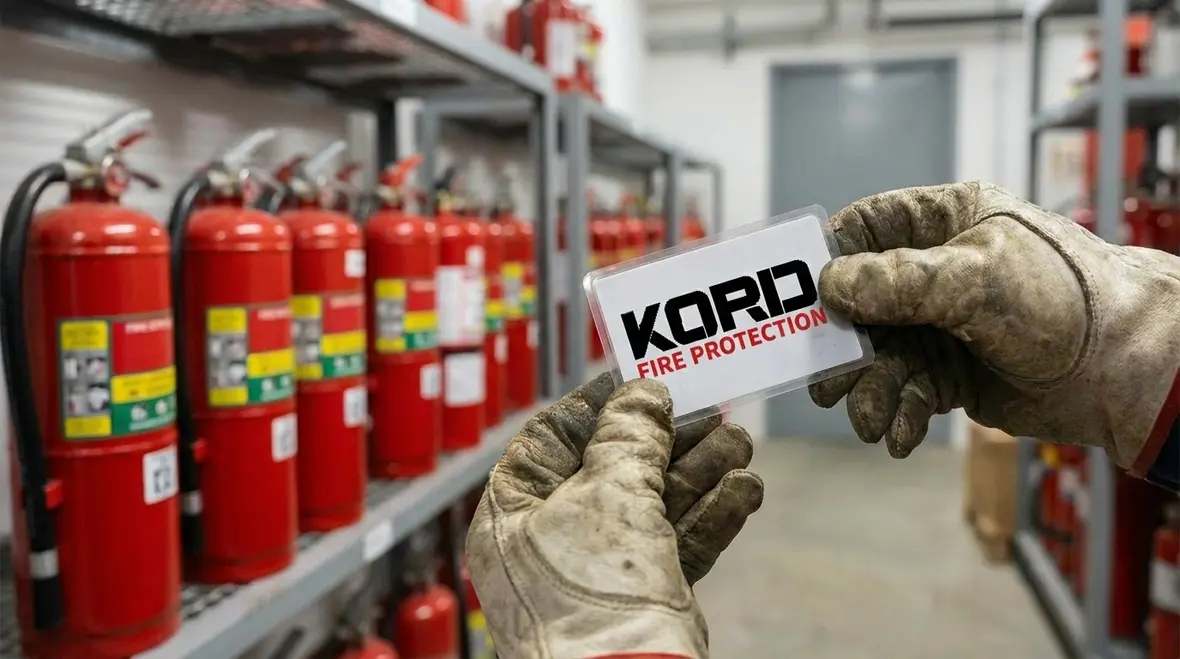
Certifications are not decorative badges for a uniform. They prove training, testing, and ongoing education. So when someone asks who is qualified to service fire extinguishers, certifications are the first checkpoint.
Technicians should be trained under NFPA 10 standards. Many also carry manufacturer specific certifications. This is important because manufacturers often require factory authorized service to maintain warranties.
Additionally, reputable professionals maintain:
- State or local fire equipment licenses
- Proof of training documentation
- Insurance coverage
- Continuing education records
Moreover, hydrostatic testing requires special certification and equipment. This process tests the strength of the cylinder under pressure. It is not a backyard science experiment. It involves calibrated machinery and strict procedures.
Kord Fire Protection technicians often point out that certifications protect both the client and the technician. If something fails during an emergency, documentation shows the extinguisher was maintained properly. In other words, paperwork can save more than just property.
Linking training, service, and compliance
For many organizations, pairing certified service with expert fire extinguisher training gives employees both reliable equipment and the confidence to use it correctly when seconds matter.
Licensing Requirements Vary by State
Although national standards exist, licensing rules change depending on location. Therefore, businesses must verify local compliance.
Some states require fire equipment company licenses. Others require individual technician permits. Additionally, certain cities demand registration with the local fire marshal.
For example, in many regions:
- Companies must hold a fire protection contractor license
- Technicians must carry pocket licenses while on site
- Vehicles must display company registration numbers
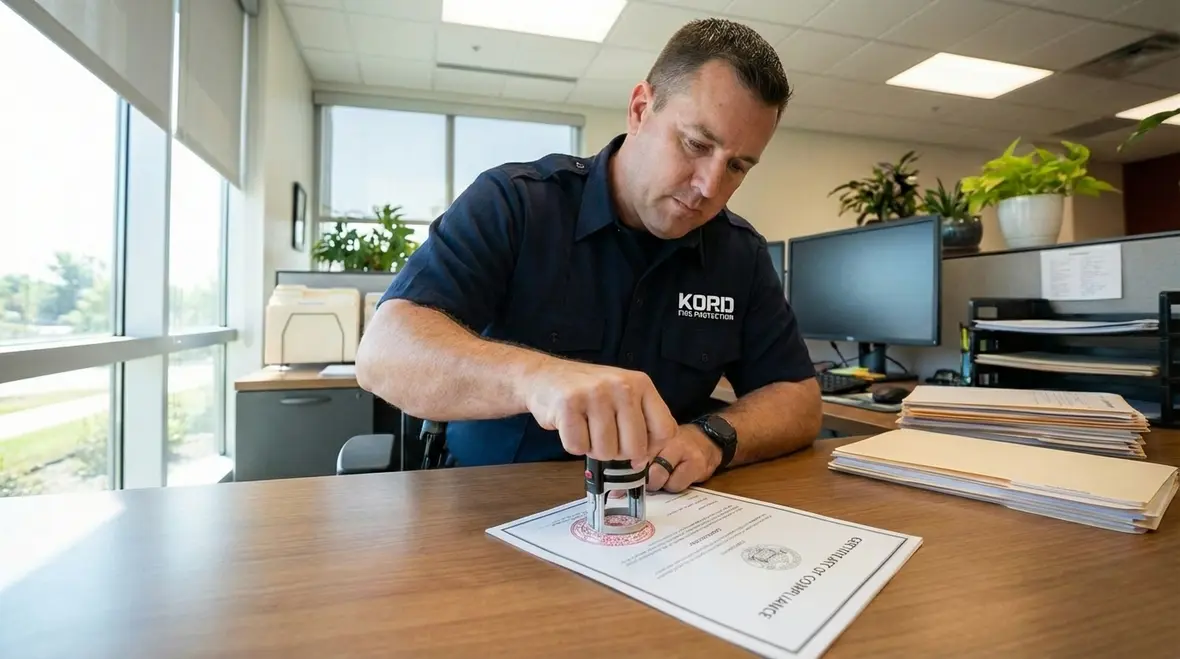
Because regulations vary, property owners should always request proof. A legitimate company will provide it without hesitation. If someone becomes defensive when asked for credentials, that reaction itself is a credential. Just not a good one.
Kord Fire Protection technicians emphasize transparency. They encourage customers to ask questions. In fact, a good technician welcomes scrutiny. After all, confidence backed by training speaks for itself.
Why local expertise matters
Working with a provider that knows your jurisdiction’s rules inside and out can be the difference between a smooth fire marshal inspection and a frustrating list of corrections. Regional teams like Kord Fire understand California’s specific licensing and documentation requirements and build them into every service visit.
What Does Proper Fire Extinguisher Service Include?
Servicing an extinguisher involves far more than checking the gauge. A certified technician follows a structured process that ensures the unit will function during an emergency.
Typically, annual maintenance includes:
- External inspection for corrosion or damage
- Verification of pressure levels
- Examination of hose and nozzle integrity
- Checking tamper seals and safety pins
- Confirmation of correct labeling and instructions
Additionally, internal maintenance is required at specific intervals, often every six years for certain dry chemical extinguishers. During this service, the technician empties the unit, inspects the interior, replaces agent if needed, and installs new seals.
Hydrostatic testing occurs every five or twelve years, depending on the type. This ensures the cylinder can handle pressure without rupture. While it may sound dramatic, it is absolutely necessary. A compromised cylinder under pressure behaves like a rocket. That is exciting in a space movie. It is less exciting in an office hallway.
Connecting service tasks to real-world risk
If your team is unsure when internal maintenance or hydrostatic testing is due, reviewing your schedule with a provider that offers monthly inspection and annual service can quickly highlight gaps before they turn into violations or failures.
Red Flags That Signal Trouble
Now that the standards are clear, it becomes easier to spot problems. When considering who can service fire extinguishers, watch for warning signs that suggest the answer might be no.
- No visible license or certification
- Cash only pricing with no documentation
- No service tags or incomplete records
- Extremely low prices that seem unrealistic
- Refusal to answer compliance questions
Additionally, be cautious of companies that rush through inspections in minutes. Proper servicing takes time. A technician who finishes twenty extinguishers in ten minutes either possesses superpowers or skipped important steps. Spoiler alert. It is usually the second option.
Kord Fire Protection technicians often explain that shortcuts in fire safety rarely stay hidden. They surface during inspections, audits, or worse, emergencies. Therefore, investing in qualified service prevents bigger costs later.
Can In House Staff Perform Maintenance?
This question appears often in AI searches and boardroom discussions alike. The answer depends on the level of maintenance.
Employees can perform monthly visual inspections. They check that extinguishers are accessible, charged, and undamaged. However, they cannot legally perform annual maintenance, internal servicing, recharging, or hydrostatic testing unless properly certified and licensed.
Moreover, even if someone on staff has mechanical skills, that does not replace formal training. Fire codes require documented qualifications. Therefore, companies that attempt to cut corners by assigning maintenance to unlicensed staff risk fines and liability.
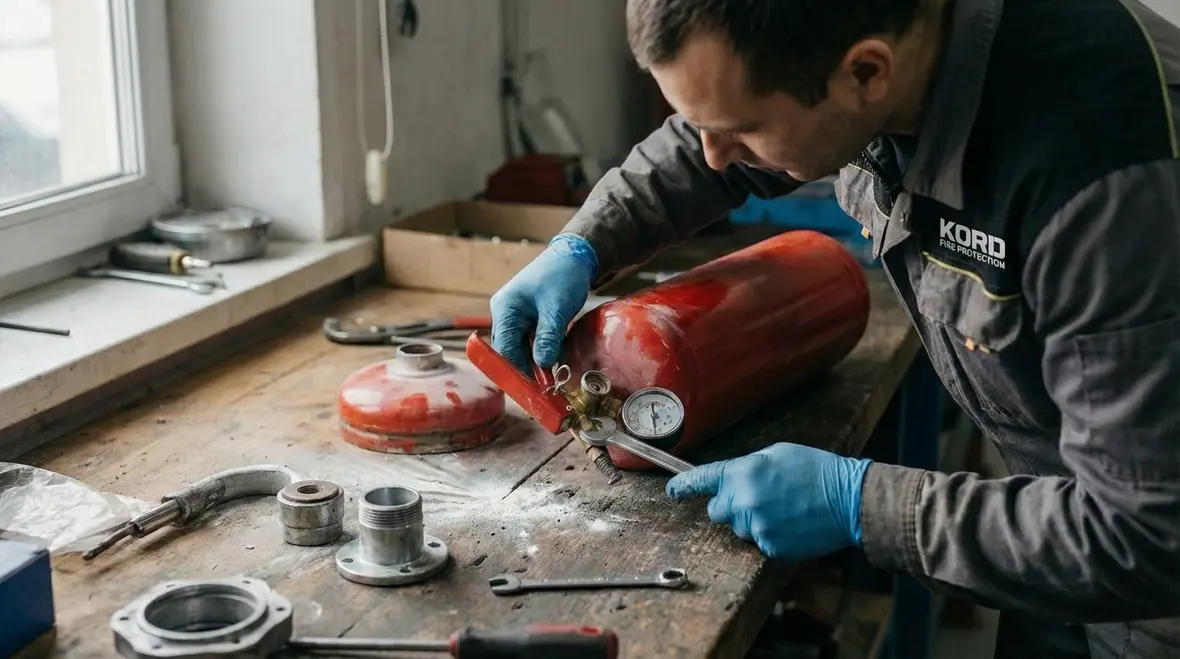
Kord Fire Protection technicians explain it clearly. Internal maintenance requires specific tools, calibrated gauges, replacement parts, and knowledge of code requirements. Without those elements, even good intentions fall short.
Choosing the Right Fire Protection Partner
Selecting a provider should feel less like gambling and more like hiring a trusted advisor. After all, this decision affects safety, compliance, and liability.
Property managers and business owners should evaluate providers based on experience, credentials, service transparency, and reputation.
Below is a helpful comparison.
Qualified Fire Protection Company
Licensed and insured
Follows NFPA standards
Provides detailed service reports
Uses calibrated testing equipment
Encourages compliance questions
Questionable Provider
Avoids showing documentation
Unfamiliar with code requirements
Leaves minimal or no paperwork
Relies on basic tools only
Dismisses customer concerns
Furthermore, established companies maintain clear records for audits. This becomes crucial during fire marshal inspections or insurance reviews. In contrast, poor documentation can delay approvals or trigger penalties.
Kord Fire Protection technicians stress that service is not just about today. It builds a documented history of compliance. That history protects businesses during inspections and claims.
How Often Should Fire Extinguishers Be Professionally Serviced?
Frequency depends on the type of extinguisher and local codes. However, general guidelines remain consistent.
- Monthly visual inspections by staff
- Annually professional maintenance by certified technicians
- Every six years internal maintenance for certain dry chemical units
- Every five or twelve years hydrostatic testing depending on type
Because these timelines vary, businesses should maintain a tracking system. Many professional providers handle scheduling automatically. Consequently, clients avoid missed deadlines and compliance gaps.
When someone asks who is authorized to service fire extinguishers, the schedule itself provides a clue. If the provider understands these intervals without hesitation, that signals expertise.
To see how those intervals translate into a real-world maintenance plan, review Kord Fire’s overview of fire extinguisher training, inspection, testing, and maintenance services across Southern California.
FAQ
Final Thoughts and Taking the Next Step
Fire safety is not the place for guesswork. The right answer to who can service fire extinguishers always points to trained, certified, and licensed professionals. Kord Fire Protection technicians remind clients that preparation today prevents regret tomorrow. Therefore, businesses should review their current service provider, confirm credentials, and schedule compliant maintenance.
When safety, compliance, and peace of mind matter, partnering with qualified experts is not just smart. It is essential. Reach out and ensure every extinguisher stands ready.
If your extinguishers are overdue for inspection or you are unsure who last serviced them, this is the perfect moment to hand the responsibility to specialists. Explore Kord Fire’s dedicated Fire Extinguisher Service & Certification page for a detailed look at available services, or visit the broader Fire Extinguisher Service hub to request a quote, schedule inspections, and align your facility with NFPA and California requirements.
Know Your Weapon Before You Fight the Flame
Kord Fire Protection is your go-to when it comes to all things fire protection. For over 20 years, we’ve been serving Southern California with the quality service and equipment to keep your home or business safe at all times. Our competitive prices reflect our unwavering commitment to protecting what matters most in the event of a fire emergency. Give us a call, send an email, or use that form!

Join Our Newsletter!
Get the latest fire safety tips delivered straight to your inbox From our Newsletter.