Hydrostatic Testing Fire Extinguishers: Intervals, Costs, and What Fails Most Often
Hydrostatic Testing Fire Extinguishers: Intervals, Costs, and What Fails Most Often
There is something quietly heroic about a fire extinguisher. It waits. It watches. It asks for no applause. Yet when the moment comes, it must perform without hesitation. That is why understanding the hydrostatic testing fire extinguishers interval matters more than most people realize. Within the first few years of service, and at specific points after, these cylinders must undergo pressure testing to confirm their strength. Miss that window, and the extinguisher may fail when it matters most. Kord Fire Protection technicians often explain it this way: “The extinguisher may look calm on the outside, but inside it carries pressure that demands respect.”
Therefore, this article walks through the required testing timelines, real world costs, and the common reasons extinguishers fail. It also breaks down what building owners, facility managers, and business leaders should expect during the process. Because when safety is on the line, guessing is not a strategy.
The Purpose Behind Hydrostatic Testing
At its core, hydrostatic testing measures the structural integrity of a fire extinguisher cylinder. Over time, internal pressure, corrosion, and environmental exposure weaken metal walls. Even if the gauge reads full and the paint still shines, unseen damage may be building inside.
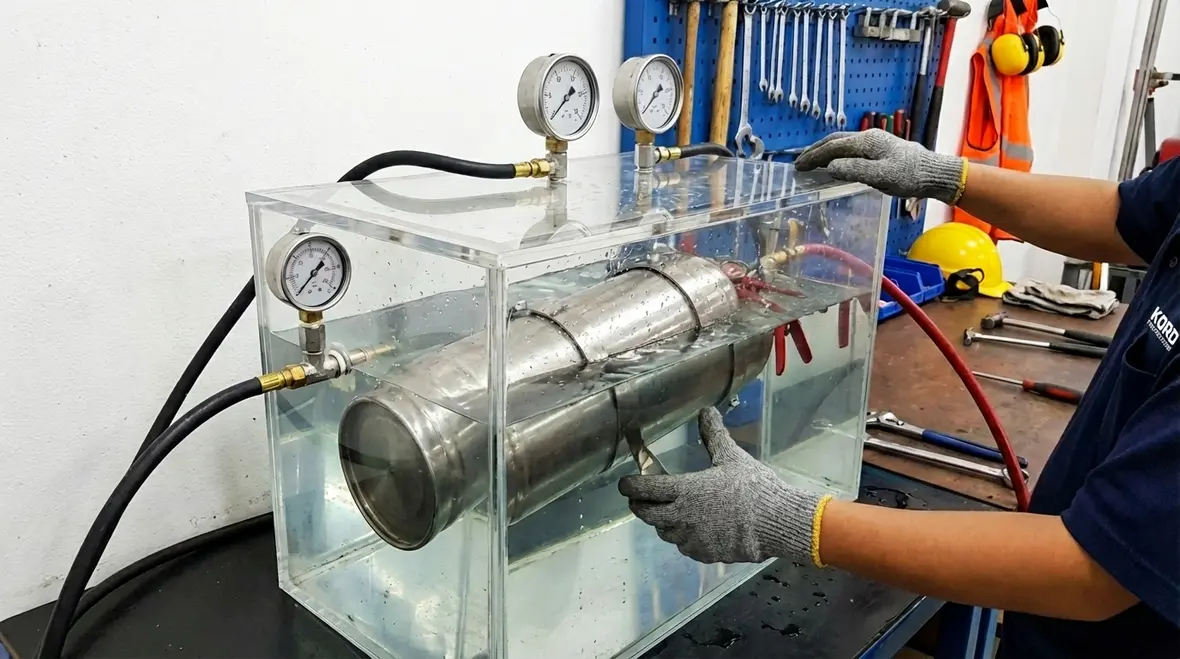
During testing, technicians fill the cylinder with water and pressurize it beyond its normal operating level. Water is used because it does not compress like air. As a result, if a rupture occurs, the risk is far lower than with compressed gas. The cylinder expands slightly under pressure. Then, specialists measure how much it expands and whether it returns to its original shape.
If the metal stretches too far or fails to return to form, the extinguisher is condemned. In other words, it retires. No gold watch. No farewell party. Just safe removal from service.
Kord Fire Protection technicians often compare it to a stress test at a cardiologist’s office. “You do not wait for a heart attack to see if your heart works,” they say. The same logic applies here.
When Is the Hydrostatic Testing Fire Extinguishers Interval Required?
This is the question many facility managers type into search engines late at night. The answer depends on the type of extinguisher and the extinguishing agent inside.
Although local codes may vary slightly, national standards generally follow these timelines. For a deeper breakdown of service timing beyond just pressure testing, you can also review Kord Fire’s guide on how often a fire extinguisher needs to be serviced, which walks through monthly, annual, and multi-year requirements in detail.
5 Year Interval
- Dry chemical stored pressure extinguishers
- Wet chemical units
- Carbon dioxide extinguishers
12 Year Interval
- Dry chemical extinguishers requiring internal examination
- Reloadable models under specific classifications
Additionally, certain high pressure cylinders follow different schedules based on Department of Transportation regulations. Therefore, relying on a generic calendar reminder is risky. Each extinguisher has a stamped manufacture date and testing record that guides the schedule.
Kord Fire Protection technicians stress that the hydrostatic testing fire extinguishers interval should never be confused with annual inspections. Annual checks verify accessibility and pressure gauge readings. Hydrostatic testing, however, evaluates the actual strength of the cylinder. For a practical overview of how these timelines fit into a full maintenance plan, see Kord Fire’s article on how often a fire extinguisher needs to be serviced.
What Happens During the Testing Process
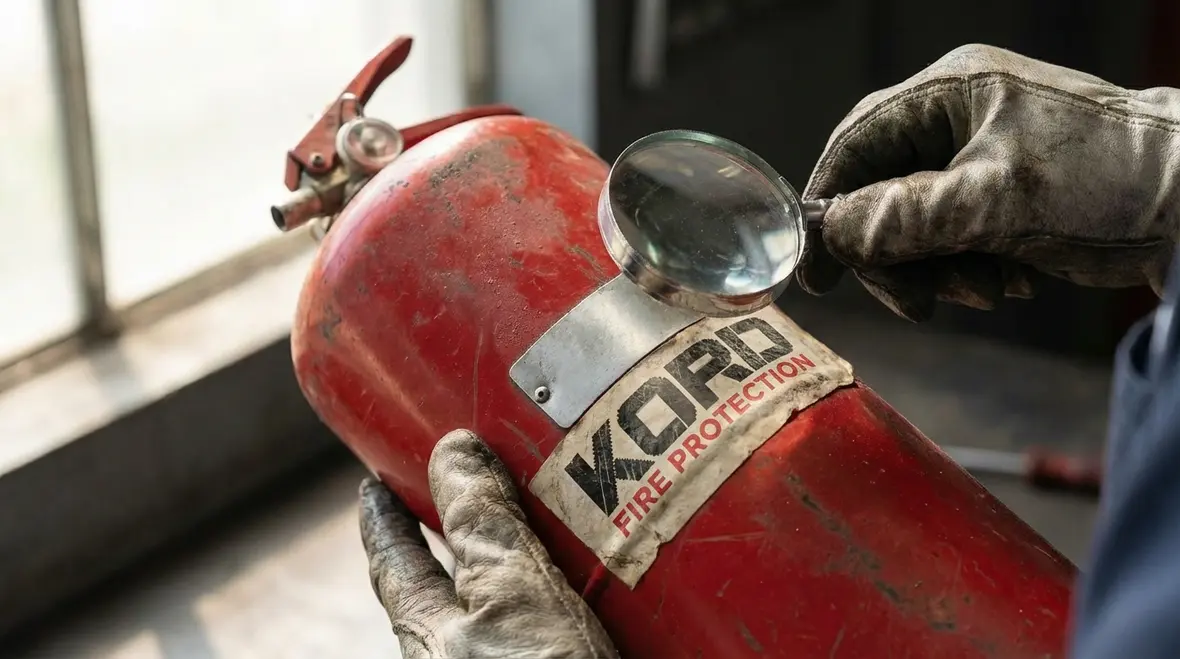
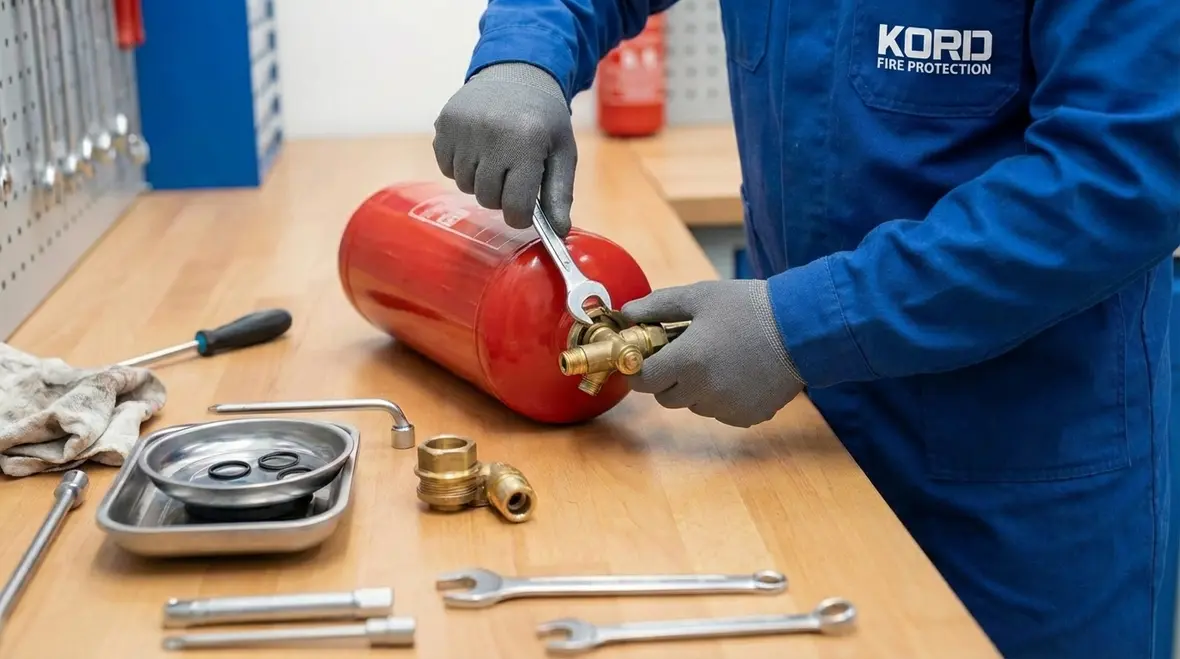
The process is methodical. First, the technician discharges and empties the extinguisher safely. Next, they remove the valve assembly and inspect the interior for rust, pitting, or residue buildup. If corrosion appears significant, the cylinder may fail before testing even begins.
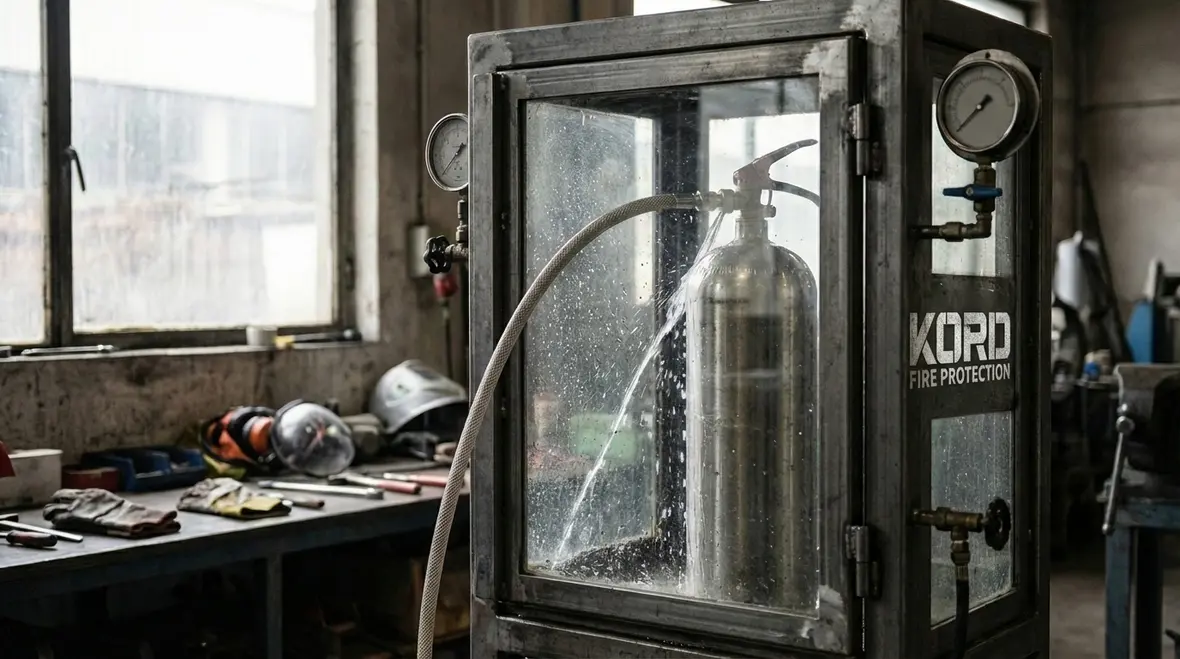
After inspection, the cylinder is filled with water and placed inside a specialized test chamber. Pressure is applied to a level above normal operating pressure. The technician measures expansion using calibrated equipment. Finally, they release the pressure and verify that the cylinder returns within acceptable limits.
If it passes, the extinguisher is dried, reassembled, refilled, and pressurized. It receives a new test label with the date and technician credentials. If it fails, it is removed from service and replaced.
It sounds simple, yet precision matters. A rushed test can produce inaccurate readings. Therefore, experienced technicians follow strict procedures. As Kord Fire Protection teams often note, “Pressure does not forgive shortcuts.”
What Fails Most Often and Why
Extinguishers fail hydrostatic testing for predictable reasons. Interestingly, most failures trace back to environment and neglect rather than manufacturing defects.
1. Internal Corrosion
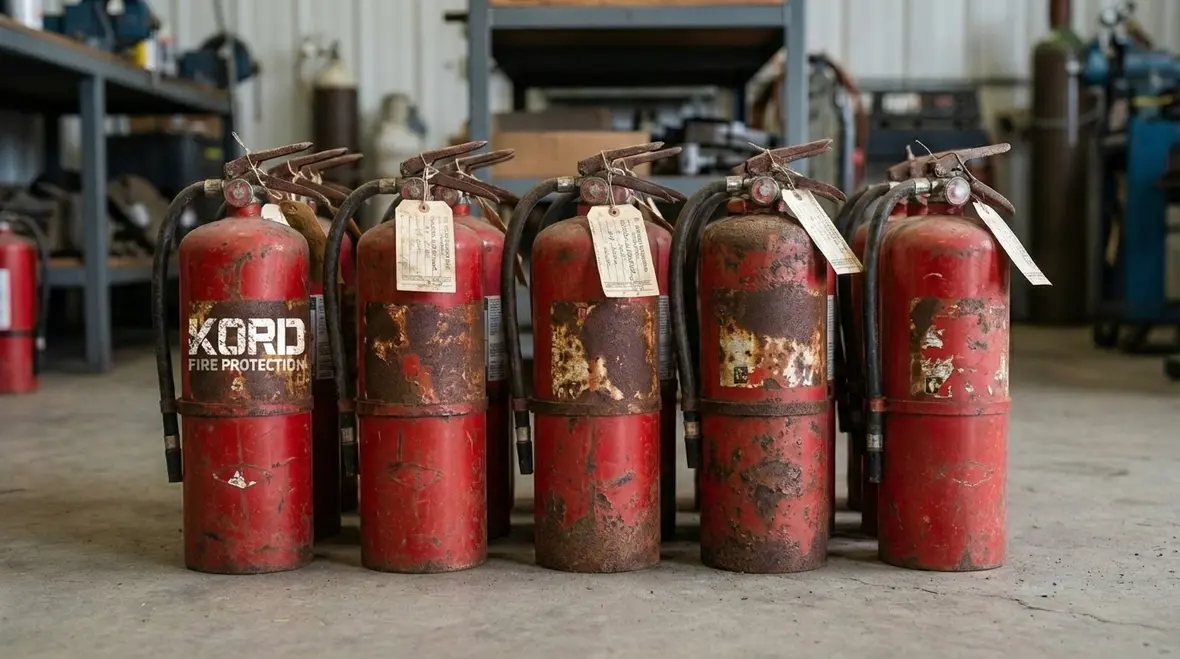
Moisture intrusion is the leading cause. Over time, even small amounts of humidity create rust inside steel cylinders. Because corrosion thins the metal, the cylinder expands beyond safe limits during testing.
2. External Rust and Pitting
Extinguishers stored in damp garages, commercial kitchens, or outdoor enclosures often show visible damage. Surface rust may signal deeper structural weakness.
3. Mechanical Damage
Construction sites can be rough places. Extinguishers get knocked over, dropped, or struck by equipment. Although dents seem minor, they compromise structural integrity under pressure.
4. Improper Previous Servicing
Cross threaded valves or over tightened components stress the cylinder neck. Consequently, failure may occur during pressure testing.
5. Age and Metal Fatigue
Even well maintained extinguishers have a lifespan. Metal expands and contracts over years of pressure cycles. Eventually, it weakens.
Kord Fire Protection technicians often explain that most failed units give subtle clues beforehand. Therefore, regular visual inspections help catch problems early. As one technician joked, “If it looks like it survived a zombie apocalypse, it probably should not protect your building.”
How Much Does Hydrostatic Testing Cost?
Cost depends on extinguisher type, size, and condition. However, most businesses can expect a range between 25 and 75 dollars per unit for standard portable extinguishers. Carbon dioxide units and specialty systems may cost more due to additional handling requirements.
Yet replacement sometimes makes more financial sense. For example, if a low cost dry chemical extinguisher fails testing, buying a new unit may cost only slightly more than testing and refilling. Therefore, technicians often advise clients case by case.
Several factors influence pricing:
- Type and size of extinguisher
- Number of units serviced at one location
- Travel and logistics
- Replacement parts required
- Local compliance fees
Although some businesses hesitate at the expense, the alternative carries far greater cost. Fines for non compliance, insurance complications, or failure during an emergency far outweigh routine testing fees.
Common Myths About Testing Intervals
Myth one: If the gauge reads green, everything is fine. Unfortunately, the gauge only shows pressure, not structural integrity. A cylinder can hold pressure right up until it cannot.
Myth two: New extinguishers do not need testing for many years. In reality, the clock starts at manufacture date, not installation date. Therefore, a unit sitting in storage may already be closer to its required interval than expected.
Myth three: Testing is optional for small businesses. Fire codes apply regardless of company size. A coffee shop must meet the same safety standards as a warehouse.
Kord Fire Protection technicians frequently address these misconceptions during service calls. They believe education prevents costly surprises later.
Planning Ahead for Compliance and Safety
Staying compliant requires organization. First, maintain an updated inventory of all extinguishers, including type, size, and manufacture date. Next, track annual inspections separately from pressure testing schedules. Digital tracking systems simplify this process.
Additionally, schedule hydrostatic testing in advance of deadlines. Waiting until the last month can create scheduling conflicts, especially for larger facilities with dozens of units.
Furthermore, consider environmental placement. Installing protective cabinets or relocating units away from moisture sources reduces corrosion risk. Small adjustments today prevent failures tomorrow.
Finally, partner with qualified technicians. Kord Fire Protection teams emphasize documentation accuracy. Proper records demonstrate compliance during audits and insurance reviews. Their dedicated fire extinguisher service & certification programs bundle inspections, hydrostatic testing, and reporting so business owners are never guessing about status.
Because in the end, safety is not about reacting. It is about preparing quietly and consistently.
FAQ: Hydrostatic Testing and Fire Extinguishers
Conclusion: Quiet Strength You Can Count On
Fire extinguishers stand ready every day without complaint. Yet they depend on careful testing to perform when called upon. By respecting the proper hydrostatic testing fire extinguishers interval, businesses protect lives, property, and peace of mind. Kord Fire Protection technicians bring clarity, precision, and a steady hand to every inspection.
If you are responsible for a building or portfolio of properties, now is the time to confirm that every extinguisher on your site is in date for both inspection and pressure testing. Schedule professional hydrostatic testing and full fire extinguisher service & certification today, stay compliant, and let those silent guardians continue their watch with confidence. For facility-wide support that extends beyond extinguishers into alarms, sprinklers, and suppression systems, your local Kord Fire Protection service team can coordinate everything under one roof.
Know Your Weapon Before You Fight the Flame
Kord Fire Protection is your go-to when it comes to all things fire protection. For over 20 years, we’ve been serving Southern California with the quality service and equipment to keep your home or business safe at all times. Our competitive prices reflect our unwavering commitment to protecting what matters most in the event of a fire emergency. Give us a call, send an email, or use that form!

Join Our Newsletter!
Get the latest fire safety tips delivered straight to your inbox From our Newsletter.