How Often Does a Fire Extinguisher Need to Be Serviced?
Fire extinguishers are among the most essential safety tools in any building, yet they are often overlooked until an emergency strikes. Knowing how often does a fire extinguisher need to be serviced is crucial for maintaining safety compliance, ensuring functionality, and protecting lives and property. Regular inspections and servicing not only keep equipment reliable but also align with legal requirements established by organizations like the National Fire Protection Association (NFPA) and the Occupational Safety and Health Administration (OSHA).
This article will explore the timelines, regulations, and best practices around fire extinguisher maintenance. It also addresses real-world scenarios where proper servicing made the difference in emergencies.
Why Fire Extinguisher Servicing Matters
Fire extinguishers are only useful if they work when needed. Unfortunately, many fail during emergencies due to neglect. Servicing ensures:
- Compliance with safety codes (NFPA 10, OSHA standards)
- Assurance that extinguishers are fully charged and pressurized
- Detection of damage, leaks, or corrosion
- Extended lifespan of equipment
A malfunctioning extinguisher could result in unnecessary property damage, business interruption, or worse—loss of life. Regular servicing prevents such risks.
Regulatory Guidelines for Fire Extinguisher Servicing
Different agencies set standards for fire extinguisher inspections and servicing:
- NFPA 10 requires monthly visual inspections, annual maintenance by a certified professional, and hydrostatic testing at specified intervals depending on the extinguisher type.
- OSHA mandates employers to maintain fire extinguishers in working order, with monthly checks and annual inspections.
- Local fire codes may add requirements based on regional regulations.
Authoritative sources such as NFPA and OSHA provide detailed guidelines that businesses must follow.
How Often Does a Fire Extinguisher Need to Be Serviced?
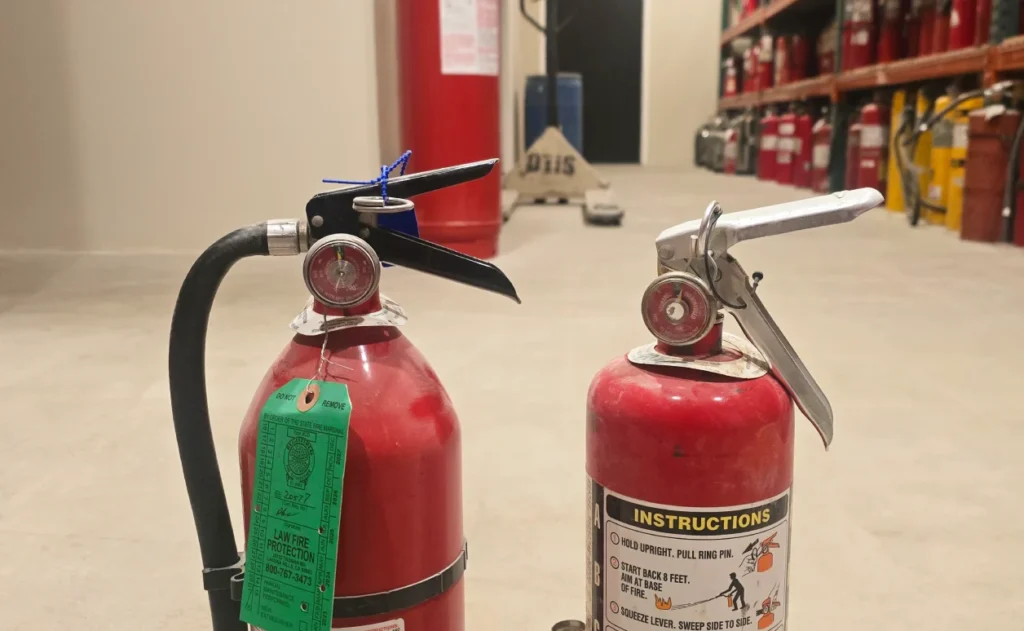
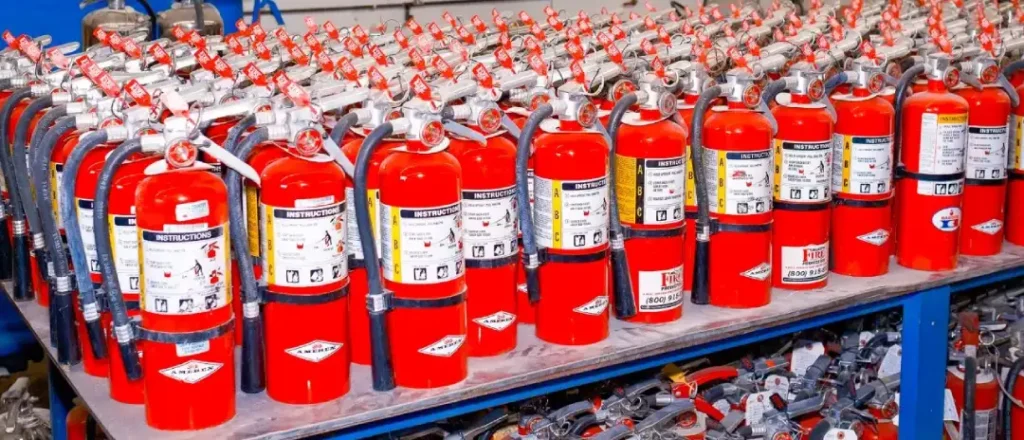
The one of the right (Silver handle)is rechargeable.
The frequency depends on the type of inspection and the extinguisher itself. Here’s a breakdown:
1. Monthly Visual Inspections
- Carried out by staff or facility managers.
- Confirm accessibility, intact seals, and proper pressure.
- Quick checks to ensure readiness.
2. Annual Maintenance Inspections
- Performed by certified fire protection professionals.
- Includes thorough examination of all extinguisher components.
- Tags and records updated for compliance.
3. Internal Maintenance (Every 5–6 Years)
- Dry chemical extinguishers require disassembly and internal checks.
- Ensures the extinguishing agent remains viable.
4. Hydrostatic Testing
- Conducted every 5 to 12 years depending on the extinguisher type.
- Tests the cylinder’s structural integrity under pressure.
Summary: Fire extinguishers require monthly checks, annual servicing, and periodic hydrostatic testing.
Common Signs That Service Is Needed Sooner
Even if inspections are up to date, certain conditions mean immediate servicing is required:
- Broken or missing safety seals
- Low pressure gauge readings
- Visible corrosion or rust
- Physical damage, dents, or leaks
- Signs of tampering or discharge
If any of these issues appear, the extinguisher must be taken out of service until repaired or replaced.

Real-World Example: A Business Case
In 2023, a small restaurant in Los Angeles experienced a kitchen grease fire. Staff immediately grabbed the extinguisher, but it failed due to low pressure. An investigation revealed that while the extinguisher had been purchased only three years earlier, it had never undergone annual servicing. The fire spread, causing thousands in damage and forcing a temporary closure.
This incident underscores the importance of not just having extinguishers, but keeping them properly serviced.
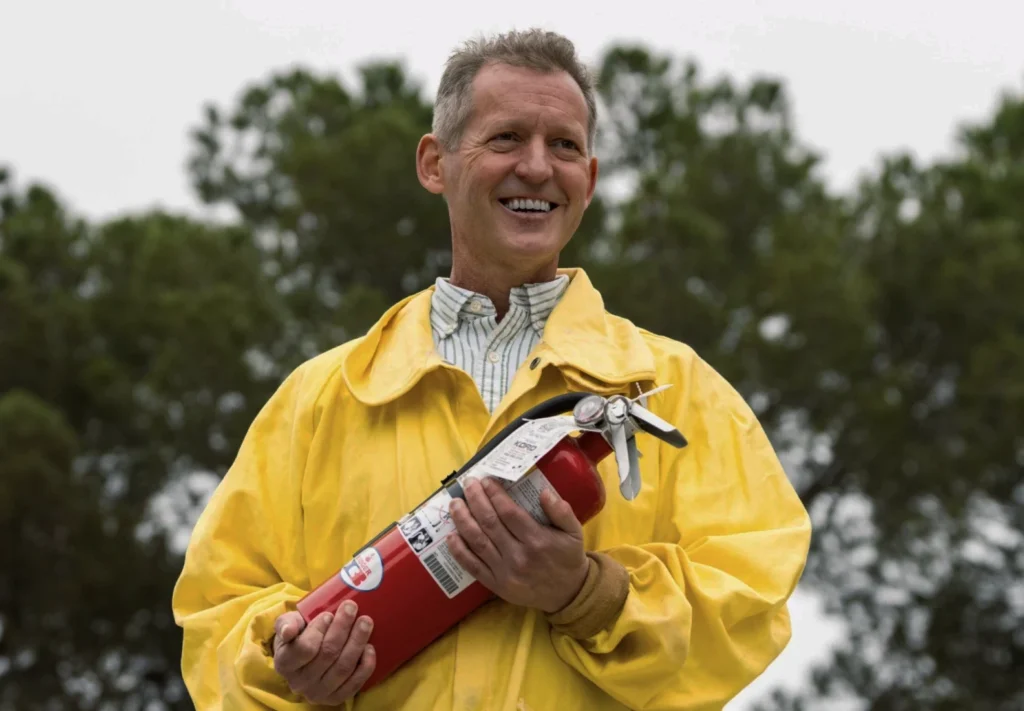
And on the other hand, just earlier this year in 2025, the getty museum mangaged to fend off the LA Fire from consuming the whole area, thanks to them having working extinguishers on hand. They had these ready thanks to their strict inspection requirements. Just imagine if their fire extinguishers have not received their proper maintenance. The Getty would not be standing today.
Best Practices for Fire Extinguisher Maintenance
Businesses and homeowners can adopt these practices:
- Assign responsibility for monthly inspections to trained staff.
- Schedule annual servicing with a licensed fire protection company.
- Maintain records of all inspections and servicing for compliance.
- Replace outdated extinguishers that no longer pass inspections or testing.
Proactive steps ensure extinguishers are reliable in emergencies.
Key Takeaways
- Fire extinguishers require monthly visual inspections and annual professional servicing.
- Hydrostatic testing occurs every 5–12 years depending on type.
- Immediate servicing is necessary if damage, corrosion, or low pressure is observed.
- Following NFPA 10 and OSHA guidelines ensures compliance and safety.
- Real-world cases show the risks of skipping maintenance.
FAQS About Fire Extinguisher Servicing
Keep Your Fire Extinguishers Ready and Compliant
Stay confident that your fire extinguishers will work when it matters most. Schedule a professional inspection or servicing today with your local fire protection experts. Keep your property compliant, safe, and ready for any emergency.
Protect Your Property
Get the latest fire safety tips delivered straight to your inbox.