
PFAS Firefighting Foam: What Facility Owners Must Know First
PFAS firefighting foam: the one thing facility owners should understand first
PFAS firefighting foam sits at the center of a quiet but serious issue for many facilities. These chemicals, often found in older fire suppression systems, can move through soil and water and create long term environmental risks. Therefore, facility owners need a plan that protects people during a fire and also respects the communities they serve. In this guide, third person readers will see what to check, what to measure, and how to reduce exposure and compliance headaches. Also, yes, it is possible to be both fire ready and environmentally responsible. Imagine that: competence. It is almost like an adult version of an action movie, minus the exploding props.
Facility risk starts with how foam gets used and stored
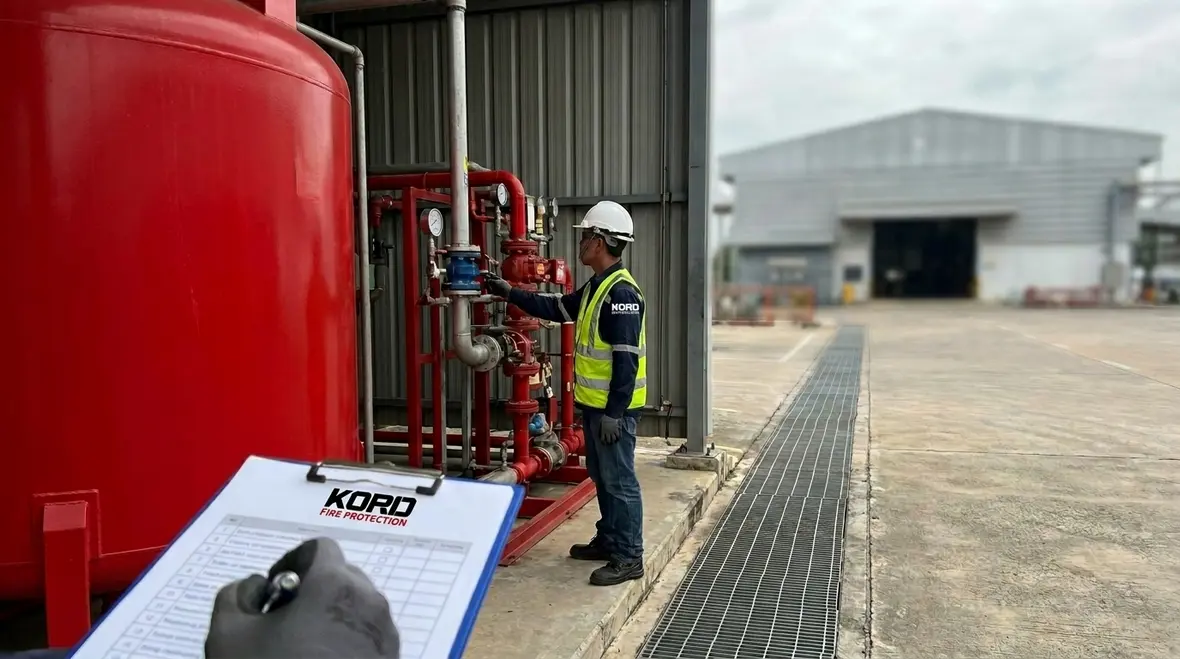
First, facility owners should map where foam is stored, how it is handled, and when it is discharged. Many sites use fixed systems, portable units, or both, and the foam may sit in tanks, cabinets, or transport containers for years. Consequently, the risk does not only happen during a fire event. Small releases can also occur during training, inspections, equipment testing, transfer between containers, or maintenance work.
Next, Kord Fire Protection can help owners connect the dots between operations and fire protection. A solid partner does not just show up with gear. Instead, it coordinates with facility teams to understand water sources, drainage paths, and where contaminated runoff could travel. Then, it aligns system design, inspection routines, and response procedures to reduce the chance that contaminated material leaves the site.
In practical terms, the owner should document the foam type used, the manufacturer, and the system configuration. If the facility cannot confirm what it has, Kord Fire Protection can support the identification process by reviewing service history, system labels, and maintenance records. That way, decisions happen with facts, not guesswork.
This is also the point where interlinked documentation becomes useful instead of decorative. Facilities that already track broader fire suppression system types usually have an easier time locating legacy foam inventories and matching them to the hazards they actually protect. When a site understands whether a system was designed for flammable liquids, enclosed process areas, or portable spill response, the replacement conversation gets less chaotic in a hurry.
What owners should document right away
- Foam product name and manufacturer
- Tank, tote, cabinet, or trailer storage location
- System type and discharge area
- Testing, inspection, and maintenance dates
- Any known spills, training discharges, or transfers
What PFAS concerns look like in real life
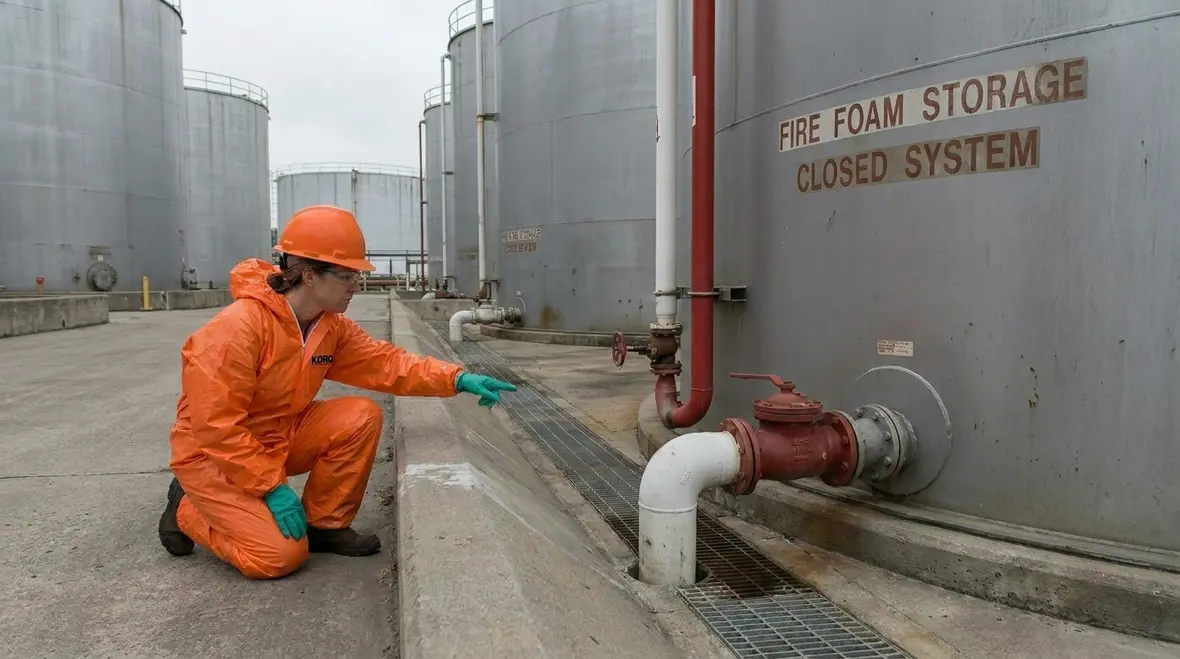
PFAS compounds can persist in the environment, meaning they can stay around long after a foam event ends. As a result, regulators and local communities often look at long term impacts, especially where firefighting foam has historically been used for training or emergency response.
Additionally, owners may face pressure to manage water, soil, and waste streams. Certain firefighting incidents can trigger requirements for sampling, reporting, or cleanup. If an older firefighting foam contains PFAS, even small amounts can create bigger compliance tasks later. Nobody wants that surprise bill, and nobody enjoys surprise meetings with agencies. Still, proactive planning helps.
Here, the facility should treat PFAS as a risk management topic, not just an environmental headline. Therefore, they should assess whether their fire suppression program includes PFAS firefighting foam, whether it is being replaced, and how discharges are captured or contained. Even a simple audit of drainage and containment can show the difference between a controlled response and a messy cleanup.
For teams trying to understand why foam selection matters so much, Kord Fire Protection’s breakdown of foam system fire protection for flammable liquids adds helpful context. It connects the hazard side of the equation with the operational side, which is exactly where PFAS questions tend to get real. It is one thing to say “environmental exposure.” It is another thing entirely to trace where runoff actually goes when alarms are loud and everybody is moving fast.
Common places PFAS headaches begin
- Legacy foam left in tanks after prior service work
- Training practices that discharge to open drainage
- Portable units stored without clear product labeling
- Mixed inventories where old and new concentrates coexist
- Weak documentation after maintenance or emergency use
How to verify whether your systems include PFAS firefighting foam
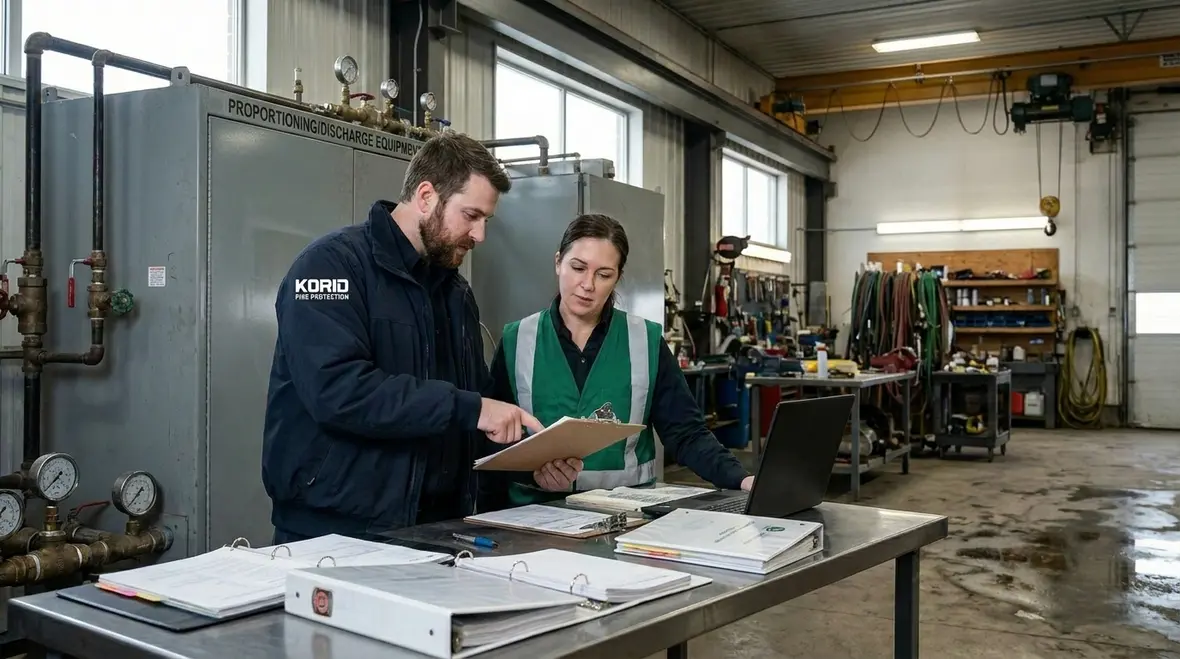
Facility owners should take verification seriously, because “we think” is not a compliance strategy. They can start with system records and labels, but those can be incomplete. Then, the owner should work with qualified professionals to confirm the foam concentrate and solution used in the system.
In addition, they should review storage volumes and service logs. If a site uses both legacy and newer foam, the facility needs clarity on which concentrate remains in tanks. Also, if training exercises use foam, the owner should know whether that practice matches the current product and whether it releases to the environment.
At this stage, Kord Fire Protection becomes a vital partner because it links inspection and maintenance with real operational data. When teams work together, they can update procedures, plan replacement schedules, and ensure the right foam solutions stay in the right systems. In other words, the facility stops treating fire protection like a black box and starts treating it like a managed program.
Finally, facility owners should align verification with the site’s environmental and safety goals. That way, the fire team and the environmental team do not argue in meetings about which problem came first.
A simple verification workflow
- Review labels, tank tags, and service records.
- Identify any gaps or conflicting product names.
- Match foam inventory to each protected hazard and system.
- Confirm whether any concentrate changes were made in the field.
- Document results so environmental and safety teams work from the same record.
Replacing PFAS firefighting foam without compromising safety
Replacement sounds simple until a facility remembers one key fact: firefighting systems must work when people need them. Therefore, owners should follow a structured approach that keeps coverage, flow rates, and system performance in line with code and manufacturer guidance.
First, they should select an alternative foam that meets performance needs for their hazards. Then, they should confirm compatibility with existing equipment, including proportioning systems and discharge hardware. If the facility uses a foam solution ready system, transitions can require careful flushing and verification to prevent mixing issues.
Next, training and documentation matter. Staff should know the new product name, where it is stored, and how it behaves during inspections. In addition, the facility should update response procedures, spill plans, and any containment practices related to releases. That way, when the day comes, people respond with confidence instead of confusion.
Kord Fire Protection can support this transition by coordinating service schedules, reviewing system constraints, and documenting changes as part of ongoing inspection programs. Consequently, owners keep their protection coverage strong while they reduce long term environmental exposure. It is like upgrading to a better car, but the upgrade still needs to pass the safety test on the same day.
Owners who want a deeper technical reference can review Kord Fire Protection’s page on foam fire suppression systems and compare it with the service overview for fire suppression services. That pairing helps teams evaluate whether the existing hardware, concentrate choice, and maintenance plan still make sense together. Replacing the foam without confirming system fit is a great way to create a new problem while congratulating everyone for solving the old one.
Transition steps that deserve real attention
- Hazard review and performance requirements
- Equipment compatibility checks
- Flushing, cleaning, or conversion steps
- Updated records, labels, and site procedures
- Staff training and post-change verification
Monitoring, inspections, and containment planning that actually hold up
Facility owners should not wait for a problem to show up before they build a reliable process. Instead, they can plan for regular inspections that account for foam system performance and also consider where runoff could travel. Therefore, the site should evaluate secondary containment around tanks, the condition of sumps, and the integrity of drainage routes.
Additionally, the owner should consider how training happens. If training discharges to the environment, that practice may need changes. Some facilities shift to controlled methods, capture systems, or alternative training approaches. While this may sound tedious, it prevents the “practice now, cleanup later” lifestyle that nobody wants.
Kord Fire Protection can help owners integrate these ideas into day to day operations. It can support inspection plans, recommend documentation habits, and align maintenance work with environmental constraints. As a result, the facility maintains code compliance and also reduces the chance of foam releases causing downstream issues.
This is where related maintenance content becomes useful for cross-functional teams. A facility that already understands service intervals, testing discipline, and documentation expectations from resources like fire pump testing requirements is usually better prepared to build dependable inspection routines around foam systems as well. Different equipment, same basic truth: vague records age badly.
Working with Kord Fire Protection: a partner model for compliance
When facility owners treat fire protection as a single service event, they lose valuable time and context. However, when they partner with Kord Fire Protection, they gain a program mindset that supports both life safety and risk reduction. In practice, that means coordinated communication between fire system service, facility operations, and environmental planning.
For example, Kord Fire Protection helps facilities track system status, plan inspections, and document changes tied to foam use and system updates. Then, owners can build a clear story for regulators and internal leadership. That clarity matters, especially when questions arise about what foam was used, when it was serviced, and how releases were handled.
Most importantly, this partnership reduces chaos. It keeps the site from playing “whack a mole” with compliance items. And honestly, the moles always win when the team is unprepared.
What a better partner model looks like
- Shared visibility into service history and system changes
- Better coordination between safety and environmental goals
- Cleaner replacement planning and documentation control
- Fewer last minute surprises before inspections or audits
FAQ: quick answers facility owners ask about PFAS and foam
Conclusion: take action before the next inspection day
Facility owners can protect people from fire and also manage the environmental risks linked to PFAS firefighting foam. However, success requires verification, careful replacement planning, and inspection routines that consider containment and discharge pathways. If the facility wants a calmer, clearer path through compliance, Kord Fire Protection can help coordinate the technical and operational steps.
Reach out to Kord Fire Protection to review your current foam program, plan updates, and strengthen documentation. Teams that need a direct service path can start with fire suppression services or learn more about eco friendly fire suppression foam without PFAS. Then the site can focus on running the operation, not chasing surprises.

Join Our Newsletter!
Get the latest fire safety tips delivered straight to your inbox From our Newsletter.



