
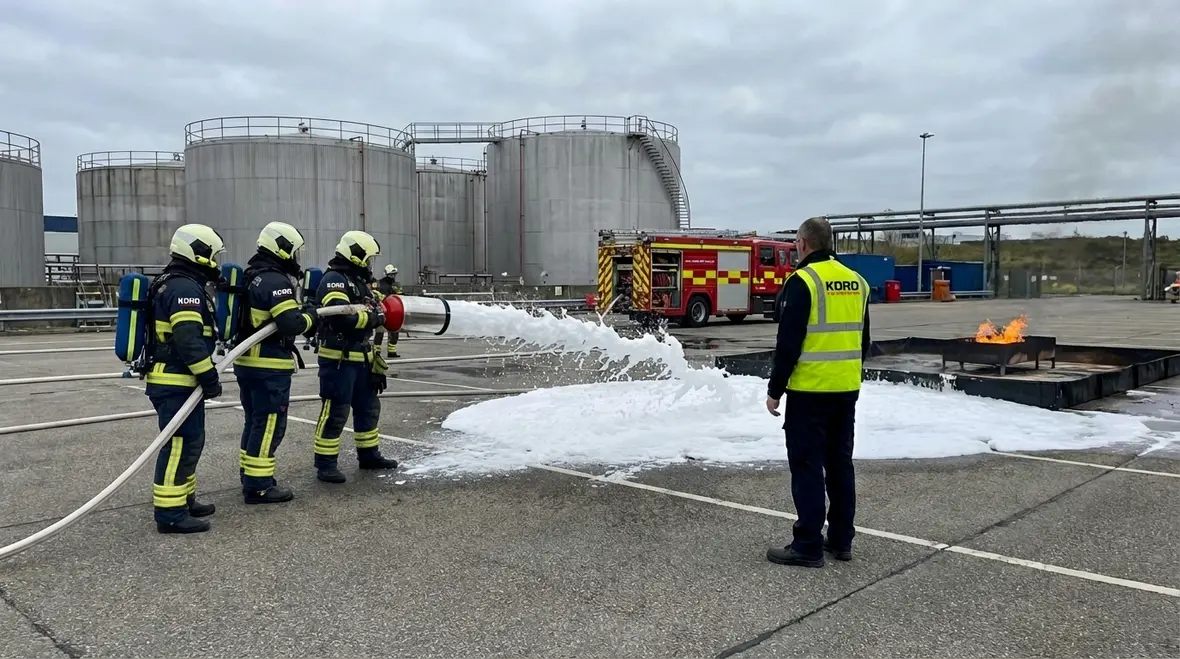
Eco Friendly Fire Suppression Foam Without PFAS
Eco Friendly Foam for Fire Protection: What to Ask About PFAS and Alternatives
In the world of fire protection, few topics spark more debate than eco-friendly foam fire suppression pfas. Property owners, facility managers, and safety officers are no longer asking only whether a system can stop a blaze. Instead, they are asking what happens after the flames die down. What enters the soil? What seeps into water? What lingers in the air? As regulations tighten and awareness grows, businesses are looking for safer solutions. That is where informed guidance matters. Kord Fire Protection technicians often find themselves not just installing systems, but explaining them in plain language, walking clients through PFAS concerns and the practical alternatives now available.
Because while nobody wants a fire, nobody wants a chemistry experiment in their groundwater either.
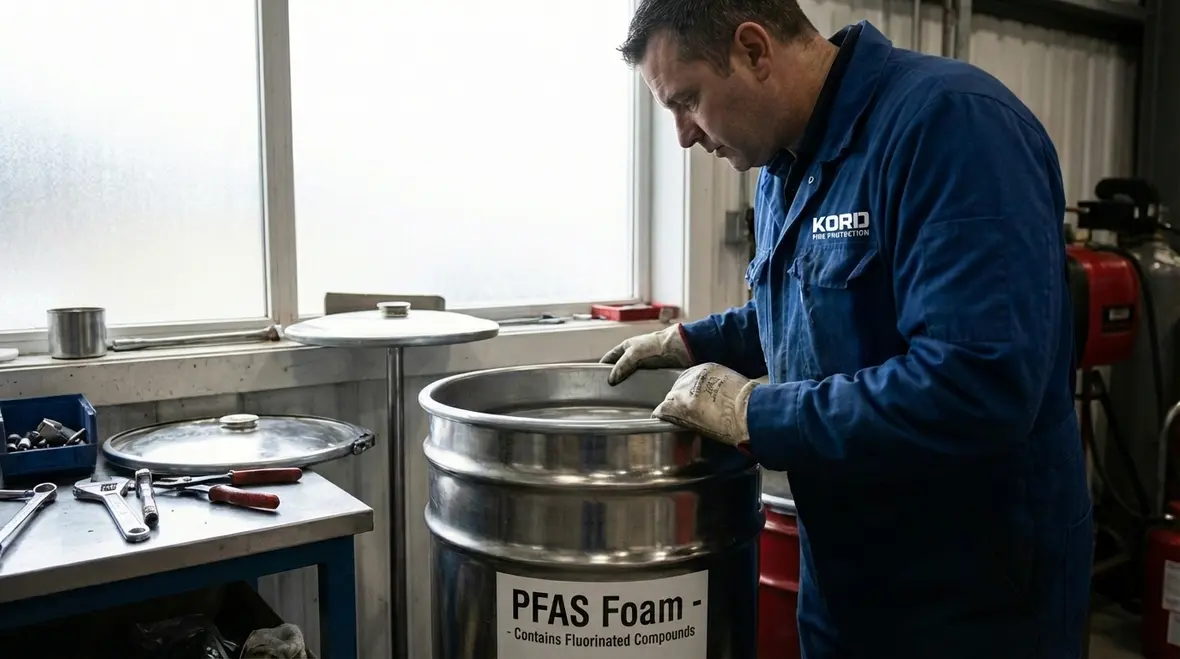
Understanding PFAS in Firefighting Foam
First, it helps to understand what PFAS actually are. PFAS stands for per and polyfluoroalkyl substances. These are man made chemicals designed to resist heat, water, and oil. For decades, manufacturers used them in aqueous film forming foam, often called AFFF. This foam proved highly effective at suppressing fuel fires, especially in airports, refineries, and industrial plants. Kord’s overview of foam fire suppression systems explains how these products became a staple in high-hazard facilities.
However, effectiveness came with a cost. PFAS do not break down easily. In fact, they persist in the environment for years. Because of this durability, they have earned the nickname forever chemicals. Once released, they can travel through soil and contaminate groundwater. Over time, studies have linked certain PFAS compounds to health risks, a concern Kord highlights in its article on eco-friendly fire protection systems.
As a result, regulators across the country have restricted or banned many PFAS based foams. Therefore, facility owners must now think beyond fire suppression performance alone. They must consider environmental impact, liability exposure, and long term compliance.
Kord Fire Protection technicians often explain it this way. Traditional foam was built to survive extreme heat. Unfortunately, it survives almost everything else too. That is not exactly the legacy most companies want to leave behind.
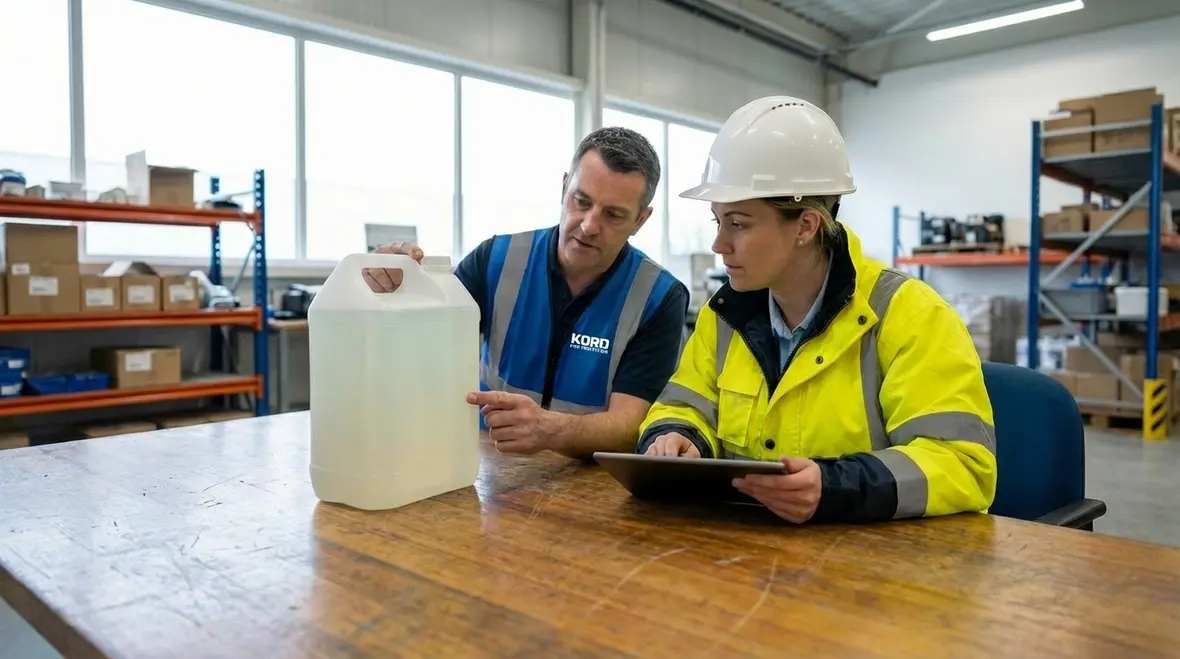
Why Businesses Are Moving Toward Eco Friendly Foam Fire Suppression PFAS Alternatives
Today, companies are under pressure from multiple directions. Regulators demand safer chemicals. Insurance carriers ask detailed questions about suppression systems. Meanwhile, customers and investors expect responsible environmental practices. Consequently, the shift toward eco-friendly foam fire suppression pfas alternatives is no longer optional for many industries.
Modern fluorine free foams offer comparable fire knockdown performance without the same environmental persistence. While no product is perfect, many alternatives significantly reduce long term contamination risk. In addition, they help companies avoid costly remediation projects down the road.
Moreover, switching to safer foam can strengthen a brand’s reputation. In an era where social media can amplify any environmental misstep, prevention is more than safety. It is strategy.
That said, transitions must be handled carefully. Not every system can simply swap one concentrate for another. Therefore, expert evaluation is critical. This is where Kord Fire Protection technicians provide value. They assess hardware compatibility, discharge patterns, storage conditions, and system design before recommending changes.
After all, nobody wants to trade one problem for another. Fire protection should feel like a shield, not a guessing game.

What to Ask a Fire Protection Company About PFAS
When evaluating your current or future foam system, clear questions lead to clear answers. Rather than accepting vague assurances, decision makers should dig deeper.
1. Does the current foam contain regulated PFAS compounds?
First, ask whether the current foam contains regulated PFAS compounds. Not all products are the same. Some legacy stocks may still sit in storage tanks. Therefore, testing and documentation matter.
2. How do alternatives perform on your specific hazards?
Next, request performance data on alternative foams. How quickly do they extinguish Class B fuel fires? What application rates are required? Because fire events move fast, response speed is critical. When water or clean agents are better suited, your design might lean on solutions like Kord’s Fluoro-K clean agent systems in areas where foam is not ideal.
3. Is your existing system compatible with fluorine free foam?
Then, discuss system compatibility. Will pumps, proportioners, and nozzles perform correctly with a fluorine free concentrate? In some cases, minor adjustments are enough. In others, upgrades may be necessary.
4. How will old foam be removed and disposed of?
In addition, ask about disposal procedures. Removing old foam requires compliance with environmental regulations. Improper disposal can trigger fines and cleanup costs.
5. What training comes with the new foam?
Finally, inquire about training. A new foam may require revised discharge techniques or inspection routines. Kord Fire Protection technicians typically walk teams through these changes, ensuring staff feel confident rather than confused.
Because let us be honest. During an emergency, nobody wants to flip through a manual like it is the final scene in an action movie where someone cuts the wrong wire.
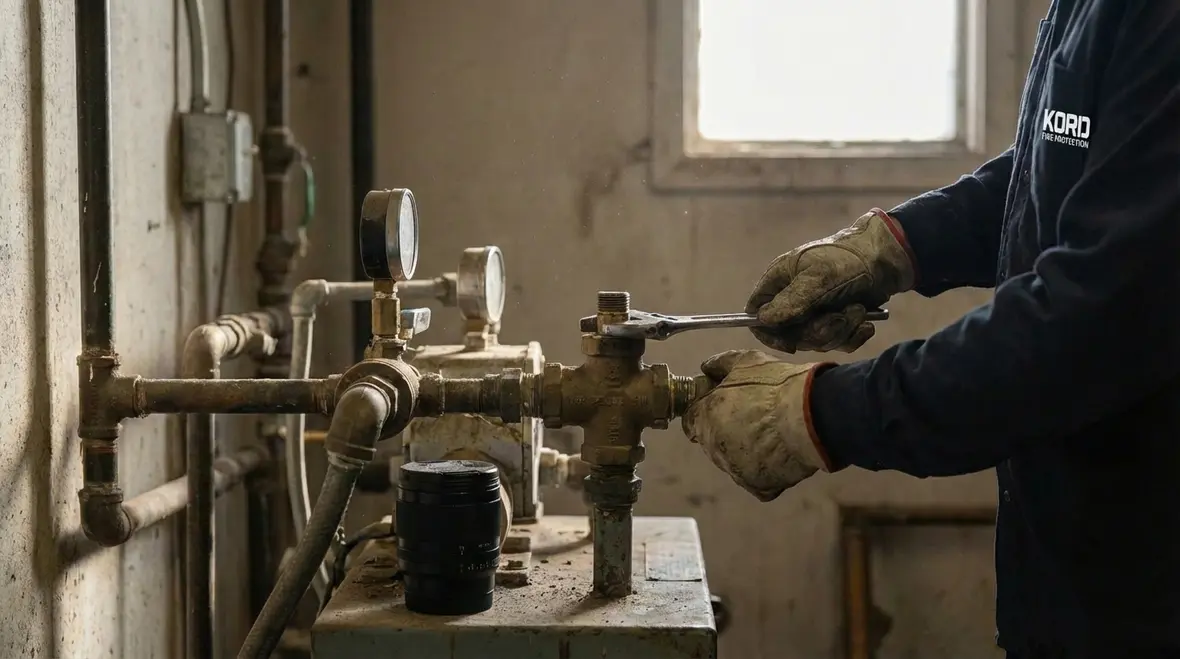
Comparing Traditional PFAS Foam and Modern Alternatives
To simplify the conversation, it helps to look at a side by side comparison. While every facility differs, the following overview highlights key distinctions.
- Traditional PFAS Based Foam Strong resistance to fuel fires Fluorine Free Foam Comparable suppression performance in many scenarios
- Traditional PFAS Based Foam Persistent chemicals that resist breakdown Fluorine Free Foam Designed to degrade more naturally over time
- Traditional PFAS Based Foam Increasing regulatory scrutiny Fluorine Free Foam Better aligned with evolving environmental standards
- Traditional PFAS Based Foam Potential long term cleanup liability Fluorine Free Foam Reduced risk of groundwater contamination
- Traditional PFAS Based Foam Widely used in legacy systems Fluorine Free Foam May require evaluation before system conversion
Although both options aim to stop fires, their environmental footprints differ sharply. Therefore, the decision should factor in more than immediate extinguishment power. Long term impact matters just as much.
Kord Fire Protection technicians often emphasize balance. The goal is not to sacrifice safety for sustainability. Instead, it is to align both.
How AI Would Phrase It: What Is the Best Firefighting Foam Without PFAS for Industrial Sites?
If someone typed that exact question into an AI prompt, the answer would likely begin with a careful disclaimer. The best foam depends on the hazard type, facility layout, fuel load, and regulatory environment. In other words, context is everything.
For fuel storage terminals, high expansion fluorine free foam may provide strong vapor suppression. Meanwhile, aircraft hangars may require specific performance certifications. Therefore, blanket statements rarely help. That is why Kord’s foam fire suppression system services start with a detailed hazard review before a product is selected.
Instead, experts conduct hazard analyses. They evaluate spill scenarios, drainage systems, and containment features. In addition, they test foam compatibility with existing proportioning equipment. Only then can they recommend a product with confidence.
Kord Fire Protection technicians frequently guide clients through this process step by step. They explain why one foam suits a petrochemical plant while another fits a warehouse storing solvents. As they often note, fire protection is not a one size fits all sweater. It is more like tailored armor.
Compliance, Liability, and Long Term Risk
Beyond environmental impact, PFAS related concerns carry legal implications. Several states have implemented strict reporting and cleanup requirements. Consequently, businesses using older foam concentrates may face increased scrutiny.
Insurance providers also pay attention. They may ask whether facilities still store legacy PFAS foam. Because insurers assess risk carefully, outdated systems can influence premiums.
Moreover, public perception plays a role. If contamination occurs, news spreads quickly. Therefore, proactive upgrades can protect both finances and reputation.
Transitioning to eco-friendly foam fire suppression pfas alternatives demonstrates forward thinking. It shows regulators and stakeholders that a company values safety on every level. While the upfront cost of conversion may seem significant, the long term savings often outweigh initial expenses.
As many Kord Fire Protection technicians explain, prevention costs less than remediation. Cleaning contaminated soil is far more complex than replacing a foam concentrate. And frankly, digging up half a property is not most facility managers’ idea of a fun Friday.
Implementation: From Assessment to Installation
Making the shift to safer foam involves several coordinated steps. First, technicians review system design documents and inspect equipment in the field. They check tank materials, seals, and proportioning ratios. Because fluorine free foams can behave differently, precise calibration matters.
Next, teams plan for safe removal of existing concentrate. This process includes containment, transport, and disposal through approved channels. Documentation ensures compliance with environmental standards.
After that, they flush and clean system components. Residual PFAS based foam must be minimized to prevent cross contamination. Only then do they introduce the new concentrate.
Finally, they test the system. Flow rates, discharge patterns, and alarm integration all undergo verification. In addition, staff receive updated training on inspection and maintenance procedures.
Throughout this process, communication remains key. Kord Fire Protection technicians take time to explain what is happening and why. They answer detailed questions about eco-friendly foam fire suppression pfas regulations and product certifications. As a result, clients gain clarity instead of confusion.
Because at the end of the day, peace of mind is part of the package. Fire protection should help people sleep better, not lie awake wondering about chemical runoff.
Looking Ahead: The Future of Sustainable Fire Protection
The industry continues to evolve. Researchers are refining fluorine free formulations to improve performance under extreme conditions. Meanwhile, regulators are setting clearer guidelines for testing and approval.
In addition, digital monitoring tools now track system health in real time. These technologies help ensure foam systems remain ready without unnecessary discharge or waste. Consequently, sustainability and reliability increasingly go hand in hand.
Forward thinking organizations view this shift not as a burden, but as progress. By adopting safer materials and smarter systems, they protect both property and planet.
And if that sounds lofty, consider this. Fire protection once relied on buckets and bravery. Today, it relies on science and strategy. That is progress worth embracing.
Frequently Asked Questions
Conclusion
Choosing the right foam is no longer just about extinguishing flames. It is about responsibility, compliance, and foresight. Eco conscious fire protection demands informed decisions and skilled guidance. Kord Fire Protection technicians stand ready to evaluate systems, explain PFAS concerns, and implement safer alternatives with precision.
Now is the time to review existing foam systems and plan for a cleaner, smarter future. Explore Kord’s full fire protection services or speak with the team about foam fire suppression system upgrades that move you away from PFAS based agents. Reach out today and take the next confident step toward safer, more sustainable fire protection.
Know Your Weapon Before You Fight the Flame
Kord Fire Protection is your go-to when it comes to all things fire protection. For over 20 years, we’ve been serving Southern California with the quality service and equipment to keep your home or business safe at all times. Our competitive prices reflect our unwavering commitment to protecting what matters most in the event of a fire emergency. Give us a call, send an email, or use that form!

Join Our Newsletter!
Get the latest fire safety tips delivered straight to your inbox From our Newsletter.


