Foam Fire Suppression System Deficiencies and Inspections
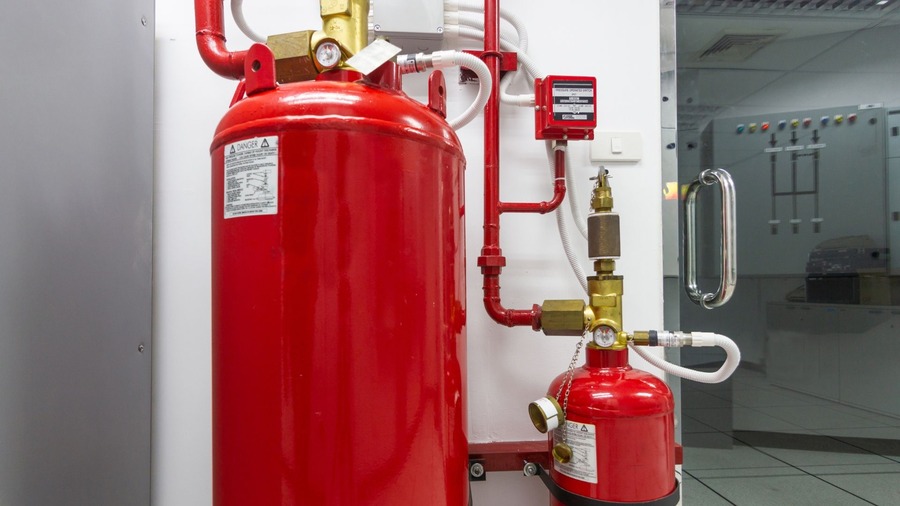
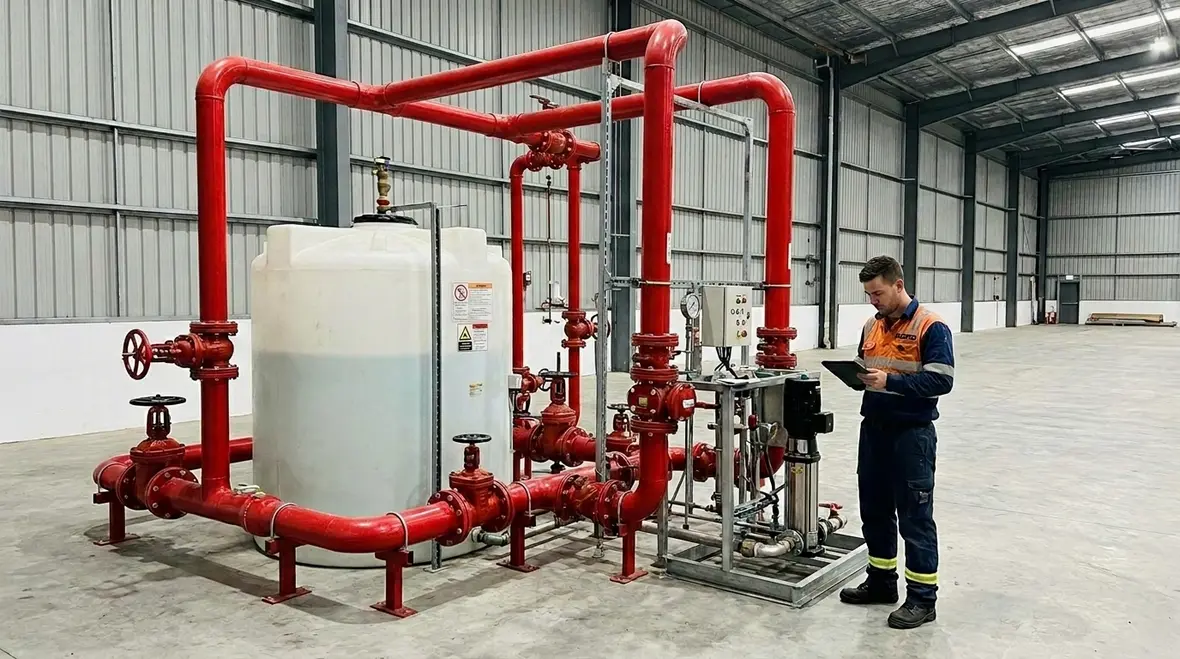
Foam fire suppression systems protect spaces like warehouses, airports, tank farms, and industrial plants where a normal sprinkler setup just would not cut it. Yet even well designed installations can drift into trouble. Foam system deficiencies often show up quietly, then strike at the worst possible moment. For instance, foam concentrate can go bad, nozzles can clog, and the proportioning system can be set incorrectly. In other cases, testing misses key checks, and operators end up relying on “it worked last time” logic, which is about as comforting as trusting a smoke detector with a battery from 2012. Because of this, facilities need a partner who understands both code expectations and real world maintenance. Kord Fire Protection can step in as that vital partner, helping teams catch issues early and keep performance dependable.
Facilities with flammable liquid hazards do not get much grace when a suppression system underperforms. A foam system has one job: arrive correctly mixed, discharge properly, spread where it should, and hold the fire in check long enough to prevent escalation. If one part of that chain drifts, the whole result can drift with it. That is why owners, safety managers, and maintenance teams need inspections that look deeper than surface level compliance and focus on whether the system will actually perform when the moment turns ugly.
Kord Fire Protection works across suppression systems and inspections, including fire suppression services for commercial and industrial facilities, and the team also provides dedicated foam fire suppression system support for hazards where water alone is not enough. That broader view matters because foam system problems rarely live in isolation. They usually connect to maintenance habits, documentation gaps, equipment drift, and testing practices that looked acceptable right up until they were not.
Where foam systems fail in the real world
Most failures come from small gaps that pile up over time. First, many teams treat foam like a set and forget product. However, the foam solution changes with age, heat, water quality, and exposure. Over time, foam can lose its expansion rate, drainage time, and burnback resistance. As a result, it may not blanket fuel properly.
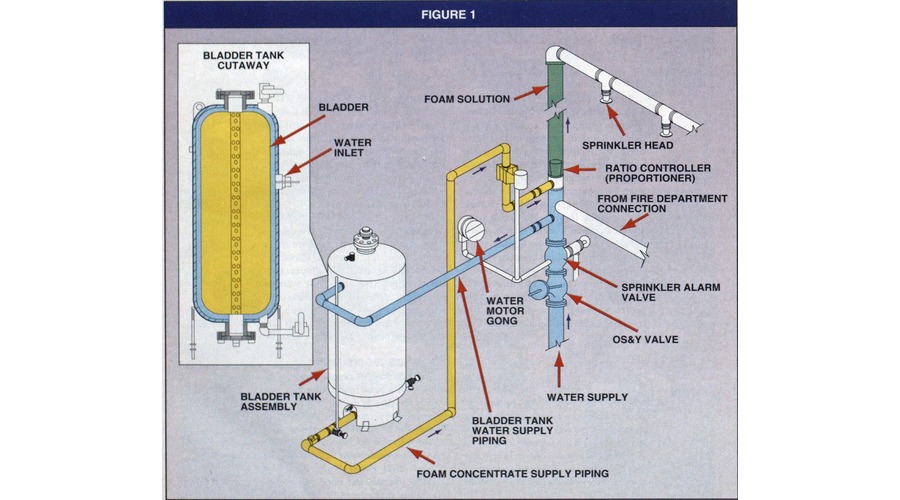
Next, the proportioning process often becomes the weak link. If the system does not mix concentrate and water at the required ratio, the foam performance drops. Even minor adjustments made during repairs can throw off the chemistry. Then, the system may still discharge, but it will discharge the wrong thing in the wrong way.
Real world failures also tend to happen in the space between departments. Operations assumes maintenance checked it. Maintenance assumes the vendor documented it. The vendor assumes site staff restored the valves after testing. Everyone assumes someone else confirmed the ratio. That kind of teamwork-by-telepathy is not ideal. Foam systems reward clarity and punish assumptions.
The danger of a system that looks ready but is not
A foam setup can appear healthy during a walk through while still hiding serious performance problems. Tanks may look full. Controllers may show normal status. Pipe may be in place and painted nicely enough to inspire confidence. Yet if the concentrate is degraded or the proportioner is off, the system can fail in a way that is difficult to spot without targeted inspection. This is why Kord Fire Protection emphasizes field based verification over wishful thinking and fresh clipboards.
Common foam system deficiencies that inspectors flag
When Kord Fire Protection reviews systems, they typically focus on the things that lead to failure during a demand. Below are common foam system deficiencies seen across sites:
- Wrong foam concentrate type or incompatible concentrate replacement
- Out of date foam or concentrate that has degraded due to storage conditions
- Incorrect proportioning setting after maintenance or component swaps
- Clogged or partially blocked nozzles, strainers, and piping sections
- Leaking valves, seals, or fittings that reduce foam delivery pressure
- Tank levels, pumps, or standby systems that do not meet readiness requirements
- Poor documentation, missing records, or incomplete test reports
- Inadequate follow up after testing, such as not restoring system configurations
And yes, sometimes the issue is as simple as a valve left in the wrong position. It happens. People get busy. The system does not care. It just performs what it was told to do.
What experienced inspectors usually look for first
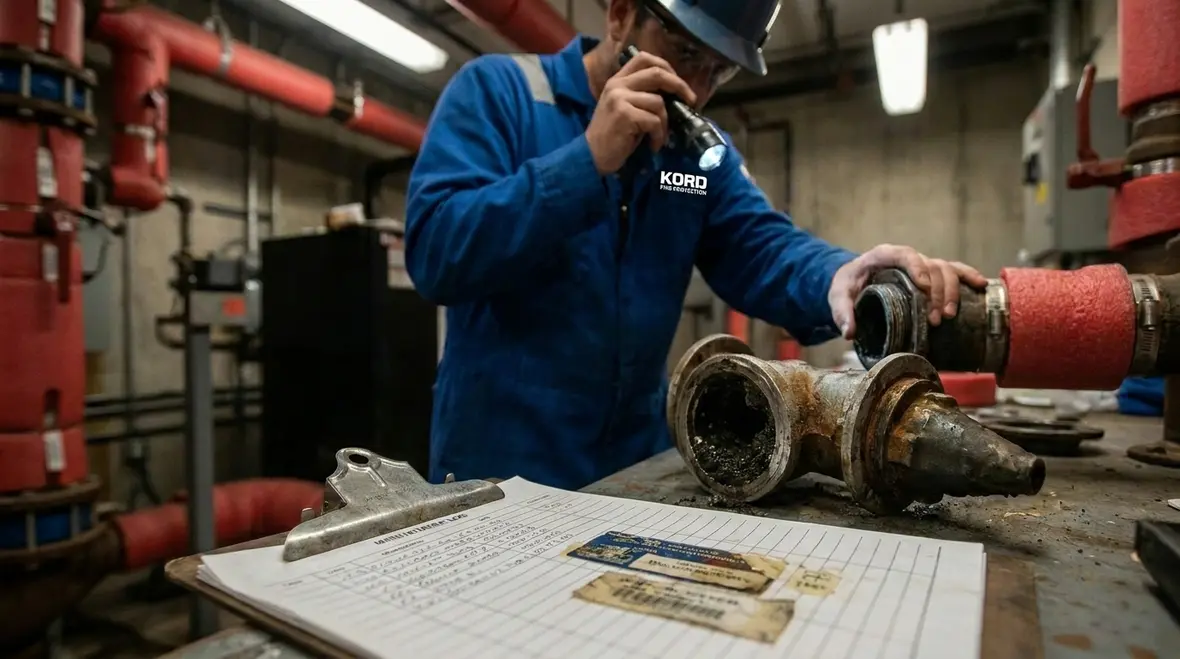
Inspectors generally start with the items most likely to derail performance fast: concentrate condition, storage method, proportioning accuracy, physical obstructions, pump readiness, and recent maintenance history. They also compare documentation with actual field conditions, because paperwork has a funny habit of staying optimistic after equipment changes. If the records say one concentrate is in service and the tote says something else, that is not a paperwork issue. That is a red flag with a label on it.
How inspection gaps create maintenance blind spots
Inspection gaps do more than delay repairs. They allow foam system deficiencies to hide behind routine compliance. For example, a team might run a basic inspection but skip flow and discharge checks that verify actual foam delivery. Additionally, some facilities test only what is easy to reach, while hard to access nozzles stay unchecked. Over time, this turns into a patchwork of performance.
Moreover, the wrong test procedure can create false confidence. If a test does not match the system’s intended operating range, it may look fine on paper while still failing during a real fire scenario. Therefore, a strong plan includes the right scope, the right sampling, and the right verification after repairs.
This is where a connected inspection strategy matters. Kord Fire Protection frequently works from the principle that the inspection itself should expose weak points, not politely avoid them. If a site only checks what is easiest to test, it trains itself to miss exactly the kind of drift that causes real trouble. A stronger program ties visual inspection, operational testing, repair verification, and documentation into one practical loop instead of four separate chores nobody fully owns.
Foam nozzles, piping, and pumps: where clogs and drift happen
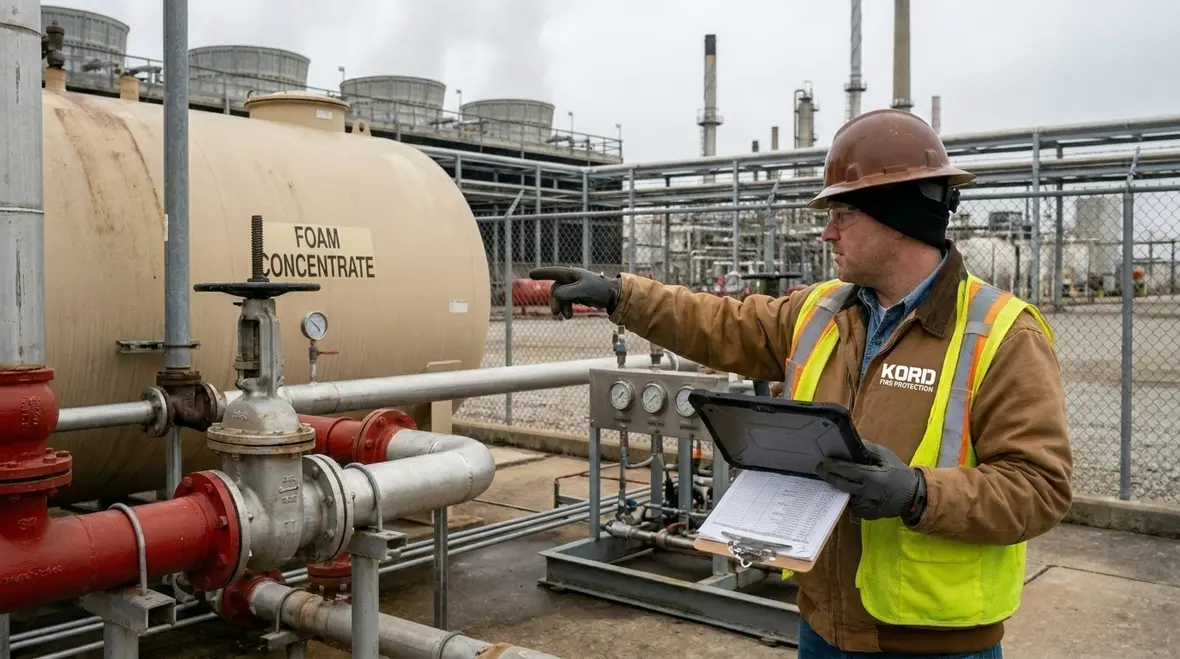
Foam discharge depends on components behaving like a synchronized team. When piping holds debris, foam concentration can separate or concentrate can settle. Then, the system may deliver uneven foam application. Similarly, strainers can collect scale or particulates from the water supply. Even small blockages can change discharge patterns.
On the pump side, wear and misalignment can reduce pressure. If pressure falls short, proportioning equipment may not draw concentrate properly. Consequently, the discharged foam might be thin, watery, or slow to blanket. Also, automation and control wiring can degrade. If solenoids or sensors lag, the system can lose response time at the worst moment.
In short, it is not one broken part. It is the chain of small drifts that turns into failure.
Why small blockages cause big headaches
A partially blocked nozzle does not need to be fully clogged to create a serious application problem. Foam depends on pattern and coverage, not just the fact that something came out of the pipe. If distribution gets distorted, one section may receive a proper blanket while another barely gets a misty apology. The same logic applies to strainers and valves. Minor restrictions create major performance differences once the whole system is under demand.
Why foam concentrate aging and water quality matter
Foam concentrate does not live forever. Temperature swings, UV exposure, and long storage can affect performance. Likewise, water quality matters because minerals, pH changes, and contaminants influence foam formation. When water chemistry shifts due to supply changes or treatment adjustments, the foam solution behaves differently.
As time passes, teams may overlook these changes. They replace components, add filters, or update water treatment, without recalculating foam compatibility. Therefore, a system that once performed well can lose effectiveness without anyone noticing until a demand event.
Kord Fire Protection helps sites manage this risk by supporting ongoing reviews of concentrate status, system configuration, and realistic testing practices. That partnership keeps foam performance grounded in current conditions, not last year’s assumptions.
Compatibility is not something to guess at
Facilities sometimes make one well intentioned change at a time and accidentally create a chemistry problem in slow motion. A new water source, a different concentrate, a swapped proportioner component, or an updated storage arrangement can all affect the finished foam. None of those changes sounds dramatic on its own. Together, they can rewrite system behavior. That is why periodic review is so valuable. It catches the quiet changes before they become very loud failures.
How Kord Fire Protection becomes a vital partner
Some contractors show up, swap parts, and disappear. Others stay engaged, track trends, and help facilities prevent recurrence. Kord Fire Protection fits the second category by taking a system wide view. First, the team evaluates the full foam loop, not just the parts that feel “most broken.” Then, they align maintenance with how the system should perform during a fire, not just how it should pass a checkbox inspection.
Additionally, Kord Fire Protection supports teams with clear documentation and practical next steps. That matters because one vague report can lead to repeated issues and more downtime than a bad plot twist. Furthermore, the partnership approach helps facilities coordinate corrective actions with operations, so testing and repairs do not stall schedules.
When the goal is reliability, Kord Fire Protection helps companies move from reactive fixes to dependable prevention. Teams that want to understand related inspection discipline can also explore Kord Fire Protection’s article on foam system fire protection for flammable liquids, which adds helpful context around how these systems function in higher hazard environments. For facilities balancing multiple protection systems, Kord’s fire pump testing requirements guide is another useful resource because dependable water delivery still matters anywhere suppression performance is on the line.
FAQ: foam suppression readiness
Closing CTA
Foam suppression systems protect assets that do not get second chances. When foam system deficiencies appear, they rarely announce themselves with a flashing sign. Instead, they creep in through aging concentrate, clogged components, drifting ratios, and incomplete testing. Kord Fire Protection helps facilities spot these issues early, restore performance, and maintain readiness with a clear, practical plan.
If you want dependable foam operation, schedule a system review with Kord Fire Protection today. For direct support, explore Kord’s fire suppression services or go straight to the dedicated foam fire suppression system page and get ahead of the next demand event.

Join Our Newsletter!
Get the latest fire safety tips delivered straight to your inbox From our Newsletter.