Transition From AFFF to Fluorine Free Foam Plan
Transitioning From AFFF to Fluorine Free Foam is no longer a “someday” project for many fire protection teams. In fact, AFFF replacement foam solutions now play a central role in keeping systems compliant, effective, and responsible. Therefore, facilities that still rely on older formulations need a plan that works in the real world, not just on paper. And while the chemistry can sound like something from a science lab, the operational steps are something most fire teams already understand: inspect, test, train, and document. Kord Fire Protection can become a vital partner during this change, because replacing foam is not just swapping one product for another. It is updating procedures, validating performance, and keeping people safe. (Yes, even if the old bottles look like they have lived through every drill since the Jurassic era.)
Why facilities move away from AFFF and toward fluorine free options
Many organizations shift away from AFFF because regulations and environmental expectations keep tightening. As a result, fire protection leaders must consider both compliance and long term risk. Fluorine free foam reduces dependence on fluorinated chemistry, which helps support environmental goals and future readiness. However, the transition is not simply a policy checkbox. Foam concentrates act like mission critical tools, so a facility must confirm that its hazard assessment, water supply, application method, and discharge systems still perform as intended.
Additionally, teams often face practical concerns. For example, they ask whether the new agent will flow through existing equipment, whether performance stays stable in different temperatures, and how training must change. Meanwhile, stakeholders want assurance that testing and documentation will match regulatory expectations. This is where a careful plan matters, and where Kord Fire Protection can guide the job from start to finish.
If your facility is reviewing broader suppression strategy, Kord’s foam system fire protection for flammable liquids resource offers useful context on how foam behaves in high hazard environments, while the dedicated foam fire suppression systems page helps connect planning decisions to real world applications.
The pressure behind the transition
For many teams, the move is not driven by a single factor. It is a combination of environmental responsibility, operational readiness, insurer expectations, and the very practical desire to avoid being caught flat-footed later. In other words, the transition usually starts as a compliance conversation and ends as a full system performance conversation. That is a much healthier place to be.

What AFFF replacement foam changes for real systems
When a facility installs AFFF replacement foam, it affects more than the storage cabinet. First, the concentrate’s characteristics can change the proportioning and application technique needed for effective blanket formation. Then, operators must understand any new maintenance intervals or inspection points. Even small differences in viscosity or burn-back performance can matter in the field.
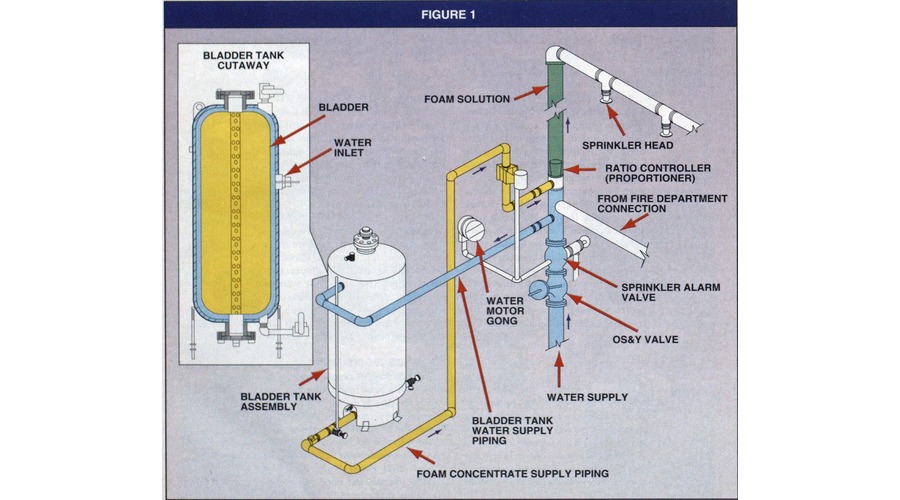
Moreover, foam systems do not work alone. They rely on pumps, proportioners, valves, nozzles, and foam chambers. Therefore, the transition should include a full systems review. A fire protection partner helps determine whether minor adjustments are enough or whether upgrades are required. Otherwise, teams risk “technically installed” equipment that behaves differently during live testing or an actual incident. And nobody wants a surprise when the alarm sounds and everyone starts doing the internal math of “Will it work?”
Kord Fire Protection brings that operational lens. It helps facilities plan the transition so the system performs as a system, not as a stack of components that happened to meet specifications at install time. Kord also notes in its foam fire protection system concentrate guide that proportioners, pumps, storage tanks, and discharge devices must work together at precise ratios, which is exactly why concentrate replacement needs more than a simple product swap.
Where compatibility checks matter most
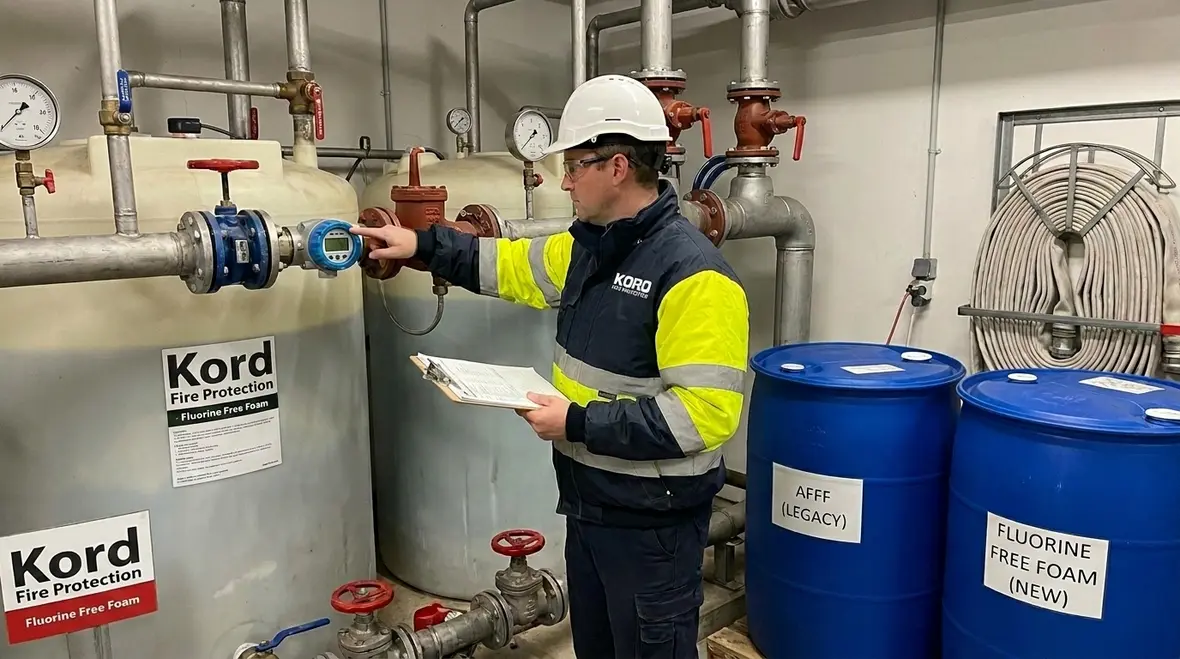
Compatibility review should focus on concentrate storage, piping materials, seals, proportioning equipment, discharge devices, and the water supply that supports the system. Teams should also think about testing practices, flushing plans, and any special cleanup procedures required during the changeover. These details are not glamorous, but then again neither is explaining after the fact why a system looked perfect on a drawing and acted weird in the field.
How to plan a smooth fluorine free foam transition
A strong plan follows a sequence that reduces downtime and avoids last minute scrambling. Therefore, most facilities start with a hazard review and inventory check. They confirm the types of hazards they protect, the foam types historically used, and where concentrate is stored. Next, they align the transition with the facility’s testing calendar and shutdown windows.
Then the team validates the foam system with methodical steps. That includes checking proportioning accuracy, verifying discharge patterns, and confirming that application rates match the required scenarios. Also, if the facility uses fixed systems, teams verify the integrity of piping and actuation logic. If it uses mobile equipment, teams train operators on correct handling and mixing practices.
Finally, the job needs paperwork that stays organized. Labels, system drawings, inspection logs, and training records should all reflect the new agent. This is not just good hygiene. It makes audits faster and reduces uncertainty when questions come from regulators, insurers, or internal leadership.
Step
Conduct hazard review and equipment inventory.
Align the transition with planned testing windows.
Verify proportioning and discharge performance.
Update labeling, drawings, and procedures.
Why it matters
It confirms the system matches the hazard, not just the paperwork.
It limits downtime and reduces operational disruption.
It protects real world effectiveness during an incident.
It supports audits, training, and safe operations.
A practical sequence that avoids chaos
The most successful conversions usually do not begin with ordering product. They begin with clarifying hazards, documenting what exists, and deciding what must be proven before the old concentrate comes out. That sequence gives maintenance, operations, and safety staff a common map. It also prevents the classic project problem where everybody is “aligned” right up until someone asks who approved the flushing plan.
Training and documentation that actually sticks
Fire protection changes only work when people understand them. For fluorine free foam conversions, training should cover more than “how to mix.” Operators must know what to look for during inspections, what to record after tests, and how to handle concentrates safely and correctly. In addition, teams need simple guidance for common questions like: What happens if test results vary from expectations? How do they report foam quality issues? And who has authority to approve changes?
Because facilities often include multiple shifts, training should also cover consistency. One shift cannot do “foam science” while the next shift eyeballs ratios like it is cooking. Furthermore, documentation should make it easy to follow. Procedures should reference the specific foam used, the expected conditions, and the exact system settings. If a facility updates its AFFF replacement foam approach, it should keep a clear trail of modifications.
Kord Fire Protection supports this by helping teams build a program that is repeatable. That matters because in fire response, people do not rely on memory alone. They rely on systems, checklists, and training that feels natural under stress.
Make records easy to use under pressure
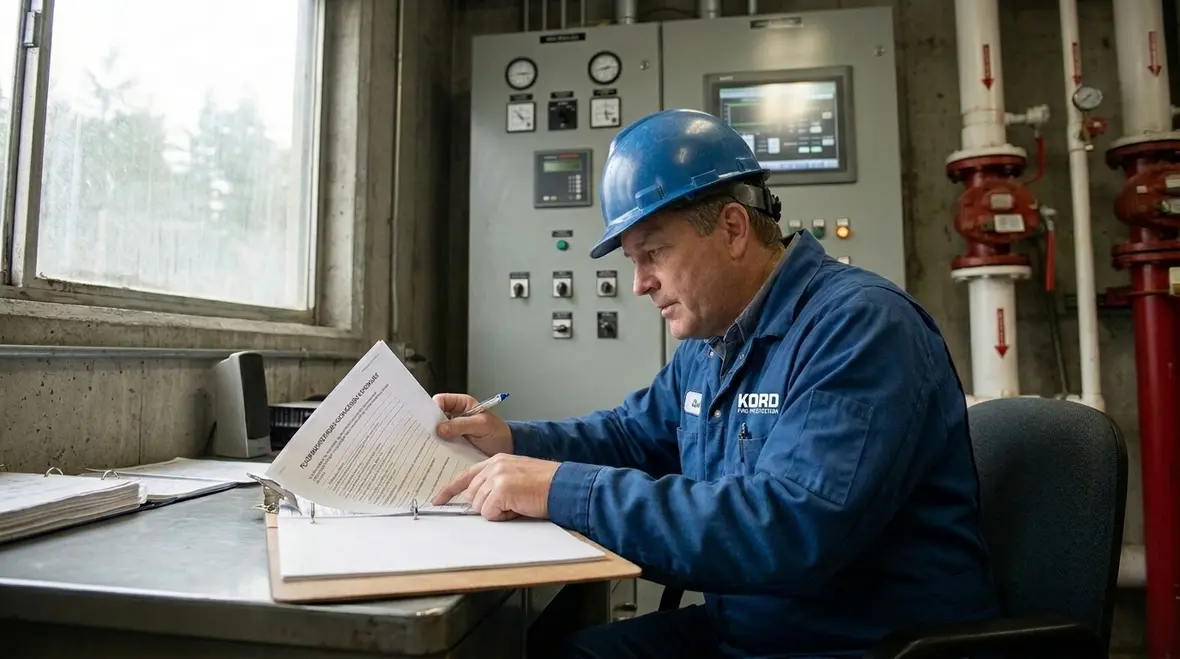
Good documentation is not about creating a beautiful binder that nobody opens. It is about making labels, drawings, inspection records, test reports, and response procedures easy to find and easy to trust. The clearer the records, the faster a team can answer questions from authorities having jurisdiction, insurers, internal leadership, or the technician standing there wondering why the proportioner setting does not match the old tag.
Testing, compliance, and avoiding the “installed but not validated” trap
Many transitions stumble when organizations skip validation steps. However, without performance checks, a facility can end up with equipment that looks correct yet fails to achieve the expected results. Therefore, testing must include the right measurements and the right acceptance criteria. Teams should verify foam concentrate quality, confirm proportioner settings, and evaluate application behavior under controlled conditions.
In addition, compliance does not only come from choosing the right product. It also comes from proving that systems meet requirements in the context of the facility’s hazard profile. As regulators and insurers often look for documentation, facilities should store test reports and update records promptly. Then, training records and maintenance logs should reflect the new foam and any updated methods.
Kord Fire Protection can help reduce risk by aligning testing with the facility’s goals and ensuring that the conversion does not become an endless cycle of “we will test it later.” Because later sometimes becomes “after an incident,” and that is a bad sequel.
Facilities that want a broader look at suppression support can also review Kord’s fire suppression services page, which outlines service options including foam suppression, room integrity testing, and other related system support that can help during complex changeovers.
Choosing Kord Fire Protection as a vital partner in the conversion
AFFF replacement foam conversions require technical judgment, scheduling discipline, and clear communication. Kord Fire Protection acts as a vital partner by bridging those needs into one coordinated effort. That means assessing the current system, planning the change, supporting validation, and helping teams manage documentation and training.
Just as importantly, Kord Fire Protection understands that facilities operate under real constraints. They may need minimized downtime, staged installation, and clear guidance for maintenance staff. Therefore, a good partner plans the conversion like a project, not like a last minute supply run. The outcome is a smoother transition, fewer surprises, and a fire protection program that stays reliable.
In short, the conversion works best when a team treats it like a mission. Fire protection is not the place for guesswork, and Kord helps eliminate it. Near the end of the process, when teams are ready to connect the conversion to broader facility readiness, Kord’s full fire protection services page is a strong next step for coordinating inspections, testing, repairs, and long term support under one partner.
FAQ
Conclusion and call to action
Switching from AFFF to fluorine free foam is a smart move, but it takes the right plan to protect performance and compliance. A well run conversion includes hazard review, system validation, staff training, and clean documentation, so the system performs when it matters most.
Kord Fire Protection can act as your vital partner, helping you move from product selection to validated operation with less uncertainty. Contact Kord Fire Protection through its full fire protection services team to plan a transition that is safe, organized, and built to last.

Join Our Newsletter!
Get the latest fire safety tips delivered straight to your inbox From our Newsletter.