NFPA 52 Section 20.5: LNG Piping Systems and Components (What Facilities Must Verify)
Quick Answer: NFPA 52 Section 20.5 focuses on how LNG piping systems and components must be designed, installed, and maintained to support safe handling of cryogenic fluids. It addresses component suitability, installation integrity, and inspection readiness, directly impacting leak prevention and operational reliability.
Facilities that are tightening their LNG compliance programs can also benefit from reviewing NFPA 52 Section 15.4 LNG facility maintenance requirements, since ongoing maintenance discipline often determines whether piping related issues stay controlled between formal inspections.
Why NFPA 52 LNG piping system component requirements matter in the real world
Commercial and industrial LNG users often treat “piping” as routine infrastructure. NFPA 52 Section 20.5 shifts that mindset by requiring that LNG piping system component requirements are satisfied as an integrated safety function, not as a set of standalone parts. The practical result is tighter control over material selection, joint design, supports, valves, and protection measures, especially during commissioning and long term maintenance.
Facilities also face operational pressures that expose weak points: vibration from pumps and compressors, thermal cycling during fill and draw cycles, and physical damage risks near equipment and traffic zones. Compliance failures typically surface during pressure tests, visual inspections, and functional checks because the system was built without ensuring components matched the cryogenic service conditions and installation requirements.
What Section 20.5 typically expects from LNG piping systems
Section 20.5 addresses LNG piping systems and components with an emphasis on preventing leaks, controlling stress, and maintaining safe performance throughout the system’s life. For compliance planning, facility teams should treat each piping segment and component interface as a potential failure point where integrity can degrade.
1) Component suitability for cryogenic service
LNG piping systems operate at extremely low temperatures. NFPA 52 LNG piping system component requirements generally require that components withstand cryogenic exposure without loss of material properties or sealing effectiveness. The compliance risk is not only material grade, but also component design features such as gasket selection, valve stem seals, packing arrangements, and pressure rating compatibility across the operating range.
2) Installation integrity at joints, flanges, and connections
Many leaks originate at interfaces. Compliance verification should include how components are connected, how joints are aligned, and how mechanical loads are managed. Misalignment can amplify stress in flanges and threaded connections. Inadequate support can cause low cycle fatigue over time, particularly where thermal contraction and expansion repeat each cycle.
3) System readiness for inspection and testing
Even when components are correctly rated, compliance can fail if the system design prevents inspection access or obscures critical interfaces. Section 20.5 expectations align with practical inspection outcomes: operators must be able to observe joints, verify labeling and configuration, and complete pressure or leak testing without unsafe workarounds.
Which components demand extra attention during compliance and maintenance
To meet NFPA 52 LNG piping system component requirements, facilities should build inspection and maintenance routines around components that commonly fail in cryogenic service or during abnormal conditions.
Valves and isolation devices
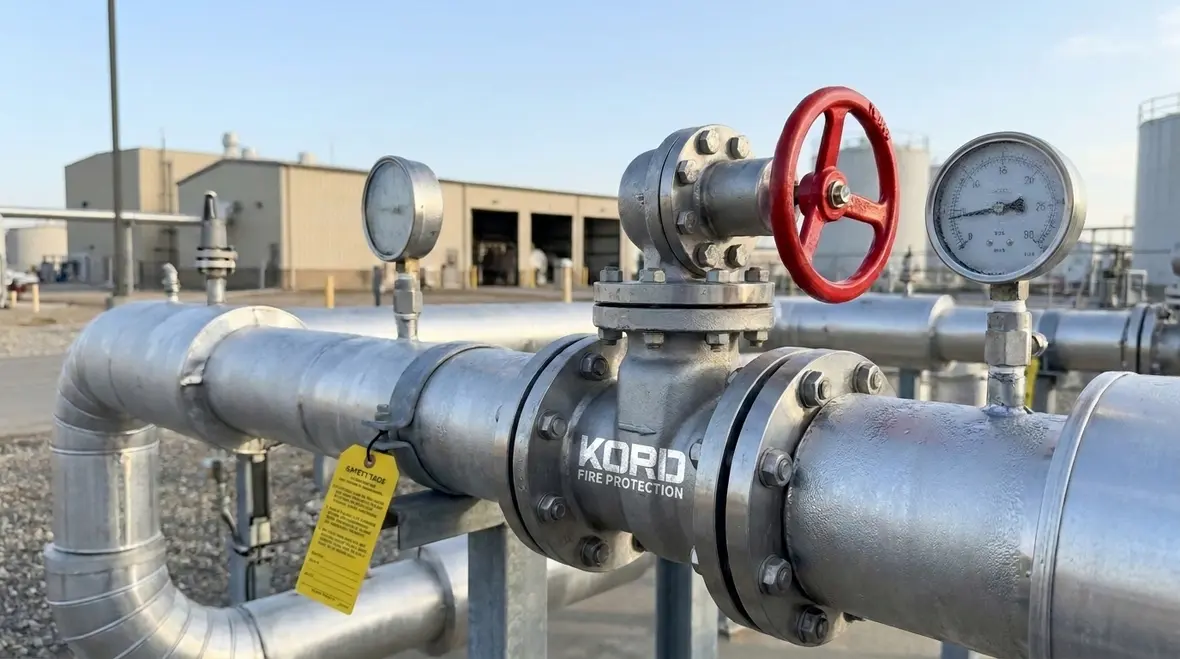
Valves support operational control and emergency isolation. Key compliance checks include valve pressure rating, body material compatibility, seating integrity, and stem seal performance after thermal cycling. Operationally, facilities should confirm that actuation methods remain reliable at cryogenic temperatures and that functional testing is performed according to the facility’s approved procedures.
Flexible connections, expansion joints, and supports
Thermal movement forces stress into the system. Supports and expansion features are often installed to manage contraction and expansion, but they can drift out of alignment due to settling, vibration, or improper load transfer. Compliance verification should include support condition checks, anchorage integrity, and confirmation that expansion movement is not constrained in ways that increase stress at flanges or welds.
Gaskets, seals, and bolting practices at flange interfaces
Leak risk concentrates at gasketed joints and seal interfaces. Facilities should verify that gasket material and thickness match cryogenic requirements and that bolting procedures account for thermal effects. Under-torque or uneven tightening can create microgaps that leak under pressure and temperature transitions.
Pipe sections and welded joints
Welded and joined sections can develop defects over time due to cyclic loading and thermal contraction. Compliance programs should align installation records with inspection outcomes, including review of weld documentation, repair history, and any changes after construction. During maintenance, technicians should monitor for localized corrosion, deformation, and signs of stress concentration near transitions.
Operational procedures that protect compliance between inspections
NFPA 52 compliance does not end at installation. LNG piping integrity depends on operating practices that reduce abnormal stress and prevent progressive damage. Facilities should treat these areas as routine compliance controls.
Control thermal cycling during fill and draw
Rapid temperature changes can increase thermal gradients and stress. Operators should follow approved operating sequences, monitor trends in system temperatures and pressures, and avoid practices that produce repeated thermal shock. Where operational changes occur, a documented engineering review helps confirm that component performance remains within design intent.
Manage vibration and mechanical loading
Pumps, compressors, and transfer lines can introduce vibration that impacts supports, valves, and flexible connections. Facility teams should verify that operational maintenance includes checks for loose mounts, degraded hangers, and abnormal movement. If vibration increases after a modification, the facility should reassess whether the change affects stress on piping supports and component connections.
Use documented testing and leak response actions
Even well maintained systems can develop leaks. Compliance programs should specify immediate actions: isolate, control ignition sources, implement the approved leak assessment process, and document findings for engineering follow up. This approach improves corrective action quality and prevents recurring failures at the same component interfaces.
Common failure points that show up during audits
Audit findings often trace back to predictable gaps. Understanding these patterns helps facilities focus resources where they reduce risk the most.
- Unverified component compatibility: components installed without complete documentation showing cryogenic suitability, ratings, and material confirmation.
- Support misalignment or loss of load paths: anchors settle, hangers degrade, or installation tolerances drift, increasing stress at joints.
- Inadequate access for inspection: insulation, covers, or layout prevents visual checks of critical interfaces and labeling.
- Weak maintenance traceability: repair and replacement history is incomplete, making it difficult to correlate operating events with observed deterioration.
- Gasket and seal issues after component service: seal replacement without matching specifications, or inconsistent bolting practices after maintenance.
Facilities that address these points early reduce downtime and avoid repeat corrective actions. Kord Fire Protection supports commercial and industrial clients by providing structured compliance support for testing readiness, maintenance planning, and documentation discipline that supports successful inspections.
How Kord Fire Protection helps keep LNG piping systems inspection ready
LNG systems require ongoing coordination across engineering, operations, and safety teams. Kord Fire Protection positions itself as a compliance partner that helps facilities translate NFPA expectations into practical field actions and maintainable records.
For clients building or updating inspection programs, Kord Fire Protection supports a risk informed approach that includes verification readiness, maintenance coordination, and documentation practices that support audit outcomes. For additional guidance on compliance readiness and fire protection planning, see this related resource: Kord Fire Protection compliance and service capabilities.
Teams that want a more piping specific comparison point can also review NFPA 52 Section 21.9 piping requirements for ASME LNG tanks, which pairs well with Section 20.5 when facilities are aligning component selection, support strategy, and inspection documentation.
Frequently Asked Questions
Conclusion and Call to Action
NFPA 52 Section 20.5 requires LNG piping systems to be treated as a safety critical system, not a collection of parts. Facilities should verify component compatibility, joint integrity, support condition, and inspection accessibility, and then maintain those controls through disciplined operating and maintenance practices. If compliance timelines are tight or audit findings are pending, Kord Fire Protection can help you build an inspection ready plan, strengthen documentation, and reduce repeat corrective actions.

Join Our Newsletter!
Get the latest fire safety tips delivered straight to your inbox From our Newsletter.