NFPA 52 Section 20.4: LNG Storage Requirements at Vehicle Fueling Facilities
Quick Answer
Navigating NFPA 52 Section 20.4 requires more than meeting siting and tank basics. Operators must verify design limits, deliver safe vapor control, maintain leak detection and shutdown strategies, and follow disciplined inspection and maintenance routines. These steps protect people, vehicles, and nearby assets at LNG fueling sites.
For broader LNG fueling context, review NFPA 52 Section 20.2 General: LNG Fueling Requirements Overview to see how overall LNG fueling expectations connect with storage-specific compliance duties.
Why NFPA 52 Section 20.4 matters for commercial LNG fueling operations
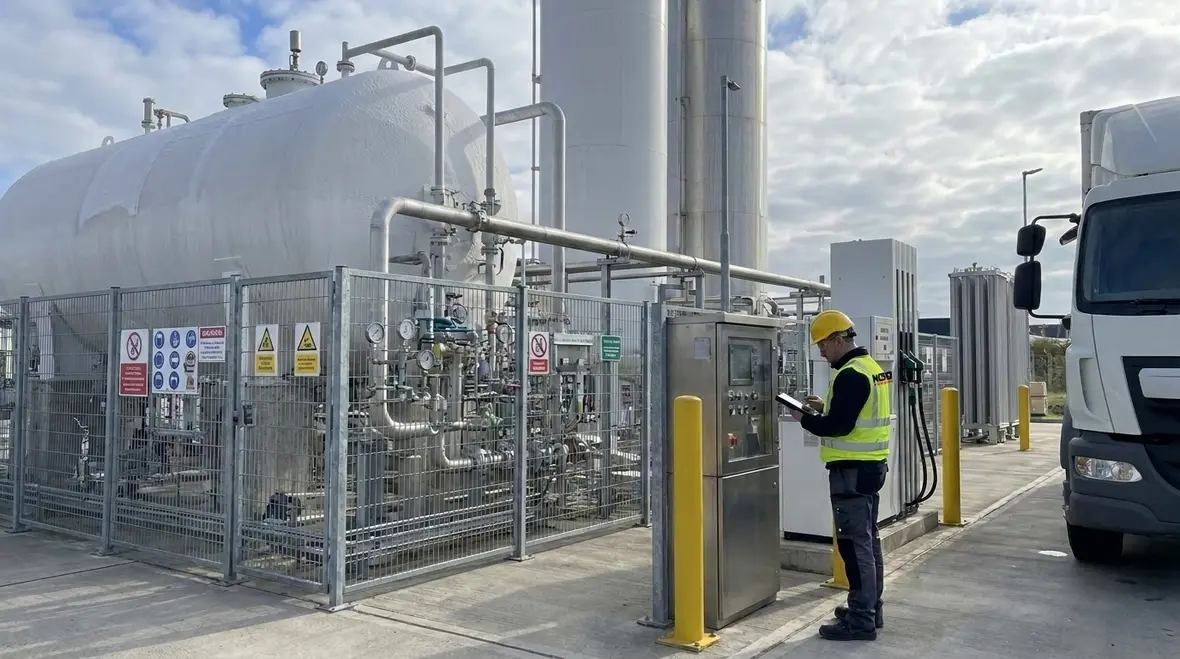
For commercial and industrial sites, NFPA 52 LNG storage vehicle fueling facility requirements translate design intent into daily operational control. Section 20.4 focuses on LNG storage systems associated with vehicle fueling, including how tanks are protected, how hazards are managed during normal and abnormal conditions, and how ongoing inspection keeps safety features reliable. Compliance impacts staffing, maintenance scheduling, service contractors, and outage planning, not just initial installation.
NFPA 52 LNG storage vehicle fueling facility requirements often intersect with facility-wide fire protection, hazardous area management, and emergency response readiness. The practical challenge is that safety systems can degrade quietly. A compliant program must catch deterioration early through inspection, testing, and documented corrective actions.
What Section 20.4 typically covers in LNG storage at vehicle fueling facilities
Section 20.4 addresses LNG storage provisions that support fueling operations. While each facility design differs, compliance commonly includes the following themes:
- Confinement and containment concepts: ensuring released LNG or cryogenic liquids are controlled to prevent escalation.
- Vapor management: maintaining safe handling of boil off and venting conditions during operation.
- Protective arrangements: controls that limit ignition, manage heat input, and protect tank components.
- Operating limits and safety functions: requirements that align normal operation with safe shutdown behavior.
- Inspections and maintenance: verified readiness of valves, detection systems, pressure protection equipment, and mitigation features.
From an engineering and operations standpoint, regulators and insurers typically expect that the storage system is not treated as a static asset. Instead, the site must demonstrate that safety critical components remain functional across seasonal conditions, fueling cycles, and maintenance events.
How storage hazard controls work day to day (and where they fail)
Vapor generation, venting, and ignition control
LNG storage introduces two operational realities. First, LNG naturally warms and generates boil off vapor. Second, vapor releases must be managed so that concentrations do not reach ignition capable ranges. In a well controlled facility, vapor handling features maintain safe discharge behavior and avoid creating hazardous zones near ignition sources.
Common failure points include blocked or improperly maintained vent paths, incorrect discharge elevations relative to air currents, and degraded insulation that increases boil off rates. These issues can cause higher venting frequency and abnormal operating conditions. A robust inspection program tracks performance trends, not only pass or fail tests.
Pressure protection and cryogenic equipment reliability
Pressure protection devices and related components protect the storage system from overpressure. In practice, operators should expect that valves, regulators, and sensing elements can suffer from contamination, mechanical sticking, or calibration drift. Cryogenic thermal cycling can also contribute to gasket wear and connection loosening if installation and maintenance controls are weak.
When pressure protection performance degrades, the system may respond differently during transients, increasing the likelihood of nuisance operations or delayed safety action. Facilities strengthen compliance by enforcing periodic testing and by using documented acceptance criteria aligned with the equipment manufacturer and the safety basis.
Leak detection, shutdown logic, and interlocks
NFPA 52 compliance depends on safety functions that detect hazardous conditions and trigger protective actions. For LNG storage systems, operators commonly rely on detection and control strategies that alarm staff and initiate shutdown or isolation sequences.
Operational weaknesses usually appear in three areas:
- Detection coverage gaps: sensors installed or maintained without verifying coverage, response time, or alarm setpoints.
- Interlock integrity: bypasses, incorrect wiring, or outdated control logic that no longer matches the current configuration.
- Operator response effectiveness: procedures that do not reflect the actual sequence of protective actions.
A credible program validates not only hardware operation but also procedural readiness. Staff should be able to execute emergency shutdown steps consistently, especially after outages and component replacements.
Compliance process: inspection, testing, and maintenance expectations
NFPA 52 Section 20.4 compliance hinges on disciplined assurance activities. Commercial fueling sites often struggle when maintenance is treated as a vendor driven checklist rather than a risk managed system.
Inspection and documentation that auditors expect
Facilities should maintain a clear record of:
- Component identification and configuration control
- Inspection dates, findings, and corrective action documentation
- Testing results for pressure protection, detection, and safety shutdown functions
- Calibration records for sensors and instrumentation
- As built drawings updated through change management
When records do not match field conditions, compliance risk increases quickly. A common operational issue involves temporary adjustments during troubleshooting that later become permanent without formal documentation.
Maintenance sequencing during outages
LNG storage equipment maintenance often requires controlled conditions. Sites must plan for safe cooldown, purging, and return to service testing. Maintenance that omits verification testing after reassembly can leave the system vulnerable to undetected faults.
To reduce risk, operators should plan:
- Defined hold points for safety critical checks
- Return to service tests aligned to safety functions
- Procedure review and staff qualification before execution
- Verification that no detection or interlock coverage is lost
This approach supports safe and defensible compliance for commercial, industrial, and retail LNG fueling customers.
Facility integration: coordination with fire protection and site safety systems
LNG storage does not exist in isolation. NFPA 52 LNG storage vehicle fueling facility requirements must align with the facility fire protection approach, hazardous area considerations, and emergency management planning. In real operations, the most costly compliance gaps come from disconnected scopes: fire system design does not reflect LNG release behaviors, or emergency procedures do not match actual safety system response.
To strengthen integration, facilities should coordinate storage safety controls with fire prevention, detection, and suppression strategies. Kord Fire Protection supports commercial and industrial operators with ongoing fire protection services that help maintain readiness and documentation quality across changing facility conditions.
For a broader facility fire protection perspective, review NFPA 52 Section 5.1 General: Facility Fire Protection for Natural Gas Vehicle Fueling.
For additional guidance on fire protection readiness and compliance support, review Kord Fire Protection resources here: Kord Fire Protection.
Practical compliance checklist for NFPA 52 Section 20.4 readiness
The following checklist helps teams focus on verifiable actions rather than vague intentions. It also supports ongoing maintenance and inspection planning for vehicle fueling operations.
- Confirm configuration control: verify drawings, control logic, and instrumentation layouts match the field.
- Validate vapor handling performance: review venting behavior, insulation condition trends, and discharge integrity.
- Verify pressure protection readiness: ensure periodic testing meets acceptance criteria and records are complete.
- Test detection and shutdown functions: confirm alarm setpoints, interlocks, and response sequences work as designed.
- Audit maintenance procedures: confirm safe cooldown and return to service steps include required verification testing.
- Train operators and document outcomes: ensure staff can execute protective actions and emergency steps reliably.
Facilities that implement this discipline typically reduce nonconformities during inspections, shorten corrective action timelines, and improve overall operational safety.
Frequently Asked Questions
Take action now
Ensure your NFPA 52 LNG storage vehicle fueling facility requirements remain defensible throughout the year, not just at commissioning. Kord Fire Protection can support your compliance program with inspection and maintenance alignment, documentation quality, and readiness-focused fire safety services. Contact Kord Fire Protection to review your current maintenance and testing plan and identify risk reduction opportunities before your next compliance window.

Join Our Newsletter!
Get the latest fire safety tips delivered straight to your inbox From our Newsletter.