NFPA 52 Section 5.1 General: Facility Fire Protection for Natural Gas Vehicle Fueling
Quick Answer
NFPA 52 Section 5.1 sets baseline requirements for designing, operating, and maintaining fire protection at natural gas vehicle fueling facilities. It focuses on appropriate detection, manual and automatic response provisions, hazard control, and life cycle maintenance to help reduce ignition risk and limit fire spread.
What does NFPA 52 Section 5.1 cover for fueling sites?
NFPA 52 Section 5.1 establishes general expectations for NFPA 52 facility fire protection natural gas fueling operations. The intent is practical: ensure the facility can identify abnormal conditions, support safe emergency response, and maintain protective features over time. For commercial, industrial, and retail fueling locations, compliance is not limited to initial installation. Ongoing operational readiness and documented maintenance matter as much as the original design.
In real facilities, this section becomes the framework for how fire protection systems integrate with site operations such as fueling control logic, emergency shutdown procedures, access for responders, and the performance of suppression, detection, and protective devices.
If your team is tightening inspection routines and maintenance records, it also helps to review Kord Fire Protection’s inspection, testing, and maintenance services for a practical look at how ongoing readiness is documented and supported.
Core compliance themes in Section 5.1: detection, response, and readiness
Section 5.1 “General” requirements drive several practical compliance themes that facility owners and fire protection contractors must align early in the project lifecycle.
1) Ensure the facility can detect abnormal fire and unsafe conditions
Detection requirements typically influence how facilities protect fueling equipment areas, cabinets, and other hazard zones. Inspectors expect the site to support prompt recognition of conditions that could lead to fire or escalate an incident. This includes verifying that detection equipment is properly installed, configured, and kept in service.
Common failure points include sensor drift, loose wiring terminations, contamination on detection surfaces, and misaligned detection coverage after maintenance work. Facilities also sometimes forget that firmware updates or control system changes can affect alarm behavior and reporting pathways.
2) Provide a reliable response chain from discovery to mitigation
General provisions support an operational response that can function even when the primary fueling system is in an abnormal state. That means the response chain must remain coherent during upset conditions, including emergency shutdown scenarios, evacuation, and safe activation of protective actions where applicable.
Commercial sites usually need clear interfaces between fueling controls and fire alarm or fire protection subsystems. If the alarm signaling or suppression activation logic depends on components that are not maintained on schedule, the response chain becomes unreliable.
3) Maintain protection features as part of normal facility operations
Section 5.1 emphasizes life cycle performance. Inspectors routinely look for evidence that protective devices are maintained, tested, and verified. Maintenance documentation should show that the facility can demonstrate continued readiness, not just that systems were installed.
From a risk management standpoint, maintenance failures often show up as partial outages, delayed notifications, or devices that fail supervision tests. For natural gas fueling environments, degraded reliability can also delay mitigation during critical minutes.
How NFPA 52 facility fire protection maps to commercial operations
Natural gas vehicle fueling facilities often sit inside commercial, industrial, or retail footprints. That creates operational complexity that standard “design only” checklists miss. Section 5.1 expectations translate into facility practices that support daily operations and third party access.
Site walkthrough discipline: hazard zones and access pathways
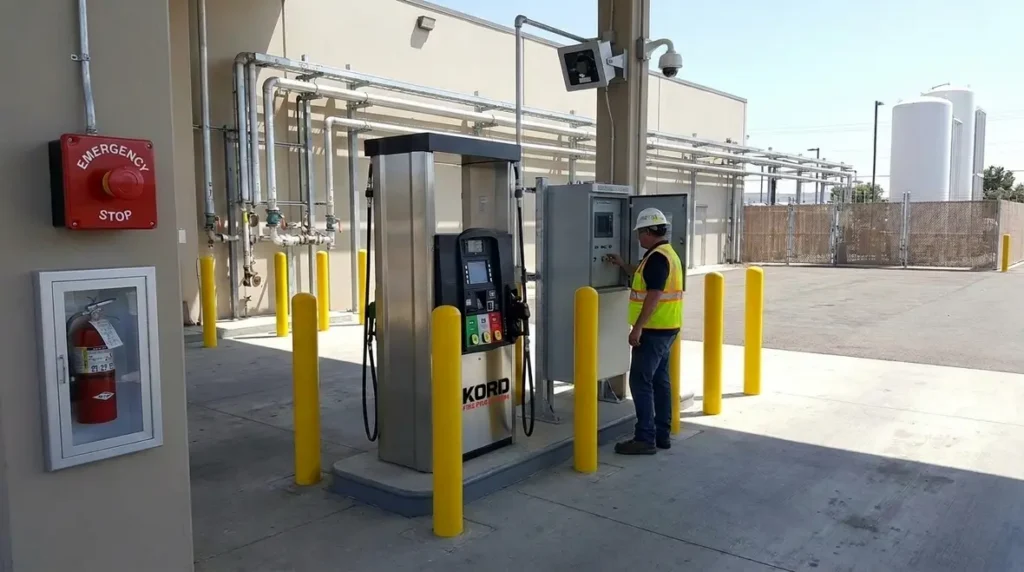
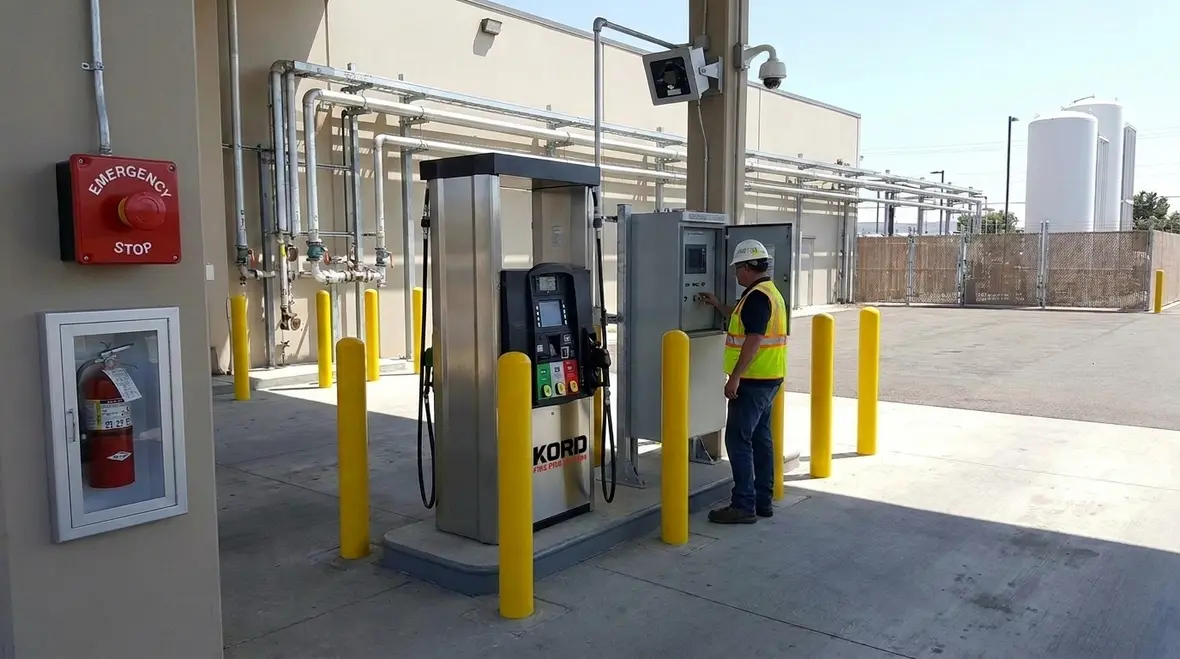
Commercial compliance requires structured walkthroughs that confirm hazard zone integrity and access pathway readiness. This includes verifying that protective equipment, cabinets, and control panels remain unobstructed and that emergency access routes remain clear and marked.
A common issue at retail locations is ad hoc storage or contractor staging that blocks access, reducing the effective response time. Another frequent issue is post construction equipment changes that alter clearances or exposure profiles around detectors and suppression components.
Emergency procedures that match actual equipment behavior
Procedures must reflect how alarms activate, how shutdown actions occur, and how notifications reach the right stakeholders. If emergency action plans are generic or outdated, the facility may satisfy a document requirement but fail functional readiness.
Operational drill frequency, role clarity, and “stop work” triggers are where many commercial sites struggle during audits. Updating procedures after any control system modification is typically required for real compliance.
Coordination with inspection authorities and responder expectations
Fire protection compliance often involves coordination between the facility, the Authority Having Jurisdiction, and emergency responders. Section 5.1 supports outcomes that responders can act on. That usually requires consistent alarm signaling, intelligible labeling, and reliable system status reporting.
Facilities that use contractors with inconsistent documentation standards frequently face repeat corrections. Establishing a repeatable maintenance and test regime helps reduce these operational delays.
Where detection and alarm behavior are central to the site response chain, Kord Fire Protection’s commercial fire alarm services page is a useful related resource for understanding inspections, maintenance, repairs, monitoring, upgrades, and installations.
Inspection, testing, and maintenance: what high performing facilities document
Even when systems meet initial installation criteria, ongoing verification is what sustains compliance. Section 5.1 “General” expectations become measurable through inspection and maintenance records.
Maintenance documentation that auditors actually accept
High performing fueling sites typically maintain documentation that includes:
- Device identification, location, and system configuration references
- Inspection, testing, and maintenance dates tied to a schedule
- Pass or fail outcomes, including corrective actions and follow up verification
- Changes after system modification, including updates to wiring, control logic, or hardware
When facilities keep only “service completed” notes without test results, they often fail to demonstrate ongoing readiness.
Common failure points to prioritize before and during inspections
In natural gas fueling environments, the most frequent reliability issues include:
- Detectors or sensors drifting out of calibration due to environmental exposure
- Supervision problems such as wiring faults, power issues, or communication interruptions
- Delayed or incorrect alarm annunciation due to notification pathway changes
- Suppression or mitigation components that are inaccessible due to poor staging practices
- Inadequate verification of emergency shutdown interfaces after routine service
These failure points often stem from inconsistent maintenance intervals, incomplete corrective action closure, or changes made without updating emergency documentation.
Service partner expectations: why ongoing commercial support matters
NFPA 52 facility fire protection natural gas fueling compliance works best when the facility uses a consistent, qualified service partner for inspection, testing, maintenance, and documentation. Kord Fire Protection supports commercial owners and operators with practical compliance planning, structured testing, and lifecycle maintenance support that helps reduce audit risk and operational downtime.
For additional insight on how commercial fire protection programs are structured, facility managers may also reference Kord Fire Protection resources here: Kord Fire Protection services.
Implementation checklist: aligning Section 5.1 with day to day performance
Use the following checklist to turn NFPA 52 Section 5.1 general expectations into operational controls that hold up under scrutiny.
- Verify detection coverage: confirm device locations, aim points where applicable, and unobstructed views around detectors.
- Confirm alarm and notification pathways: test annunciation routing, escalation logic, and that acknowledgments and alerts work as intended.
- Validate emergency shutdown interfaces: ensure control system changes do not alter protective actions.
- Establish a documented test schedule: align maintenance work with device manufacturer instructions and applicable inspection intervals.
- Track corrective actions to closure: re test after repairs and update procedures if behavior changes.
- Maintain access and labeling: keep cabinets, controls, and access routes unobstructed and clearly identified.
This approach reduces “surprise failures” during inspections and helps sustain dependable performance throughout the year.
Frequently Asked Questions
Conclusion and next step
NFPA 52 Section 5.1 provides the general framework for keeping natural gas vehicle fueling sites prepared for abnormal conditions. The most reliable compliance comes from disciplined testing, clear response procedures, and documented maintenance that reflects real equipment performance. Kord Fire Protection helps commercial facilities build and sustain inspection ready fire protection programs. Contact Kord Fire Protection to review your current setup, confirm maintenance coverage, and develop a practical compliance plan for ongoing NFPA 52 facility fire protection natural gas fueling readiness.

Join Our Newsletter!
Get the latest fire safety tips delivered straight to your inbox From our Newsletter.