
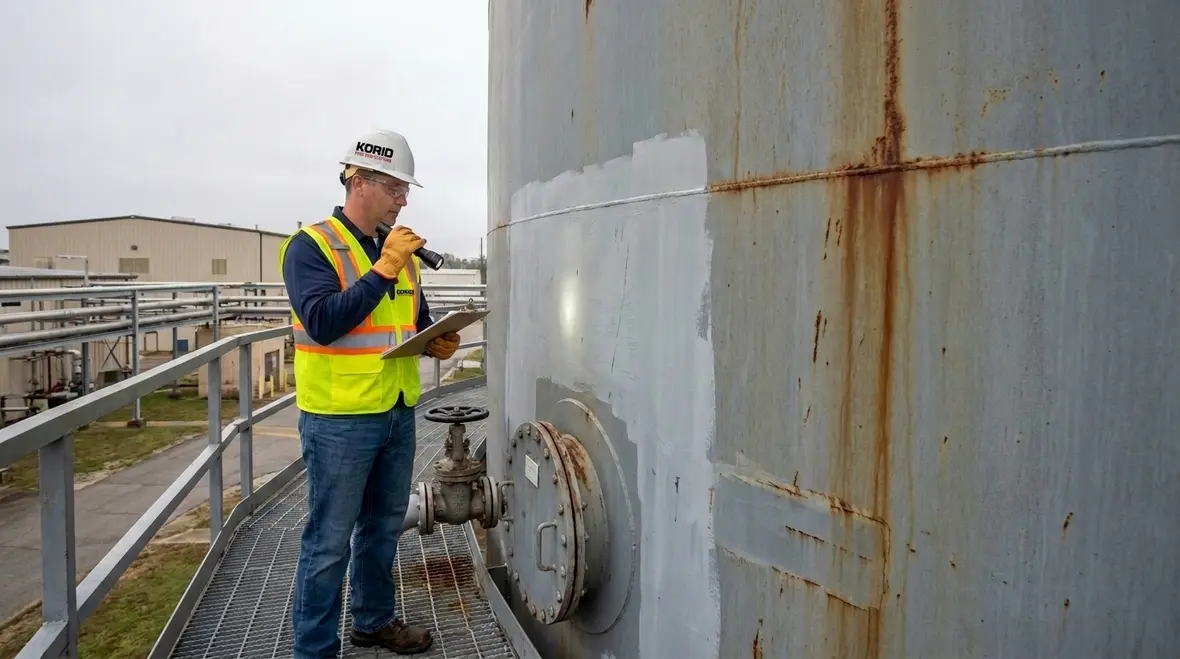
NFPA 25C Section 9.3: Water Storage Tank Testing and Leak Detection
Quick Answer: NFPA 25C Section 9.3 establishes inspection and testing expectations for fire water storage tanks, emphasizing verification of tank integrity and leak detection. Facilities must follow a disciplined process for visual checks, operational testing, and documentation to maintain system reliability.
What NFPA 25C Section 9.3 actually requires for tank integrity
NFPA 25C Section 9.3 water storage tank testing leak detection focuses on whether the water supply remains dependable when the fire protection system demands it. In commercial, industrial, and retail environments, compliance commonly fails at the practical level: degraded tank coatings, hidden seepage, poorly controlled maintenance access, and incomplete records. NFPA 25C Section 9.3 water storage tank testing leak detection drives a methodical approach that aligns physical condition with measurable performance.
Because water supplies often feed sprinkler and water based systems, the tank cannot be treated like a passive asset. It is an operational component with measurable risks: tank wall corrosion, leaking seams, valve gland leakage, compromised fittings, and water level inaccuracies caused by undetected losses.
Where water storage tanks sit in the fire protection system
Most facilities connect storage tanks to pumps, pressure maintenance devices, jockey pumps, and fire sprinkler systems or other water based applications. Even where the tank is elevated or located on grade, it acts as the buffer that stabilizes system pressure and provides flow duration. When the storage tank fails, downstream components may still operate briefly, but overall fire flow capacity becomes unreliable.
Facilities that maintain multiple water based systems often confuse inspection ownership. The water tank may be managed by facilities or utilities, while the fire protection system is managed by life safety contractors. NFPA 25C Section 9.3 water storage tank testing leak detection is most effective when responsibilities for inspection, testing, and documentation are clearly assigned across both disciplines.
To better align maintenance planning with the water based system the tank supports, facilities can reference Kord Fire Protection’s broader water based system maintenance guidance: NFPA 25 overview for water based fire protection maintenance breakdown.
If your facility is tightening inspection routines across multiple assets, Kord Fire Protection’s full fire protection services page is a useful starting point for coordinating sprinkler, pump, and maintenance support under one service plan.
How inspections and testing should be performed
Effective compliance uses a repeatable workflow. NFPA 25C Section 9.3 water storage tank testing leak detection is not only about finding obvious drips. It requires attention to the tank structure, appurtenances, and the interfaces where leaks originate or where water levels can change without clear surface evidence.
1) Visual condition assessment before any operational testing
Start with a safety focused entry and observation plan. Inspect accessible areas for coating breakdown, corrosion, deformation, staining, moisture trails, and abnormal water accumulation. Verify the condition of manways, inspection hatches, internal supports, ladder systems, and protective enclosures. Inspect external foundations and drainage patterns because leak pathways may migrate and present away from the source.
Typical failure points include:
- Tank wall corrosion and coating failure near welds and penetrations
- Leakage at manway covers, gaskets, bolting surfaces, or clamp rings
- Seepage around conduits, instrument penetrations, and cable glands
- Undetected weeping at fittings located above grade waterline zones
2) Operational verification of water level stability
Leak detection commonly relies on establishing a baseline and observing whether the tank level remains stable over a defined interval. Operational testing should control variables such as make up water sources, pressure fluctuations, and concurrent system draws. If the facility has transfer pumps or automatic level control valves, technicians must confirm their set points and normal cycling behavior before concluding a leak exists.
Level stability checks should also consider environmental impacts like temperature induced expansion and evaporation. The goal is to differentiate a genuine integrity issue from normal day to day water behavior.
3) Appurtenance and valve leakage checks
A significant portion of “tank leaks” originates not in the tank shell, but in components connected to the tank. NFPA 25C expectations align with ensuring appurtenances do not compromise water supply. Inspect and test:
- Inlet and outlet valves, including packing leakage at stems
- Check valves for backflow behavior that can mimic leaks
- Drain valves and sampling ports for proper closure and sealing
- Overflows, vent lines, and relief components that may pass water silently
Where accessible, technicians should observe valve seats and discharge points during controlled operations. If the facility has reduced maintenance access, record the limitation and confirm an alternate verification method to sustain compliance.
4) Documentation, labeling, and traceable results
Compliance depends on defensible records. Each test should document tank identification, test date, observed conditions, valve positions, measured parameters, leak indicators, corrective actions, and follow up requirements. When systems are audited or insurance reviews occur, incomplete logs become a risk even if the tank was in good shape.
Kord Fire Protection supports this documentation discipline as part of ongoing commercial service plans, helping facilities standardize procedures across properties and teams.
Why commercial facilities struggle with tank leak detection
Even well managed buildings can miss leak conditions because the failure is intermittent, concealed, or misattributed to other water system behavior. The most frequent practical challenges include:
- Uncontrolled make up water: Automatic fill can mask slow leaks by restoring level without a clear drop pattern.
- Concurrent water use: Cooling processes, wash down cycles, or other facility demands can create false positives or hide real loss.
- Corrosion under coatings: External staining may not appear until corrosion progresses, delaying detection.
- Access and fall protection limitations: Confined tank spaces and limited entry coverage delay or reduce inspection quality.
- Valve and penetration confusion: Leaks at manways, vents, and penetrations often get treated as “small” repairs without integrity verification.
- Inconsistent test intervals: Short or variable observation windows reduce confidence in leak conclusions.
To improve overall reliability of the water based system that depends on the tank, facilities often connect fire sprinkler code requirements to maintenance workflows. For related context on installation and system integration, see: NFPA 13 overview for automatic fire sprinkler system installation.
Equipment mechanisms that lead to leaks and loss of supply
Understanding where leaks develop helps technicians target verification instead of performing surface level checks only. The following mechanisms represent common drivers behind NFPA 25C Section 9.3 water storage tank testing leak detection findings.
Tank shell corrosion and seam failure
Steel tanks experience corrosion at welds and along stress points. Coating systems fail due to adhesion loss, impact damage, or moisture ingress. Seam integrity can degrade slowly, producing weeping that only appears under specific water line conditions or after temperature changes.
Manway and gasket degradation
Manways and hatches rely on gaskets, clamp pressure, and proper bolt torque. Repeated thermal cycling loosens assemblies. When gasket materials age, they can leak without obvious pooling, especially if the leak runs along internal surfaces to a lower point.
Penetrations, vents, and overflow discharge
Penetrations concentrate stress and often use sealing methods that are not designed for long term movement. Vent lines may pass water during fill or during pressure equalization events. Overflow lines can be overlooked because the leak appears at a distant discharge point.
Pump interface and pressure transients
Pressure changes during pump start, system testing, or hydrant flows can influence valve sealing. A valve that seals under static conditions may leak under transient pressure, creating a problem that appears during other system operations.
Facilities can extend this systems thinking by reviewing fire pump and water supply reliability resources such as firepumps.org, which provides additional context on pump driven water supply performance.
What to do when leaks are found and how to prevent recurrence
When NFPA 25C Section 9.3 water storage tank testing leak detection identifies a leak pathway, the response should be structured and controlled. The correction process typically includes isolating the water source, verifying the leak source precisely, and implementing repairs that restore integrity to an acceptable standard.
Step 1: Confirm the leak source
Technicians should not assume the tank shell is the source. Use targeted observation at likely interfaces: manways, valve packing, penetrations, and discharge lines. If possible, isolate sections using valve operations and monitor level changes to confirm the leak location.
Step 2: Implement appropriate repair and integrity restoration
Repairs may include gasket replacement, sealing of penetrations, valve packing adjustments, or coating system remediation. Structural repairs may require specialized welding, non destructive evaluation, and recoat plans that match the tank’s original corrosion protection design.
Step 3: Re test and document the outcome
Follow repairs with re testing aligned with the same acceptance logic used in the initial verification. Document pre and post conditions, updated measurements, and any operational constraints. For facilities that also maintain other water based fire protection components, aligning documentation with comprehensive maintenance schedules reduces audit friction.
For broader water based maintenance planning guidance, facilities can review: complete water based fire protection systems maintenance breakdown.
Where local installation practices impact ongoing maintenance, commercial facility owners in California may also find Kord Fire Protection’s resource helpful: fire sprinkler code California explained.
Frequently Asked Questions
Get tank compliance right before small leaks become big failures
Water storage tanks often fail quietly, then create supply problems exactly when the fire protection system needs it most. Kord Fire Protection helps commercial owners standardize NFPA 25C Section 9.3 water storage tank testing leak detection workflows, verify water level stability, check appurtenances, and produce defensible documentation for audits and insurance reviews. Schedule a tank testing review and maintenance plan update today to reduce risk and protect system reliability.
Contact Kord Fire Protection through kordfire.com or kordfire.com.au to align your program with current maintenance expectations.

Join Our Newsletter!
Get the latest fire safety tips delivered straight to your inbox From our Newsletter.


