NFPA 25C Section 6.4: Standpipe System Maintenance and Repair Guidelines
Quick Answer
NFPA 25C Section 6.4 sets practical rules for maintaining and repairing standpipe systems so they perform reliably during an emergency. It covers inspection frequencies, verification of readiness, documented testing, corrective actions for defects, and safe repair practices that preserve system performance.
For facilities that need a practical service path near the top of the conversation, Kord Fire Protection’s standpipe systems service fits naturally with the maintenance and repair obligations discussed here.
Why standpipe maintenance under NFPA 25C Section 6.4 matters in real facilities
Standpipe systems often serve as the backbone of fire attack support for commercial, industrial, and retail buildings. They must function correctly under high stress conditions: limited visibility, rapid water demand, and critical time pressure. In practice, failures typically stem from poor water supply verification, impaired hose connections, damaged valves, corrosion, leaking couplings, blocked inlets, and out of tolerance gauges. NFPA 25C Section 6.4 standpipe system maintenance repair guidelines address these risks by requiring disciplined inspection and documented corrective repairs.
For facilities like strip malls, warehouses, multi tenant retail, and light industrial occupancies, compliance also intersects with operational realities: tenant buildouts, seasonal equipment changes, vandalism exposure, and frequent corridor access by maintenance contractors. A compliant program must balance safety, downtime control, and evidence of ongoing readiness.
What NFPA 25C Section 6.4 expects the maintenance program to verify
NFPA 25C Section 6.4 standpipe system maintenance repair guidelines focus on ensuring the system remains capable of delivering usable water to the required standpipe outlets and hoses. While specific requirements vary based on system configuration and water supply arrangement, the maintenance program must consistently confirm readiness across three functional layers.
1) Water supply and system pressure readiness
Standpipe performance depends on the reliability of the connected water supply. Maintenance actions typically include verifying that pressure and flow conditions remain adequate for fire operations and that supply components remain free from obstructions. This includes attention to backflow prevention devices where present, check valves, relief devices, and any monitored supply arrangement. Where impairment is found, corrective repair must restore the system to its intended operating state.
2) Standpipe piping, valves, and outlet integrity
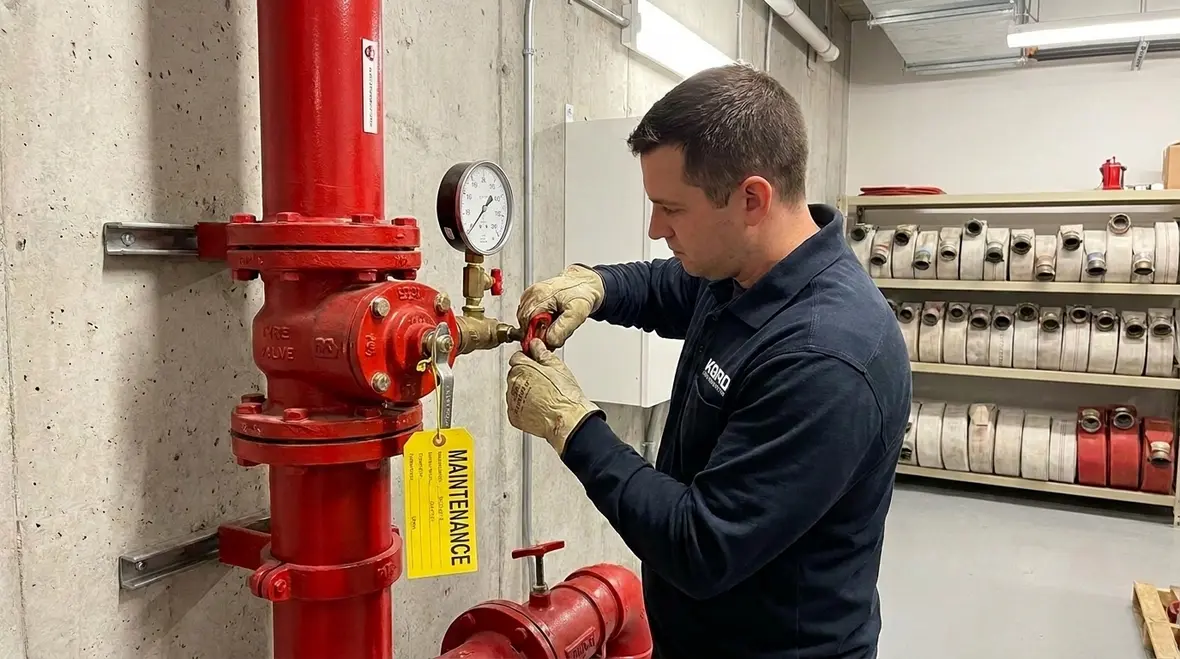
Maintenance must address the integrity of piping runs and components that commonly suffer from corrosion, minor mechanical damage, and leakage. Valves and outlet components require specific attention since partial failures can be deceptive. A valve can appear operational yet fail to fully open under flow or can leak internally, reducing effective system pressure.
3) Hose, connections, and accessibility
Outlets only help if crews can connect and deploy hoses quickly. NFPA 25C-related maintenance expectations include ensuring hose assemblies remain in place, connections remain compatible and serviceable, and equipment stays accessible. Frequent real world failure points include missing or wrong hose couplings, damaged hose wraps, deteriorated hose materials, and obstructed access due to storage, construction activity, or tenant changes.
For teams building a broader water based compliance program, aligning standpipe readiness with other water based systems reduces duplication and improves documentation quality. Kord Fire Protection regularly supports facilities using structured maintenance breakdowns for water based systems such as those summarized here: NFPA 25 overview complete water based fire protection systems maintenance breakdown.
Inspection approach: how to catch defects before they become noncompliant repairs
Effective NFPA 25C Section 6.4 compliance comes from early detection, not end of cycle failures. Standpipe systems often experience slow degradation, and certain problems hide until a high demand test or real use reveals them. A practical inspection approach focuses on high probability failure points and evidence based verification.
Use a component checklist tied to standpipe use scenarios
Inspections should reflect how the system operates during an emergency. That means confirming that:
- Hoses and couplings are present, compatible, and stored properly in their locations.
- Outlet valves are accessible, correctly labeled, and free from physical impairment.
- Signs of corrosion, leakage, and valve damage are identified at every visible section.
- Threaded or mechanical connections remain clean and undamaged.
Confirm gauges and indicators where applicable
Where the system includes pressure indication, the maintenance program should verify that the readings remain meaningful and that devices have not drifted or failed. Incorrect readings lead to wrong decisions during emergencies. Even when readings do not directly fail a standpipe ready status, they often indicate that system conditions may not be stable.
Document findings with repair triggers
Facilities frequently struggle with documentation quality. NFPA 25C Section 6.4 standpipe system maintenance repair guidelines require that deficiencies drive corrective actions. Maintenance records should include the location, defect type, observed condition, and the final corrective step taken. Where a repair does not fully restore operability, the record should clearly state the limitation and the required follow up.
Common standpipe failure points and corrective repair practices
Standpipe systems can look intact while still failing operational requirements. The highest frequency repair drivers typically fall into the categories below.
Leaking valves, packing, and connection points
Leaks can be small and persistent, especially at valve stems, joints, and outlet connections. Minor leaks can also conceal internal valve degradation. Corrective repair typically includes isolating the segment, verifying safe conditions, replacing worn components, and reestablishing tightness before returning the system to service. Repairs should restore the original configuration and not introduce incompatible materials.
Corrosion and internal scale buildup
Corrosion in piping and internal valve pathways can reduce effective flow and increase resistance. Where inspections reveal corrosion or operational impairment, repair planning should consider the likelihood of recurring defects in adjacent sections. Segment replacement often proves more reliable than repeated patch repairs.
Blocked inlets, incorrect fittings, or damaged couplings
Blocked inlets can occur from construction debris, unintended closure, or environmental intrusion. Damaged couplings and incorrect fittings can prevent crews from achieving a functional connection. Corrective work should verify compatibility and ensure that the coupling interfaces match the hose and standpipe outlet requirements.
Hose degradation and readiness loss
Hoses may degrade through abrasion, UV exposure, moisture, or improper storage. Replacement should follow observed condition rather than calendar date alone. A key practical compliance lesson is that “present” equipment is not the same as “serviceable” equipment. Repairs must restore full capability, including hose condition and connection integrity.
To coordinate standpipe repairs with other building water based systems, many facilities benefit from understanding maintenance expectations across the broader fire protection system landscape. This resource can help align schedules and documentation: NFPA 25 overview complete water based fire protection systems maintenance breakdown.
Commissioning level handoffs: repairs, retesting, and documentation that inspectors expect
After repair, the maintenance process must move beyond “installed and tightened.” It must include verification that the standpipe system returns to an operable, compliant condition. Inspectors and insurers typically look for evidence that repairs did not compromise other components and that corrective actions restored the system’s readiness.
Retest to confirm restored performance
Retesting should confirm that the repaired components function as intended and that system readiness returns to baseline. When valves are serviced or hoses are replaced, validation should cover full operability at the outlet and connection interface level. If the repair affects supply components, retesting must address system pressure stability and functional delivery capability.
Update maintenance records immediately
Commercial facilities often fail audits due to incomplete records. NFPA 25C Section 6.4 standpipe system maintenance repair guidelines rely on traceable documentation. Records should include:
- System identification and affected location(s).
- Deficiency description and condition observed.
- Repair scope and parts replaced, where applicable.
- Retest results or evidence of functional restoration.
- Date, contractor details, and next scheduled action.
Integrate with local building practices and water supply realities
Standpipe systems do not operate in isolation. Local codes and water supply requirements can influence how systems are arranged and maintained. In California, for example, facility teams often align broader water based fire protection expectations with state specific interpretive practices. For planning context, see: fire sprinkler code California explained.
Where pumps play a role, coordination with pump system readiness becomes critical. For additional reference material supporting fire pump and water delivery fundamentals, see: firepumps.org.
Kord Fire Protection also supports commercial teams by integrating code expectations across water based systems and coordinating maintenance workflows with ongoing building operations. This approach aligns strongly with how facilities manage multiple fire protection assets under a single documented compliance program.
How Kord Fire Protection helps facilities meet standpipe maintenance obligations
Facilities often need more than a checklist. They need dependable execution, consistent documentation, and repairs that preserve system performance. Kord Fire Protection supports ongoing compliance through structured inspection practices, clear repair scopes, and verification focused on operational readiness. This is especially valuable when tenant turnover, construction activity, or seasonal operational changes introduce risk to accessibility and equipment condition.
For facilities coordinating multiple water based systems, Kord Fire Protection’s broader service perspective supports consistent maintenance planning. Learn more through Kord Fire Protection resources including: NFPA 13 overview automatic fire sprinkler system installation and related water based maintenance breakdown guidance at NFPA 25 overview complete water based fire protection systems maintenance breakdown.
For teams seeking localized support, Kord Fire Protection also operates through Kord Fire Protection’s regional presence at kordfire.com.au and supporting brand references at kordelectric.com.
Frequently Asked Questions
Take action now
Facilities should review current standpipe inspection and repair records against NFPA 25C Section 6.4 standpipe system maintenance repair guidelines, then close any gaps in documentation, accessibility checks, and corrective retesting evidence. Kord Fire Protection can support compliant maintenance planning, targeted repairs, and audit ready reporting. Contact Kord Fire Protection today to schedule a standpipe maintenance assessment and corrective repair review before small issues become major readiness failures.

Join Our Newsletter!
Get the latest fire safety tips delivered straight to your inbox From our Newsletter.