
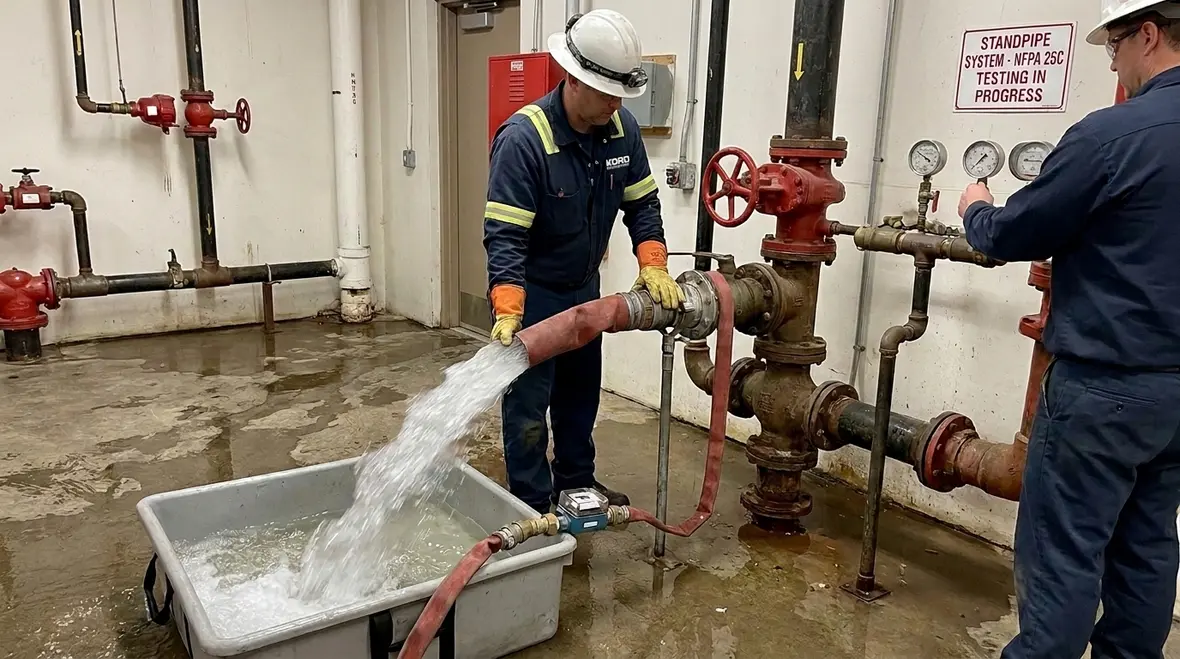
NFPA 25C Section 6.3 Standpipe and Hose System Testing Protocols
Quick Answer: NFPA 25C Section 6.3 establishes practical, repeatable testing steps for standpipe and hose systems to verify performance, water supply reliability, and hose integrity. This includes defined frequencies, acceptance expectations, documentation, and correction of defects before systems are returned to service.
Why Section 6.3 matters for commercial standpipe reliability
NFPA 25C Section 6.3 standpipe hose system testing protocols help commercial facilities confirm that the standpipe and hose arrangement will deliver usable fire streams when occupants or firefighters need it. In real building operations, compliance is challenged by equipment age, intermittent water supply changes, threaded connection wear, damaged hose storage, and incomplete documentation from prior service cycles. A defensible testing program protects life safety and reduces costly downtime during emergency response readiness activities.
Facilities often pair standpipe program maintenance with broader water based system governance. Kord Fire Protection supports coordinated compliance planning using current guidance for water based fire protection systems and related installation and maintenance requirements, including: standpipe system Class I-II-III service, NFPA 25 overview for complete water based fire protection systems maintenance breakdown and NFPA 13 overview for automatic fire sprinkler system installation.
What Section 6.3 tests: performance, condition, and readiness
Standpipe and hose systems include more than the piping network. Section 6.3 testing typically verifies three core elements:
- Water delivery performance: whether the standpipe system maintains required flow and pressure at the hose connection points under test conditions.
- Hose usability: whether stored hoses and attached nozzles remain serviceable, correctly coupled, and free from damage that would impair flow.
- Connection integrity: whether hose couplings, valves, caps, and related fittings operate correctly and can be assembled without functional defects.
In practice, many failures originate from “mechanical drift” rather than catastrophic pipe failure. Common issues include valve packing degradation, friction in hose couplers after repeated connect and disconnect cycles, hose abrasion inside cabinets, and partial obstructions from sediment or debris. Section 6.3 testing protocols aim to identify these issues before they become response impacting.
How testing is typically performed step by step
NFPA 25C Section 6.3 standpipe hose system testing protocols are most effective when facilities use a controlled workflow that protects occupants, maintains system discipline, and produces defensible records. A standard operational approach looks like this:
1) Pre test verification and system readiness
- Confirm the test objective for the specific standpipe zone or riser and identify hose stations to be tested.
- Inspect hose cabinets or hose valves for accessibility, labeling, and correct storage configuration.
- Verify tools and gauges are calibrated and suitable for expected pressures and flow rates.
- Coordinate traffic control, fire watch if required by the AHJ or facility policy, and communication with site leadership.
2) Valve and hose station inspection before flow
- Operate standpipe valves to confirm smooth movement and ensure they can be returned to their correct position.
- Inspect hose lengths, coupling alignment, and nozzle presence where applicable.
- Check for visible defects such as abrasion, mildew staining, cuts, swelling from moisture exposure, or coupler damage.
3) Flow and pressure verification during hose deployment
During Section 6.3 standpipe and hose testing, technicians introduce controlled water flow from the appropriate standpipe source to the hose connections under monitored conditions. The goal is to validate that the system can deliver an effective fire stream at the connection. Pressure loss across valves, fittings, and hose components is a common reason systems fail test acceptance criteria. When results fall short, the corrective action process should focus on identifying whether the limitation sits in the supply source, the standpipe configuration, or the hose station components.
4) Post test restoration and evidence capture
- Restore all valves and hose cabinet components to the intended operating positions.
- Dry and manage hose condition requirements when wetting occurs and follow facility or manufacturer storage guidance.
- Document measured parameters, locations tested, hose identifiers, and any defects found and corrected.
Scheduling the right frequency without disrupting operations
NFPA 25C Section 6.3 standpipe hose system testing protocols require facilities to follow defined inspection and test intervals. The compliance challenge is not only calendar tracking. It is also operational disruption management in occupied commercial, industrial, and retail environments with high foot traffic and complex tenancy.
Facilities typically plan standpipe and hose testing as part of an annual or periodic service cycle and integrate it with related water supply readiness work. When combined with other water based programs, the maintenance team reduces total downtime by consolidating labor, ensuring consistent documentation, and minimizing repeated valve operations.
For facilities that also run comprehensive sprinkler systems maintenance cycles, coordinated planning aligns with the broader water based compliance posture described here: NFPA 25 overview for complete water based fire protection systems maintenance breakdown.
Where standpipe and hose systems fail in the real world
Even well maintained buildings encounter recurring problem patterns. Testing under NFPA 25C Section 6.3 standpipe hose system testing protocols frequently reveals these root causes:
Hose damage from storage conditions
Hoses stored in cabinets can experience abrasion, pinching, or long term moisture exposure that degrades wall integrity. Couplers can also become misaligned or contaminated, increasing friction and impairing coupling speed. Quick visual inspection is essential, but test results provide the performance confirmation.
Valve and coupling friction that slows connection under stress
Standpipe valves that stiffen over time, thread galling, or couplers with debris can fail readiness expectations even if the pipe network looks intact. A failure to achieve correct connection and flow performance during the Section 6.3 test indicates corrective action must include component servicing or replacement, not only record updates.
Inadequate water supply performance
When measured pressures or flow do not meet acceptance expectations at hose stations, the likely contributors include undersized or obstructed piping, supply limitations, system configuration changes from construction, or sediment accumulation. The corrective action should trace from supply source to the connection points.
Documentation gaps and incomplete evidence trails
Common audit findings include missing test records, incomplete station identification, absent gauge calibration evidence, and unclear defect disposition. Strong documentation is part of the compliance protocol. Kord Fire Protection emphasizes structured reporting and repeatable service processes that support AHJ review and internal risk management.
For additional industry context and references on fire pump related operational readiness and maintenance concepts, see: firepumps.org.
How to coordinate with AHJ expectations and other water based systems
NFPA standards guide testing methods, but actual compliance success depends on how the facility, installer, maintainer, and AHJ align on documentation format, site specific constraints, and acceptance criteria interpretation. Commercial facilities benefit from a clear testing plan that names:
- Risers and hose stations in scope for each service event
- Target performance parameters and recording method
- Defect classification and repair or replacement triggers
- Re testing and verification approach after corrective work
Where California specific code overlays apply to fire sprinkler and broader water based programs, facilities often seek additional clarification to maintain consistent interpretation. For related background, reference: Fire sprinkler code California explained.
For coordinated service capabilities across regions, facilities can also review Kord Fire Protection resources at: kordelectric.com and kordfire.com.au.
Frequently Asked Questions
Get standpipe and hose testing to a defensible standard
Ensure NFPA 25C Section 6.3 standpipe hose system testing protocols remain audit ready by using a documented, station based workflow with calibrated measurements and rapid defect correction. Kord Fire Protection supports commercial facilities with coordinated maintenance planning, evidence grade reporting, and field execution that minimizes operational disruption. Contact Kord Fire Protection to schedule a compliance assessment and build a testing plan aligned to your risers, tenants, and AHJ expectations.

Join Our Newsletter!
Get the latest fire safety tips delivered straight to your inbox From our Newsletter.


