NFPA 25C Section 5.5: Component Action Requirements for Sprinkler Systems
Quick Answer: NFPA 25C Section 5.5 defines what parts of a sprinkler system must operate when tested, how quickly they must respond, and how inspectors confirm correct function. It focuses on component action during operational tests, not just visual condition.
What NFPA 25C Section 5.5 sprinkler component action requirements mean in practice
NFPA 25C Section 5.5 sprinkler component action requirements set clear expectations for how sprinkler system components behave when a maintenance test initiates operation. In commercial and industrial buildings, compliance often fails when staff perform visual checks but do not verify functional action under supervised test conditions. This section bridges that gap by requiring inspectors to confirm that specific components actuate as designed and that system behavior stays within acceptable performance limits.
For facilities managing inspections, the practical takeaway is straightforward: component testing must demonstrate correct mechanical, electrical, and hydraulic response. For additional context on how sprinkler systems are installed and configured to support ongoing testing, see NFPA 13 overview for automatic fire sprinkler system installation.
If you are planning service around operational reliability, it also helps to review Kord Fire Protection’s fire sprinkler system service offering near the start of your compliance planning, since field testing, maintenance, and repairs all feed directly into whether these action requirements pass cleanly.
Which components fall under “action” testing, and why it matters
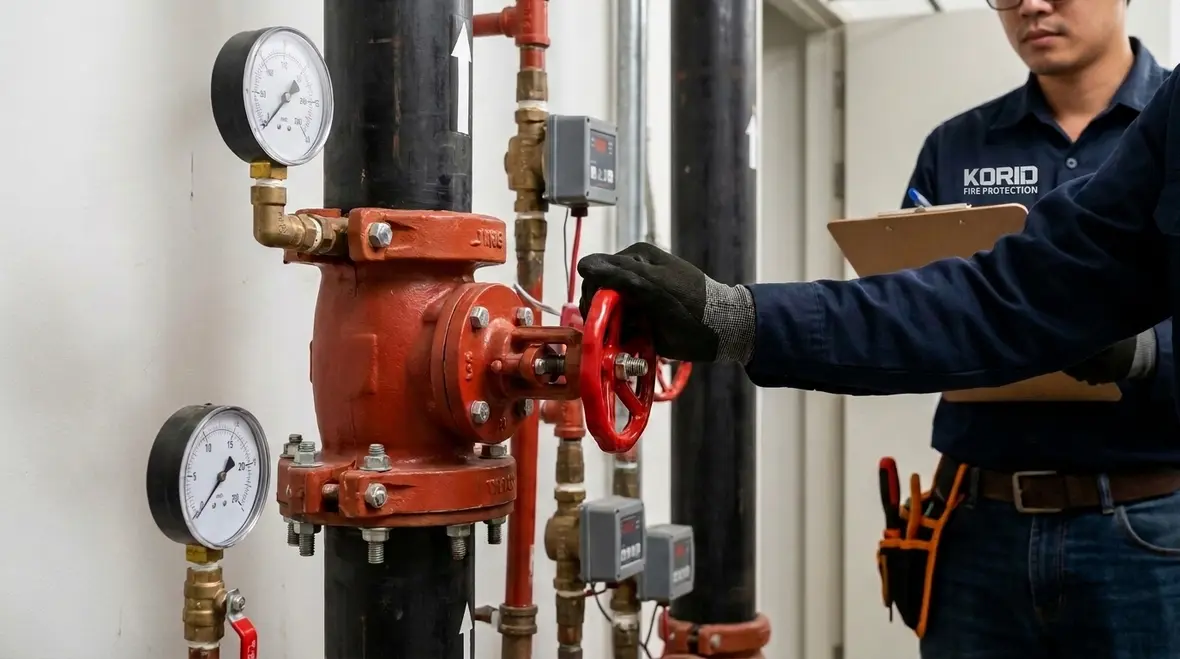
Section 5.5 concentrates on components that must change state during an operational test. While the exact scope depends on the water based system type and configuration, “action” typically involves verifying that mechanical movement, valve position change, or alarm signaling occurs reliably when actuated.
Common component categories that facilities often prepare for include:
- Control valves and supervisory arrangements that must report correct position during testing.
- Water flow detection features that must produce an accurate initiating signal when flow occurs.
- Alarm interfaces and notification components that must receive and respond to the system’s initiating condition.
- Water supply and pressure regulating devices where applicable, ensuring system readiness for flow.
In real operations, “action” testing proves more than connectivity. It confirms that wear, corrosion, air or water trapped in circuits, contaminated fittings, misadjusted actuators, and electrical control issues have not degraded functional performance since the last inspection.
Operational testing workflow: how inspectors confirm component action
Commercial facilities benefit from a repeatable test workflow because the goal is functional verification under controlled conditions. Kord Fire Protection teams commonly see faster, cleaner outcomes when sites follow a structured sequence aligned to NFPA guidance and local adopted code requirements.
1) Verify prerequisites before initiating tests
- Confirm the system status matches the expected test mode, including supervisory conditions and system readiness.
- Check that access, isolation practices, and safety controls for water discharge and alarm audibility exist.
- Confirm test documentation requirements for the jurisdiction and the facility’s internal compliance standard.
2) Initiate the test condition and observe action response
During the operational test, inspectors validate that the component changes state exactly as required. This includes verifying that:
- Valve actuation completes to the correct position within an acceptable time window.
- Initiating signals reach the alarm interface without loss or abnormal delay.
- Any required supervisory responses occur, including correct alarm categories and signal status.
3) Confirm performance outcomes and document deviations
Action requirements are not satisfied by a “successful start” alone. The inspection must capture what happened and whether it matched expected operation. Inspectors should document:
- Observed timing and sequence of actions.
- Any abnormal conditions such as partial valve movement, sluggish actuation, persistent supervisory trouble, or inconsistent signal transmission.
- Corrective actions taken immediately and recommendations for repairs.
When facilities also consider the broader maintenance structure, it helps to align sprinkler system testing with an overall water based program. For a systems view, review NFPA 25 overview of complete water based fire protection systems maintenance breakdown.
Common compliance challenges that cause failed action tests
Most failures linked to component action testing fall into predictable categories. Addressing these early prevents repeated call backs, reduces downtime, and improves audit readiness for commercial owners and facility managers.
Stiction and mechanical degradation
Valves, check mechanisms, and moving parts can accumulate corrosion, scale, or contamination. The component may visually appear “in place,” but it does not fully complete the required motion under test conditions. Operational testing exposes that difference.
Supervisory and control signal issues
Signal pathways can degrade even when they pass a basic continuity check. Common causes include loose terminations, intermittent wiring faults, incorrect relay settings, or incompatibility between panel logic and supervisory wiring. Action tests often reveal delayed or missing responses.
Pressure and water supply variability
Some systems rely on stable supply conditions to achieve expected response. Fluctuations can prevent the component from reaching full operational status or can delay detection events. Facilities handling multiple buildings often see these issues during peak demand or seasonal supply changes.
Inadequate test planning and incomplete documentation
Action requirements require precise observation. When technicians skip steps such as confirming the correct initiating condition, recording alarm categories, or verifying the final component state, the test result becomes noncompliant even if the system “seems to work.”
For California facilities navigating installed configurations and local expectations, see fire sprinkler code California explained. It supports better planning around adoption differences and inspection realities.
How to reduce risk between inspections (maintenance that supports Section 5.5)
NFPA 25C Section 5.5 emphasizes verified action during inspections. Facilities can reduce the likelihood of noncompliant action outcomes through targeted maintenance that supports reliable component movement and dependable signaling.
Build a component-focused maintenance checklist
Instead of generic schedules, a component action focused checklist should track:
- Valve movement history and prior test observations.
- Alarm interface behavior patterns, including recurring trouble or delayed signals.
- Water flow detection verification results and any debris related trends.
Use the right testing tools and trained personnel
Operational tests demand careful handling because water discharge and control signaling can affect life safety systems and building operations. Reliable outcomes depend on disciplined procedures and competence in sprinkler system operation. Partnering with experienced commercial specialists helps maintain consistency.
Align service planning with facility schedules
Retail and industrial environments often require low disruption. Kord Fire Protection coordinates testing windows, ensures alarms and notifications remain compliant, and prepares mitigation steps for temporary impacts. This approach supports both operational continuity and audit readiness.
If the facility uses water supply components that impact sprinkler performance, it also benefits from expertise around pumps and water supply systems. For pump and water supply considerations, visit firepumps.org.
NFPA 25C and related standards: keeping installation and maintenance aligned
Component action requirements do not exist in isolation. They depend on the quality of system installation, the correctness of device selection, and the ongoing state of system components. When inspection teams and maintenance teams align installation assumptions with operational test expectations, they reduce the most common sources of action test failure.
Facilities should also ensure their service provider understands both the code intent and the installed system design. Using a consistent provider improves trend tracking and accelerates corrective actions after deviations. Kord Fire Protection supports this continuity through ongoing testing and maintenance planning across water based systems.
For additional corporate resource context and service presence, you can also reference kordelectric.com and kordfire.com.au.
Frequently Asked Questions
Take the next step
Ensure your sprinkler system meets NFPA 25C Section 5.5 sprinkler component action requirements through disciplined operational testing, documented observations, and fast corrective follow up. Contact Kord Fire Protection to schedule a maintenance and compliance review that targets component action performance, reduces repeat findings, and supports audit ready documentation.

Join Our Newsletter!
Get the latest fire safety tips delivered straight to your inbox From our Newsletter.