
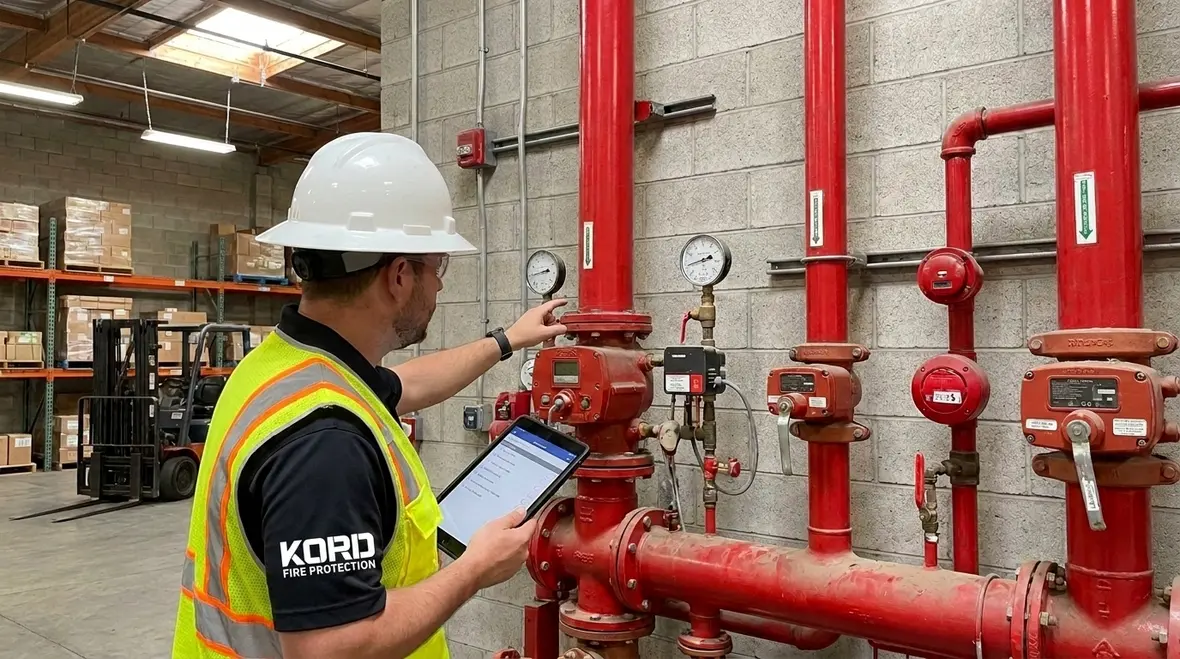
NFPA 25C Section 5.4: Sprinkler System Maintenance Best Practices in California
Quick Answer
NFPA 25C Section 5.4 sprinkler system maintenance best practices focus on recurring inspections, testing, and correct documentation of water based automatic sprinkler systems. In California, facilities also address local code enforcement, water supply variability, and site specific hazards to maintain compliance and reliability.
Why NFPA 25C Section 5.4 matters for California sprinkler reliability
Commercial facilities in California operate under continuous scrutiny, including insurance expectations, AHJ requirements, and operational risk management. NFPA 25C Section 5.4 addresses maintenance in a structured way so systems perform as intended throughout their service life. The goal is simple: keep sprinklers, valves, alarms, water supplies, gauges, and connected components in a condition that can deliver the required water flow and pressure when a fire occurs.
Many maintenance issues do not show up as obvious failures until inspections coincide with peak demand seasons. Common drivers include corrosion in wet systems, debris in supply lines, misaligned supervisory signaling, paint and overspray on alarms, and delayed action resulting from incomplete documentation. Facilities that treat maintenance as a recurring operational program rather than a periodic task align faster with compliance expectations.
If your facility is tightening up service intervals or correcting repeat deficiencies, a dedicated fire sprinkler system service program can help connect inspections, repairs, and maintenance before small issues turn into expensive surprises. For background on how installation quality influences what maintenance must protect, see: NFPA 13 overview for automatic fire sprinkler system installation.
What Section 5.4 typically requires: inspection, testing, and documentation
NFPA 25C Section 5.4 sprinkler system maintenance best practices typically follow an organized maintenance framework. While specific inspection frequencies and test procedures depend on system type and hazard classification, the operational intent stays consistent. Service teams verify that the system components can initiate water delivery, detect system status changes, and generate alarms as required.
1) Keep the system configuration “as installed”
Commercial remodels, tenant improvements, and rack changes frequently alter the ceiling conditions, obstructions, and even coverage details. When obstructions accumulate or storage layouts change, sprinkler performance can be compromised. Section 5.4 maintenance practices include confirming that the system configuration remains consistent with the applicable design intent and that any changes receive proper evaluation.
2) Verify the alarm pathway and supervisory signaling
Water based systems rely on more than sprinklers. Valve supervisory switches, pressure switches, flow detection, and connected alarm devices must function correctly. If a supervisory device missignals due to incorrect setting, failed wiring, or physical damage, the facility may not receive an early warning. Maintenance best practices include functional checks designed to confirm the alarm pathway is reliable.
3) Maintain clean water flow paths
Flow restriction is one of the most overlooked failure points. Corrosion, sediment, and debris can reduce effective flow. Maintenance work should include activities that evaluate and address conditions that prevent water from reaching sprinklers at the required rate.
To understand broader water based system maintenance context, reference: NFPA 25 overview and water based fire protection systems maintenance breakdown.
How California enforcement and site conditions change the maintenance approach
California facilities often face operational and compliance challenges that increase the value of structured maintenance best practices. Even when a system meets initial acceptance criteria, changes in building use, water supply behavior, and site specific hazards can shift performance over time.
Water supply variability and pressure conditions
Municipal supply pressure can fluctuate. In some areas, fire pump reliance, booster arrangements, or pressure reducing devices interact with sprinkler demand. Maintenance best practices include verifying that gauges read correctly and that water supply components behave as expected during operational testing.
Commercial and industrial hazard exposure
Retail stores, warehouses, and light industrial occupancies often include dust, construction debris, and changes in storage density. These conditions can cause blocked sprinkler outlets or contamination of valve assemblies. Maintenance teams should plan cleanout and inspection activities that align with real site conditions rather than relying on generic schedules.
Code familiarity and documentation readiness
California compliance often depends on how quickly a facility can demonstrate ongoing maintenance. In practice, the documentation packet matters as much as the technical actions performed. Strong maintenance best practices include completing records in a consistent format, maintaining traceability for tested devices, and preserving calibration or verification evidence.
For a California specific code orientation, see: Fire sprinkler code California explained.
Sprinkler system maintenance best practices that reduce failure risk
NFPA 25C Section 5.4 sprinkler system maintenance best practices focus on preventing both mechanical and signaling failures. The most effective programs connect inspection observations to corrective actions and follow up to confirm performance.
Operational checks during each service event
-
Assess sprinkler cleanliness and physical condition by inspecting for paint, corrosion, blockage, and mechanical damage. Address issues immediately when they affect the ability to discharge water.
-
Verify valve supervisory status so supervisory signals correctly reflect valve positions and system readiness.
-
Confirm alarm device function through appropriate functional checks consistent with the system type and arrangement.
-
Inspect water flow detection components for wiring integrity, correct mounting, and proper operation.
-
Review gauge readings and component health to catch trends such as gradual pressure loss or abnormal system behavior.
Common failure points in the field
-
Blocked or partially obstructed sprinklers from dust accumulation, overspray, construction debris, or ceiling work.
-
Corroded drain valves or stuck test assemblies that prevent proper testing or delay water release during a required sequence.
-
Supervisory switches out of adjustment due to vibration, physical impact, or non permitted maintenance work after tenant changes.
-
Water supply issues not tracked over time such as recurring flow shortfalls, gauge drift, or unnoticed restrictions.
Align maintenance with facility operations
California commercial sites often require minimal downtime. A best practice is to schedule work that maintains safety while protecting operations, such as coordinating with building management for access windows, isolating work areas, and ensuring alarms and supervisory signals remain accounted for during testing.
Kord Fire Protection supports commercial, industrial, and retail facilities by building a practical compliance program around real site conditions and system types, not generic checklists. That approach reduces repeat findings and improves readiness for AHJ review.
Build a maintenance program that passes scrutiny: people, process, and records
NFPA 25C Section 5.4 sprinkler system maintenance best practices succeed when they are implemented as a repeatable program. Facilities should treat the sprinkler system as a life safety system with a continuous documentation trail.
1) Assign ownership and escalation
Commercial owners and property managers benefit from clear ownership of maintenance scope. Define who authorizes corrective work, who approves temporary conditions, and who confirms that repairs restore normal system readiness.
2) Create a repeatable service workflow
A structured workflow typically includes pre inspection review, onsite verification, documentation, corrective actions, and post repair confirmation. This reduces missed components and prevents “test without verification” outcomes.
3) Use records to drive improvements
Maintenance records should show what was checked, what was found, what was corrected, and when the follow up occurred. That record quality matters during audits, insurance reviews, and underwriting questions. It also helps trending, such as recurrent gauge anomalies or repeated supervisory switch adjustments.
For a deeper perspective on firefighting water delivery components often tied to sprinkler performance, consult additional practical resources such as firepumps.org.
Why a specialized partner improves compliance outcomes in California
Sprinkler maintenance involves mechanical reliability, alarm signaling, and water supply performance. Facilities often struggle when maintenance is performed as a one off task by general contractors who focus on access but not system level performance. A specialized fire protection partner improves results by using system knowledge, disciplined documentation, and operationally aware scheduling.
Kord Fire Protection positions its service program around NFPA aligned maintenance best practices and the practical expectations of California commercial facilities. The team coordinates testing that respects building operations, identifies risk trends early, and closes findings with verified corrective actions.
If the facility also needs electrical support for signaling and related components, coordinate with Kord Electric via: kordelectric.com.
Additional service and training context may be found at kordfire.com.au and kordfire.com.
Frequently Asked Questions
Take action now
Review the facility’s current maintenance records against NFPA 25C Section 5.4 sprinkler system maintenance best practices and confirm the system configuration, alarm signaling, and water flow path are reliable. If documentation is incomplete or findings repeat, schedule a professional inspection and maintenance program update with Kord Fire Protection. Acting early reduces operational disruption, strengthens AHJ readiness, and protects life safety.

Join Our Newsletter!
Get the latest fire safety tips delivered straight to your inbox From our Newsletter.


