
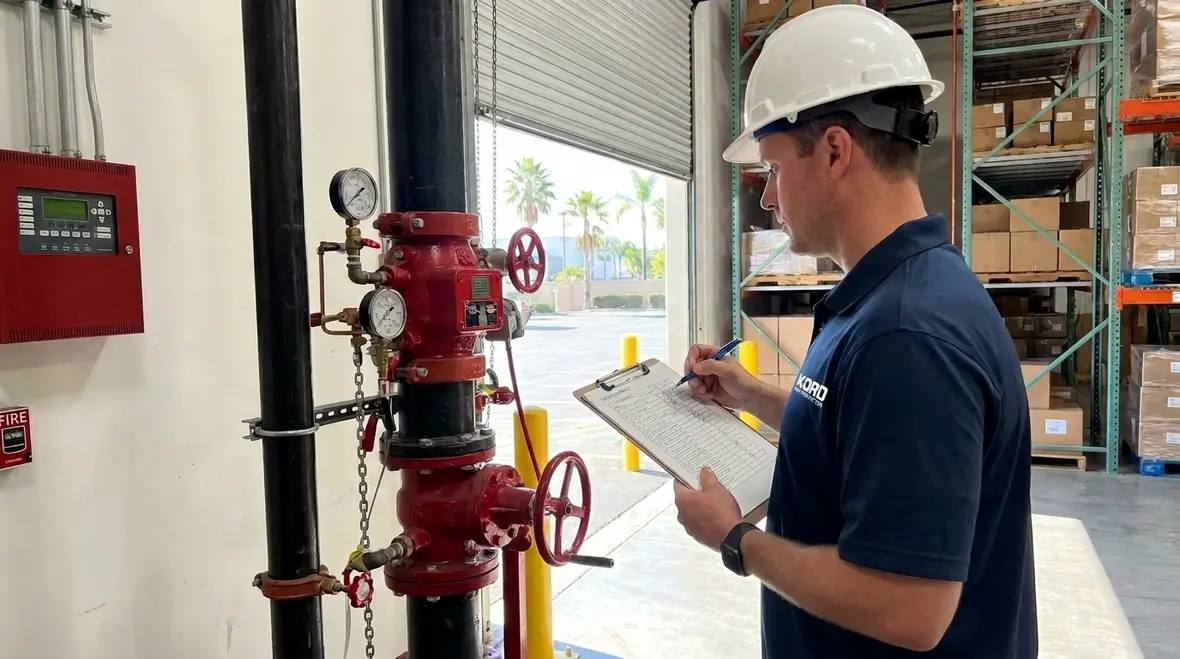
NFPA 25C Section 4.1: Property Owner Responsibilities Under California NFPA 25
Quick Answer: NFPA 25C Section 4.1 assigns ongoing fire protection responsibilities to the property owner, including ensuring systems are maintained, documented, and kept in service-ready condition. In California, these duties directly support life safety and help facilities meet inspection, testing, and maintenance expectations.
What NFPA 25C Section 4.1 requires of property owners in California
In commercial and industrial facilities, fire protection performance depends on more than code-required installation. NFPA 25C Section 4.1 property owner responsibilities fire protection establish a continuing compliance framework: the owner must ensure fire protection systems receive the inspection, testing, and maintenance (ITM) required by the applicable NFPA standard and enforced by California authorities having jurisdiction (AHJs). This includes organizing service, maintaining system records, and addressing impairments promptly so systems remain capable when emergencies occur.
In practice, compliance failure often does not come from missing equipment, but from delayed testing, undocumented repairs, or informal “swapping” of maintenance tasks between contractors without a controlled program. Property owners therefore need a deliberate process for ITM governance.
For owners looking to align those responsibilities with practical field service, a natural next step is reviewing fire sprinkler system service through Kord Fire Protection, which fits directly into the maintenance, testing, and repair obligations described here.
So what does “property owner responsibilities” mean operationally?
1) Ensure systems are maintained in accordance with the standard
NFPA 25C Section 4.1 centers on the owner’s duty to keep listed fire protection systems maintained. For water-based systems, that typically includes components such as sprinkler valves, supervisory switches, waterflow devices, alarm devices, and control valves. The owner must make sure maintenance activities match the inspection and test frequencies defined by NFPA 25 for the specific system type.
For facilities with mixed hazards, such as retail merchandising with back-of-house storage or light industrial operations with variable occupancy levels, the maintenance program must reflect actual system configuration and risk. This is where owners commonly struggle, especially when tenant turnover changes rack layouts, storage density, or obstruction conditions.
2) Provide access, cooperation, and defined authority
ITM cannot occur without operational access. Owners need to coordinate with facilities teams and contractors so fire protection technicians can safely gain access to valves, control panels, fire pumps, monitoring devices, and documentation repositories. Where access control is strict, owners should establish controlled procedures that protect both safety and auditability.
Commercial standards often require lockout coordination and shutdown planning for certain tests. Property owners should define who authorizes impairments and who can approve scheduling changes. Clear authority prevents unauthorized system deactivation and reduces compliance exposure during repairs.
3) Manage impairments and restoration of service
When equipment must be taken out of service, owners must ensure the impairment is controlled and the system is restored. In real-world operations, this frequently involves balancing production schedules, retail opening hours, or event timelines against test needs. NFPA 25 programs generally require documenting impairments and ensuring adequate life safety measures during the downtime.
Owners also must confirm repairs are completed and the system is returned to an operational state. A common failure point is “partial completion,” where components are replaced but verification steps such as retests, valve confirmations, and record updates do not occur promptly.
4) Maintain records that demonstrate compliance
Records are a core element of demonstrating that property owner responsibilities fire protection are being carried out. Owners must retain inspection and test documentation in a way that can be provided to AHJs and used for internal quality control. Without records, even properly performed work can become noncompliant during an enforcement review.
Strong documentation practice typically includes the date of service, findings, corrective actions, parts or component details, and confirmation of restored functionality. For multi building campuses and shopping centers, owners should also ensure record consistency across properties and contractors.
California compliance challenges owners face in real facilities
California enforcement varies by jurisdiction, but the underlying expectation remains consistent: ongoing ITM and defensible documentation. Owners frequently encounter challenges in three areas.
Change management for tenants and remodels
Retail and industrial spaces often change frequently. Remodels can impact sprinkler spray patterns, obstructions, ceiling construction, and concealed spaces. Even when the original installation complied at the time of construction, later changes can affect system performance unless the maintenance and inspection program includes review triggers.
Owners should require that fire protection reviews occur after construction, ceiling modifications, and storage reconfigurations. A maintenance partner should confirm that inspection access points and monitoring devices remain functional and unobstructed.
Legacy equipment, mixed system vintages, and undocumented alterations
Many commercial facilities include older components integrated with newer technology. Owners may not have complete as-built documentation for every branch line, control valve, or supervisory circuit. This leads to testing that “passes” operationally but does not match the expected configuration during record verification.
Owners should plan for discovery work as part of ITM governance, such as validating valve labeling, confirming alarm circuit behavior, and reconciling field conditions with available drawings and manuals.
Water-based system readiness and coordinated testing
For automatic fire sprinkler systems and other water-based fire protection equipment, owners must coordinate testing without compromising readiness. Testing can involve pressure checks, flow measurements, and functional verification of alarms. These tests expose common failure points such as partially closed valves, corroded components, stuck alarms, impaired monitoring contacts, and control issues at panel or supervisory devices.
To strengthen program quality, many owners align maintenance planning with a complete water-based fire protection systems approach. For background on how installation and maintenance requirements connect, Kord Fire Protection provides practical guidance at NFPA 13 overview for automatic fire sprinkler system installation and NFPA 25 overview for complete water-based fire protection systems maintenance breakdown.
How owners should structure ITM for sprinkler and related systems
NFPA 25C Section 4.1 responsibilities are executed through a disciplined ITM program. Owners can reduce compliance risk by requiring structured maintenance activities that cover both mechanical and signaling reliability.
Inspect, test, and verify key components
Effective ITM programs typically include recurring verification of system integrity and alarm performance. In water-based systems, the “mechanical and signaling chain” approach helps owners avoid blind spots. For example, a system may appear visually intact, yet alarm transmission can fail if supervisory circuits, waterflow detection interfaces, or panel logic experience issues.
- Valves and supervision: Confirm correct positions, monitor supervisory switches, and ensure water supply readiness.
- Detection devices: Verify waterflow devices and related detectors function as intended and return to normal conditions.
- Alarms and notification: Confirm audible and visual outputs, monitoring contacts, and panel behavior align with system design.
- Pressure and flow indicators: Validate that performance indicators are within acceptable operational behavior and that test results are recorded.
Schedule maintenance around occupancy and operational constraints
Owners can keep downtime low by building an annual schedule that accounts for business cycles and reduces disruptions. However, the schedule should never force work into “skipped testing” patterns. Instead, owners should coordinate impairment timing with supervisory planning and ensure all tests required by NFPA 25 are performed at the prescribed intervals.
When owners manage multiple properties, a centralized ITM calendar with standardized documentation requirements improves consistency and reduces contractor variability.
Standardize documentation to support enforcement reviews
ITM records should be organized so that the owner can quickly demonstrate compliance. A well-managed program usually includes:
- System identification, location, and configuration data
- Date of inspection and testing
- Test procedures performed and results
- Deficiencies noted and corrective actions taken
- Verification steps after repairs, including any retests
For additional California context that supports how sprinkler code concepts translate into compliance obligations, refer to fire sprinkler code California explained.
Why Kord Fire Protection helps owners meet NFPA 25C Section 4.1 duties
Property owner responsibilities fire protection succeed when the service partner executes ITM like a compliance system, not a collection of one-off visits. Kord Fire Protection supports commercial facilities with program planning, field execution, and documentation that aligns with how AHJs typically review compliance.
Common value points for owners include:
- Repeatable ITM workflows: Technicians follow defined inspection and testing checklists to minimize missed steps and strengthen record quality.
- Deficiency management: The process identifies root causes, not just symptoms, and drives corrective action through verification and retest.
- System understanding across vintages: Legacy and modern component integration is handled with configuration validation during testing.
- Operational coordination: Maintenance scheduling supports facility operations while still protecting compliance requirements.
Owners often also seek broader perspective on fire pump and water supply systems. For foundational industry context, owners may reference firepumps.org alongside their NFPA 25 program documentation. Kord Fire Protection teams can then integrate those concepts into practical maintenance planning for installed systems.
If the facility requires additional electrical and interface coordination, the owner can also coordinate engineering considerations through Kordelectric and Kord Fire Protection resources in the same operational ecosystem, including Kord Fire Protection updates available via kordfire.com.au.
Frequently Asked Questions
Take action now to protect compliance and life safety
NFPA 25C Section 4.1 assigns continuing duties that cannot be handled casually. Commercial owners should confirm their ITM schedule, impairment procedures, and record system are audit ready. Kord Fire Protection can support you with program governance, field testing execution, deficiency follow up, and compliance documentation for water-based systems. Contact Kord Fire Protection today to align your maintenance plan with NFPA 25 expectations and your California operational realities.

Join Our Newsletter!
Get the latest fire safety tips delivered straight to your inbox From our Newsletter.


