
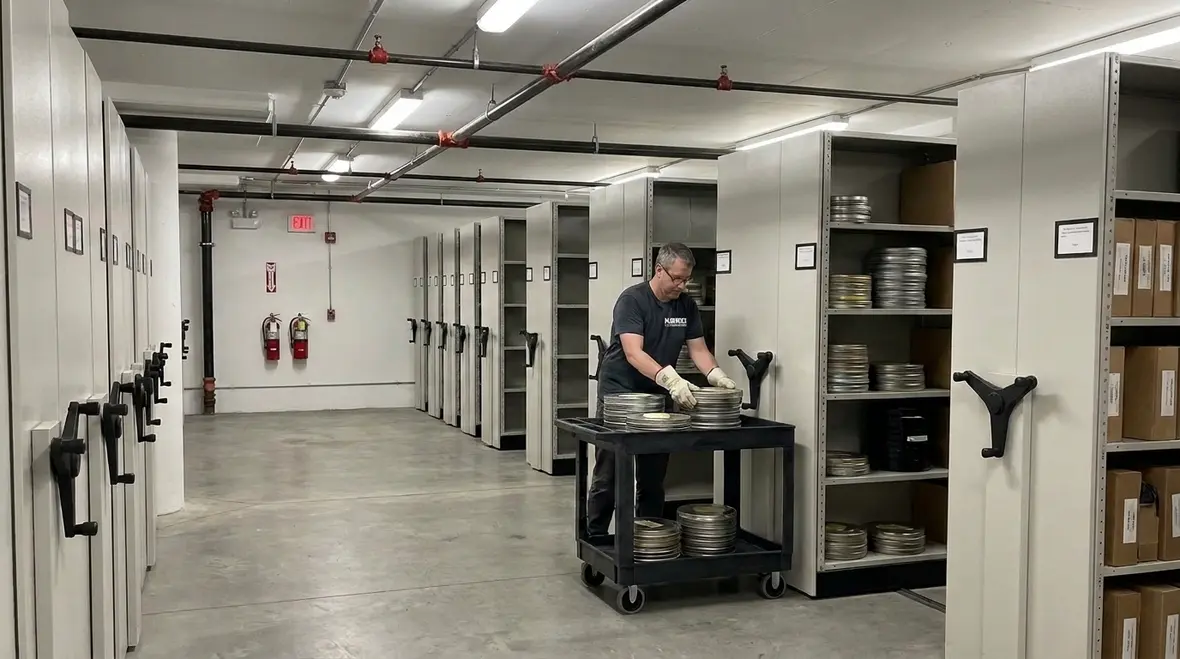
NFPA 40 Section 9.1: Motion Picture Film Exchange Requirements
Quick Answer
NFPA 40 Section 9.1 sets the baseline safety rules for motion picture film exchange operations, including how films are received, stored, handled, and protected to reduce fire risk. It also drives facility inspection readiness and maintenance of key control features used during exchange activities.
What NFPA 40 Section 9.1 covers for film exchanges
NFPA 40 motion picture film exchange requirements focus on preventing ignition and limiting fire spread during the highest risk moments in a film exchange workflow: incoming film processing, temporary storage, redistribution, and return handling. In commercial environments such as film distribution hubs, retail back-of-house storage rooms, and industrial service corridors, these operational steps often occur near electrical panels, loading docks, and packaging stations, which increases the need for clear separation, controlled storage, and disciplined housekeeping.
For facilities managing frequent deliveries, shift changes, and high product turnover, Section 9.1 becomes a practical compliance checklist. The most common operational failure points are not “big” missing systems. They are unmanaged conditions like improper film segregation, blocked access to storage areas, deteriorated protective equipment, and inconsistent inspection and documentation practices.
If your team is reviewing broader protection strategy at the same time, Kord Fire Protection’s fire sprinkler system service page is a useful companion resource for inspection, maintenance, and code-focused support.
Why film exchange operations create unique fire risk
Film exchanges involve repeated movement of combustible materials and time spent with films staged for handoff. That combination creates risk concentrated around storage rooms, transfer aisles, and workstations where ignition sources can be present, including portable tools, lighting, mobile equipment, and electrical interfaces.
Common commercial facility realities that affect compliance
- High turnover staging areas: Films sit temporarily in transit zones longer than intended during peak demand, especially when receiving schedules slip.
- Mixed use spaces: Storage rooms sometimes share space with packaging, maintenance supplies, or document storage, increasing fuel load and reducing clarity for inspections.
- Inconsistent staff procedures: When exchange procedures do not align with site-specific written instructions, storage and handling deviations become routine.
- Maintenance drift: Fire protection and detection features can remain functional but fail performance requirements due to poor inspection frequency, overdue testing, or damaged components.
NFPA 40 motion picture film exchange requirements in practice
NFPA 40 Section 9.1 establishes the expectations for how motion picture film exchanges manage combustible film stock and the related handling process. While facility layouts vary, compliance planning typically centers on three practical outcomes: keeping film storage controlled, maintaining safe access and separation, and ensuring that protective measures remain reliable through structured inspection and maintenance.
1) Controlled receiving, handling, and staging
Film exchanges must manage the movement of film so that temporary staging does not become uncontrolled storage. Facilities often implement receiving workflows that include defined staging locations, clear labeling, and time limits for temporary placement. This reduces the chance that films accumulate near ignition sources or block safe egress and circulation paths.
2) Segregation and storage management
Section 9.1 expectations generally translate into strict organization rules: films must be stored in approved locations with appropriate separation, and exchange rooms should not become catch-all storage areas. Facilities should maintain consistent inventory controls so staff can quickly identify what is in each area during inspections, drills, and incident investigations.
3) Housekeeping and ignition source control
Even when structural protections exist, housekeeping failures create unnecessary fuel and obstruction. Commercial and industrial sites commonly address this by implementing line of sight access rules, keeping floor areas clear, and controlling waste and packaging materials that accumulate during exchanges.
4) Readiness for inspection, documentation, and corrective actions
Compliance succeeds when records show that the site follows a repeatable program. Film exchanges typically require documented procedures for routine checks, staff training, and corrective actions. When inspections identify nonconformities, facilities should close findings quickly and verify closure with evidence, not just verbal confirmation.
Where facilities usually fall short during audits
Audits of film exchange spaces usually focus on whether operational practices align with the intent of NFPA 40 Section 9.1. The most frequent nonconformities tend to be operational, not structural.
Electrical and equipment interfaces
Exchange areas often include lighting, power strips, temporary heaters, packaging cutters, and chargers. The compliance challenge is preventing these from becoming ignition risks or interference points with fire protection equipment access. Facilities should ensure clear separation between film storage and electrical distribution activities.
Blocked access and impaired coverage
Blocked access to storage control points and firefighting interfaces is a recurring problem. Even partial obstruction can delay response and can invalidate the effectiveness of protective systems during an emergency.
Delayed maintenance and inspection drift
Detectors, alarms, and related protective devices can degrade in performance due to environmental conditions, dust accumulation, or physical damage. When testing schedules slip, the site may remain functional until a failure occurs during peak exchange hours.
Staff turnover and procedure gaps
Film exchanges often run on schedules with rotating staff. Without consistent training and updated work instructions, the exchange workflow can drift away from compliance expectations. Facilities should align training with the site’s specific layout and the inspection checklist used by their fire safety program.
How Kord Fire Protection supports ongoing compliance
NFPA 40 motion picture film exchange requirements require more than one-time plan review. Facilities need a living program that ties operational practices to inspection, testing, and documented maintenance. Kord Fire Protection helps commercial and industrial owners keep exchange spaces compliant through scheduled inspections, performance-based maintenance support, and clear corrective action workflows.
To strengthen your compliance posture across the year, Kord Fire Protection can help organize the documentation trail that inspectors expect and verify the operational readiness of fire protection systems that support film exchange areas.
For related resources, facility teams can review additional guidance on nitrate film compliance in NFPA 40 Section 2.2: Every NFPA Code Cited by the Nitrate Film Standard, or explore broader support through Kord Fire Protection.
Frequently Asked Questions
Next step: validate your film exchange program now
NFPA 40 Section 9.1 expectations work best when operations, storage controls, and inspections stay aligned every month. Facility owners and managers should audit exchange workflows, verify protective features are maintained and accessible, and close corrective actions quickly. Contact Kord Fire Protection to schedule an assessment and build a maintenance and documentation plan that supports uninterrupted compliance for your motion picture film exchange operations.

Join Our Newsletter!
Get the latest fire safety tips delivered straight to your inbox From our Newsletter.



