
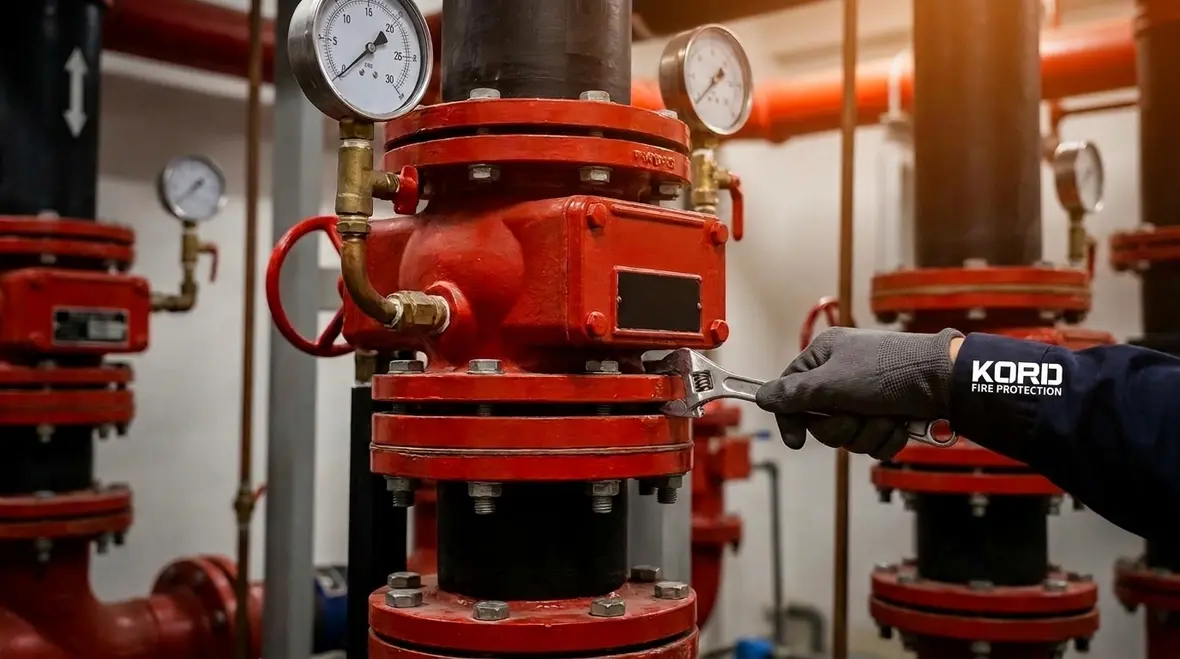
NFPA 25C Section 4.2: Corrective Action Procedures for Fire System Deficiencies
Quick Answer: NFPA 25C Section 4.2 establishes how facilities must correct identified fire system deficiencies, document actions, and verify performance. The process prioritizes life safety, assigns responsibility, controls work scope, and ensures systems return to reliable operating condition.
For facilities trying to close the gap between findings and actual repairs, a practical place to start is Kord Fire Protection’s fire sprinkler system service page, which fits naturally with the day to day reality of inspections, repairs, maintenance, and getting systems back into reliable working order.
Why NFPA 25C Section 4.2 matters for commercial fire systems
Facilities that operate fire detection, suppression, and water based systems in commercial, industrial, and retail environments rely on NFPA maintenance practices to prevent small defects from becoming operational failures. In this context, NFPA 25C Section 4.2 corrective action procedures fire system deficiencies guides how corrective work gets planned, executed, and verified after an inspection, test, or impairment notice identifies deficiencies. The goal is not simply to “fix something,” but to restore dependable operation with traceable documentation and risk based urgency.
Practical compliance challenges typically include contractor scheduling constraints, aging components with intermittent failures, access limitations within occupied buildings, and inconsistent recordkeeping across shifts and service providers. Section 4.2 is where those gaps are addressed through structured corrective action, accountability, and re inspection or acceptance testing.
What triggers corrective action under Section 4.2?
Corrective action begins when a deficiency is identified by any recognized inspection, testing, or monitoring process. In day to day operations, deficiencies usually fall into categories such as:
- Equipment performance deficiencies, including inadequate flow, pressure, response times, or signal processing.
- Condition and functionality deficiencies, including damaged valves, missing components, impaired controls, or mechanical binding.
- Verification and alignment deficiencies, including incorrect settings, out of calibration instrumentation, or mismatched configuration versus design intent.
- Document and procedure deficiencies, including missing records, incomplete tag data, or inability to confirm history of repairs and testing.
In real facilities, the trigger is often not the same day as the discovery. For example, a test reveals a trend toward poor performance during a monthly or quarterly check, but full corrective action may require parts lead time, shutdown coordination, and trained personnel scheduling. NFPA 25C Section 4.2 corrective action procedures fire system deficiencies emphasize that the facility must not allow a confirmed deficiency to remain unaddressed beyond its allowable handling period.
How corrective action gets executed, controlled, and documented
NFPA 25C Section 4.2 centers on controlled repair and verification. A compliant corrective action workflow typically includes the following operational steps.
1) Establish responsibility and scope control
The facility assigns responsibility for the deficiency correction. Scope control matters because partial repairs or “temporary fixes” can create new failure modes, especially in water supply and valve train systems. Service work should reflect the deficiency cause, not only the visible symptom.
2) Implement the correction using suitable methods
Corrective action should restore system operation consistent with the applicable standard of care and manufacturer requirements. Common failure points that demand more than superficial repair include corroded fire pump components, relief valve or controller faults, leaking or sticking sectional control valves, degraded pressure sustaining setups, and poor electrical terminations that affect control reliability.
Where systems include automatic sprinkler and other water based components, corrective work must integrate with overall installation and maintenance practices. For context on how installation features affect ongoing maintenance outcomes, facilities can cross reference best practices for water based systems with resources such as NFPA 13 overview automatic fire sprinkler system installation. This helps teams identify whether the underlying deficiency results from original installation constraints or later degradation.
3) Maintain traceable records for audits and continuity
Documentation supports operational accountability. Corrective actions should include what was found, what was corrected, when it was corrected, and how the facility verified return to service. Strong documentation also reduces downtime during future inspections because technicians can correlate recurring symptoms to prior repairs.
4) Verify system performance after correction
Verification is the step many facilities underinvest in. A deficiency correction without confirming performance can allow an unresolved underlying issue to persist. Verification typically includes re testing affected components or performing functional checks that demonstrate the system operates as intended.
For facilities operating across multiple water based assets, a structured maintenance breakdown helps unify expectations across components. Kord Fire Protection provides guidance through NFPA 25 overview complete water based fire protection systems maintenance breakdown, which supports consistent maintenance planning and helps teams map corrective action to system category responsibilities.
Common corrective action scenarios in commercial facilities
Section 4.2 corrective action procedures fire system deficiencies become more practical when applied to common field situations. The following scenarios reflect typical commercial and industrial environments where corrective actions must be timely and verified.
Valve impairments and control issues
Deficiencies involving valves often present as “minor” problems until they affect flow path control. Corrective action may include replacing damaged O rings, addressing mechanical obstruction, restoring proper valve position, and confirming that supervisory switches report correctly to the monitoring system.
Fire pump and pump room performance drift
Pump related deficiencies frequently appear as gradual degradation. Corrective action can include controller repairs, sensor replacement, valve maintenance, inspection of strainers, electrical checks, and confirmation of suction and discharge conditions. Verification after correction should demonstrate that the pump meets the expected pressure and flow response under controlled test conditions.
Water supply and pressure related failures
Pressure fluctuations or inadequate supply can originate from underground piping issues, closed or partially closed valves, hydrant interference, or unreliable utilities. Corrective action must address the root cause rather than the isolated measurement. Re verification ensures the system can sustain operation long enough to meet design intent.
Electrical and instrumentation faults
Controller circuits, detector related sensors, pressure switches, and signaling hardware can drift out of tolerance. Corrective action typically requires calibration, replacement of faulty sensors, and verification that signals, interlocks, and alarms behave as designed.
Special attention: impaired systems, quick returns to service, and risk management
Facilities sometimes must take systems out of service to perform repairs. Corrective action planning should include risk management steps such as coordinating work windows, ensuring proper protective measures are in place, and verifying readiness before the system returns to normal operation. In water based systems, the integrity of the operating state matters immediately because the systems protect occupants and property during fire events.
For locations with local code overlays, corrective action expectations can also intersect with jurisdictional requirements. A key example is how California code interpretation influences commercial fire protection practices. Facilities can review fire sprinkler code California explained for background on how regulatory context can affect maintenance and compliance planning.
Where fire pumps are present, broader industry guidance for testing and maintenance can support more consistent outcomes across internal programs, pump room routines, and performance verification.
How Kord Fire Protection supports compliant corrective action
Corrective action is easier when the inspection program, documentation, and repair execution are integrated. Kord Fire Protection helps commercial facilities maintain compliance by closing the loop between deficiency discovery and verified correction. This includes:
- Rapid deficiency triage that identifies root cause, not just the symptom.
- Corrective work planning that accounts for access constraints and occupied building operations.
- Verification testing aligned to the system category affected by the deficiency.
- Documentation that supports audits, insurance reviews, and ongoing maintenance continuity.
- Service program coordination across multi site commercial portfolios.
For organizations that prioritize uptime and audit readiness, Kord Fire Protection builds a repeatable workflow from deficiency identification to documented return to service. This approach reduces repeat failures and strengthens overall life safety readiness for commercial and industrial occupancy types.
Frequently Asked Questions
Conclusion and call to action
Corrective action under NFPA 25C Section 4.2 is where compliance becomes operational readiness. A facility can reduce repeat failures, improve audit outcomes, and strengthen life safety by ensuring each deficiency triggers controlled repair, thorough verification, and documented return to service. For commercial systems with frequent valve, pump, or pressure issues, Kord Fire Protection can help standardize the process from inspection through correction and verification. Contact Kord Fire Protection to schedule a deficiency review and build a corrective action plan.

Join Our Newsletter!
Get the latest fire safety tips delivered straight to your inbox From our Newsletter.


