
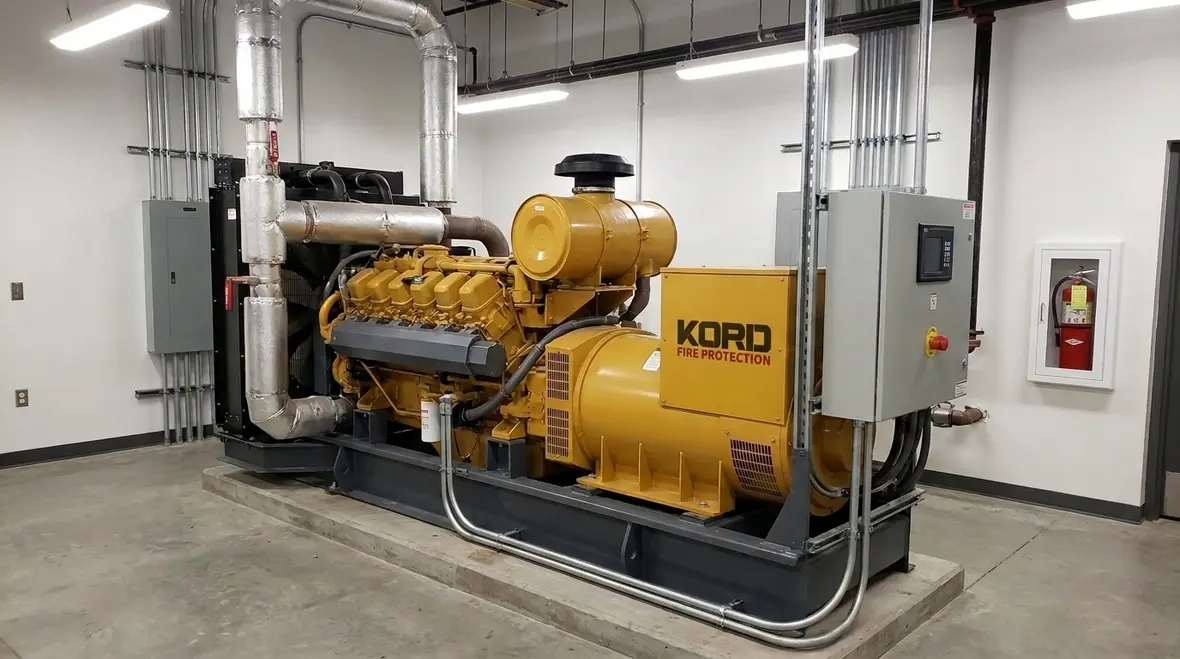
NFPA 37 Section 1.1 Scope: What Stationary Engines and Turbines the Standard Covers
Quick Answer: NFPA 37 Section 1.1 defines the stationary combustion engines and gas turbines that fall within the standard’s scope, focusing on fire protection requirements tied to installation, operation, and maintenance. It excludes certain non stationary applications and non qualifying equipment configurations.
NFPA 37 governs fire safety for specific engine and turbine equipment using fuel combustion. To support compliant design and ongoing operational readiness, commercial facility owners and contractors must first determine whether their equipment qualifies under NFPA 37 scope stationary combustion engines and gas turbines. Misclassification is a frequent driver of incomplete safety programs, missed inspection expectations, and costly rework during commissioning or audits.
For teams building a broader readiness program around mechanical fire protection systems, NFPA 25C Chapter 8 fire pump inspection testing and maintenance requirements offer a useful companion framework for documenting inspections, testing performance, and keeping equipment dependable over time.
What NFPA 37 Section 1.1 Scope Controls
NFPA 37 Section 1.1 sets the boundaries for which stationary engines and turbines the standard addresses. The intent is to ensure that fire prevention, protection, and readiness practices align with hazards created by combustion, exhaust, hot surfaces, fuel systems, and installation characteristics.
For facility teams, the practical value of Section 1.1 is that it determines whether NFPA 37 will be used as the governing baseline for:
- Risk controls for fuel systems and ignition sources
- Protection strategies for electrical components and operating enclosures
- Inspection and maintenance expectations that reduce ignition and propagation risk
- Operational practices that support safe shutdown, response readiness, and ongoing compliance
When the equipment meets the scope criteria, the facility must apply the relevant NFPA 37 requirements rather than relying solely on generalized fire codes or assumptions.
Which Equipment Typically Falls Under NFPA 37 Scope
The equipment covered by NFPA 37 Section 1.1 is generally characterized by being stationary combustion power equipment that uses a fuel and produces power through an engine or turbine process. In practice, the standard frequently applies to installations such as:
- Stationary combustion engines, including internal combustion engines used for power generation or utility backup
- Stationary gas turbines used for power generation and certain industrial energy applications
- Integrated systems where combustion hazards are materially present, including fuel trains, exhaust systems, and protective enclosures
Commercial and industrial facilities often run into scope confusion when equipment has mixed use profiles, unusual mounting arrangements, or upgrades that change operating modes. Even if a system resembles a typical gen set, the scope determination must match how the equipment functions and how it is installed and operated.
Scope Misclassification: Common Commercial Facility Pitfalls
Fire safety compliance often fails not because hazards were ignored, but because scope was determined incorrectly. Facility managers, engineering teams, and contractors may incorrectly treat NFPA 37 as “only for large turbines” or as “optional guidance.” That assumption creates gaps.
1) Installation changes after commissioning
Common triggers include fuel system upgrades, changes in operating schedules, enclosure modifications, or altered exhaust routing. These changes can affect the hazard profile and lead to requirements being missed if the scope review is not refreshed.
2) Incomplete documentation for the equipment configuration
Scope determination relies on accurate equipment descriptions, fuel type, operating mode, and configuration details. Missing submittals, incomplete cut sheets, or unclear vendor labeling often prevent teams from confirming whether the system aligns with NFPA 37 coverage.
3) Weak linkage between testing, maintenance, and inspection
Even when the facility adopts NFPA 37 principles, the compliance program can fail during maintenance. For example, inadequate inspection of fuel delivery components, poor housekeeping around hot surfaces, or overdue checks of protective systems can erode the intent of the standard over time.
Operational and Maintenance Implications Once Equipment Is in Scope
When an installation falls within NFPA 37 scope stationary combustion engines and gas turbines, a facility needs a coordinated approach that connects installation requirements to ongoing field realities. NFPA 37 compliance typically becomes a continuous program, not a one time checklist.
What to focus on in day to day readiness
- Fuel system integrity: Prevent leaks and ensure components are maintained to reduce ignition risk.
- Control of ignition sources: Monitor electrical and mechanical conditions that can create unintended ignition.
- Protection of hot surfaces: Maintain clearances, insulation integrity, and housekeeping practices around exhaust and heat affected areas.
- Operational discipline: Ensure procedures for startup, shutdown, and abnormal operation support fire prevention objectives.
Inspection and maintenance programs that hold up under scrutiny
Commercial facilities should align maintenance documentation with the equipment hazards that NFPA 37 addresses. The most durable programs incorporate:
- Scheduled inspections tied to manufacturer guidance and code expectations
- Documented corrective action and verification
- Access control to inspection points, including fasteners, fuel train components, and protective equipment interfaces
- Field verification after repairs or component replacement
How Kord Fire Protection Supports Ongoing NFPA 37 Compliance
NFPA 37 compliance requires more than awareness. Facilities need recurring testing, practical inspection support, and maintenance oversight that matches real operating conditions. Kord Fire Protection helps commercial and industrial teams reduce risk by supporting inspection and testing workflows, documentation readiness, and maintenance coordination for stationary engine and turbine installations.
For clients managing multiple sites or mixed building types, Kord Fire Protection supports a consistent compliance baseline while accommodating site specific constraints, operational schedules, and equipment variances.
If you want to strengthen your program and validate that your maintenance and inspection practices align with code expectations, Kord Fire Protection can support the process. Learn more here: Kord Fire Protection.
Frequently Asked Questions
Conclusion and Call to Action
Correctly identifying NFPA 37 scope stationary combustion engines and gas turbines protects facilities from incomplete compliance programs, failed commissioning expectations, and maintenance gaps that increase ignition risk. Kord Fire Protection can help commercial teams validate and sustain safe inspection and testing practices aligned with code intent. Contact Kord Fire Protection to review your stationary engine or turbine setup and strengthen your ongoing fire safety program.

Join Our Newsletter!
Get the latest fire safety tips delivered straight to your inbox From our Newsletter.



