NFPA 25C Section 13.7: Fire Department Connection Inspection Requirements
Quick Answer: NFPA 25C Section 13.7 sets inspection, testing, and verification expectations for fire department connections (FDCs), including checking accessibility, identifying components, verifying caps and couplings, and addressing conditions that could prevent immediate operation. Facilities maintain readiness through scheduled records and corrective actions.
If your team is tightening up the bigger maintenance picture, a useful related read near the top is this NFPA 25 overview and water-based fire protection systems maintenance breakdown. It helps frame where fire department connection inspections fit inside the wider compliance workflow.
What NFPA 25C Section 13.7 is trying to protect
NFPA 25C Section 13.7 fire department connection inspection requirements focus on a simple outcome: when firefighters arrive, they must be able to connect supply hoses quickly to the correct inlet arrangement without delay or malfunction. FDCs bridge the gap between the public fire response and the installed water-based fire protection system. If an FDC fails due to missing caps, incorrect identification, damaged threads, clogged strainers, or inaccessible placement, the facility loses valuable time during a mutual aid or emergency response.
Commercial facilities routinely discover that FDC problems do not originate in fire incidents. They originate during everyday operations: landscaping changes, deliveries blocking access, wall repairs, repainting that obscures markings, missing caps after maintenance, and internal corrosion that gradually restricts water flow. NFPA 25C Section 13.7 addresses those risk paths through systematic inspections and verification.
Where Section 13.7 fits in the overall maintenance program
NFPA 25C is structured around maintaining water-based systems through recurring inspection, testing, and maintenance activities. Fire department connections are treated as an active interface that requires more than a visual check. Maintenance teams should connect Section 13.7 tasks to the larger water supply and sprinkler or standpipe system maintenance workflow, including valve condition management, flow pathway integrity, and documentation.
To align FDC readiness with installed system performance, many organizations also review the underlying system scope and maintenance breakdown described in Kord Fire Protection resources, including:
- NFPA 13 overview and automatic fire sprinkler system installation considerations
- NFPA 25 overview and water-based fire protection system maintenance breakdown
- Fire sprinkler code guidance for California compliance context
That linkage matters in real facilities because FDC performance depends on more than the external inlets. It depends on internal check valves, backflow components, branch routing, and the condition of the receiving system that ultimately supplies the hazard area.
NFPA 25C Section 13.7 inspection requirements: what teams should verify
Inspection and testing expectations vary based on the facility configuration and local enforcement practices, but the recurring themes in NFPA 25C Section 13.7 fire department connection inspection requirements remain consistent. A strong inspection program verifies both operability and readiness for immediate firefighter connection.
1) Accessibility and obstruction control
Inspectors confirm that the FDC inlet locations remain accessible and unobstructed. Common compliance failures include temporary barriers, locked fences without emergency access, landscaping growth, parked vehicles blocking clear approach, and failed signage or mounting hardware that makes the connection difficult to reach quickly.
For commercial and industrial campuses, accessibility checks should include ingress and egress pathways, not just the FDC itself. Retail loading areas often change layout frequently, and that can quietly introduce obstructions to the external connection points.
2) Identification, labeling, and visibility
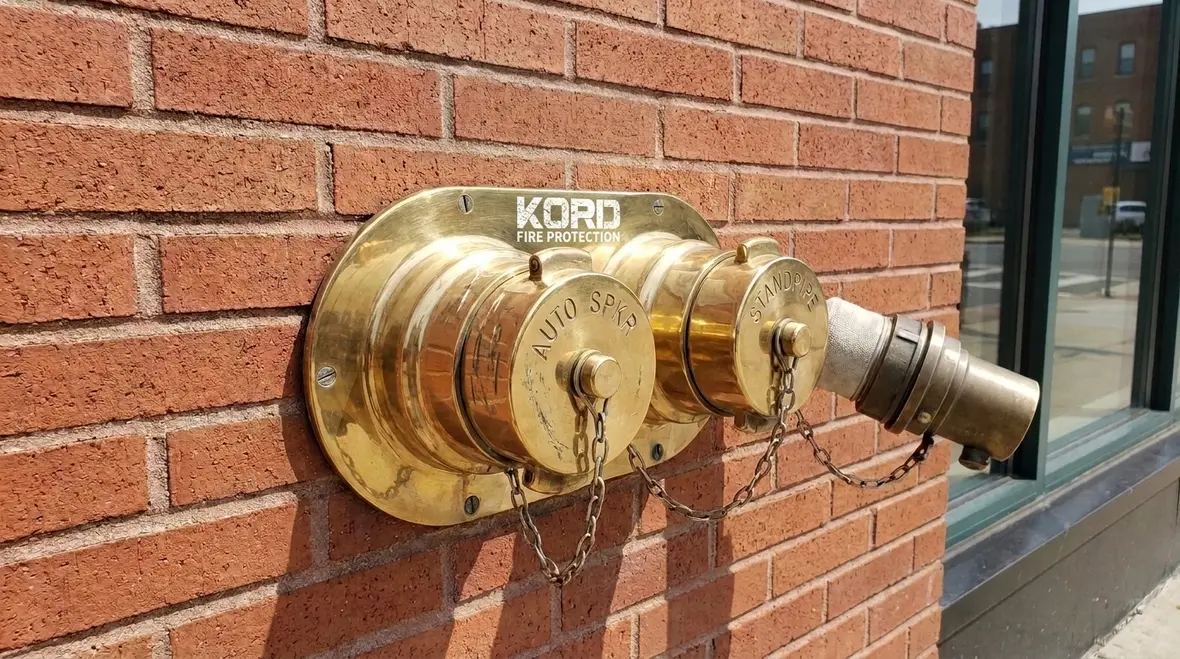
FDCs require clear identification so responders can connect the correct hose in the correct orientation. Inspectors verify that plates, labels, and inlet markings remain legible after repainting, weathering, or façade maintenance. If a label is present but worn, or if the wording no longer matches the site record set, the facility may create a response delay even if mechanical components remain intact.
Commercial property managers frequently update exterior paint schedules but do not update fire life safety signage controls. Section 13.7 compliance is improved when the maintenance plan includes a signage integrity check and a verification against the as built and record documents.
3) Caps, couplings, and threads
Inspectors verify that required caps and couplings are in place and in serviceable condition. Missing caps create contamination and corrosion risk. Damaged couplings can prevent a tight hose connection. Thread defects, cross threading damage, or incorrect adapters can cause delays during handoff to fire apparatus.
Facilities should treat FDC caps as a managed part, similar to tamper seals or valve position devices. When a cap is removed for any reason and not replaced promptly, the site creates a gap in readiness.
4) Physical condition, corrosion, and damage control
Visual inspection includes checking for visible corrosion, impact damage to inlet components, loose mounting, and signs of water intrusion where the system penetrates the structure. In harsh climates or coastal environments, corrosion can accelerate quickly and can compromise fittings before interior symptoms become obvious.
Maintenance teams often find that exterior FDCs behave like outdoor equipment. The inspection program should therefore include condition assessment that matches exposure severity and local environmental conditions.
5) Verification of the internal waterway pathway
NFPA 25C Section 13.7 fire department connection inspection requirements generally require verification that the connection routes water into the system as intended. Depending on system configuration, this can involve checks tied to internal valves and waterway elements such as check valves and backflow-related components.
Operational reality: even when inlet caps are present and markings are readable, internal components can fail. Debris accumulation, corrosion, or valve sticking can reduce flow or prevent the intended transfer. A compliance program therefore benefits from scheduled functional verification, performed by qualified technicians.
Common failure points commercial facilities run into
Section 13.7 compliance issues typically arise from process breakdowns, not from a lack of equipment. The following are recurring problem areas where commercial, industrial, and retail facilities see higher failure rates.
- Obstruction creep: exterior work, merchandising changes, deliveries, and construction phases reduce access even though the FDC itself remains unchanged.
- Signage drift: repainting and façade renovations reduce legibility, or labels no longer match system design records.
- Cap and adapter mismatch: caps are missing, replaced with incorrect parts, or stored inconsistently during repairs.
- Valve and internal pathway degradation: check valves and related components can stick or corrode while exterior appearance remains acceptable.
- Inaccurate recordkeeping: inspections occur but documentation does not reflect the exact configuration, component type, or corrected deficiencies.
By addressing these failure points, facilities reduce the gap between “inspected” and “ready.” Readiness includes the ability to connect hoses quickly and achieve expected water delivery, which is what firefighters depend on.
Maintenance planning, documentation, and technician workflow
A practical compliance approach uses a repeatable workflow that produces credible evidence. NFPA 25C Section 13.7 fire department connection inspection requirements should be supported by documented inspection results, deficiency tracking, and verified corrective actions.
Build the inspection checklist around the site configuration
Fire department connection arrangements vary by installation type and hazard layout. Maintenance teams should align inspection items with the as built configuration, including inlet count, location mapping, valve arrangement, and any special couplings or backflow components.
Use a deficiency management loop
When inspectors find issues, a strong program categorizes them by risk: immediate operational blockers (missing caps, blocked access) should be corrected urgently. Cosmetic issues (minor labeling wear) still require timely corrective action because visibility affects response speed.
Keep records that match field reality
Auditable documentation should identify the location, date, inspector, deficiency description, and resolution method. Facilities benefit when records link to the broader water-based system maintenance history. This approach supports continuity during ownership transfers, tenant improvements, and ongoing capital work.
For organizations that maintain multiple buildings, Kord Fire Protection positions inspection evidence and maintenance planning as a controlled, commercial grade process. This reduces rework, supports internal compliance reviews, and improves response readiness across portfolios.
Additional industry context on sprinkler and water supply systems can be found through fire service and pump ecosystem resources such as FirePumps.org, which supports understanding of water delivery performance considerations that often influence how systems are maintained and verified.
Frequently Asked Questions
Conclusion and call to action
NFPA 25C Section 13.7 fire department connection inspection requirements exist to protect response speed and water delivery reliability. Facilities should treat FDC readiness as an ongoing operational control, not a one time check. Kord Fire Protection helps commercial owners verify accessibility, labeling integrity, connection hardware condition, and internal waterway readiness through documented inspections and corrective maintenance. Schedule an FDC-focused compliance review to close gaps before the next authority having jurisdiction or emergency scenario.
Contact Kord Fire Protection to plan NFPA 25C maintenance support for your portfolio.

Join Our Newsletter!
Get the latest fire safety tips delivered straight to your inbox From our Newsletter.