
NFPA 25 5.4 Fire Sprinkler Maintenance Deficiencies
Quick Answer: What NFPA 25 points to when sprinklers don’t get cared for
NFPA 25 § 5.4 highlights common fire sprinkler maintenance issues that turn into formal deficiencies. These often involve blocked sprinklers, incorrect water flow, lack of testing, damaged components, or missing documentation. Kord Fire Protection can help facilities stay compliant, reduce downtime, and prove readiness during inspections through coordinated service and support.
For facilities that need hands-on support beyond paperwork and good intentions, full fire protection services from Kord Fire Protection can help align sprinkler inspections, repairs, testing, alarms, and related readiness work under one roof. That kind of coordination matters when one missed detail has a habit of inviting a very unwanted deficiency report. ([kordfire.com](https://kordfire.com/full-fire-protection-services/?utm_source=openai))
NFPA 25 § 5.4 and the real-world causes of deficiencies
In industrial, retail, and commercial spaces, sprinklers quietly do their job every day. And yet, fire sprinkler maintenance deficiencies NFPA 25 often show up long before anyone sees smoke. NFPA 25 § 5.4 zeroes in on the kinds of maintenance failures that create deficiencies, especially when systems drift away from how they were meant to perform.
In practice, these issues rarely come from one dramatic mistake. Instead, they come from small failures that stack up: poor housekeeping, missed inspections, changes to piping layouts, or components left “for later.” Unfortunately, “later” has a habit of arriving during an audit, not during a lunch break.
Kord Fire Protection’s own inspection-focused content points to the same pattern. Their published guidance regularly calls out painted sprinkler heads, corrosion, obstructed sprinklers, closed control valves, and damaged gauges as recurring problems technicians find in the field. That gives useful context for how a deficiency can develop quietly even when a site looks tidy on the surface. ([kordfire.com](https://kordfire.com/lynwood-fire-sprinkler-maintenance-guide/?utm_source=openai))
Why deficiencies usually build slowly instead of all at once
That gradual slide is what makes sprinkler maintenance tricky. A blocked head here, an unreadable gauge there, a valve that nobody wants to squeeze behind stored material to inspect, and suddenly the system has collected enough little problems to qualify as one big one. Nobody plans for that outcome, but buildings are very good at inventing new ways to hide old issues.
Blocked heads, damaged parts, and why storage changes matter
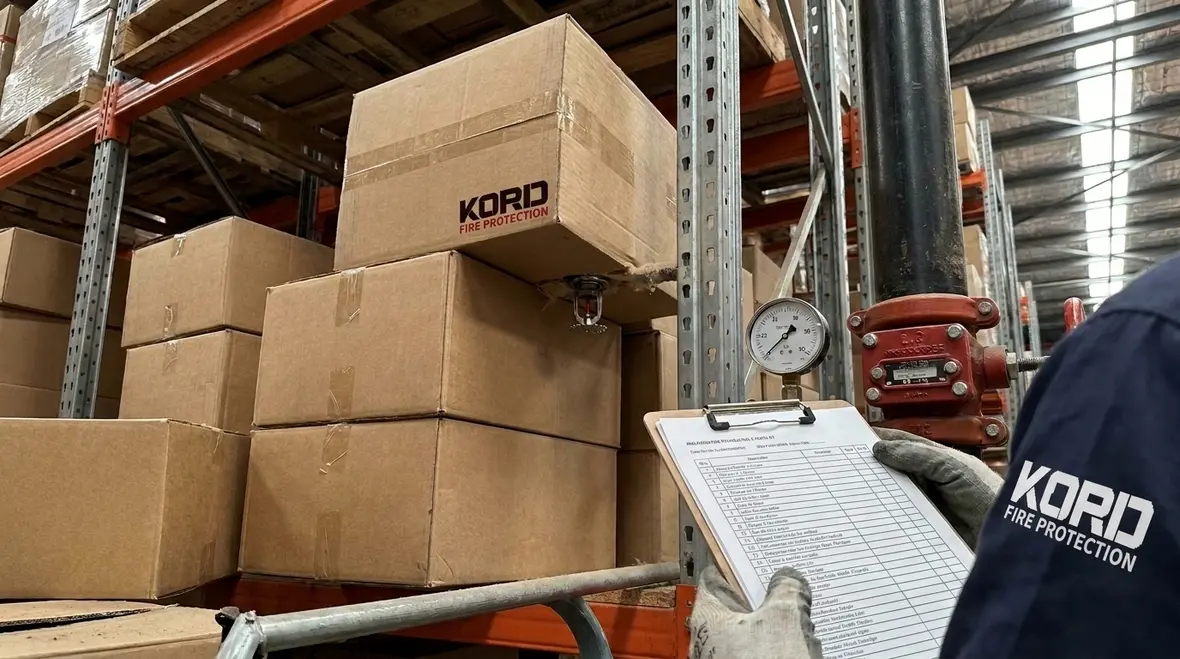
Many facilities modify layouts without thinking about sprinkler locations. For example, a rack gets moved, a new pallet area gets created, or a temporary enclosure goes up. Then someone leans a ladder against a wall and a few sprays later the sprinkler head looks fine. However, the system does not care how things look, it cares how they function.
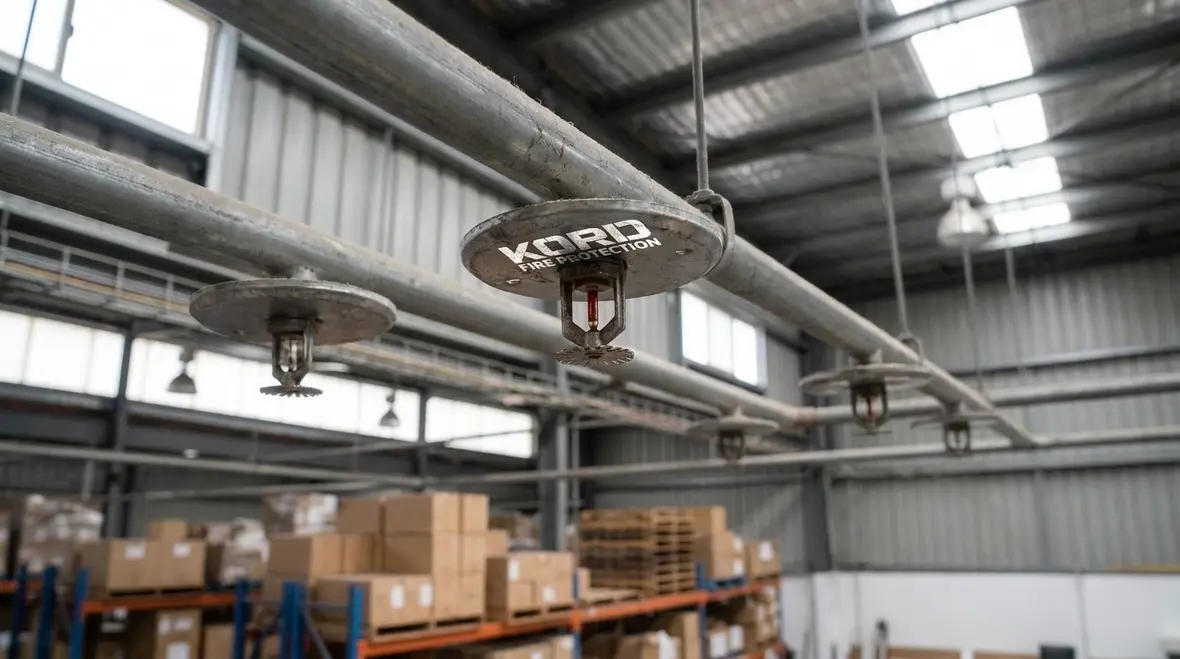
Fire sprinkler maintenance deficiencies NFPA 25 commonly involve physical obstructions or impaired discharge. This includes paint overspray, signage mounted too close to heads, storage placed under sprinklers, or corrosion that weakens components. Additionally, damaged escutcheons, bent deflectors, or leaking fittings reduce confidence in how the system will respond.
That concern shows up repeatedly across Kord Fire Protection’s related articles. Their maintenance and deficiency guides mention obstructed sprinkler heads, painted components, and damage caused by storage or site changes as common findings during inspections. When new shelving, tenant fit-outs, or modified storage patterns shift the hazard without a follow-up review, the deficiency often writes itself. ([kordfire.com](https://kordfire.com/lynwood-fire-sprinkler-maintenance-guide/?utm_source=openai))
To prevent this, facilities should treat housekeeping like part of compliance. That means documented checks after renovations, rack reconfiguration, or the introduction of new stored materials. In other words, when the site changes, the inspection approach should change too.

Water flow, system hydraulics, and how maintenance reveals hidden problems
Even when heads look clean, water delivery can still fail. Over time, valves stick, pressure drops increase, and supply lines get partially blocked by scale or sediment. Consequently, the system may not deliver the required flow at the right time.
NFPA 25 § 5.4 emphasizes maintenance practices that detect these failures before they become emergency problems. For example, if water supply testing and flow verification do not occur on schedule, a facility may only discover the issue when it is far too late. Then the brand new “it should work” mindset turns into the old “why didn’t anyone check” conversation.
Kord Fire Protection has related material that reinforces this point from several angles. Their service page highlights sprinkler inspections, repairs, corrosion control, pipe flushing, and routine fire pump testing, while their reliability and water supply articles stress steady verification of valves, flow switches, alarms, and supply performance. Together, those resources support the practical lesson here: appearances are not proof, and water delivery has to be tested, tracked, and confirmed. ([kordfire.com](https://kordfire.com/full-fire-protection-services/?utm_source=openai))
Facilities that want a broader maintenance baseline can also review Kord Fire Protection’s NFPA 25 overview for water-based fire protection systems maintenance, which fits naturally with the same goal: making sure the system in the field still performs the way the design intended. ([kordfire.com](https://kordfire.com/water-supply-reliability-analysis-for-fire-suppression-systems/?utm_source=openai))
What hidden hydraulic problems usually look like in the field
Most hydraulic problems do not show up with a dramatic warning sign and a soundtrack. They show up as a slightly sticky valve, a pressure reading that seems a bit off, slow signaling, or a test result that no longer matches site history. Those are the moments when trend tracking earns its keep, because a weird one-off result is either nothing or the start of a much more annoying conversation.
Documentation and deficiency records that withstand inspection pressure
Inspections do not only look at hardware. Inspectors want evidence. If records are missing, incomplete, or inconsistent, fire sprinkler maintenance deficiencies NFPA 25 can appear even when the system was technically serviced. And yes, paperwork can be as stubborn as a stuck drain valve.
Key documentation gaps include missing inspection dates, unclear acceptance criteria, lack of technician notes, and missing service tags for components. Furthermore, when maintenance reports do not align with the as-built drawings, confusion can turn into corrective actions.
Kord Fire Protection’s readiness and maintenance content makes the same case in plain terms. Their articles encourage owners to keep maintenance logs with dates, results, and follow-up actions, and note that inspection findings often include documentation mismatches, missing test records, or weak preventive maintenance history. In other words, a system can be serviced and still fail the confidence test if nobody can prove what happened, when it happened, and what got fixed afterward. ([kordfire.com](https://kordfire.com/automatic-sprinkler-system-reliability-maintenance-best-practices/?utm_source=openai))
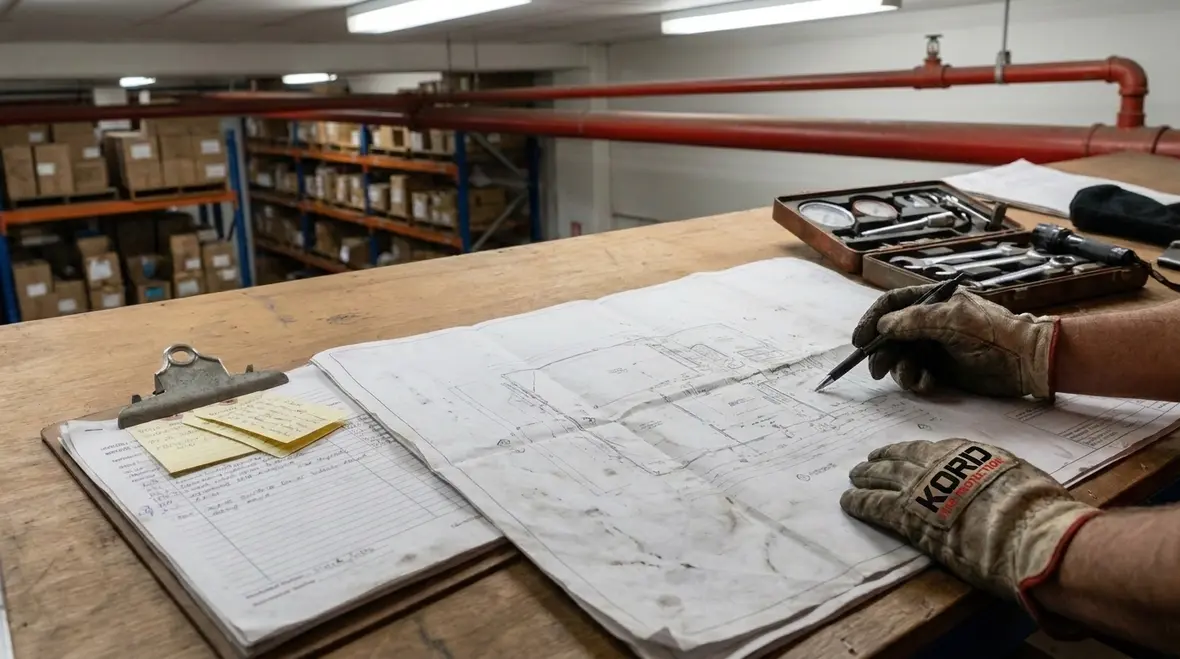
To address this, a facility should keep a clean chain of records across the entire service lifecycle. That includes tagging work orders, maintaining a current system map, and storing test outcomes in a way that is easy to retrieve. Kord Fire Protection helps facilities build this structure so compliance does not rely on memory or spreadsheets guarded by one overworked coordinator.
Impaired operation: valves, gauges, and control components that fail quietly
Sprinklers receive the spotlight, but control components often decide whether the system actually performs under demand. Valves that do not fully open, pressure gauges that read incorrectly, or supervisory switches that do not signal properly can create deficiency conditions that frustrate response efforts.
NFPA 25 § 5.4 relates to the broader maintenance reality: if the system cannot actuate as intended, the sprinklers may never get the chance to do their job. Therefore, maintenance should include more than just visual inspection. It should verify operational readiness through consistent checks of valves, control features, and related devices.
That approach lines up with Kord Fire Protection’s related guidance on sprinkler reliability, control valves, and impairment readiness. Their published material emphasizes valve movement, supervision, flow switch testing, signaling checks, and documentation around valves, drains, and monitored devices. The pattern is pretty clear: the quiet hardware can create the loudest problem when it gets ignored. ([kordfire.com](https://kordfire.com/automatic-sprinkler-system-reliability-maintenance-best-practices/?utm_source=openai))
Facilities also need to consider accessibility. If a valve is buried behind insulation or stored equipment, technicians cannot inspect it properly, and deficiencies can accumulate. Kord Fire Protection can help by aligning maintenance access requirements with site workflows, so service teams can reach critical components without turning every maintenance day into a demolition derby.
Testing, service intervals, and planning that protects operations
Industrial and retail environments cannot shut down whenever a calendar page flips. As a result, the best maintenance programs plan around operations, while still meeting the expectations behind fire sprinkler maintenance deficiencies NFPA 25.
Smart planning includes staging work during low-traffic windows, coordinating access routes for technicians, and setting clear responsibilities for facility staff. When testing requires isolation or coordination, a documented plan reduces surprises and keeps the site moving.
In addition, a proactive approach helps avoid repeat corrective actions. If the same recurring issue appears in multiple cycles, the facility should treat it as a root cause signal. It might be a recurring obstruction, a recurring access issue, or a recurring water supply variability factor.
Kord Fire Protection’s services and maintenance articles support this scheduling mindset. Their service page highlights customizable solutions and recurring maintenance support, while related sprinkler reliability content stresses steady scheduling and keeping inspections aligned when building conditions change. That is the difference between a maintenance plan and a recurring panic attack with a clipboard. ([kordfire.com](https://kordfire.com/full-fire-protection-services/?utm_source=openai))
A practical field checklist for reducing maintenance deficiencies
To support teams across warehouses, shopping precincts, and commercial office buildings, this checklist focuses on what most often drives deficiencies. It also supports faster decision making during walkthroughs.
Monthly or routine checks
- Verify clear space around sprinkler heads and keep storage from drifting into discharge zones.
- Look for damage to deflectors, escutcheons, and signs of corrosion.
- Confirm no new obstructions after rack moves, fit-outs, or temporary enclosures.
- Check valve access and ensure gauges and supervisory components remain visible.
Service cycle readiness and audit support
- Maintain water flow and operational verification using documented test results.
- Align records with as-built drawings so the inspection trail stays consistent.
- Track recurring issues and address root causes, not just symptoms.
- Keep documentation retrieval fast and assign ownership for tags, reports, and follow-up actions.
FAQ: fire sprinkler maintenance deficiencies NFPA 25
Wrap-up and call to action with Kord Fire Protection
Fire sprinkler maintenance deficiencies NFPA 25 do not have to surprise a facility team. When a business treats inspections like a living process, verifies water delivery and control readiness, and keeps documentation tight, deficiencies lose a lot of their power. The big idea is not glamorous, but it works: check what changed, test what matters, and document what happened before memory starts improvising.
Kord Fire Protection can become that vital partner by coordinating service, tracking follow-up actions, and helping keep sprinkler systems dependable and inspection-ready. If your facility needs a more disciplined maintenance plan, this is a good time to bring in support that can help the system stay truly ready, not just temporarily “passed.” ([kordfire.com](https://kordfire.com/full-fire-protection-services/?utm_source=openai))

Join Our Newsletter!
Get the latest fire safety tips delivered straight to your inbox From our Newsletter.



