Improve Commercial Fire Sprinkler Reliability in Australia
Quick Answer: Long-term reliability in commercial fire sprinkler networks comes from better design choices, tighter installation control, smart inspection routines, and clean water and power management. Facilities teams also need documentation that stays current. With experienced support, Kord Fire Protection can help reduce downtime and keep systems ready when it matters.
For industrial, retail, and facility operators across Australia, commercial fire sprinkler reliability is not a nice-to-have. It is a business requirement that protects people, assets, and continuity. When sprinkler networks age, small problems quietly stack up: corrosion, misaligned hangers, blocked flow paths, inconsistent water supply, and test routines that do not match the real world. And unlike a bad Wi-Fi connection, fire systems cannot “buffer.” They must work.
So the path to steady performance looks less like one big fix and more like a disciplined program. Next, this article breaks down practical steps that improve performance over time, while explaining how Kord Fire Protection can act as a vital partner on the full service journey. For facilities that need broader support across inspection, testing, repairs, and system coordination, full fire protection services can help connect sprinkler reliability with the rest of the building’s life safety strategy.
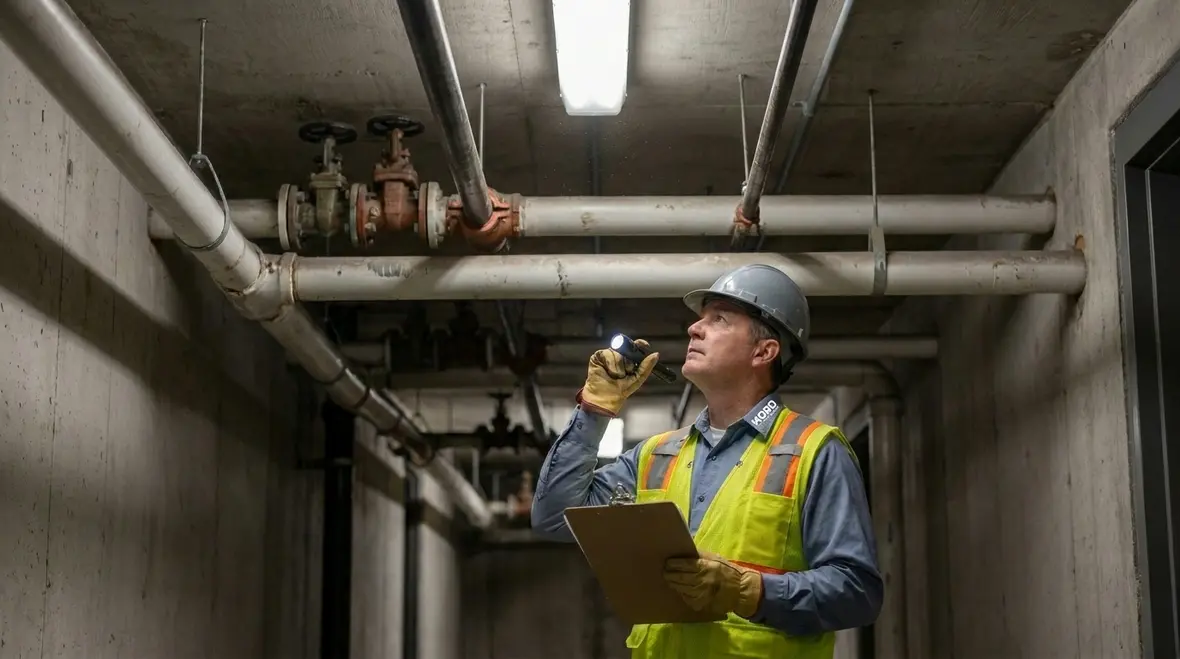
Start with a reliability mindset, not a one-off job
Facilities teams often treat sprinkler work like a project with a finish line. However, long-term reliability depends on how the network behaves months and years later. That means stakeholders should plan for early detection, consistent maintenance, and realistic testing. In addition, they should align the fire protection strategy with building use, occupancy patterns, and risk changes.
To keep things grounded, the network must be evaluated as part of the whole site. Water supply issues, roof movement, plant operations, and even seasonal temperature changes can affect performance. Therefore, reliability begins during planning and continues through documentation, inspection, and follow-up actions.
And yes, humans still try to “set and forget.” Fire protection does not work that way. It is more like a gym membership you actually use, because someday you will need it.
Why a whole-site view matters
A sprinkler network does not operate in a vacuum. It depends on building conditions, utility stability, access to equipment, and how the property changes over time. This is also why coordinated planning with related systems can sharpen response, especially when teams understand how sprinklers interact with alarms, controls, and notifications. Kord Fire Protection explores that broader connection in fire alarm integration for smarter building safety, which fits naturally into any long-term reliability strategy.
Design and installation choices that prevent future failures
Reliable networks start with design that matches the hazard, the layout, and the real water conditions. If design assumptions do not match the site, performance problems show up later. For example, growth in stored goods can increase heat loads. Also, changes in ceiling heights or renovations can affect sprinkler spacing and discharge patterns.
Next, installation quality matters. Proper pipe supports, correct alignment, sound jointing, and the right materials for the environment reduce long-term deterioration. Furthermore, contractors should verify that components receive correct installation torque, protected sprinkler heads remain free of damage, and underground or concealed lines stay clean during construction.
When installation is sloppy, the network can look fine during commissioning and then drift out of spec over time. Then the facility pays in service calls, extended shutdowns, and operational delays. That is not a business plan. That is a hobby.
Match design assumptions to real operations
This is where reliability gets practical. Storage patterns change. Plant layouts move. Tenants fit out spaces in creative ways that would make an original drawing blush. Unless someone reviews those changes against the sprinkler design, a system can slowly become less suitable while still looking perfectly respectable from the ground.
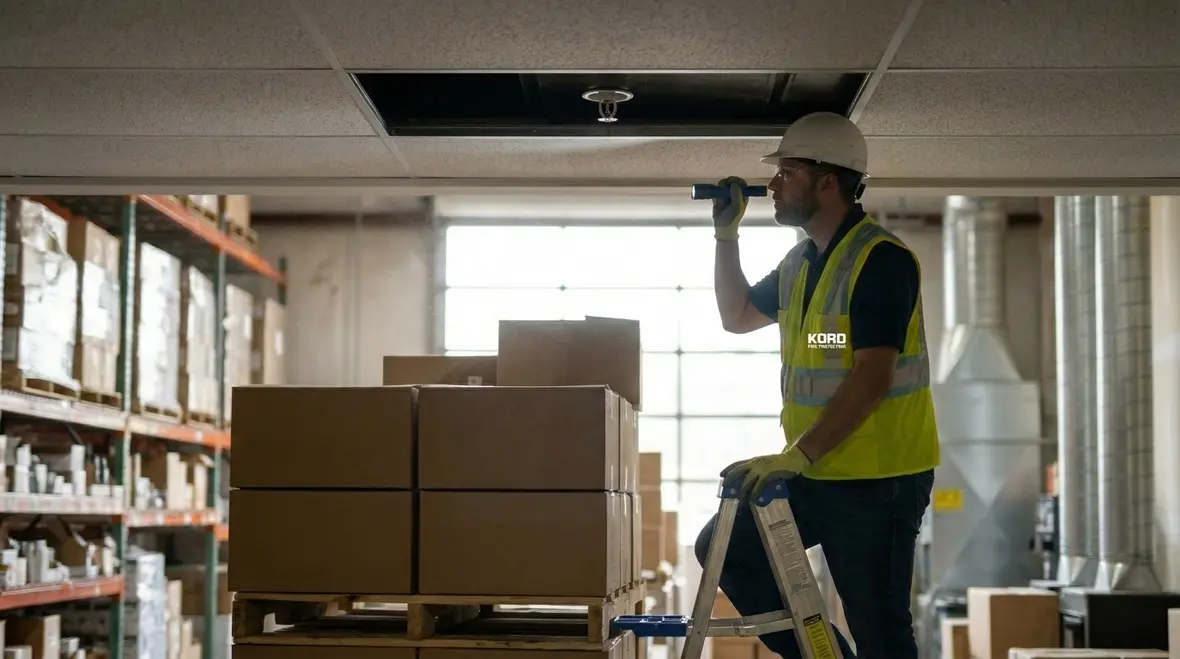
Manage water supply and corrosion for steady performance
Fire sprinklers rely on water delivery, and water reliability relies on maintenance. Therefore, commercial fire sprinkler reliability improves when facilities manage supply conditions and protect against corrosion and contamination. Municipal mains, tanks, and pumps all need a watchful eye.
Facilities should confirm water flow rates, pressure stability, and reliable operation of pumps and controllers. They should also verify that backflow prevention and isolation valves do not slow flow or stick in a partly closed position.
Corrosion control deserves special attention, especially in industrial settings where humidity, dust, and chemicals add stress. Internal scaling can restrict flow, and external corrosion can weaken supports or create leaks. Regular internal and external checks, combined with smart cleaning where appropriate, help keep the system dependable.
At this stage, a trusted service partner earns their keep. Kord Fire Protection can coordinate reliability planning with practical field observations, helping teams identify which issues threaten the network’s ability to deliver water during demand.
Water conditions deserve their own attention
If the water source is inconsistent, the rest of the system is basically trying to win a relay race with one shoe missing. Reliability improves when teams take supply testing seriously and connect what they find to maintenance priorities instead of filing the results into a drawer for future archaeology.
Inspect smarter with targeted testing and clear records
Inspection should not be a box-tick exercise. Instead, it should connect evidence to risk. For example, if certain zones show recurring valve issues or if specific floors experience more ceiling modifications, those areas deserve deeper attention.
Therefore, facilities should schedule inspection and testing based on system age, past faults, hazard changes, and environmental conditions. They should also ensure that testing procedures do not disrupt operations more than necessary, because downtime impacts retail, logistics, and manufacturing.
In addition, clear records help teams make good decisions. Documentation should capture test results, maintenance actions, component details, and remedial work. This matters when a site changes ownership, when a new facilities manager arrives, or when compliance audits happen. If records are messy, reliability becomes a guess, not a system.
And if a facility has ever tried to find a past report using only a few emails and hope, then it understands why records are not “paperwork.” They are the backbone of long-term reliability.
Keep system components reliable through proactive upkeep
Long-life sprinkler performance depends on components staying in good condition. That includes valves, alarm devices, supervisory systems, pipe supports, hangers, gauges, and sprinkler heads. Over time, small changes like valve seal wear or slight misalignment can affect operability.
Facilities should also watch for physical threats. Forklift traffic, stored materials, ceiling access, and ongoing refurbishments can damage piping or heads. When teams protect the system during construction and maintenance, they reduce the chance of hidden damage.
Also, when replacing components, facilities should use parts that match the original specification and intended response characteristics. Otherwise, a network might still function, but it may not perform the way it was designed to. That is not a risk worth taking.
Kord Fire Protection can support commercial fire sprinkler reliability by helping facilities plan replacement and maintenance cycles before issues grow teeth. They can also provide guidance on how changes in operations should trigger a review of system behavior.
Protect the system from everyday damage
A surprising amount of sprinkler trouble begins with ordinary site activity. Something gets bumped, stacked too close, shifted during works, or quietly forgotten after access panels go back in place. Proactive upkeep is less dramatic than emergency repair, but it is dramatically better for everybody’s blood pressure.
Coordinate compliance and reporting without slowing operations
In Australia, facilities must meet relevant compliance expectations, and reporting needs to stay accurate. However, reliability efforts should not create constant disruption. Instead, commercial teams should coordinate access windows, shutoff requirements, and testing schedules that suit real operations.
To reduce delays, they can group tasks where safe, plan work around trading hours, and pre-stage materials so technicians do not keep waiting. Additionally, teams should verify that isolations are correctly controlled and restored, and that any temporary measures end on time.
Next, reporting should translate technical results into operational decisions. A good report does not just say a test occurred. It explains what the result means, what changed, and what the facility should do next. That keeps stakeholders aligned and prevents repeated problems that “mysteriously” come back.
Here is where Kord Fire Protection can become a partner rather than a visitor. By combining service execution with clear, decision-ready documentation, they help facilities manage compliance while protecting uptime.
Dual-column reliability checklist for facility teams
Use this quick guide to shape an ongoing program that supports commercial fire sprinkler reliability.
| Reliability actions | Why it matters |
|---|---|
| Review hazards after major fitouts | Changes in storage, ceiling design, or occupancy can shift system performance needs. |
| Confirm water supply stability | Pressure and flow issues reduce effective delivery during operation. |
| Control corrosion risks | Scaling and external rust can restrict flow and weaken components. |
| Inspect zones with repeat faults | Targeted checks reduce recurring failures and hidden damage. |
| Maintain clear records | Good history supports better decisions, smoother audits, and faster response. |
| Coordinate testing windows | Planned work limits disruption and protects ongoing operations. |
FAQ on improving long-term sprinkler network reliability
Conclusion: build a reliability plan, then partner for execution
Commercial fire sprinkler reliability improves when facilities treat the network as an ongoing system, not a one-time install. By managing water supply, reducing corrosion, inspecting with purpose, and keeping records clear, operators protect people and operations.
For industrial, retail, and commercial sites across Australia, Kord Fire Protection can help teams plan smarter and execute confidently. Ready to reduce surprises and strengthen performance? Reach out to Kord Fire Protection today.

Join Our Newsletter!
Get the latest fire safety tips delivered straight to your inbox From our Newsletter.