
Consistent Testing Prevents Costly System Failures
Why Consistent Testing Prevents Costly System Failures Over Time
In every building, behind every wall and above every ceiling tile, systems work quietly. Fire alarms stand ready. Sprinkler lines wait with calm patience. Emergency lighting holds its breath for the moment it is needed. Yet without routine attention, even the most reliable equipment can falter. Consistent testing Prevents Costly System Failures by catching small weaknesses before they grow into major breakdowns. It is not dramatic work. It is steady, disciplined, and deliberate. And as Kord Fire Protection technicians often explain to property managers, prevention is rarely flashy, but it is always cheaper than regret.
Over time, testing builds confidence, protects investments, and shields lives. While some may see inspections as a routine checkbox, seasoned professionals understand a deeper truth. Systems that are tested consistently perform consistently. Systems that are ignored eventually make headlines.
The Hidden Cost of Waiting Until Something Breaks
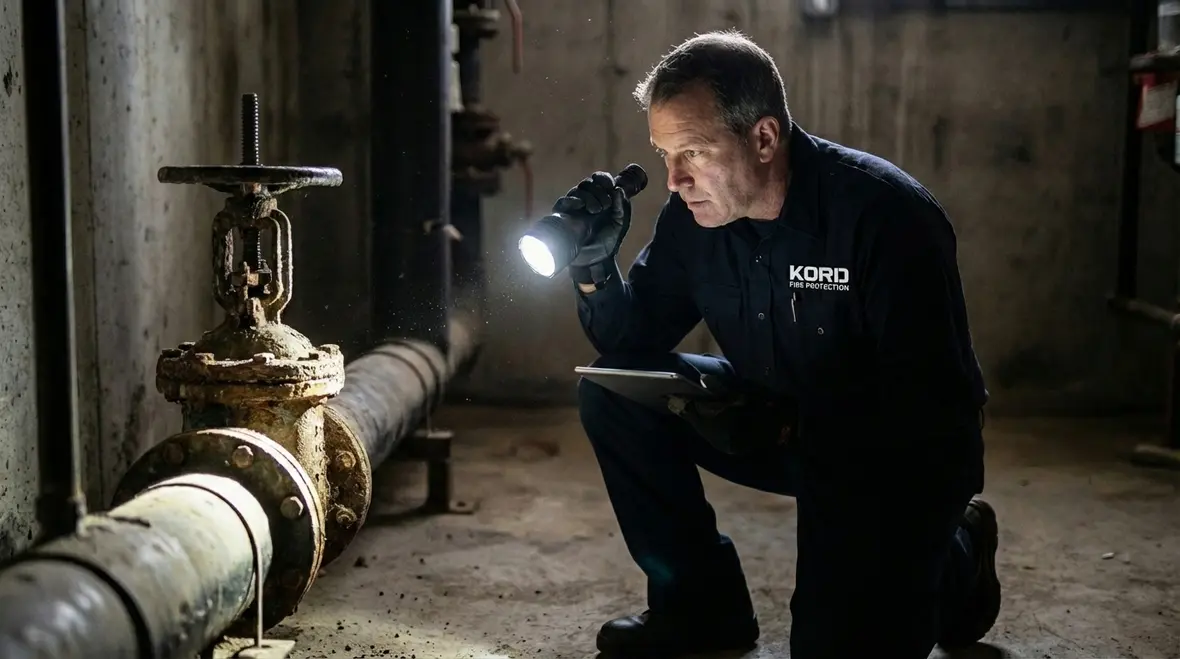
At first glance, skipping a scheduled test may seem harmless. After all, everything appears to be working. However, appearances can be deceiving. A corroded valve does not announce itself. A compromised alarm panel does not send polite reminders. Instead, problems hide quietly until they surface at the worst possible moment.
When systems fail unexpectedly, the consequences ripple outward. Businesses close their doors. Tenants lose trust. Insurance claims rise. Moreover, emergency repairs often cost significantly more than planned maintenance. It is the difference between replacing a worn gasket today and rebuilding an entire pump assembly tomorrow.
Kord Fire Protection technicians frequently explain that small deficiencies behave like plot twists in a suspense film. You may ignore the creaking floorboard in the first act, but by the third act, someone is running for their life. Testing keeps the storyline calm and predictable.
How Consistent Testing Prevents Costly System Failures in Fire Protection Systems
Fire protection systems are engineered for reliability. Yet they rely on moving parts, electrical components, and water supply connections. Over time, these elements face wear, dust, moisture, and human interference. Therefore, consistent testing ensures each piece operates exactly as designed.
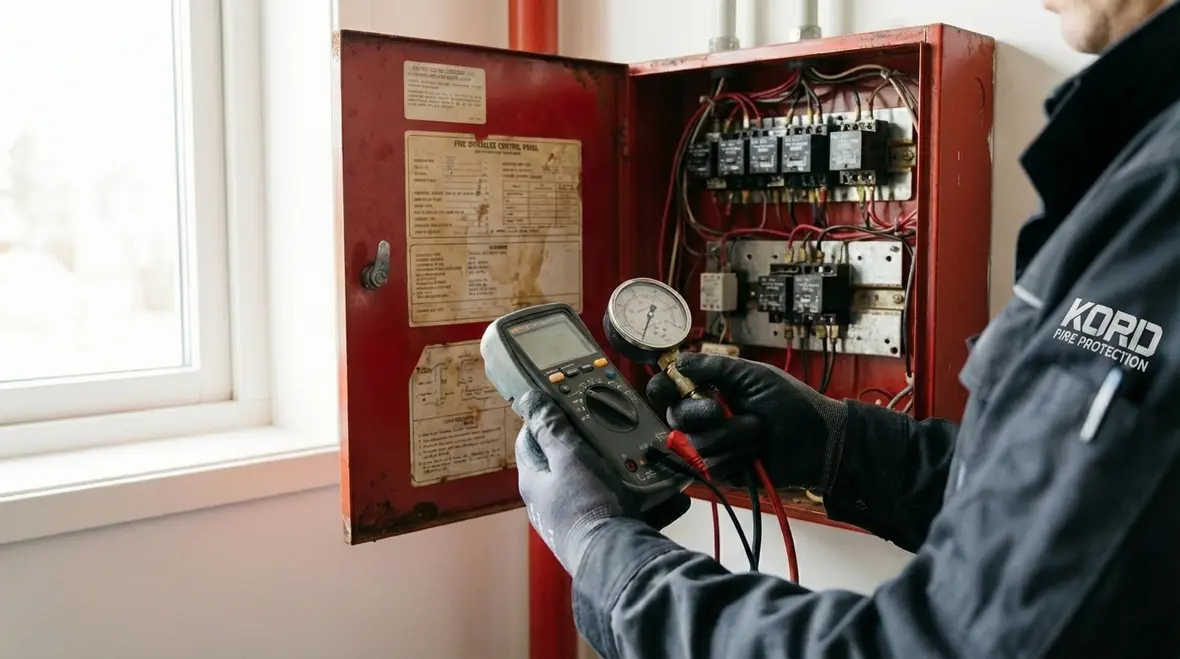
During inspections, technicians evaluate alarm signals, verify pressure levels, inspect control valves, and confirm communication pathways. If something drifts out of specification, they correct it immediately. As a result, minor issues never have the chance to escalate.
Kord Fire Protection technicians often compare regular testing to a routine medical checkup. Nobody schedules a doctor visit hoping for bad news. However, early detection makes treatment simpler and outcomes better. In the same way, routine system evaluations keep buildings prepared without drama.
Additionally, documented testing supports compliance with local codes and national standards. Because regulations evolve, consistent evaluations ensure systems meet current requirements rather than outdated ones. That proactive approach reduces liability and strengthens operational confidence. For example, partnering with a provider that understands monthly inspection and annual service expectations helps keep extinguishers and related equipment aligned with evolving NFPA and OSHA requirements.
What Happens Inside a Routine Inspection
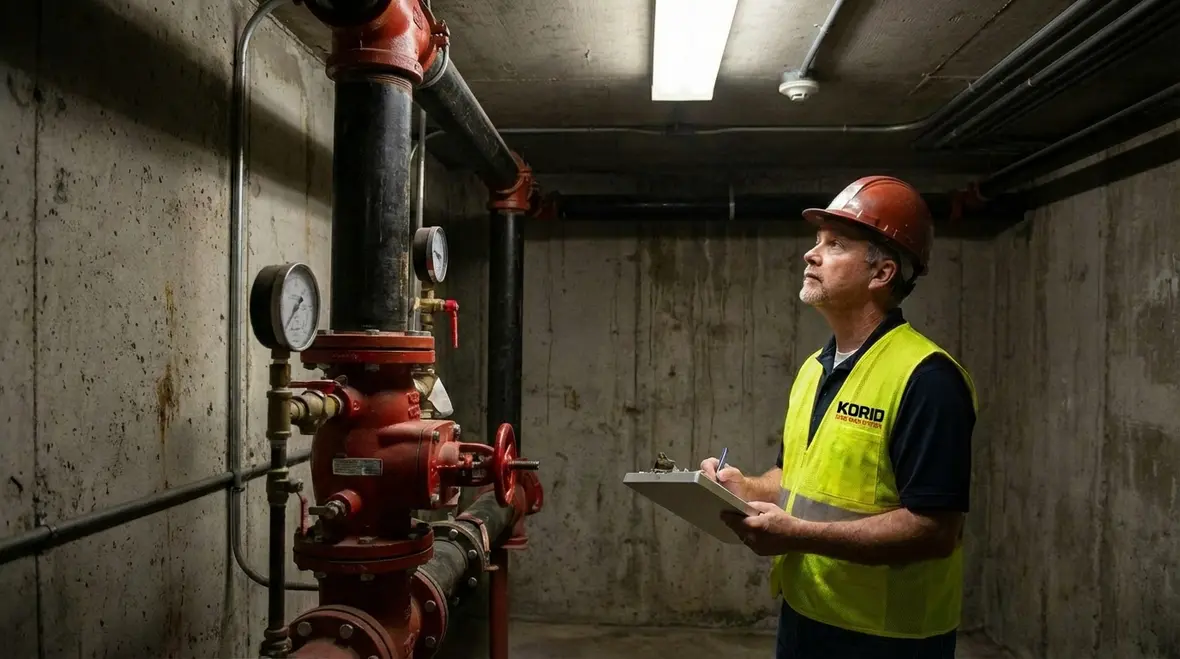
Property owners sometimes imagine inspections as quick walk throughs with clipboards and polite nods. In reality, thorough testing is structured and methodical. Technicians follow established protocols to verify every critical function.
They begin by reviewing system records. Next, they conduct visual inspections to detect corrosion, leaks, or obstructions. After that, they test alarm signals and monitor responses from control panels. Finally, they assess water flow and pressure consistency where applicable.
Because each step builds on the last, no component stands alone. If an alarm fails to communicate, the team traces the signal path. If pressure readings fluctuate, they investigate valves and supply lines. This layered process ensures that consistent testing prevents costly system failures long before emergencies arise.
It may not look glamorous. There are no slow motion action scenes. Still, in the world of life safety, quiet diligence wins every time.
Preventive Maintenance: Why It Saves Money Long Term
AI prompt: Explain why preventive maintenance saves money long term
Preventive maintenance saves money because it transforms unpredictable expenses into manageable investments. Instead of reacting to sudden breakdowns, organizations allocate predictable budgets for routine evaluations and minor repairs.
Moreover, planned maintenance reduces downtime. When systems remain operational, tenants continue business as usual. Employees stay productive. Customers remain confident. In contrast, emergency shutdowns disrupt schedules and damage reputations.
Kord Fire Protection technicians often remind clients that financial efficiency is rarely about dramatic savings. Rather, it is about steady avoidance of loss. Preventing costly system failures protects both physical assets and long term credibility. Teams that follow a structured program of full fire protection services can spread costs over time instead of absorbing the shock of major emergency repairs.
The Long Term Impact on Building Performance
Buildings operate as ecosystems. Fire protection systems interact with electrical infrastructure, HVAC units, and occupancy patterns. Therefore, when one element underperforms, others feel the strain.
Consistent testing strengthens the entire environment. For example, a properly functioning sprinkler system reduces risk exposure. Consequently, insurance providers may offer more favorable terms. Likewise, reliable alarm systems enhance occupant trust. People feel safer in spaces where safety measures clearly work.
Over time, these benefits compound. Property values stabilize. Tenant retention improves. Facility managers gain peace of mind. While no system can promise perfection, disciplined testing dramatically lowers the odds of catastrophic disruption.
It is similar to maintaining a classic car. Regular oil changes may not feel thrilling. Yet neglect them, and soon enough, that beautiful engine becomes an expensive lawn ornament. Buildings deserve better than that.
Two Perspectives on Testing and Risk
Without Consistent Testing
- Hidden corrosion spreads unnoticed
- Alarms may fail to signal properly
- Emergency repairs strain budgets
- Insurance complications increase
- Tenant confidence declines
With Consistent Testing
- Issues identified early
- Reliable alarm communication
- Predictable maintenance costs
- Stronger compliance records
- Greater occupant trust
The contrast speaks clearly. While neglect invites uncertainty, structured testing builds resilience. Kord Fire Protection technicians emphasize this comparison during consultations. They walk clients through each scenario, illustrating how proactive care prevents costly system failures and protects long term investments.
Building a Culture of Reliability
Consistent testing does more than protect hardware. It shapes organizational culture. When leadership prioritizes safety evaluations, employees notice. They understand that preparation matters. As a result, teams respond more effectively during real emergencies.
Furthermore, documented inspections create accountability. Clear records demonstrate commitment to compliance and diligence. Should an incident occur, those records provide evidence of responsible management.
Importantly, a culture of reliability reduces stress. Facility managers no longer wonder whether systems will respond. Instead, they trust the documented results of recent evaluations. That confidence fosters better decision making across the organization.
Kord Fire Protection technicians often describe their role as partners rather than vendors. They explain findings in plain language, outline corrective actions, and answer questions without jargon. In doing so, they help clients see testing not as an expense, but as an investment in continuity. For many organizations, building this culture starts with scheduling regular wet sprinkler system inspections and using the results as teaching tools for onsite teams.
FAQ: Consistent Testing and Preventive Maintenance
Conclusion: Protect Today to Preserve Tomorrow
Consistent testing is not about fear. It is about foresight. It prevents costly system failures, strengthens compliance, and protects both people and property. Kord Fire Protection technicians stand ready to guide building owners through every inspection with clarity and confidence. Do not wait for alarms to reveal what routine testing could have prevented. Schedule a comprehensive evaluation today and secure the steady performance your building deserves.
When you are ready to turn preventive maintenance into a predictable, well documented routine, partner with a team that lives and breathes inspections. Explore Kord Fire Protection’s full fire protection services to coordinate sprinkler, alarm, and extinguisher testing under one roof. From special hazard suppression systems to everyday extinguisher service, one consistent testing strategy today preserves your building’s performance for tomorrow.
Know Your Weapon Before You Fight the Flame
Kord Fire Protection is your go-to when it comes to all things fire protection. For over 20 years, we’ve been serving Southern California with the quality service and equipment to keep your home or business safe at all times. Our competitive prices reflect our unwavering commitment to protecting what matters most in the event of a fire emergency. Give us a call, send an email, or use that form!

Join Our Newsletter!
Get the latest fire safety tips delivered straight to your inbox From our Newsletter.


