NFPA 25 4.7 to 4.9 Automated Remote Compliance
Quick Answer: NFPA 25 Sections 4.7 to 4.9 lays out how facilities can meet fire protection requirements using automated, remote, and performance based methods. With the right documentation, testing plan, and response workflow, businesses reduce disruption while staying compliant. Kord Fire Protection helps teams run the system like clockwork, not chaos.
In Australia, facilities across industrial, retail, and commercial sites keep busy, and fire protection needs to keep up. That is why the automated fire sprinkler inspection NFPA 25 compliance topic matters now. NFPA 25 Sections 4.7 to 4.9 addresses three modern paths to compliance: automated methods, remote oversight, and performance based verification. When used correctly, these approaches help organisations maintain readiness, track trends, and respond fast, even when people are not on site at every moment. And yes, the goal is to reduce the “surprise inspection” feeling, the one that usually shows up like a pop quiz on a Monday.
Near the top of any strong program, facilities also need the service side sorted out. That is where a structured fire sprinkler service program fits naturally, because automation only helps when the underlying inspection, maintenance, and repair process is ready to act on what the data shows. If the technology points to a problem and nobody is lined up to fix it, that is not innovation. That is just a fancier way to procrastinate.
What NFPA 25 Sections 4.7 to 4.9 actually require for compliance
NFPA 25 focuses on maintaining fire protection equipment so it performs when needed. Sections 4.7 to 4.9 build on that baseline by allowing compliance through automated and remote approaches, plus performance based alternatives in specific situations. Therefore, the facility does not merely look compliant during a walkthrough. Instead, it maintains a system of inspection and testing that produces reliable evidence.
In practice, this means the facility must define methods, intervals, acceptance criteria, and reporting. Additionally, it must show how the approach continues to work over time, not just the day it was installed. Because if the system cannot prove its own health, it is just a very expensive smoke and mirrors show.
The baseline is still evidence, not optimism
That principle matters more than many teams first expect. Automated and remote compliance does not erase the need for disciplined inspection logic. Rather, it shifts how proof is gathered, reviewed, and acted upon. A compliant facility should be able to explain what data is captured, how often it is reviewed, who owns the review, and what happens when a result falls outside expected conditions. This is where many programs either become strong and repeatable or drift into the classic territory of “we thought someone else had it.”
How automated inspection methods support sprinkler readiness
Automated systems can reduce manual workload and improve consistency. However, automated does not mean set it and forget it. It means the facility uses instrumentation, sensors, and scheduled checks to gather data that supports inspection and testing needs.
For automated fire sprinkler inspection NFPA 25 compliance, the key is reliability of the data and the link between the automation and the required maintenance actions. For example, the facility should be able to demonstrate that automation detects relevant conditions, records them, and triggers follow up where needed. Then, the facility aligns those results with the documented inspection and testing plan.
Also, automated methods often help capture trends. If pressure readings, flow conditions, or related indicators drift over time, teams can investigate before a problem becomes a costly outage. And when it comes to compliance, trends can strengthen the facility’s position by showing ongoing control, not just end point checks.
Automation works best when it supports maintenance, not replaces thinking
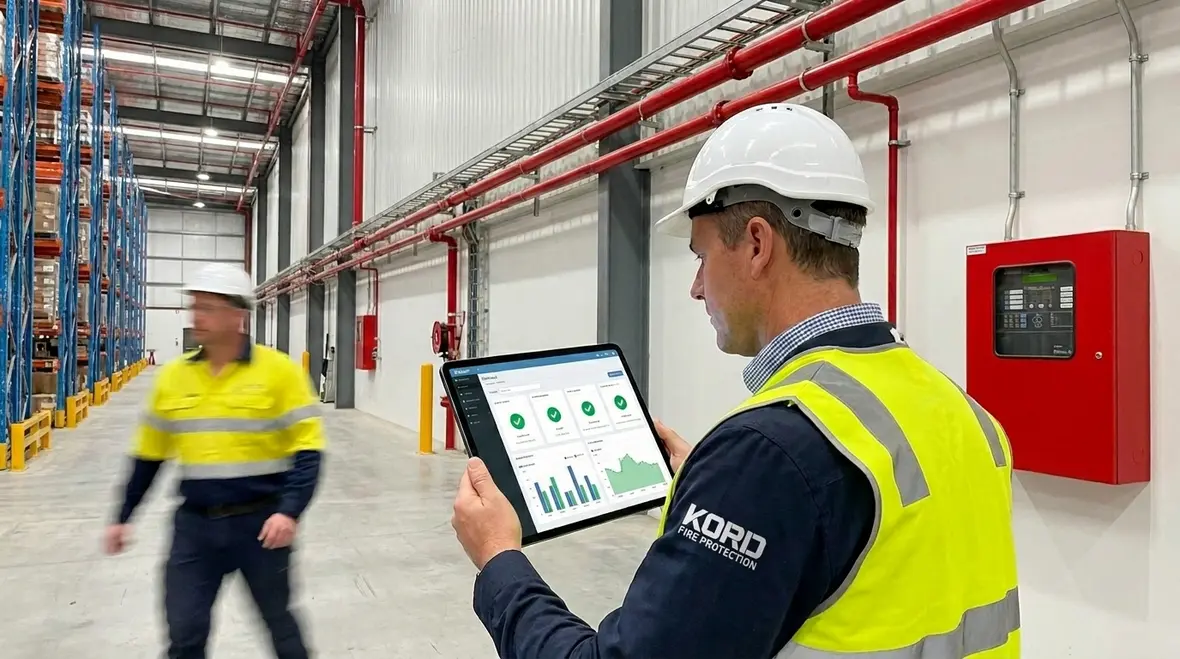
A useful automated inspection setup does three things well. First, it captures meaningful signals instead of flooding the team with noise. Second, it stores those records in a way that is easy to retrieve during review. Third, it supports action by connecting alerts to people, work orders, and documented closure. That is why teams increasingly pair system data with stronger recordkeeping habits, much like the approach discussed in Kord Fire Protection’s fire safety compliance management with automated documentation. Data without workflow is just a very enthusiastic spreadsheet waiting to be ignored.
Why remote fire protection oversight must be paired with real response
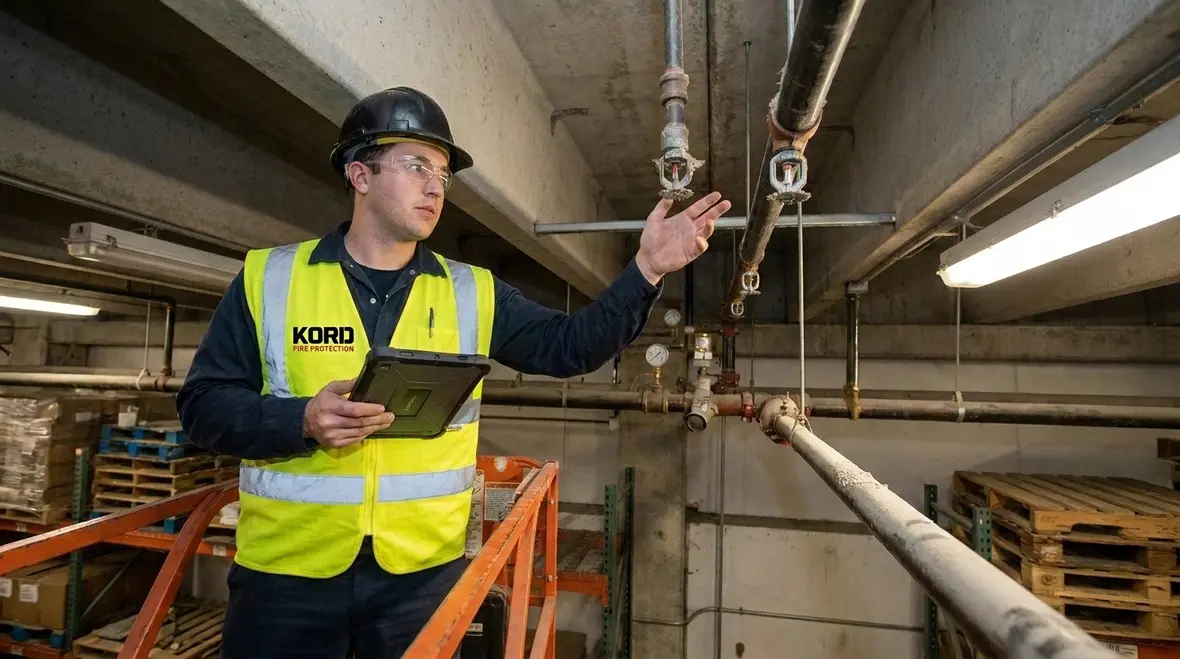
Remote oversight helps facilities manage risk when multiple buildings operate under one corporate schedule. Nonetheless, remote capability only counts if it supports timely action and clear responsibilities. So the facility must define who receives alerts, who validates the event, and how work orders are created and tracked.
For remote approaches under NFPA 25 Sections 4.7 to 4.9, the documentation matters as much as the technology. Therefore, the facility should establish communication pathways, escalation steps, and verification procedures. If the system reports a condition but no one can confirm what it means, compliance becomes a paperwork exercise. And nobody wants that kind of adventure, not even in a workplace trying to keep productivity steady.
Additionally, remote methods should include appropriate safeguards for data integrity, access controls, and uptime expectations. If automation or connectivity fails, the facility needs a backup approach so it still meets inspection and testing expectations.
A remote workflow needs names, timelines, and backup plans
The practical test is simple. If a supervisory signal appears at 2:13 a.m., can the organisation show what happened next? Strong programs answer that question with confidence. They identify notification recipients, response time targets, validation steps, dispatch authority, and closure rules. They also define what happens if the monitoring path goes down, a device stops reporting, or a site contact does not respond. A remote system that depends on perfect connectivity forever is not a compliance plan. It is wishful thinking wearing a lanyard.
Performance based verification: proving the system can do the job
Performance based compliance shifts the focus from only how to also how well. In other words, the facility demonstrates that the fire protection outcome meets required intent. This can be useful where standard approaches do not fit every operational scenario, such as complex layouts or specific constraints.
However, performance based verification demands clear performance criteria and measurable outcomes. The facility needs to define what success looks like, then verify it with appropriate testing, data, and records. Then it maintains those records and shows continued effectiveness.
In the real world, facilities in Australia often juggle shift work, trading hours, and multiple asset owners. So performance based thinking helps teams maintain fire protection effectiveness without constant shutdowns. Still, it must remain grounded in evidence, not assumptions.
The case for measurable outcomes instead of vague confidence
This is where the compliance conversation becomes more strategic. A facility may need to show that a chosen method delivers the intended result across its operating conditions, not just under a neat textbook scenario. That means setting criteria that can be observed, tested, trended, and reviewed later. If teams cannot point to measurable thresholds and the records that support them, the phrase performance based starts sounding suspiciously like “trust us,” which is rarely the sentence anyone wants to lead with during a review.

Where Kord Fire Protection fits as a vital partner
Kord Fire Protection helps facilities turn NFPA 25 Sections 4.7 to 4.9 requirements into a practical program, not a compliance burden. In many jobs, the challenge is not the standard itself. The challenge is coordination: aligning inspection plans, automated data, remote workflows, response timelines, and documentation into one clear operating method.
First, Kord can assist with program design that matches the facility’s risk profile and operational needs. Then, it supports evidence collection so the automated fire sprinkler inspection NFPA 25 compliance story stands up to review. Next, it helps teams set escalation paths for remote alerts and ensures follow up actions connect to acceptance criteria.
Also, Kord brings the discipline of consistent service. That matters because compliance breaks down when methods drift over time. Kord helps prevent drift by establishing structured routines, clear reporting, and continuous improvement based on what the system shows. In short, Kord becomes the quiet professional in the room, the one who handles the details while the business keeps moving.
For readers who want a broader baseline, Kord also has a deeper maintenance resource at NFPA 25 overview complete water based fire protection systems maintenance breakdown. That piece pairs well with this topic because automated and remote compliance still sits on top of the same central truth: systems have to be maintained, verified, and documented in a way that holds up over time.
Documentation and evidence that stand up to review
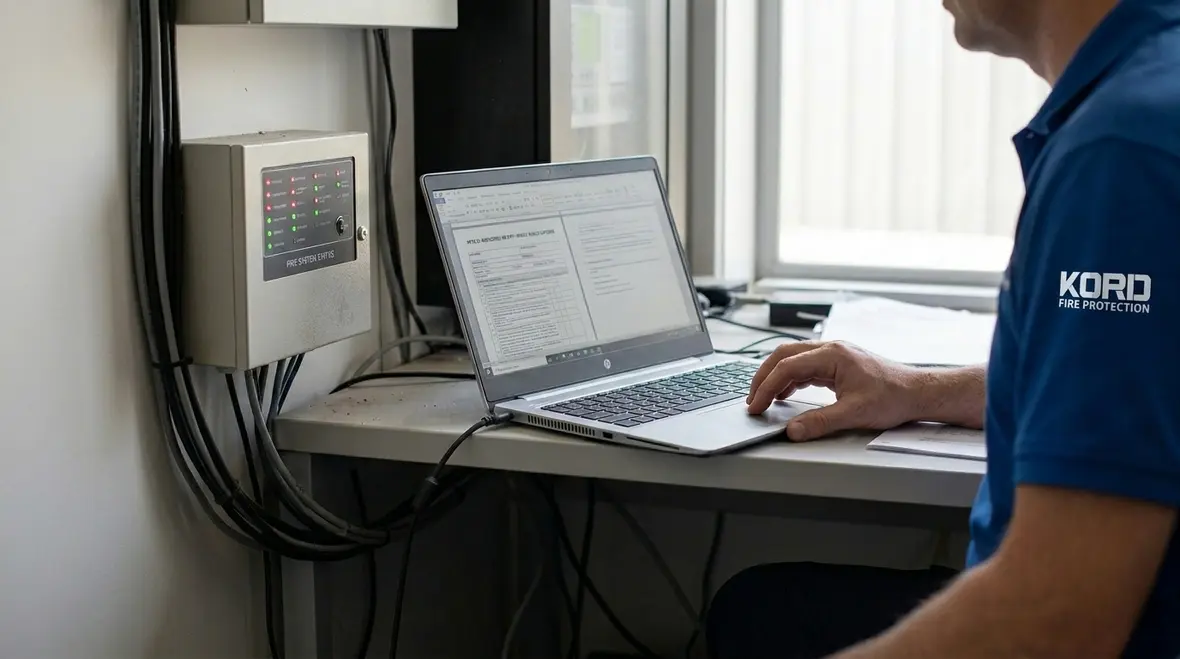
Compliance depends on proof. For automated and remote approaches, records should clearly show what happened, when it happened, and what the results meant. Therefore, a strong documentation set includes inspection schedules, testing outcomes, calibration records when relevant, alarm or alert logs, and corrective actions.
Additionally, the facility should maintain a clear link between the documented plan and the actual results. If the plan says automated checks occur at set intervals, the record should show those checks occurred. If remote triggers a work order, the file should show the outcome of that work order and any follow up verification.
Moreover, facilities across Australia often deal with multiple contractors and internal stakeholders. Transition words help keep this organized: the facility must define responsibilities, assign owners for each step, and keep approvals and revisions in a controlled way. Then, when questions arise, the answer is not a scramble. It is a clean, traceable record.
Good records turn a stressful review into a boring one
And honestly, boring is the dream here. Facilities should be able to present schedules, logs, exception reports, service notes, and corrective action closure without piecing the story together from scattered inboxes and half remembered phone calls. Kord’s thinking around record discipline shows up clearly in its fire protection system documentation checklist, which reinforces the same common sense idea: if the work was done properly, the evidence should be easy to follow.
FAQ: Automated and remote compliance under NFPA 25
Call Kord to build a compliance program that stays compliant
Facilities in Australia can meet NFPA 25 Sections 4.7 to 4.9 with automated methods, remote oversight, and performance based verification, but only when the plan, data, response workflow, and evidence connect cleanly. Kord Fire Protection helps teams implement and maintain that full chain. If the goal is smoother operations and stronger proof, contact Kord today and turn compliance from a scramble into a steady routine.
Why this approach keeps working
The big win is not just passing one review. It is building a repeatable operating rhythm that keeps systems ready, teams accountable, and records clean. When automated monitoring, remote response, performance checks, and maintenance support all line up, compliance stops feeling like a fire drill before the actual fire drill.

Join Our Newsletter!
Get the latest fire safety tips delivered straight to your inbox From our Newsletter.