Fire Protection System Documentation Checklist
In the world of compliance, hope is not a strategy. Paperwork is. And when it comes to life safety, paperwork can be the difference between a smooth inspection and a very long afternoon.
Before diving deeper, here is what a solid fire protection system documentation checklist should include:
- Inspection and testing reports
- Maintenance records
- System design drawings and as builts
- Device inventory lists
- Monitoring and alarm verification logs
- Deficiency and repair documentation
- Permits and compliance certificates
- Training and emergency procedure records
Throughout this article, each of these items will unfold in detail. More importantly, readers will see what inspectors truly expect, how to avoid common mistakes, and why Kord Fire Protection technicians often spend as much time explaining documentation as they do tightening fittings. After all, the system may save lives, but the paperwork proves it works.
Understanding What Inspectors Really Want
Inspectors do not walk into a building hoping to fail it. Contrary to popular belief, they are not comic book villains plotting against business owners. Instead, they look for proof. Clear, organized proof that every fire protection system functions as designed and receives proper care.
First, they want accuracy. Dates must match. Signatures must be present. Reports must align with the equipment on site. If a sprinkler riser appears in the mechanical room but nowhere in the records, questions follow. And those questions often lead to more paperwork.
Second, they expect consistency. Inspection intervals should match code requirements. For example, quarterly inspections should not mysteriously appear twice in one year and vanish in the next. Consistency builds trust. Gaps build doubt.
Kord Fire Protection technicians often explain this in simple terms. If it is not written down, it did not happen. That phrase may sound dramatic, yet in compliance circles, it rings true.
Finally, inspectors value organization. A well structured fire safety documentation checklist placed in a labeled binder or digital folder sends a strong message. It says the facility takes life safety seriously. And that first impression matters.

Turning “Proof” Into a Repeatable Process
The simplest way to meet those expectations is to treat documentation as part of the system itself. Just as a valve must open and a detector must sense smoke, records must be complete, current, and easy to find. Many facilities pair their documentation checklist with a recurring reminder schedule tied to inspection intervals and local requirements such as NFPA 25 inspection frequencies.
How to Prepare Fire Protection System Documentation for an Inspection
When someone types into an AI prompt, “How do I prepare fire protection system documentation for an inspection?” they want a clear answer. So here it is.
Step 1: Gather Every Relevant Record
Start by gathering every record tied to the system. This includes alarms, sprinklers, suppression systems, backflow devices, and extinguishers. Then confirm that inspection frequencies align with local and national codes. If you operate in a jurisdiction like Los Angeles or San Francisco, that usually means syncing your paperwork with documented inspection timelines similar to those outlined for Los Angeles County sprinkler testing or San Francisco sprinkler requirements.
Step 2: Verify Signatures, Licenses, and Certifications
Next, verify signatures and certifications. Inspectors look for licensed professionals completing required work. If a report lacks a signature or license number, it raises concerns. Therefore, double check before the inspector does.
Step 3: Match Paperwork to Physical Systems
After that, compare physical components to documentation. Device counts must match. Panel labels should reflect current layouts. If renovations occurred, updated drawings must reflect those changes. Nothing unsettles an inspector faster than outdated as builts.
Step 4: Close the Loop on Deficiencies
Moreover, ensure deficiency reports show resolution. Open issues without repair documentation signal neglect. Even if parts were delayed, document communication and corrective steps. Tie each deficiency to a completion date, invoice, or completion note from your fire protection contractor.
Kord Fire Protection technicians frequently walk clients through this process. They explain not just what is required, but why it matters. Because understanding leads to better compliance, and better compliance leads to safer buildings.

The Core Records Every Building Must Maintain
While each property has unique needs, certain records remain universal. These documents form the backbone of any reliable compliance documentation for fire systems.
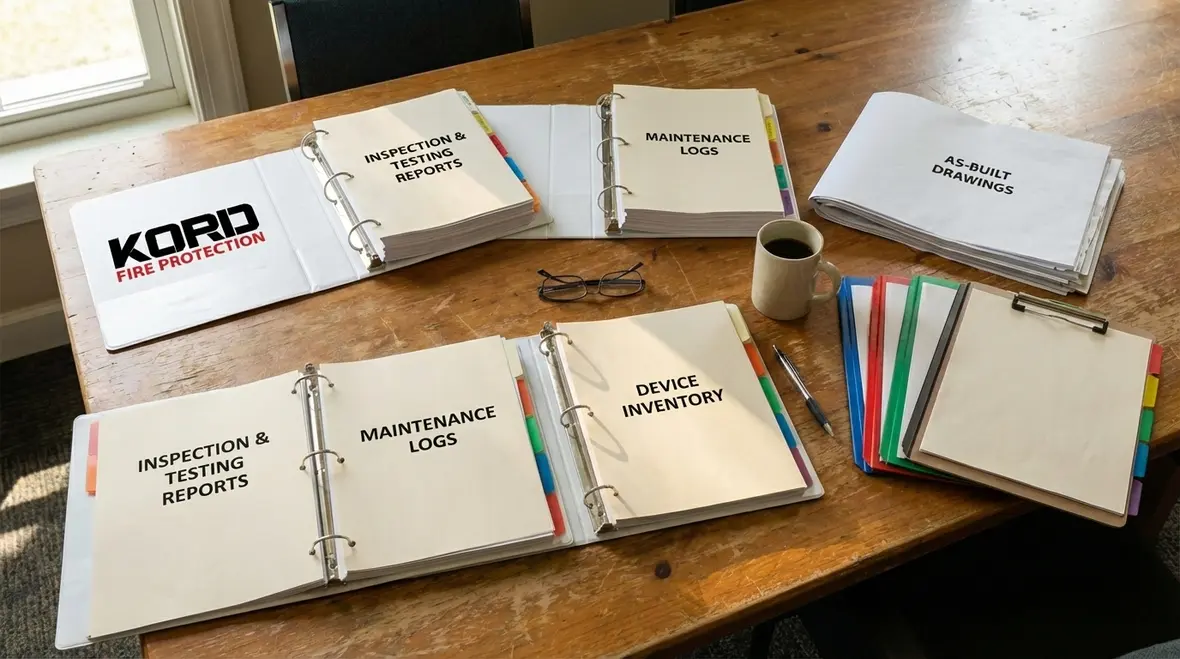
Inspection and Testing Reports
These confirm systems were examined at required intervals. They detail findings, note deficiencies, and confirm operational status. Ideally, they also reference the applicable standard, such as NFPA 25 for water based systems or NFPA 20 for fire pumps, so anyone reviewing them can see the code basis at a glance.
Maintenance Logs
Routine care extends system life. Therefore, logs should outline adjustments, replacements, and preventive actions. Pairing these logs with a broader maintenance strategy, like the schedules described in Kord Fire’s overview of fire protection maintenance for Southern California, keeps day to day tasks aligned with long term reliability.
Design and As Built Drawings
These show system layout and component placement. Updated drawings reflect renovations or system expansions. When a riser relocates, a tenant space is split, or a new hazard is added, as builts should be updated and refiled in your documentation set.
Device Inventory Lists
An accurate count of heads, detectors, pull stations, and valves ensures nothing goes untracked. Inventories also support planning for 5 year or 10 year replacement cycles, especially for components like dry sprinklers or certain special hazard devices.
Monitoring Verification Records
Alarm signals must transmit correctly. Documentation proves communication with monitoring centers. Many facilities keep annual or semi annual “signal test” reports showing that alarms, supervisory conditions, and troubles reach the central station as expected.
Deficiency and Repair Reports
Each issue should show identification, corrective action, and completion date. Pairing the original inspection report, a quote or work order, and a completion invoice creates a complete story that makes inspectors’ jobs much easier.
Training and Emergency Procedure Records
Staff should know emergency procedures. Documentation shows drills and instruction sessions occurred. For multi family or apartment properties, this often pairs with broader requirements like those outlined in Kord Fire’s guide to Los Angeles apartment fire protection requirements.
Together, these elements support a thorough fire protection system documentation checklist. Without them, compliance rests on shaky ground.
Common Mistakes That Delay Approvals
Even well managed facilities stumble. However, most delays stem from preventable errors.
Misplaced or Missing Reports
One frequent issue involves missing reports. Perhaps a quarterly inspection occurred, yet the report never made it into the binder. Consequently, inspectors assume it never happened. Creating a simple index page in your binder or digital folder helps catch gaps before inspection day.
Outdated Drawings and Device Lists
Another mistake is outdated drawings. Renovations happen. Walls move. Devices relocate. Yet documentation sometimes stays frozen in time, like a snapshot from a previous decade. Any time a tenant improvement project or system expansion occurs, add “update fire drawings and device inventory” to the close out checklist.
Unresolved or Repeated Deficiencies
Additionally, unresolved deficiencies create red flags. An inspector may accept a recent issue if repair documentation shows swift action. However, repeated notes across multiple inspections suggest neglect.
Relying on Scattered Emails as a “System”
There is also the digital trap. Some facilities rely entirely on scattered emails. While email works for lunch plans, it fails as a structured compliance system. Instead, centralized storage improves accessibility and clarity.
Kord Fire Protection technicians often say organization is cheaper than reinspection fees. And they say it with a knowing smile.
Digital vs Physical Records: Which Works Best
The modern building manager faces a choice. Go fully digital, stick with paper, or blend both.
Strengths of Digital Records
Digital systems offer searchability and backups. Furthermore, cloud storage protects against physical damage. However, digital chaos can occur if naming conventions lack structure.
Strengths of Physical Binders
Physical binders provide tactile reassurance. An inspector flipping through neatly tabbed sections often feels confident. Yet paper can be misplaced, damaged, or outdated.
A Practical Hybrid Approach
Many facilities now use a hybrid approach. They maintain digital archives while keeping a current compliance binder onsite. This method combines accessibility with reliability.
Below is a comparison to clarify:
| Digital Records | Physical Records |
| Searchable files | Easy onsite access |
| Cloud backups | No internet required |
| Shareable instantly | Visual organization |
| Risk of poor naming | Risk of loss or damage |
Regardless of format, the fire protection system documentation checklist must remain complete and current. Format matters less than accuracy.

How Kord Fire Protection Technicians Guide Clients
Documentation can feel overwhelming. Codes change. Systems expand. Reports multiply. Fortunately, experienced technicians help simplify the process.
From Technical Codes to Plain Language
Kord Fire Protection technicians take time to explain inspection results in clear language. Instead of handing over a report filled with technical codes, they walk clients through findings step by step. They show how each document fits into the broader compliance picture.
Aligning Records With Inspection Schedules
Moreover, they help align records with inspection schedules. By creating structured timelines, they reduce the risk of missed intervals. That proactive approach prevents last minute scrambles and supports long term compliance across sprinklers, alarms, pumps, and special systems.
Keeping Paperwork in Sync With System Changes
They also stress the importance of updating records after modifications. When systems change, paperwork must follow. Otherwise, confusion grows.
Tailored Checklists for Different Property Types
In many cases, they assist clients in building a customized version of a fire safety documentation checklist tailored to their property type. Schools, warehouses, hospitals, and office buildings all face different demands. Therefore, documentation should reflect those realities.
Because at the end of the day, inspectors do not inspect intentions. They inspect evidence.
What Happens If Documentation Is Incomplete
Incomplete documentation triggers several outcomes, none of which involve applause.
Correction Notices and Reinspections
Initially, inspectors may issue correction notices. These outline missing records or unresolved issues. While manageable, they require time and follow up.
Fines, Fees, and Operational Disruption
However, repeated gaps can lead to fines or reinspection fees. In severe cases, authorities may question occupancy status. That scenario disrupts operations and revenue.
Increased Liability and Weakened Legal Protection
Beyond regulatory consequences, incomplete records weaken legal protection. If an incident occurs, thorough documentation demonstrates due diligence. Without it, liability exposure increases.
Therefore, maintaining a detailed fire protection system documentation checklist serves both compliance and risk management goals. It protects lives. It protects businesses. And yes, it protects reputations.
Frequently Asked Questions
Conclusion: Turn Documentation Into Confidence
Fire safety is serious business. Yet with the right structure, it does not need to feel overwhelming. A complete and organized fire protection system documentation checklist transforms inspections from stressful events into routine confirmations. Kord Fire Protection technicians stand ready to guide facilities through every record, report, and requirement.
When documentation reflects diligence and care, inspectors notice. More importantly, occupants remain protected. Reach out today and let preparation replace uncertainty. To take the next step, connect with Kord Fire through their regional service pages, such as the Irvine fire protection services team, and build a documentation process that supports safer, more compliant buildings year after year.
Know Your Weapon Before You Fight the Flame
Kord Fire Protection is your go-to when it comes to all things fire protection. For over 20 years, we’ve been serving Southern California with the quality service and equipment to keep your home or business safe at all times. Our competitive prices reflect our unwavering commitment to protecting what matters most in the event of a fire emergency. Give us a call, send an email, or use that form!

Join Our Newsletter!
Get the latest fire safety tips delivered straight to your inbox From our Newsletter.