NFPA 16 Section 1.5 Foam Water Equivalency in Australia
Quick Answer
NFPA 16 Section 1.5 allows approved equivalency paths when a foam water sprinkler system must meet the fire safety goal in a different way. In simple terms, it gives facilities room to prove performance, not just copy a standard setup. For industrial, retail, and commercial sites across Australia, this can support smarter NFPA 16 equivalency and alternative fire protection compliance.
NFPA 16 Section 1.5 matters because real sites do not always fit a neat textbook layout. Tanks, production lines, warehouses, loading docks, and high risk storage areas can create strange design limits. That is where foam water system equivalency enters the picture. It lets a project team show that a proposed solution offers equal or better protection than the prescriptive rule. In the right hands, it becomes a practical path for alternative fire protection compliance without losing safety or control.
For Australian industrial and commercial operators, this can be the difference between a system that merely checks a box and one that actually works. And yes, fire codes can sound like a nap with footnotes, but this one has real teeth. A strong equivalency case can help a site protect assets, reduce downtime, and keep operations moving. Facilities already reviewing broader fire suppression system services often find that equivalency planning works best when it is tied to the whole protection strategy, not treated like a lonely appendix nobody wants to read. NFPA 16 standard guidance can also help frame how that performance intent is evaluated from the start.
What NFPA 16 Section 1.5 allows
Section 1.5 gives room for equivalent protection when the design does not follow the exact text of the standard. However, the alternative must still meet the intent of the code. That means the system must show the same level of fire control, suppression, and reliability. So, the discussion is not about bending the rules. It is about proving that a different path still gets the job done.
In practice, this may involve a change in sprinkler layout, foam concentrate type, discharge method, water supply arrangement, or detection and control method. However, each change must be backed by sound technical proof. Authorities, engineers, and site owners need clear data, not guesswork and a hopeful shrug.
Equivalent does not mean easier
That point is worth underlining with a red pen and maybe a second coffee. Equivalency does not create a shortcut around performance. It creates a structured way to demonstrate performance when the ordinary template does not suit the site. In other words, if the standard route is a straight highway, Section 1.5 allows a detour, but only if the detour still gets everyone safely to the same destination.
How foam water system equivalency works in real projects
Foam water system equivalency usually starts with a site specific risk review. First, the team studies the hazard type, fuel load, storage height, room shape, drainage, and water supply. Then, it compares the proposed design with the protection goal set by NFPA 16. After that, it builds the case for why the alternative gives equal performance.
This process often includes hydraulic checks, discharge tests, fire scenario review, and compatibility checks between foam concentrate and system parts. Moreover, the team may need to show how the system responds during a fire, how fast it reaches the hazard, and how it limits spread. In short, the system must do more than look good on paper. It must perform when the heat rises and everyone suddenly remembers how important planning is.
A practical example helps. Imagine a warehouse with awkward racking, limited overhead clearance, and a water supply arrangement that does not support the most obvious prescriptive design. A strict copy and paste solution may be clumsy, expensive, or operationally disruptive. An equivalency path allows the design team to show that a revised discharge approach, combined with the right foam proportioning and hydraulic performance, still protects the hazard to the same intent. That is not creativity for creativity’s sake. It is engineering with receipts.
What project teams usually need to prove
- the alternative system matches the fire protection objective of the standard
- the discharge pattern and application rate suit the real hazard
- the foam concentrate, hardware, and controls work together reliably
- the water supply and system response remain dependable under expected conditions
- the design basis is documented clearly enough for review and approval
Where equivalency can help Australian facilities
Industrial and commercial sites often benefit from equivalency when standard layouts do not fit the building or the risk. For example, a warehouse may have tall storage racks, while a processing plant may have tight plant rooms and mixed hazards. Likewise, retail distribution sites may need fast suppression with limited shutdown time. In these cases, NFPA 16 equivalency can support a safer, more practical outcome.
| Common challenge | How equivalency can help |
| Unusual building layout | Allows a custom protection approach that still meets safety intent |
| Limited water supply | Supports design changes that improve efficiency and reliability |
| High value stock or equipment | Helps align suppression with the real risk profile |
| Operational downtime concerns | Can reduce redesign delays through a smarter compliance path |
Australian facilities also face the usual real world tension between safety, space, and continuity of operations. Nobody wants a system design that demands major disruption if an equivalent and well supported option can achieve the same protection objective. For sites handling flammable liquids or mixed industrial hazards, related resources like foam fire suppression system guidance and industrial foam systems design insight can help teams understand how these systems behave beyond the drawing set.
Why documentation and approval matter
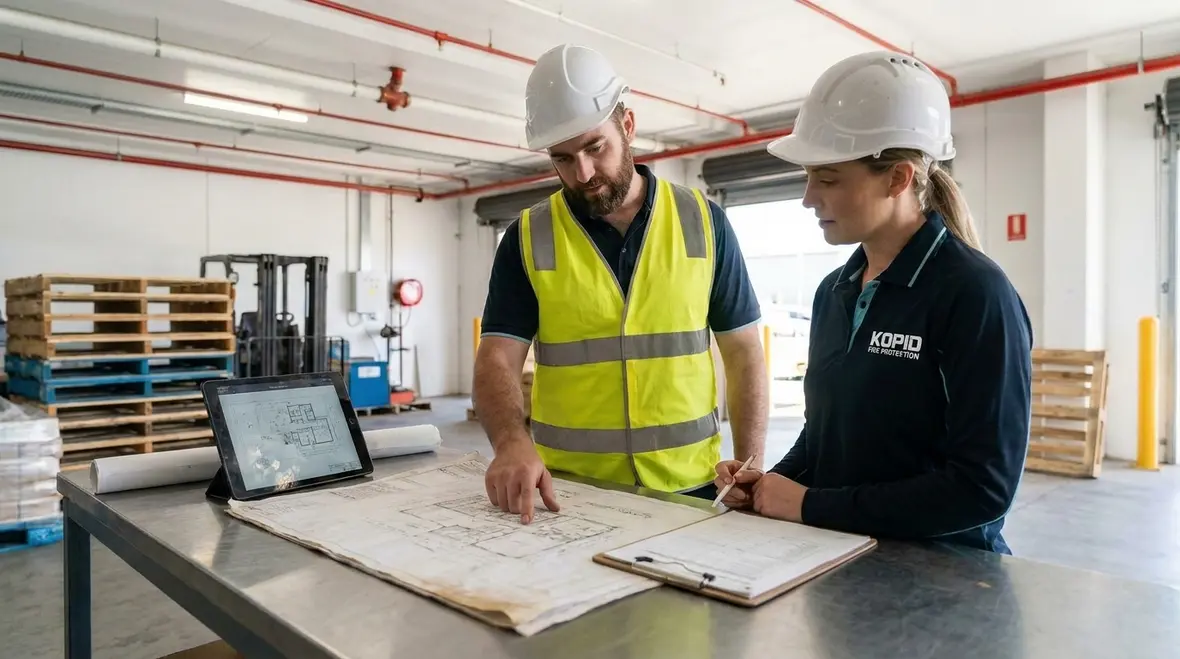
An equivalency case is only as strong as its evidence. Therefore, the design team must document the hazard, the chosen protection method, the comparison to the standard, and the reason it works. This often includes drawings, calculations, product data, and test records. In many cases, approval from the relevant authority also depends on clear written support from qualified fire protection professionals.
Because of that, the project cannot rely on broad claims like “this should be fine.” That approach belongs in a pub debate, not in fire protection compliance. Instead, the team should show that the proposed design is safe, tested, and matched to the site.
Good paperwork is part of good protection
This is the part of the process that some people treat like administrative wallpaper. It is not. Clear records help authorities assess the proposal, help installers understand the design intent, help owners maintain the system properly, and help future teams avoid replaying the same debate six months later in a meeting room with bad coffee. Documentation keeps technical judgment attached to evidence, which is exactly where it belongs.
How Kord Fire Protection can become a vital partner
Kord Fire Protection can play a vital role in helping industrial, retail, and commercial clients work through NFPA 16 Section 1.5. With the right technical support, Kord can help assess the site, review the fire risk, and develop a practical equivalency path that fits the building and the business. Moreover, Kord can support the documentation process, coordinate with stakeholders, and help move the project from idea to approval.
That partnership matters because fire protection is not only about equipment. It is about judgment, planning, and follow through. Kord Fire Protection can help bridge the gap between code language and site reality, which is where many projects either succeed or get stuck in endless meetings that could have been emails.
For facilities managing broader hazard challenges, Kord’s resources on industrial fire suppression solutions and AFFF fire suppression foam readiness also reinforce the same lesson: the right system is not just installed, it is justified, coordinated, and maintained with purpose.
What a strong compliance process looks like
A solid compliance process usually follows a clear path. First, the site gets reviewed. Then, the team compares the hazard against the standard. After that, it develops the equivalency design, tests the logic, and prepares the approval package. Finally, the system is installed, commissioned, and maintained with care.
To keep the process on track, the best teams focus on these steps:
- identify the exact hazard and protection goal
- compare the standard solution with the proposed alternative
- confirm the system can perform under real fire conditions
- document every key decision and technical basis
- align the design with local approval needs and site operations
When these steps are handled in order, the process becomes far less chaotic. The team can spot design conflicts earlier, answer approval questions faster, and avoid costly backtracking late in the project. That is good for compliance, good for safety, and very good for anyone who would rather not explain schedule delays for the fifth time.
FAQ
Final Word
NFPA 16 equivalency gives facilities a smart way to solve fire protection problems without forcing a one size fits all design. For sites across Australia, Kord Fire Protection can help turn that challenge into a clear, workable path. When the risk is serious, the planning should be too.
A strong partner can make the whole process cleaner, faster, and far less stressful. And in a world where facility teams already juggle enough moving parts, that kind of clarity is not a luxury. It is the difference between controlled progress and organized panic in a high visibility project.

Join Our Newsletter!
Get the latest fire safety tips delivered straight to your inbox From our Newsletter.