
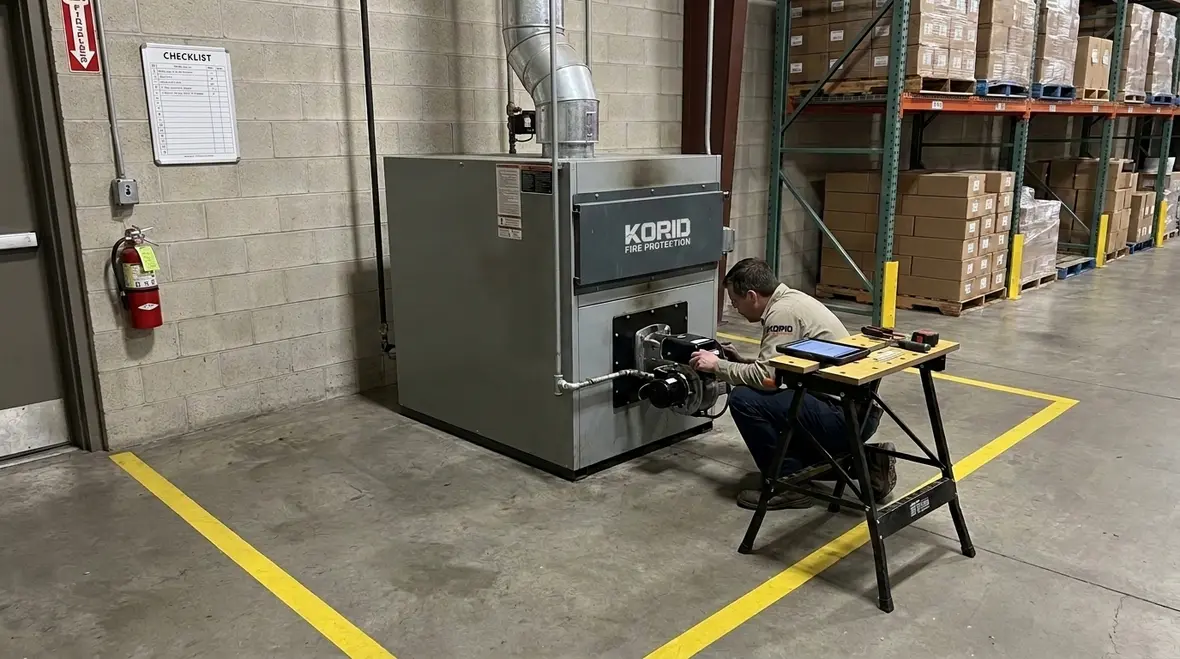
NFPA 31 Section 12.6: Installation Clearances for Used Oil Appliances
Quick Answer
NFPA 31 Section 12.6 establishes minimum installation clearances for used oil appliances to support safe combustion, cooling, access for inspection, and maintenance. Proper spacing also reduces the risk of overheating, fire spread, and carbon buildup. Facilities must verify clearances during installation and again during periodic service.
For broader code-minded planning beyond clearances alone, see fire protection services in Southern California for a practical overview of inspection, repair, installation, and ongoing support. If you want the oil-burning side of the story in more detail, keep the NFPA 31 practical guide to oil burning equipment installation handy as well.
Why Section 12.6 clearances matter in real commercial facilities
NFPA 31 used oil appliance installation clearances are not an optional spacing guideline. In day to day operations, clearances control the appliance environment: they limit heat transfer to nearby combustible materials, allow venting components to perform as designed, and provide service pathways for burners, filters, nozzles, and controls. In commercial, industrial, and retail settings, clearances also interact with maintenance practices, storage layouts, and contractor access routes. When clearances get reduced by “temporary” racks, cable trays, ductwork modifications, or later fit out works, the appliance may still run, but safety margins shrink.
NFPA 31 Section 12.6 becomes especially important after building changes. A common compliance failure point is not the original installation but subsequent fit out or relocation of adjacent equipment, shelving, or insulation. Another frequent issue is installer interpretation of what counts as a “surface” needing clearance, such as walls, flooring assemblies, coatings, or piping insulation.
What Section 12.6 clearances protect against (and how inspectors look)
Used oil appliances operate with high surface temperatures and combustion related heat. Clearances in Section 12.6 support safe outcomes in three practical ways.
1) Heat management and material compatibility
Minimum distances reduce heat exposure to adjacent combustible construction and limit the temperature rise at nearby surfaces. Inspectors typically verify clearance to materials that could ignite, including finishes that may be classified differently after renovations, such as new wall linings, suspended ceiling tiles, or stored packaging materials.
2) Venting and draft stability
Even when venting appears intact, poor spacing can contribute to incorrect draft conditions, abnormal exhaust temperatures, and premature deterioration of vent system components. During inspections, technicians commonly trace clearances around vent connectors and transitions to confirm required spacing supports the appliance venting design.
3) Access for cleaning and servicing
Used oil burners require maintenance for filters, strainers, combustion adjustment, and inspection of ignition and flame sensing components. Clearances support safe access and tool handling without unsafe bridging or removal of nearby guarding. Inspectors look for whether maintenance can occur without forcing contact with hot surfaces or disturbing clearance critical construction.
How to measure NFPA 31 used oil appliance installation clearances correctly
Clearance compliance depends on accurate measurement methodology, not only on the distance value. Commercial facilities commonly experience disputes between contractors and maintenance teams because of inconsistent measurement points.
Use consistent reference points
- Measure from the appliance surfaces intended by the listing and applicable code provisions, typically including hot surfaces and components.
- Measure to the nearest face of the adjacent material or obstruction that could interfere with required spacing.
- Include fixed obstructions, not only visible objects. Cable trays, conduit stubs, and structural brackets can become clearance conflicts after changes.
Confirm whether obstructions are temporary or permanent
Even if an obstruction is moved weekly, the appliance installation clearance still must be maintained for safe operation and servicing. If operational storage can encroach on clearances, the facility needs procedural controls, signage, and layout planning to prevent incidental violations.
Document results as an audit package
For compliance and internal assurance, teams should capture:
- Photos showing the appliance location relative to adjacent walls, piping, ducting, and storage areas
- A simple clearance sketch with measured values and measurement points
- Equipment make and model, along with installation date and commissioning notes
This audit package becomes critical when maintenance contractors change over time or when authorities require evidence during follow up inspections.
Common clearance problems that trigger non compliance
Most clearance issues appear in predictable patterns. Recognizing them early reduces downtime and prevents repeated service calls.
Fit out changes after commissioning
New storage racks, insulation upgrades, or signage frequently get installed without rechecking NFPA 31 used oil appliance installation clearances. In many facilities, maintenance teams assume the original installation remains compliant because “nothing touched the appliance.” However, adjacent modifications can indirectly reduce critical spacing.
Vent and exhaust components placed too close
Vent connectors and nearby thermal insulation can be installed or modified without verifying clearances around transitions. Over time, service activities also lead to minor repositioning of vent components that can shift required distances.
Combustible materials introduced near hot surfaces
Combustible or heat sensitive materials, including certain coatings, treated surfaces, or stored goods, create clearance conflicts that may not be obvious during commissioning but become apparent during inspections. Facilities should implement a clearance protection plan that includes controlled storage zones.
Inadequate access space for burner service
When maintenance staff must remove panels, lift components, or lean into the appliance footprint, access is no longer safe or compliant. Service access impacts both safety and operational reliability. A burner that is difficult to service often receives delayed maintenance, increasing the risk of inefficient combustion and soot accumulation.
Operational maintenance and inspection routines that preserve compliance
Installation clearances are a design and installation requirement, but compliance must persist through daily operation. A robust maintenance routine helps commercial facilities stay audit ready.
Integrate clearance checks into service intervals
During routine inspections, technicians should verify that no new obstructions exist, venting remains correctly positioned, and access routes remain unobstructed. Clearances should also be reviewed after any building works that affect the appliance room, plant room, or adjacent service corridor.
Control storage and housekeeping
Used oil appliance areas typically become high activity zones. Facilities should establish:
- Named “no storage” boundaries around clearance critical zones
- Staff training that links clearance violations to real ignition risks
- Housekeeping procedures that prevent transient materials from encroaching
Link clearance verification to combustion performance
Clearances support heat rejection and draft behavior. When clearances drift out of specification, combustion conditions can worsen even if the unit starts successfully. Service teams should cross check combustion parameters, filter condition, and flame quality. That combined review identifies whether clearance drift is contributing to nuisance shutdowns, lockouts, or excessive deposits.
For a practical, equipment focused approach to installation and ongoing expectations, see NFPA 31 practical guide to oil burning equipment installation. It supports compliance planning for commercial projects where installation coordination and later maintenance access are recurring issues.
How Kord Fire Protection supports sustained compliance
Commercial and industrial sites often face clearance risk because plant layouts evolve. Kord Fire Protection supports clients by validating installation conditions against NFPA style expectations, documenting clearances for audit readiness, and maintaining equipment so that combustion performance remains stable over time. This includes practical verification of service access, obstruction control processes, and after works re checks when fit out or plant changes occur. As a commercial service partner, Kord Fire Protection helps facilities avoid the most common clearance failures that lead to rework, operational downtime, and inspection findings.
Frequently Asked Questions
Conclusion and call to action
NFPA 31 Section 12.6 clearances for used oil appliances protect heat exposure, venting stability, and safe maintenance access. A clearance value is only compliant if it stays correct after commissioning, fit out works, and routine service. Kord Fire Protection can help you verify appliance clearances, document results for audits, and maintain equipment performance over time. Contact Kord Fire Protection to schedule a clearance focused inspection and ensure your facility stays compliant.

Join Our Newsletter!
Get the latest fire safety tips delivered straight to your inbox From our Newsletter.



